
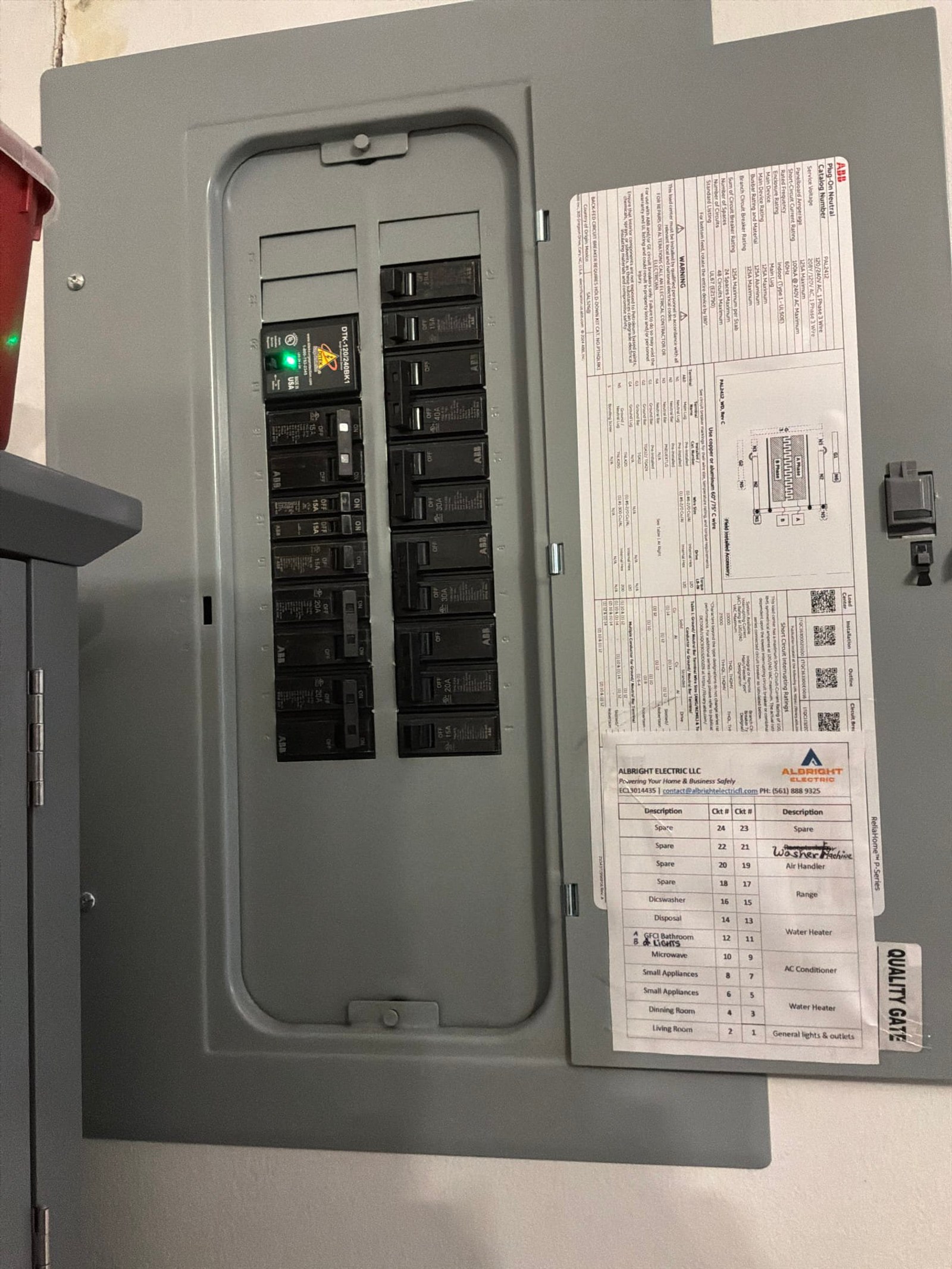
This Boynton Beach EV outlet case study walks through the real diagnosis, the fix, and the code details from a recent service call. A homeowner in Boynton Beach, FL, reached out wanting a dedicated outdoor outlet near her parking space to charge a Tesla. Our field team completed a load calculation and a whole-home visual safety inspection, confirming the existing Square D Homeline 100-amp panel as the starting point for planning a proper EV circuit.
The Problem
The homeowner had been exploring options for at-home EV charging and wanted a reliable outlet installed outdoors, close enough to her parking space to make every morning routine effortless. She was looking for a clear path forward, starting with an honest assessment of what the home’s current electrical system could support.
“I need an estimate for installing an outlet outdoors near my parking space to charge my Tesla.”
Investigation
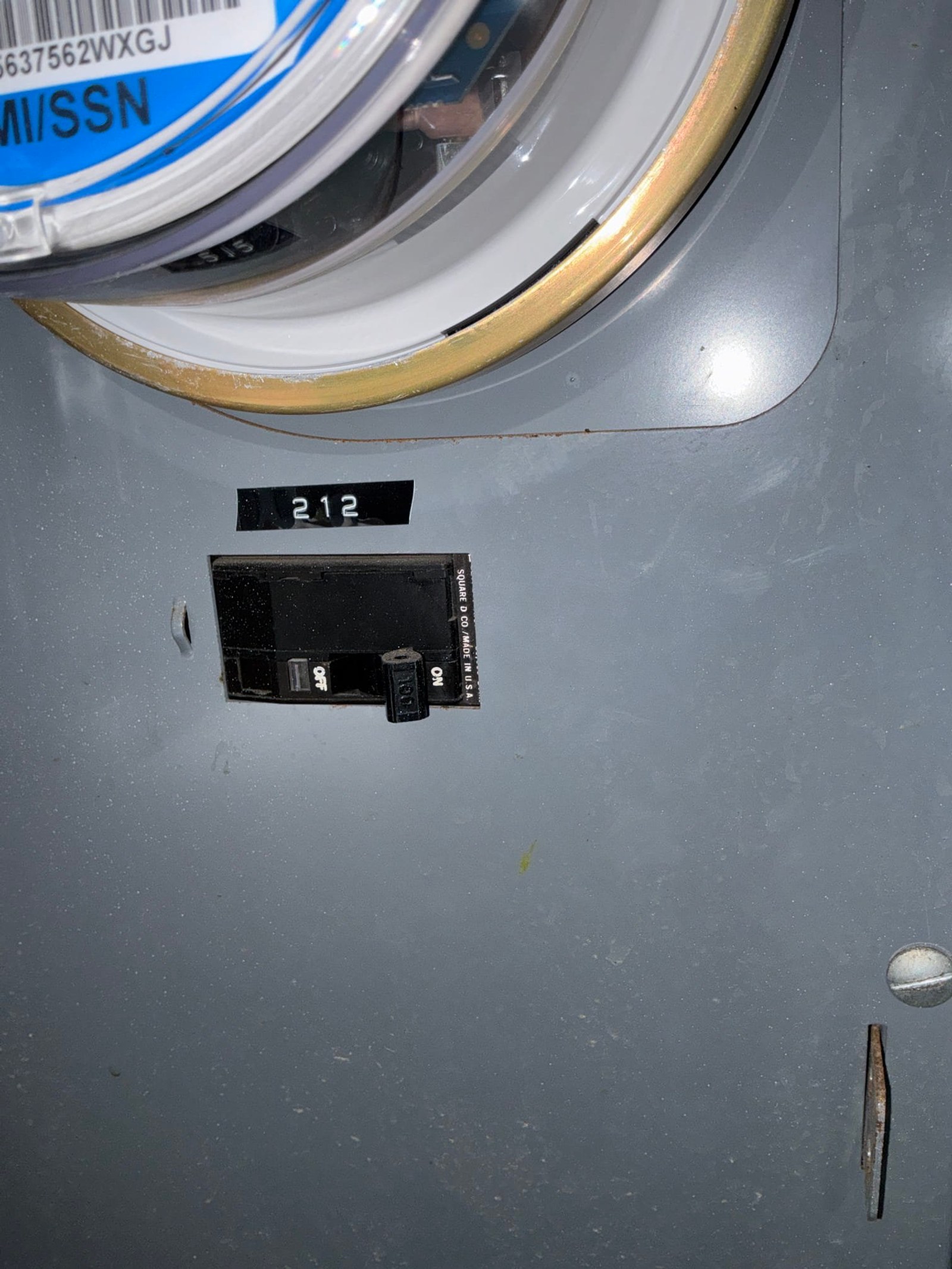
Our licensed electrician on-site started with a visual inspection of the service equipment. The panel exterior carried a nameplate and a label reading “212,” and the circuit directory inside was clearly laid out, showing a well-organized breaker schedule. The existing wiring diagram gave the field team a solid foundation for the load calculation work.
The Square D Homeline panel, rated at 100 amps, is a capable and commonly installed service size for homes of this era in South Florida. During the inspection review, two items came up as worth addressing on a future visit. First, AFCI (arc-fault circuit interrupter) protection was noted as not yet present on the branch circuits reviewed. AFCI protection is now recommended under current NEC standards for living-area circuits in dwellings, though many homes of this vintage were wired before that requirement applied. Second, the smoke detectors were flagged for a follow-up review, and no carbon monoxide detector was found on-site. These are both straightforward, low-disruption upgrades to consider alongside any new circuit work.
All other inspection points came back green. Neutrals and grounds were separated correctly. No double-tapped breakers were present. The grounding system checked out, outlets were properly grounded, and there was no corrosion or burning visible anywhere on the service. Surge protection was already in place, and the panel directory was clearly labeled. Overall, the home’s electrical system is in good shape for its service size.
What We Fixed
The primary deliverable on this visit was a formal load calculation and design assessment. Before adding any new circuit, especially a continuous-load EV charging circuit, it is important to confirm that the existing service has the headroom to handle the added demand without stressing the panel.
Our team reviewed the existing load profile against the planned EV circuit requirements. A dedicated outdoor outlet for EV charging must be sized as a continuous load under NEC 625.41, meaning the branch circuit must be rated at 125 percent of the charger’s maximum draw. That calculation guides both the breaker size and the wire gauge for the outdoor run.
The load calculation output gives the homeowner a clear, documented picture of what the new circuit will require and how it fits within the current 100-amp service. That document becomes the roadmap for the installation appointment.
Why This Boynton Beach Outlet Repair Matters for Homeowners
Adding an outdoor EV outlet is one of the most practical upgrades a household can make right now. Instead of relying on a standard indoor outlet or a public charging station, the family comes home, plugs in, and wakes up to a fully charged vehicle every single day. That kind of quiet reliability changes the morning routine in a way that is hard to overstate.
Starting with a load calculation is the right first step, not just a formality. A 100-amp service can absolutely support EV charging in many homes, but the math needs to confirm it before any wire is pulled. Knowing the numbers ahead of time means the installation goes smoothly, the breaker is sized correctly the first time, and there are no surprises down the road.
Additionally, the two items noted during the inspection, specifically AFCI protection and updated smoke and CO detection, are worth scheduling soon. Current NFPA 72 guidelines call for interconnected smoke and CO detection throughout the home. When every detector talks to every other detector, the whole household knows at once if anything changes. Pairing those upgrades with the EV outlet installation is an efficient way to bring the home fully up to current standards in one coordinated visit, giving the family real peace of mind across the board.
Code Compliance Cited in This Job
Every fix above maps to a specific section of NEC 2020. Each card links to NFPA’s public NEC index.
EV Charging Branch-Circuit Ampacity
NEC 625.41 requires that the branch circuit supplying an EV charging outlet be rated for the continuous load at 125 percent of the charger’s maximum current draw. On this job, the load calculation confirmed the correct breaker and conductor sizing needed for the planned outdoor Tesla charging outlet near the parking space. NFPA reference ›
EV Charging Continuous-Load Rating
NEC 625.42 classifies EV charging as a continuous load, meaning the circuit must be designed to sustain that draw for three or more hours. This classification directly shaped the load calculation our team performed to ensure the Square D Homeline 100-amp service can support the new circuit without issue. NFPA reference ›
AFCI Protection for Dwelling Branch Circuits
NEC 210.12 requires arc-fault circuit interrupter protection on branch circuits serving living areas in dwelling units. The inspection noted that AFCI protection was not yet present on the circuits reviewed, which is common in homes wired before this requirement took effect. Adding AFCI breakers is a straightforward upgrade to plan alongside the EV circuit installation. NFPA reference ›
GFCI Protection for Outdoor Receptacles
NEC 210.8 requires GFCI protection for all outdoor receptacles in dwelling units. The planned outdoor EV charging outlet near the parking space will need to meet this requirement, and the load calculation and design work performed on this visit accounts for that protection in the circuit plan. NFPA reference ›
Circuit Directory Identification
NEC 408.4 requires that every circuit in a panelboard be legibly identified. The circuit directory observed at this home was clearly labeled and organized, which made the load calculation process more efficient and will make it straightforward to add and label the new EV circuit when installation takes place. NFPA reference ›
Common Questions
Questions homeowners ask after seeing this kind of work.
Can a 100-amp panel support a dedicated EV charging circuit?
In many cases, yes. A 100-amp service is common in homes built through the 1990s, and it can often support a Level 2 EV charging circuit, but the answer depends on what else is already running on the panel. A load calculation looks at the full picture, including the AC, water heater, and other major appliances, and confirms whether there is enough headroom before any wire is pulled. If your home is in a similar situation, our team can schedule a load calculation to give you a clear answer before committing to the installation.
What kind of outlet does a Tesla actually need for home charging?
A Tesla (and most EVs) can charge from a standard 120-volt outlet, but that is slow. For practical daily use, a dedicated 240-volt circuit sized for Level 2 charging is the right choice. That typically means a 50-amp breaker and a weather-rated outdoor outlet or a hardwired wall connector, depending on the charger model. Under NEC 625.41, the circuit must be sized at 125 percent of the charger’s continuous draw. Schedule a consultation and our field team can walk you through the right setup for your vehicle and parking area.
Why does adding an EV outlet require a load calculation first?
EV charging is classified as a continuous load under NEC 625.42, meaning the circuit has to carry that current reliably for extended periods. Before adding that kind of demand, a licensed electrician needs to confirm the existing service has the capacity, and that the new circuit is sized correctly from the breaker through the wire to the outlet. Skipping this step can result in nuisance tripping or an undersized installation. To get started, book a load calculation visit and we will have the numbers ready before any work begins.
How often should I have my home’s electrical system inspected?
A yearly inspection is a good baseline for most homes. Homes built before 1990 and homes that have been through recent storm seasons may benefit from more frequent checkups, since older wiring and weather-related wear can create conditions worth addressing before they affect daily comfort. An annual visit also makes it easy to plan ahead for upgrades like EV circuits or AFCI protection. Schedule your inspection online and our licensed team will give you a straightforward, no-pressure assessment.
What is AFCI protection and does my home need it?
AFCI stands for arc-fault circuit interrupter. Under NEC 210.12, current standards call for AFCI breakers on branch circuits serving living areas in dwelling units. Many homes built before the mid-2000s predate this requirement and were wired under the code in effect at the time, so the absence of AFCI protection is very common and not a reflection of anything being done wrong. Upgrading to AFCI breakers is a straightforward addition that brings the home in line with current standards and adds a layer of reliability to the circuits you use every day. Book a panel review to find out which circuits in your home would benefit most.
Want to see more real jobs like this one? Browse our completed case studies, explore our services, or read about our EV charger installation in Jupiter and Palm Beach County. Ready to book a visit of your own? Contact our Jupiter office.