
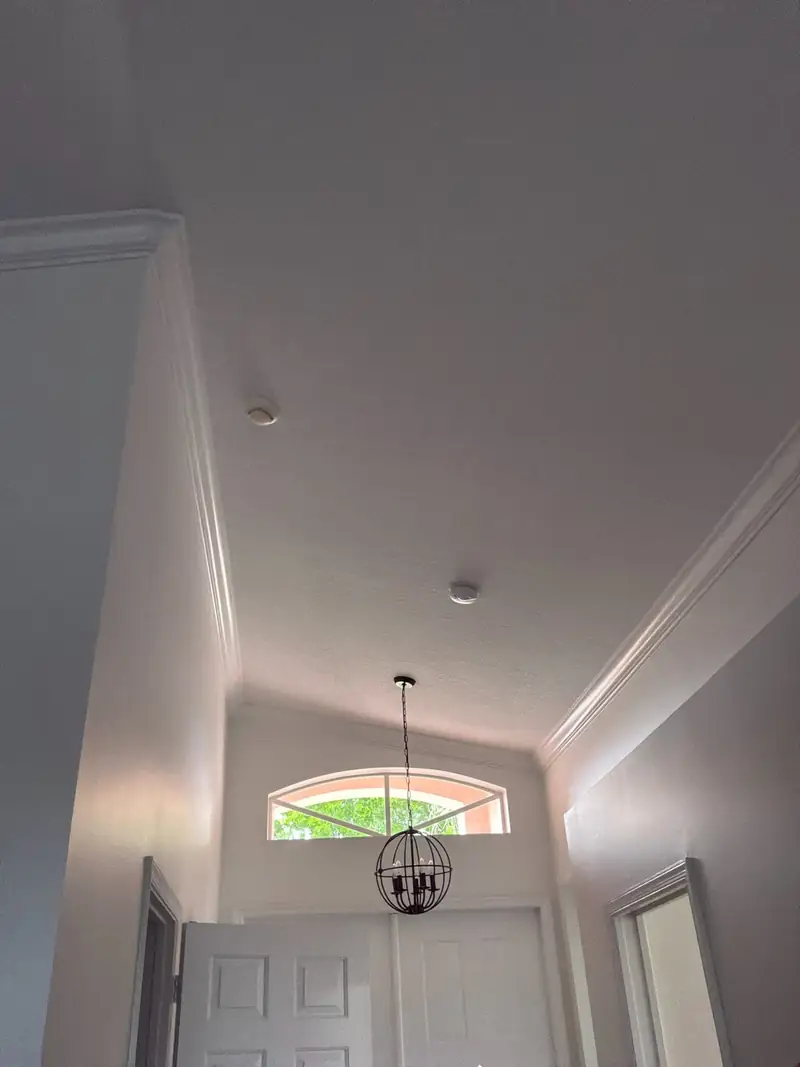
Flickering lights are telling you something, and the message depends on how many are doing it. One lamp that stutters in a Jupiter living room is usually a bulb, a socket, or a dimmer never meant for LEDs. The whole house pulsing at once is worth acting on today. We trace flickering lights from Tequesta and Juno Beach through West Palm Beach to Stuart. Call (561) 462-2800, or request a visit online.
- Licensed & insured
- FL license EC13015487
- Family-owned
- 24/7 emergency service
At a glance
- One fixture flickering: the bulb, the socket, a mismatched dimmer, or a loose wire
- The whole house flickering: the service, the meter, the panel, or the utility side
- The urgent pattern: lights brightening and dimming together, or bright in one room and dim in another
- What we bring: voltage readings under load, and a close look at the panel and service
Stop and Call If You See Any of This
- Lights all over the house brighten and dim together, or one room goes bright while another goes dark
- Buzzing, humming, or sizzling at the panel, a switch, or an outlet
- A smell of hot plastic or burning near the panel, a fixture, or a receptacle
- A panel cover, breaker, or cover plate that feels warm to the touch
- Electronics failing or bulbs burning out early at the same time
That pattern points toward a loose or open service neutral, the one not to sit on. Your home is fed by two 120-volt legs sharing one neutral. When that neutral loosens, the lightly loaded side climbs well above 120 volts while the other sags, which is why lights swing in opposite directions room to room. The high side damages electronics, and the failing connection heats and arcs. If you smell burning or see smoke, leave and call 911 first. Otherwise call (561) 462-2800 and report a whole-house flicker. We offer 24/7 emergency service across Palm Beach County.
If It Is Only One Fixture
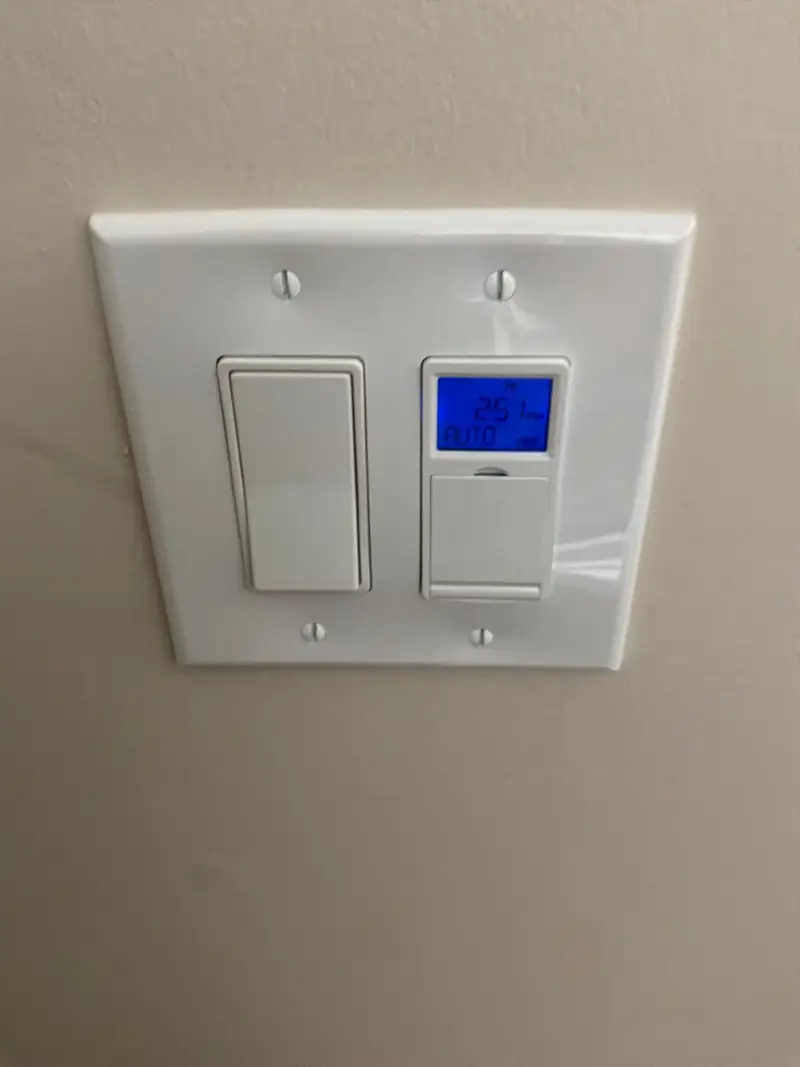
If a single fixture misbehaves after dark while the rest of the house holds steady, the trouble is in that fixture, its switch, or its circuit:
- An LED on a dimmer built for incandescents, the most common cause we find
- A bulb that is not seated tightly, or a socket whose center contact has flattened
- A loose connection in the fixture or switch box, where wire nuts and push-in terminals let go
- A failing driver in an integrated LED fixture, with no bulb to change
The dimmer cases are the simple ones. Across Palm Beach Gardens and North Palm Beach we find LED bulbs on dimmers installed for 60-watt incandescents, and those dimmers need a minimum load a pair of LEDs never reaches. Confirm the bulbs say dimmable, fit a dimmer rated for LED loads, and use matching bulbs rather than a mix of brands.
The loose connections are the ones that matter. A connection loose enough to blink a light is loose enough to arc, and arcing inside a wall is how fires start. One local example from our case files: Jupiter Ceiling Fans and Blinking Lights, Traced and Fixed.
If Every Room Dips at Once
If lights in separate rooms dip and recover in step, the fault sits where every circuit passes through:
- A fault on the utility side, such as a damaged service drop, especially if the neighbors flicker too
- A loose or open service neutral, the urgent one above, which can fail at the weatherhead, the meter socket, or the neutral bar
- A loose main lug or burned bus connection, which heats under load, so the flicker worsens on hot afternoons
- A corroded meter socket. Salt air along the Intracoastal in Jupiter, Juno Beach, and Palm Beach is hard on enclosures
We find these with readings taken under real load rather than on an idle house, and by checking the temperature of connections at the panel and service. Most of Palm Beach County is served by FPL, while Lake Worth Beach runs its own municipal electric utility, but either way the dividing line is the service point, where the utility’s conductors meet your equipment.
Lights Dim When the Air Conditioner Starts
An AC compressor, a well pump in Loxahatchee, or a pool pump on a Wellington lanai each pull a heavy surge for the moment the motor takes to start turning, so a brief, shallow dip is ordinary. Investigate when the dip is deep, lasts longer than a blink, or has clearly worsened over the past year. A tired motor draws a heavier starting surge than it used to, and an undersized or loose service turns that same surge into a larger voltage drop. If capacity is the answer, our electrical panel upgrade page explains what is involved. If the compressor is at fault, a soft start kit from your HVAC company is often the better fix.
Safe Checks Before You Call
- Turn the light off, let the bulb cool, and snug it into the socket
- Swap in a known-good bulb. If the flicker follows the bulb, you are done
- Check the packaging for the word dimmable, and the dimmer for an LED rating
- Look outside after dark. If the neighbors are flickering too, the call goes to your utility
Please leave the rest alone. Do not take the cover off the panel, do not tighten lugs or breaker screws, and never touch the meter. Those connections carry current no breaker in your house protects against, which is part of why the code reserves real working space at a panel (NEC Article 110.26, adopted in this state through the Florida Building Code).
Why Palm Beach County Homes Flicker
Heat and humidity work every connection through a daily expansion and contraction cycle, so a terminal that was merely snug when installed eventually goes loose, and summer storms push repeated surges through the service that are hard on LED drivers. Homes built in the 1960s and 1970s across Royal Palm Beach and Greenacres were also sometimes wired with aluminum branch circuits, which expand and oxidize more than copper, a real cause of loose, warm connections behind switches and receptacles. Arc-fault protection (NEC Article 210.12, adopted here through the Florida Building Code) is the code’s answer to arcing faults on branch circuits, and it applies to specified dwelling circuits rather than every circuit in an older home.
Surge protection deserves a clear word, because it gets oversold. A whole-house surge protective device is built for fast transients such as a nearby lightning strike, and the code now calls for one where a dwelling service is installed or replaced (NEC Article 230.67, as adopted through the Florida Building Code), so an older home without one is not automatically out of compliance. It will not save you from a loose service neutral, which is a sustained overvoltage rather than a transient. When flicker arrives with other symptoms, one troubleshooting visit covers all of it.
Photos from our Palm Beach and Treasure Coast jobs
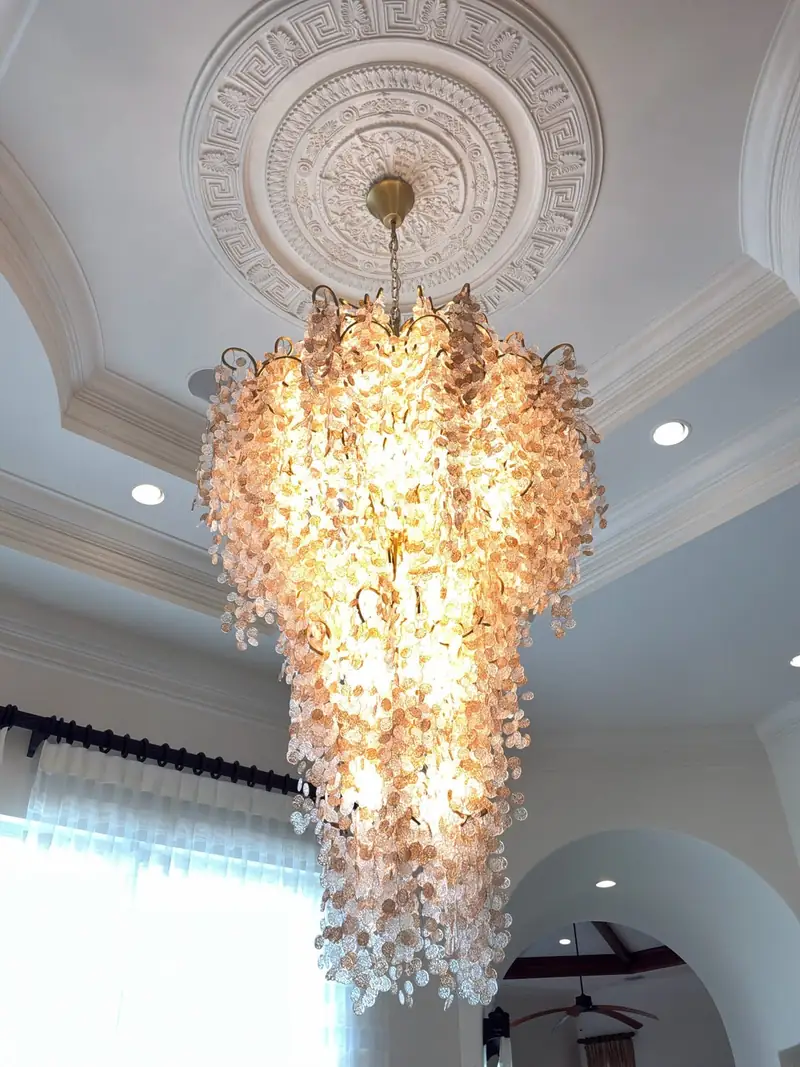
Crystal chandelier, Palm Beach Gardens 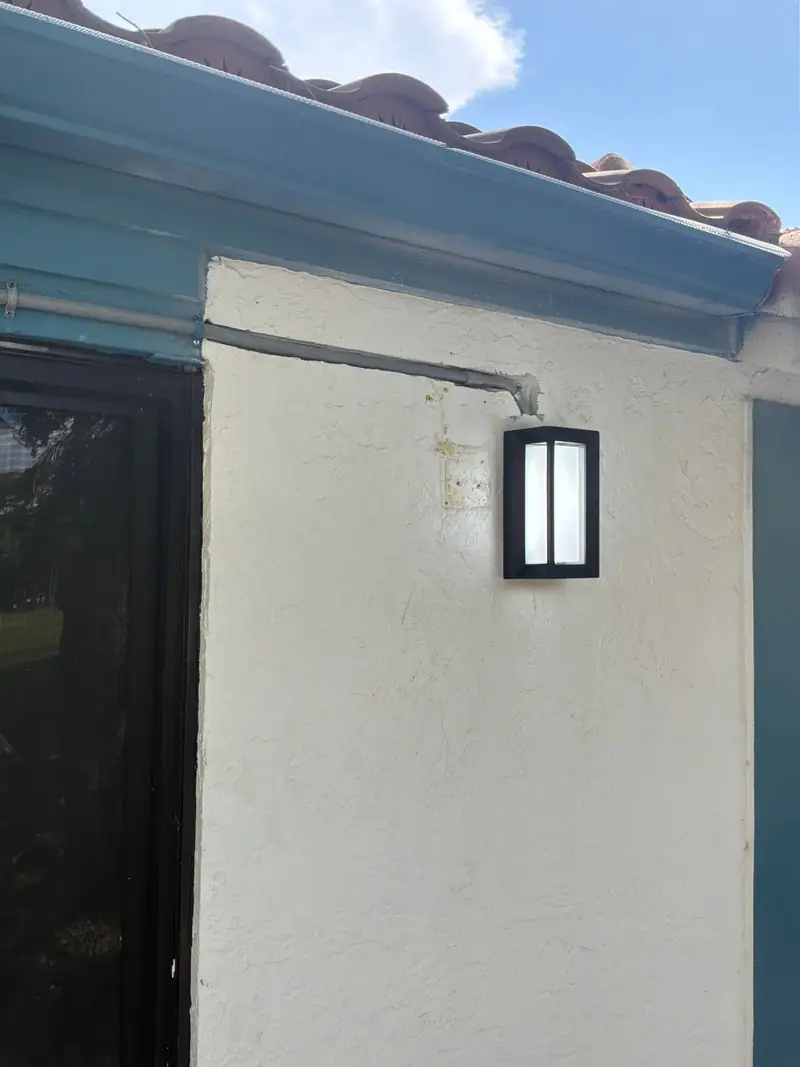
Outdoor wall lantern, Greenacres 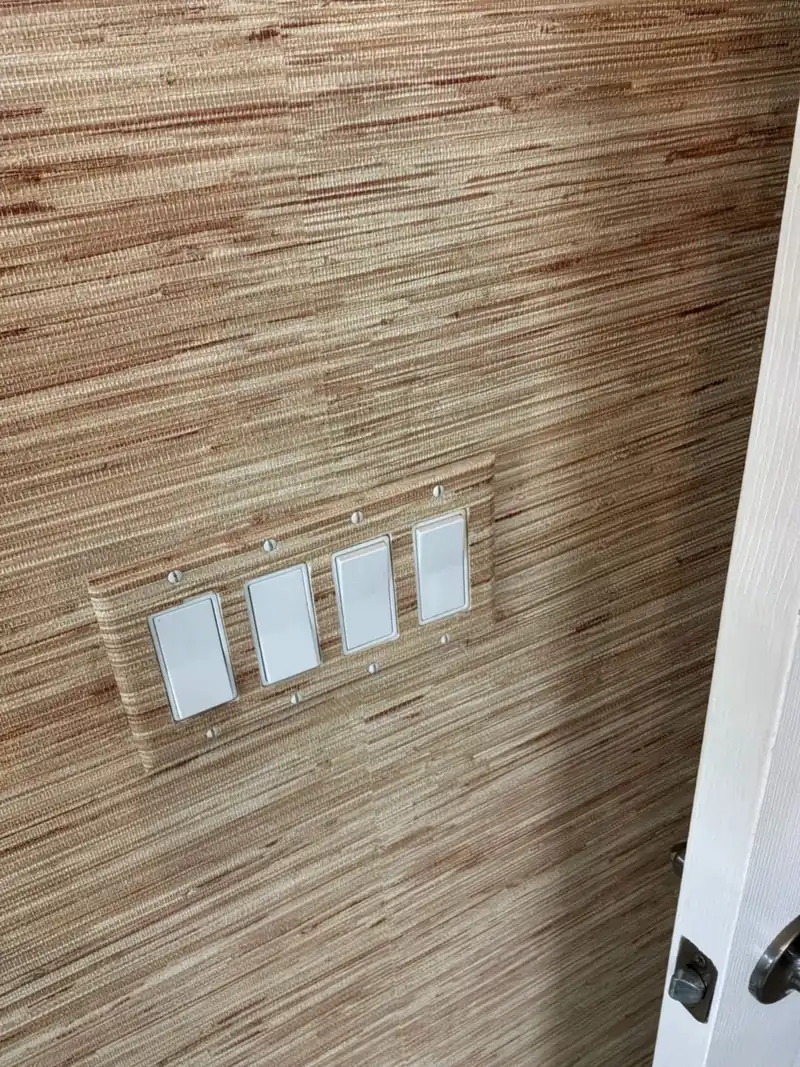
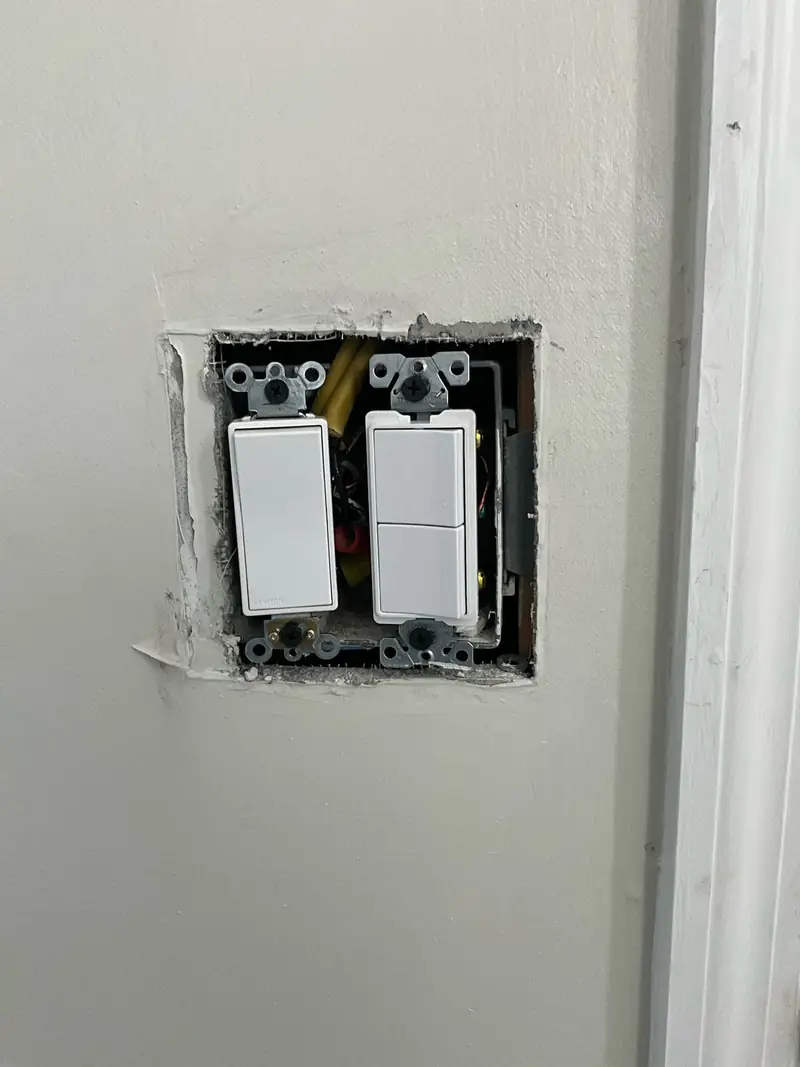
Four-gang switch plate, West Palm Beach
Flickering Light Questions
Which flickers can wait, and which cannot?
One LED on an old dimmer can wait for a convenient appointment. Lights all over the house brightening and dimming together should be looked at the same day, because a loose service neutral pushes damaging voltage into your electronics while it heats and arcs.
Why does my LED glow faintly after I switch it off?
Usually a dimmer or smart switch in a box with no neutral wire. It keeps itself powered by trickling a small current through the bulb, which an incandescent filament absorbed without lighting and an LED does not. Wiring the switch to a neutral solves it, and bypass devices exist for boxes without one.
Can salt air cause flickering lights?
Indirectly, yes. Along the Intracoastal in Jupiter, Juno Beach, and Palm Beach, salt corrodes outdoor enclosures, and a meter socket with corroded connections can drop voltage under load. It is one of the first things we check on a coastal home where the whole house flickers.
Will a whole-house surge protector stop the flickering?
No. A surge protective device clamps fast transients, such as the spike from a nearby lightning strike. Flicker from a loose connection or an overloaded service is a different problem, and the device will not touch it. Surge protection is worth having, just not as a fix for flicker.
Does flickering mean I need a new electrical panel?
Not automatically. Plenty of flicker is a bulb, a dimmer, or one loose connection. It does point at the panel when the whole house is affected, when it worsens under heavy load, or when the panel is an older type with known bus problems.
Get the Flicker Traced
From Tequesta and Jupiter down through Boynton Beach and Boca Raton, and west to Wellington and Loxahatchee, we will find out what your lights are telling you. Call Thomas Edison Electric at (561) 462-2800. Florida Electrical Contractor License EC13015487.