
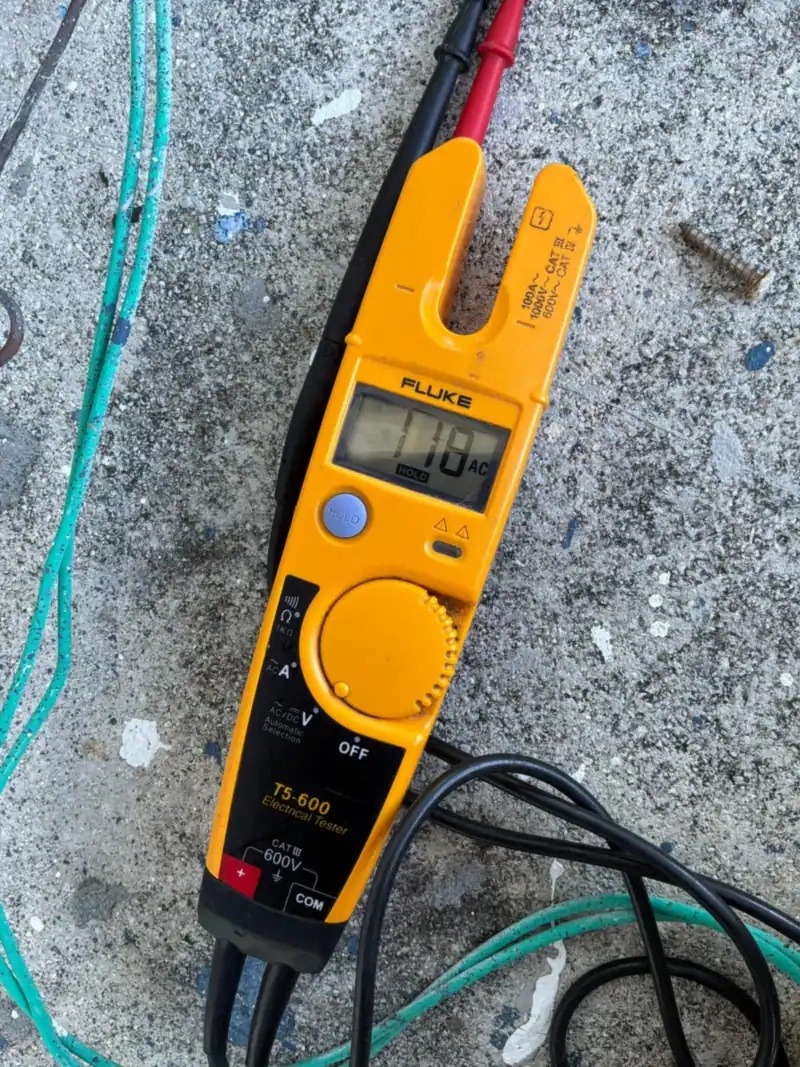
One room dark and the rest of the house fine. Half the house out while the neighbors still have power. The cause is rarely where the symptom shows up. Thomas Edison Electric traces electrical faults in homes from Jupiter and Tequesta through Palm Beach Gardens and West Palm Beach, and north to Hobe Sound and Stuart, with meters and a method. Call (561) 462-2800 for an emergency or request a visit online. We offer 24/7 emergency service. Florida Electrical Contractor License EC13015487.
- Licensed & insured
- FL license EC13015487
- Family-owned
- 24/7 emergency service
At a glance
- What this is: diagnosis first, then the repair
- Most common calls: one room dead, half the house dead, flickering lights, a dead outlet, a breaker that will not reset
- How we work: read the panel, isolate the circuit, test under load
- Often the same visit: a failed receptacle, a loose neutral, a burned connection, a tripped GFCI upstream
- Stop and call now: burning smell, scorch marks, buzzing panel, warm cover plates, any shock; smoke or flame means get out and call 911
Stop Using the Circuit and Call
Most problems can wait for a scheduled visit. These cannot. Switch that breaker off if you can reach it safely, then call. If you see smoke or flame, get everyone out of the house and call 911 first.
- Char, melted plastic, or a hot burning smell at a device, a switch, or the panel
- A cover plate or plug warm to the touch, or buzzing at the panel
- A tingle or shock from an appliance, faucet, pool light, or railing
- Lights that brighten in one part of the house while others dim
- Water in or near a panel, outlet, or lanai fixture after a storm
Three Things It Is Safe to Check First
- Press reset on every GFCI. One often protects a string of ordinary-looking outlets downstream, so check bathrooms, the garage, kitchen counters, laundry, the lanai, and exterior walls. If the button will not stay in, leave it alone.
- Cycle the breaker fully. A tripped breaker often rests in the middle rather than off. Push it firmly to off, then on. If it trips again, leave it off.
- Try the wall switch and a lamp you trust. Many outlets in older living rooms are switched, and a dead outlet and a dead bulb look alike.
One Room Is Dead and the Rest of the House Is Fine
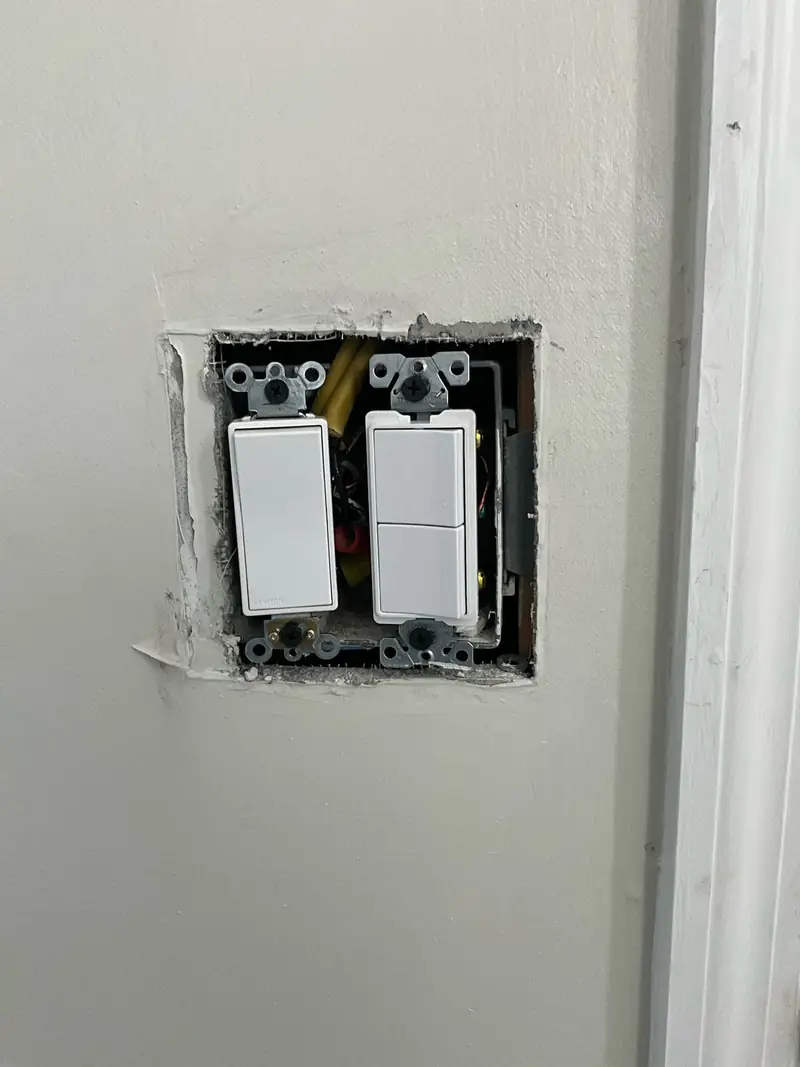
This is the most common call we take, and it is usually one failed connection. Power travels box to box along a single circuit, so everything past the break goes dark, almost always at a device rather than inside a wall.
Roughly in the order we find them: a GFCI tripped upstream in another room, a receptacle whose push-in back-stab terminals lost their grip, a loose neutral under a screw, a failed switch, or an attic splice never tightened. In Jupiter and Lake Worth homes with 1960s and 1970s aluminum branch wiring, the device connection is the weak point, and the repair needs connectors listed for aluminum to copper. Our outlet repair page covers the single-outlet version.
Half the House Is Dead and the Neighbors Have Power
Your home is fed by two energized legs plus a neutral. Lose one leg and roughly half your 120 volt circuits go dead, while the 240 volt loads (central air conditioning, an electric range, an electric water heater) stop working or behave strangely because they need both legs. Inside the home that is usually a loose main lug or a failed main breaker. It can also begin outside at the meter enclosure, where the service cable has corroded or worked loose. Salt air in Juno Beach and North Palm Beach ages that equipment faster, and the repair often means an electrical panel upgrade under permit.
A lost neutral matters more. Lights in one part of the home go unusually bright while others dim, and they swing when a large appliance starts, which can damage electronics in minutes. Shut off the main breaker if you can do it safely, then call us and report it to your utility, because that connection can fail on either side of the meter.
How We Trace a Fault
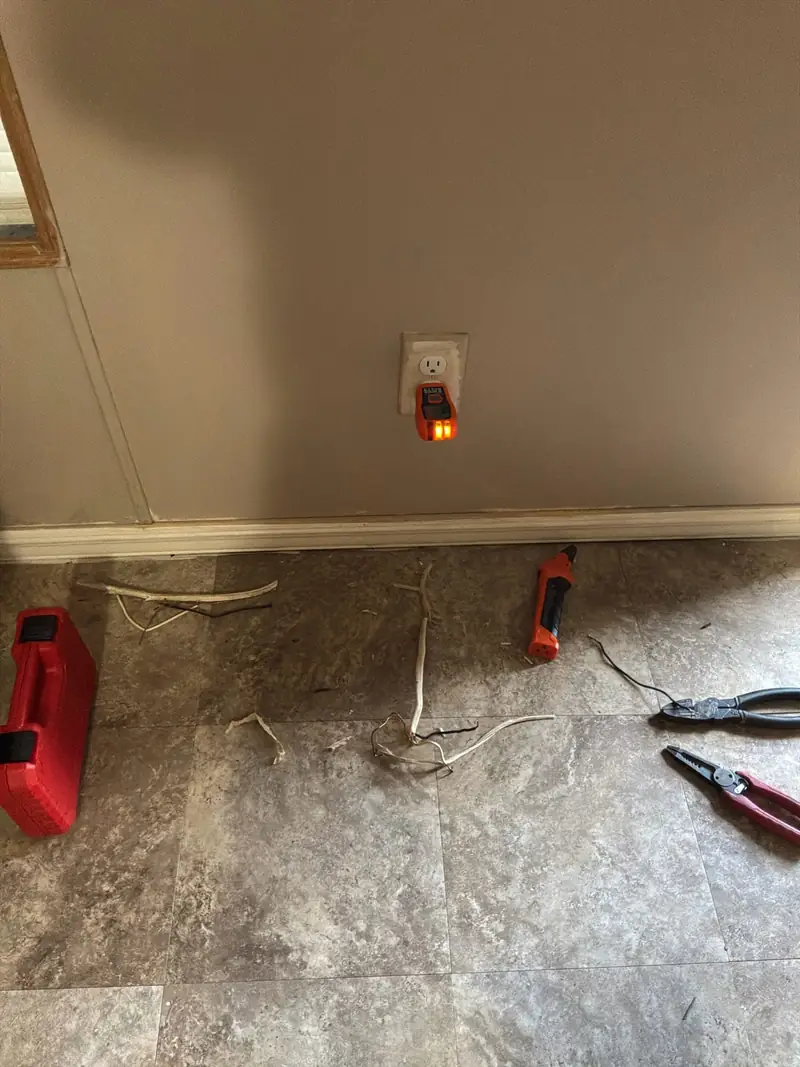
Diagnosis is an order of operations. Skipping steps is how a problem gets repaired twice.
- Define the boundary. We map what is dead and what is live, including what you have not tested. That usually narrows it to one circuit.
- Start at the panel. Voltage leg to leg and leg to neutral, heat damage, loose terminations, grounding and bonding, and whether the directory matches reality. NEC 110.26 requires clear working space here.
- Identify the circuit. A tracer and tone follow the run without guessing, which matters in additions and enclosed lanais where the wiring ignores the floor plan.
- Test under load. A high-resistance connection reads healthy with nothing plugged in and collapses the moment current flows, so we load the circuit and watch.
- Check the protective devices. GFCI protection is required in the locations listed in NEC 210.8 and AFCI protection in NEC 210.12, both adopted in Florida through the Florida Building Code.
- Open only what the readings point to, inspect the terminations and splices for heat and corrosion, repair, then retest under load.
What a Visit Involves, and What We Usually Fix on the Spot
A licensed electrician takes the history (what failed, when, and what changed), works the sequence above, and explains each test as it happens. Simple repairs are handled on the spot once you approve them. Larger findings come with the cause and the options in writing.
Most faults are a single bad connection and are repaired the same day: failed receptacles and switches, loose neutrals, burned fixture sockets, a breaker that no longer holds, and corroded pool equipment devices. A cable damaged inside a finished wall, widespread aluminum wiring, or a failing panel are second visits, and we would rather say so on day one.
Two write-ups show how often the cause sits elsewhere: Jupiter Bathroom GFCI Traced to a Tangled Panel, which began as a dead outlet, and Jupiter Ceiling Fans and Blinking Lights, Traced and Fixed.
Why These Faults Happen Here
Heat and humidity run all year, so every connection expands and contracts until a terminal that was merely adequate works loose. Salt air corrodes outdoor devices and service equipment, and summer lightning pushes surges into the house, which is why NEC 230.67 calls for surge protection on dwelling unit services and why whole-house surge protection belongs on the house before storm season. Much of the older housing in West Palm Beach and Boynton Beach was wired when a bedroom got one or two outlets.
Call the Utility or Call an Electrician?
Most of Palm Beach County is served by Florida Power and Light, while a few cities, Lake Worth Beach among them, run their own municipal electric utility, and your last bill names yours. Whoever it is generally owns the line up to the point where it connects at your home, along with the meter. The mast, the meter enclosure, and everything past them belong to the property.
- Call your utility first if the whole street is dark, an outage is posted on their map, or a wire is down
- Call us if the neighbors have power and you do not, or if the trouble stops at your panel
- Call both if lights go bright and dim at once, or if the mast or meter can looks damaged after a storm
Never touch a downed line or anything it is touching. If you depend on power for medical equipment, plan ahead of storm season, whether that means a portable unit and an inlet or a standby generator.
Photos from our Palm Beach and Treasure Coast jobs
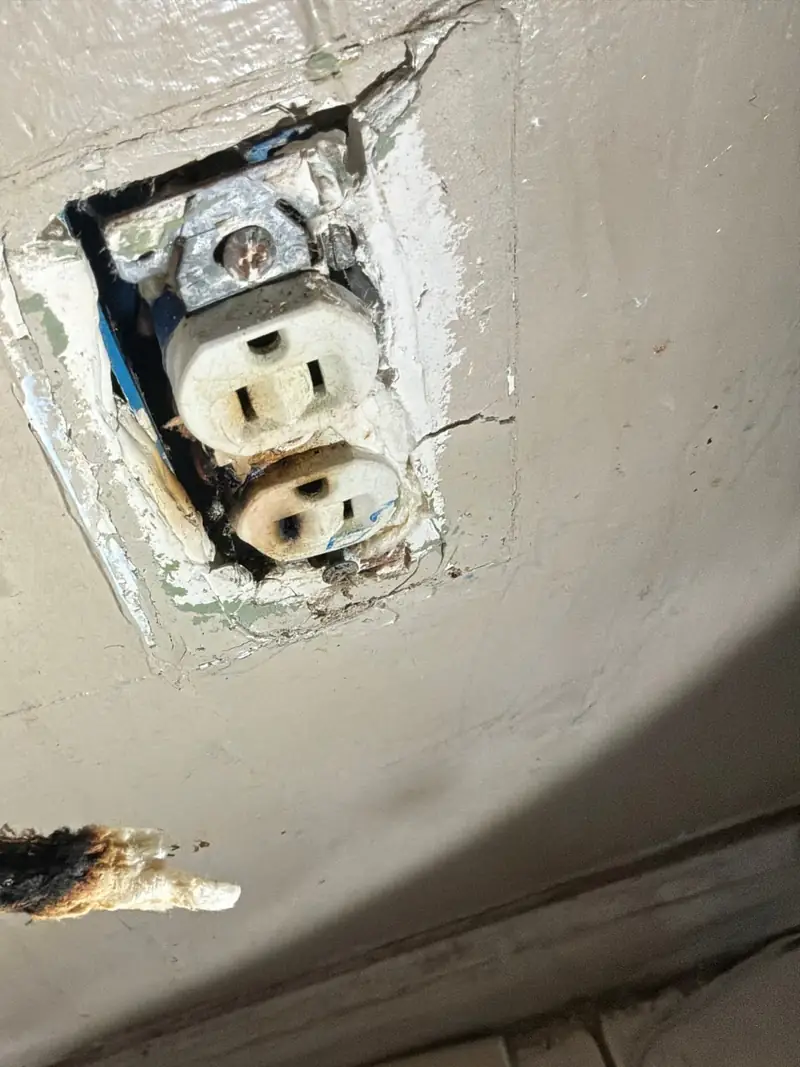
Scorched duplex outlet, Port St. Lucie 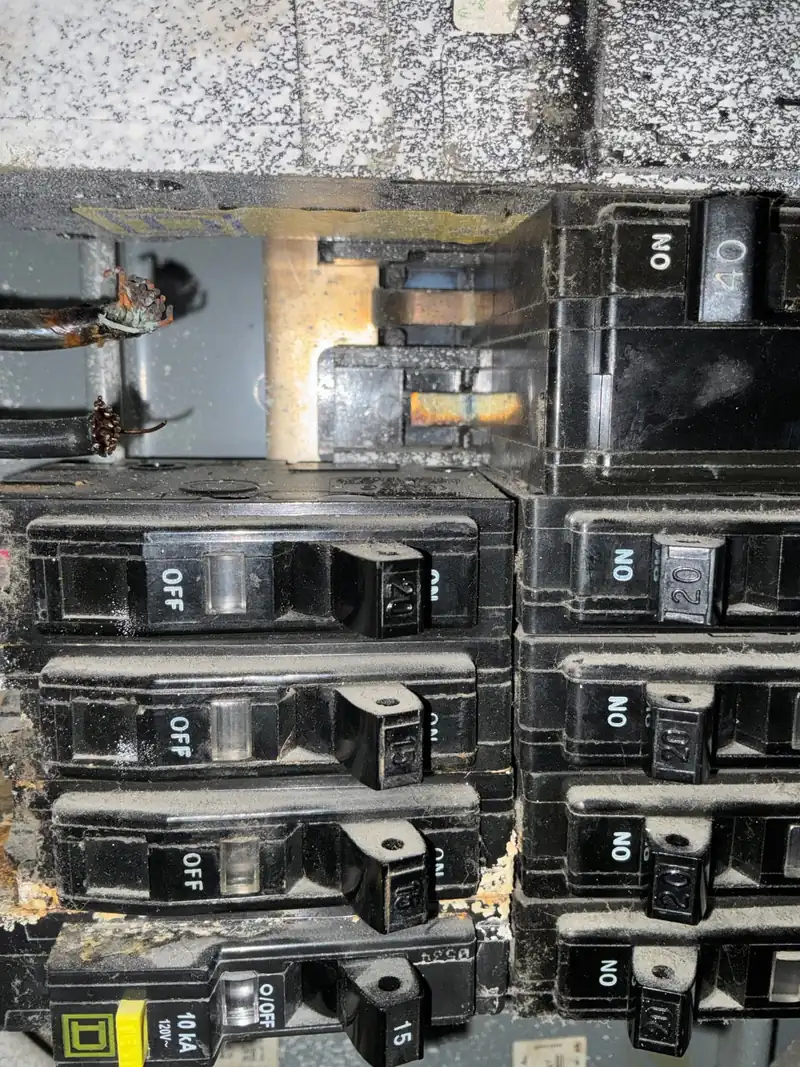
Corroded bus bar, Palm Beach Gardens 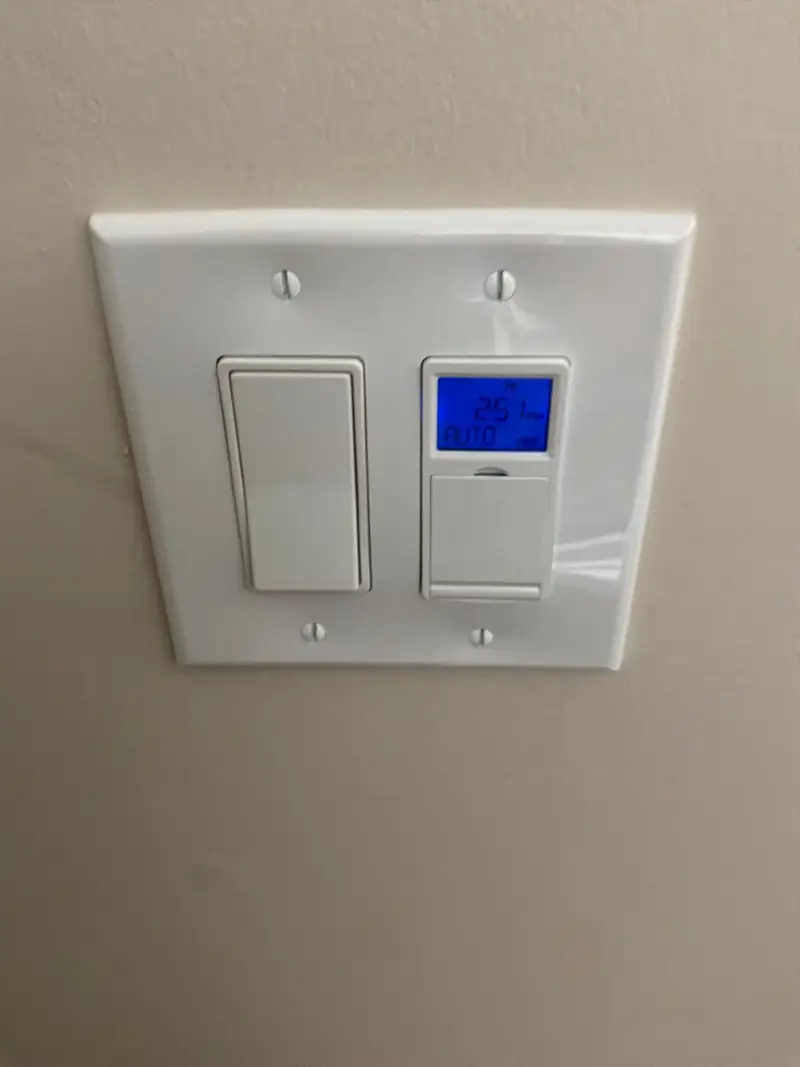
Timer and light switch, Jupiter
Troubleshooting Questions
Why do the lights work but the outlets do not?
Lighting and receptacles usually sit on separate circuits, so a fault on one leaves the other alone. When only the outlets are dead, it is most often a GFCI tripped elsewhere.
My neighbors have power and I do not. Is that the utility or me?
If the neighbors are fine and no outage is posted, the problem is usually on your side of the meter. One exception: a service connection can fail on either side, and the sign is lights going bright in one room while others dim.
Can you find the problem in one visit?
Most of the time, yes, and many repairs are finished the same day. Cables damaged inside finished walls take longer.
Will you have to cut into my walls?
Usually not. Faults concentrate at devices and junction boxes that are already accessible, and testing tells us where to open.
The problem comes and goes. Is it still worth calling?
Yes, more so than a steady fault. Intermittent symptoms are the signature of a loose connection that heats under load and cools after, which is what scorches devices over time.
Get the Fault Found
From Jupiter and Tequesta to Wellington, Boynton Beach, and Stuart, we will find what is actually wrong. Call Thomas Edison Electric at (561) 462-2800 or request a visit online. Florida Electrical Contractor License EC13015487.