
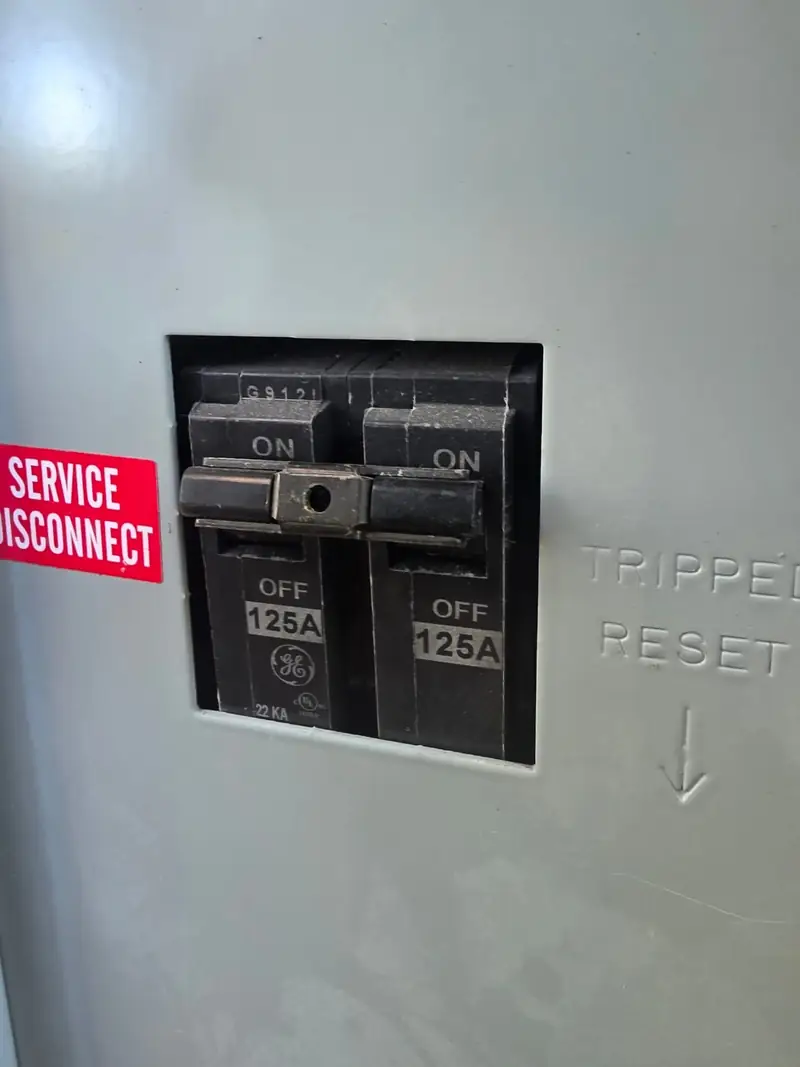
Nobody calls about a breaker because of the breaker. They call because the bedroom outlets are dead again, or the pool equipment quit after a storm. The breaker is the messenger. Thomas Edison Electric traces tripping breakers in Jupiter and across Palm Beach County. Call (561) 462-2800, or request a visit online. Florida Electrical Contractor License EC13015487.
- Licensed & insured
- FL license EC13015487
- Family-owned
- 24/7 emergency service
At a glance
- Stop and call if: you smell burning, see scorching, hear buzzing, or the panel feels warm
- Safe to try once, if none of that is present: unplug everything on the circuit, then push the breaker fully to OFF and back to ON
- Never: tape or wedge a handle on, or swap in a breaker with a higher rating
- Call right away if: half the house is dark and no breaker looks tripped
- Emergency service: available 24/7 at (561) 462-2800
Leave It Off and Call
- A burning or hot plastic smell at the panel, an outlet, or a switch
- A breaker, panel cover, or receptacle that is warm to the touch
- Scorch marks, melted plastic, or brown staining around a device
- Buzzing or crackling from the panel or from inside a wall
- Water that has reached the panel, an outlet, or a fixture
Leave that breaker off and call (561) 462-2800 for 24/7 emergency service.
Start With When It Trips
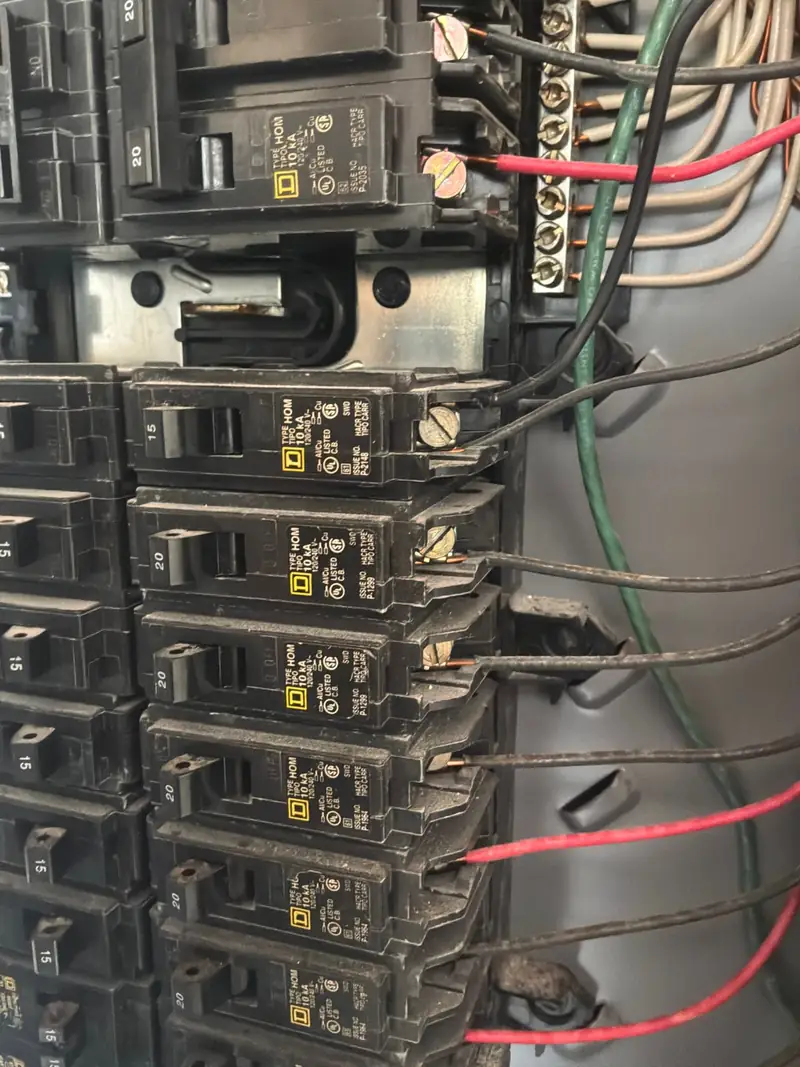
A breaker is a deliberate weak point: it opens before the wire in the wall overheats. What opened it is written in the timing, so start there.
- It lets go the moment you push it back on, with the room emptied out. Nothing you own is doing this. A damaged cable, a hardwired fixture, or the breaker itself has faulted. Leave it off.
- It holds a while, then quits under load. Heat is building, either from a circuit carrying more than it was built for or from a loose terminal warming up. If unplugging one item ends the trips, suspect that appliance.
- It goes after a rain, or the morning after the sprinklers run. Water has found a path out of the circuit. Landscape lighting, lanai boxes, pool equipment and anything mounted on an outside wall come first.
- It trips at odd hours with the house quiet. On an AFCI protected circuit that usually means the device caught arcing at a loose screw or a damaged cord, which NEC Article 210.12 addresses.
If outlets are dead rather than tripping, start with outlet repair. If lights dim and brighten instead, see flickering lights. With no pattern at all, that is what electrical troubleshooting is for.
What the Coast Does to a Circuit
A GFCI compares the current going out with the current coming back, and opens when the two stop matching. When that leakage is small, it is too little for a standard breaker to see, which is why those circuits need a GFCI. NEC Article 210.8 sets out where the protection belongs, and those requirements reach Florida homes through the Florida Building Code, widening with each code cycle.
Close to the water in Jupiter, Juno Beach and North Palm Beach, that leakage often starts as corrosion. Salty, humid air works into outdoor receptacles, pool and spa disconnects and landscape fixtures, and corroded metal makes a comfortable path for current that should stay in the wire. Cracked covers and boxes that never dry out speed it along, one reason pool and spa wiring is its own job.
Storms do the rest. Surge damage is usually partial rather than total, so a weakened breaker or appliance board keeps working for a while before it starts letting go. Whole-house surge protection at the panel is the standard answer, addressed in NEC Article 230.67, and one Jupiter home got grounding and surge work after years of intermittent power.
Age counts too. Homes built in the 1960s and 1970s around West Palm Beach and Lake Worth Beach sometimes have aluminum branch wiring, whose connections loosen as they heat and cool. The result is an AFCI trip, a warm outlet, or a flicker, repaired at the connections or through house rewiring.
The Reset You Should Not Make
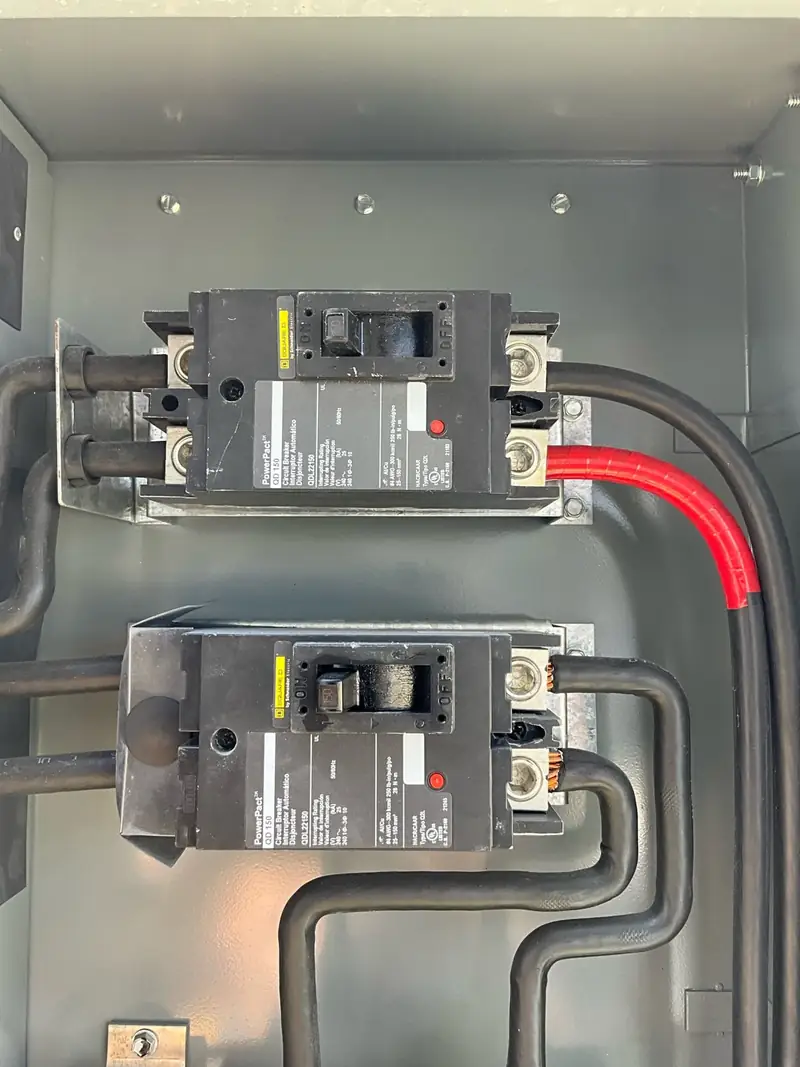
Pushing the handle back on sends full current into whatever just failed. If that is an arcing splice or an overheated terminal inside a wall, every reset reheats the same hidden spot, with nothing to see from the panel while it happens.
So never tape or wedge a handle, and never swap in a breaker with a higher number on it. That number was chosen for the wire behind it, and the wire does not get thicker to match.
When It Is Not the Breaker at All
Your home is fed by two 120-volt legs, with the circuits split between them. Lose one leg and everything on it goes dead while the other half carries on, with no breaker out of place in the panel. The related failure is an open neutral: voltage shifts between the halves, lamps burn bright in one room and dim in another, and electronics can be ruined in minutes.
A fault like that sits at the meter, the main breaker, the service lugs, or on the utility’s side, and resetting will never reach it. Switch off anything with a control board, do not open the panel, and call (561) 462-2800.
The Short List of Safe Checks
- Rule out the warning signs first. If you smell burning, hear buzzing, see scorching, or the breaker or panel feels warm, stop there and call. The cover stays on.
- Then empty the circuit and try one reset. With everything on it unplugged, push the handle firmly all the way to OFF before bringing it back to ON, since many breakers will not reset from the middle. If it holds, bring the load back piece by piece.
- Look for a GFCI that has already tripped. GFCI protection is often shared down a run, so an outlet beside your bed can depend on a device out at the pool equipment or in the garage. Press RESET. If it will not hold, stop.
That is the end of the safe list. One Jupiter call that began with a chirping alarm and a tripping breaker was settled the same day.
What Happens on the Visit
We measure the load the circuit actually carries, because a real overload and a wiring fault are different repairs. Then we divide the circuit to corner the fault, checking terminations, backstabbed connections, shared neutrals and the breaker itself.
If the panel is the real story, that becomes an electrical panel upgrade. If the tripping is one symptom among several, an electrical safety inspection is the better place to start. Either way, you get the finding in plain language and a written quote first.
Photos from our Palm Beach and Treasure Coast jobs
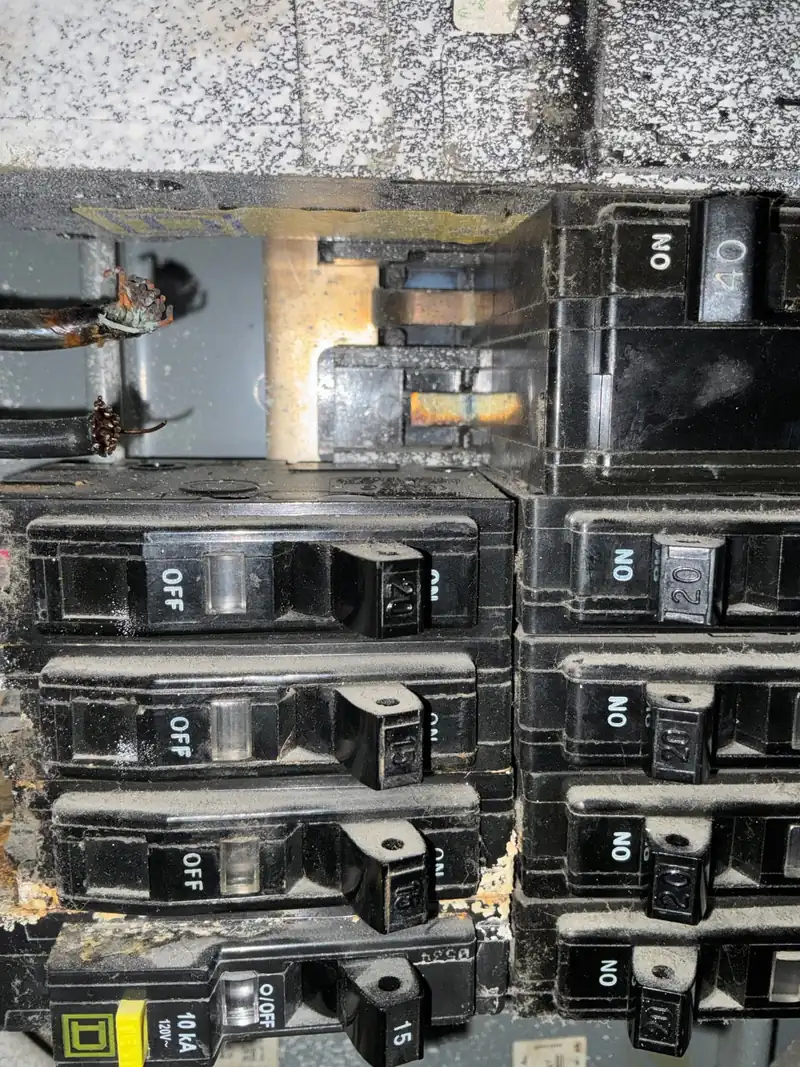
Corroded bus bar, Palm Beach Gardens 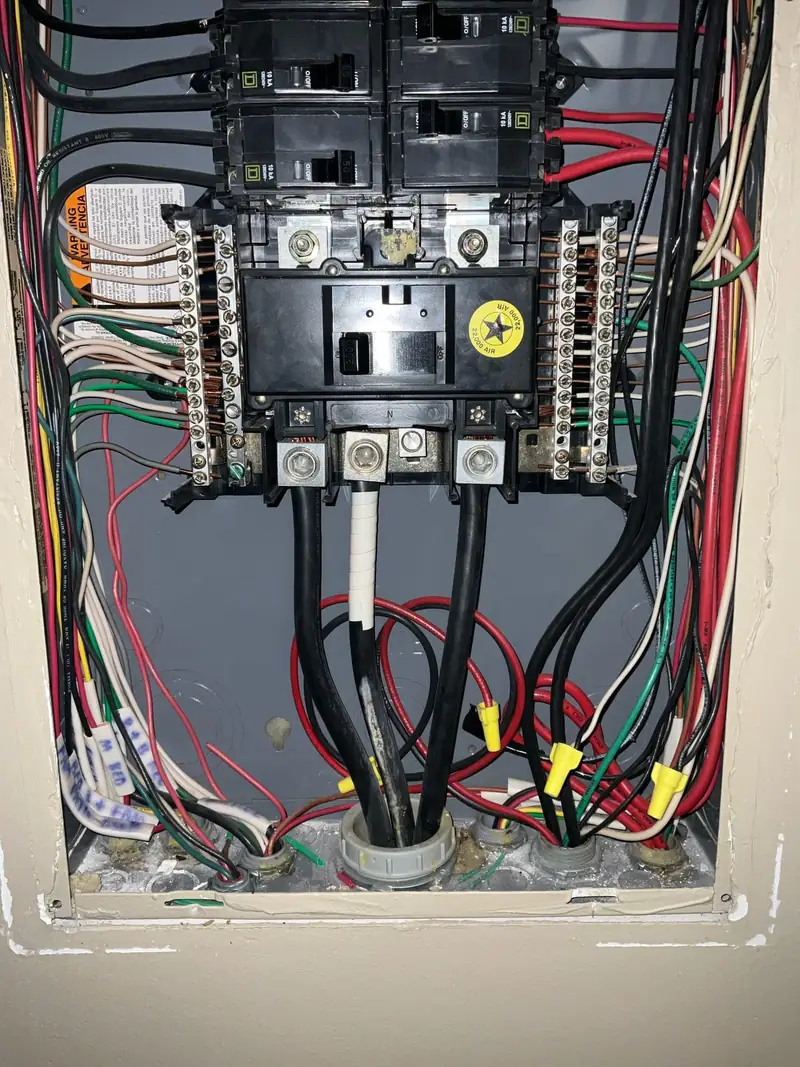
Clean panel interior, Royal Palm Beach 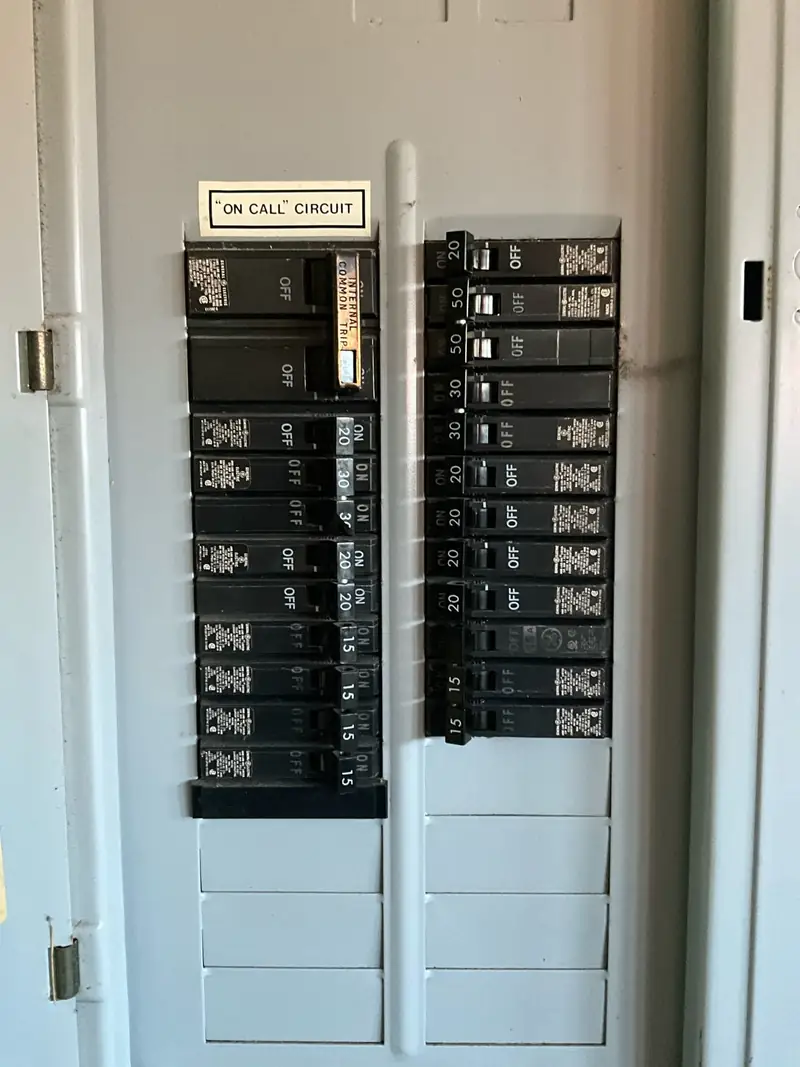
Panel dead front, Boynton Beach
Breaker Questions
Why does my breaker trip when nothing is plugged in?
Because the fault is in the circuit rather than in anything you own: a damaged cable, an overheated connection, a failed fixture, moisture in an outdoor box, or a breaker that has given out.
Is it safe to reset a breaker that keeps tripping?
A single reset with the circuit cleared is reasonable. A second and a third are not, because each one puts power back into whatever is wrong. If it will not hold, you have your answer.
My pool equipment breaker trips after heavy rain. Can it wait until things dry out?
It may reset and run once the sun is back out, then do the same at the next storm. Trips that repeat in one place mean water or corrosion has opened a path out of the circuit, on equipment people stand beside barefoot. Have it traced.
Does salt air really damage breakers and outlets?
It does, and outdoor equipment takes the worst of it. Corrosion adds resistance at contacts and terminals, which means heat, and it gives leakage current somewhere to go. Pool and spa disconnects take it first, then anything mounted on an outside wall.
Get the Circuit Traced
A breaker that keeps letting go is worth a visit before it turns into an emergency. We work out of Jupiter and cover Palm Beach County and the Treasure Coast. Call Thomas Edison Electric at (561) 462-2800, or book online. Florida Electrical Contractor License EC13015487.