
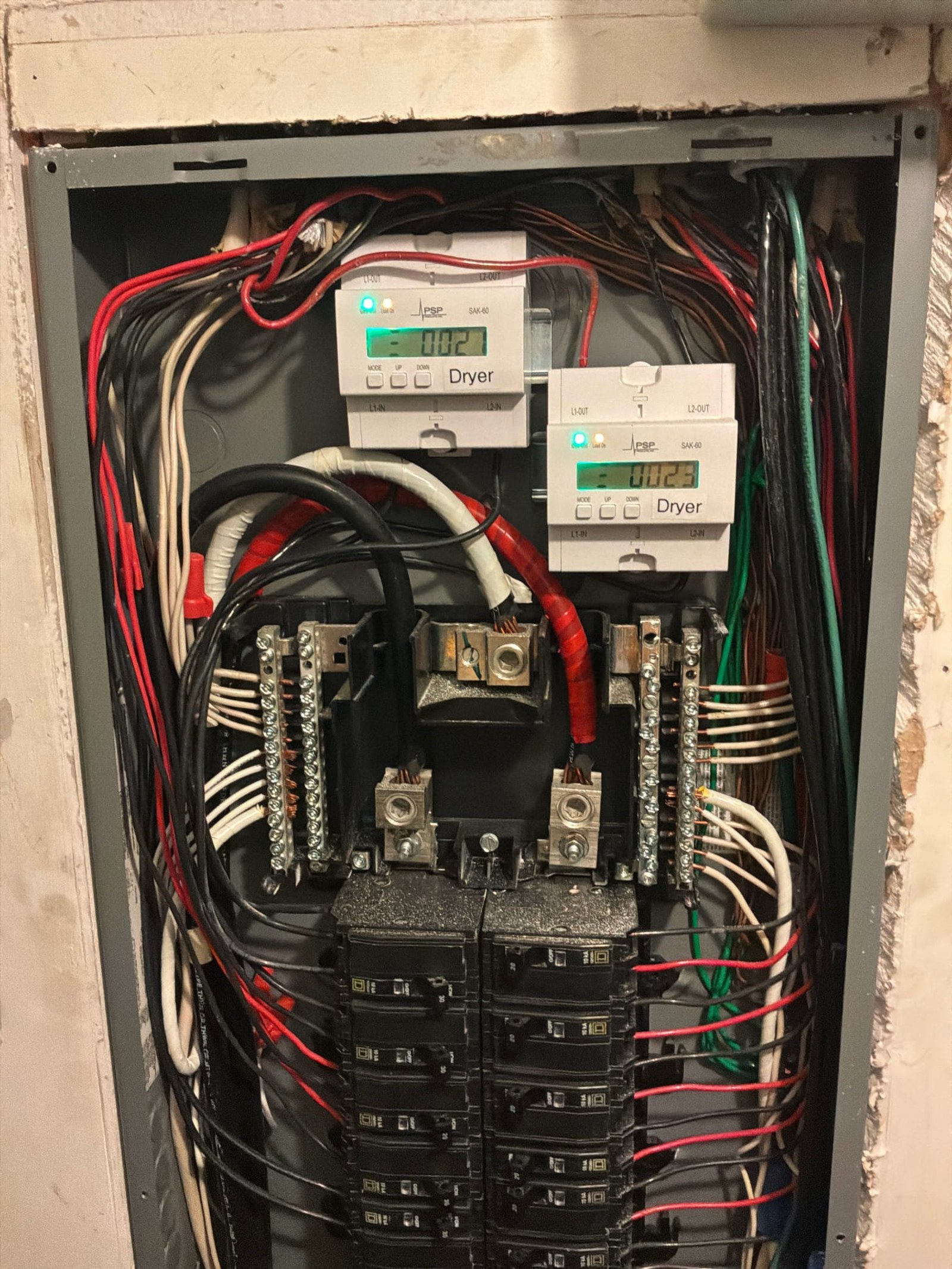
This Palm City panel upgrade case study walks through the real diagnosis, the fix, and the code details from a recent service call. A homeowner in Palm City, FL called about lights going out in the master bedroom and bathroom. When our field team opened the panel, they found corrosion on the terminations, evidence of water finding its way into the enclosure, and a mix of aging breakers that no longer matched the home’s needs. The crew replaced two breakers, added a whole-home surge protector, refreshed a receptacle and switch, and installed five interconnected smart smoke and carbon monoxide detectors.
Customer’s Problem
The homeowner noticed the lights in the master bedroom and bathroom were going out intermittently. The situation called for a same-day appointment, so our team was dispatched promptly to find the source of the problem.
What Our Electrician Found
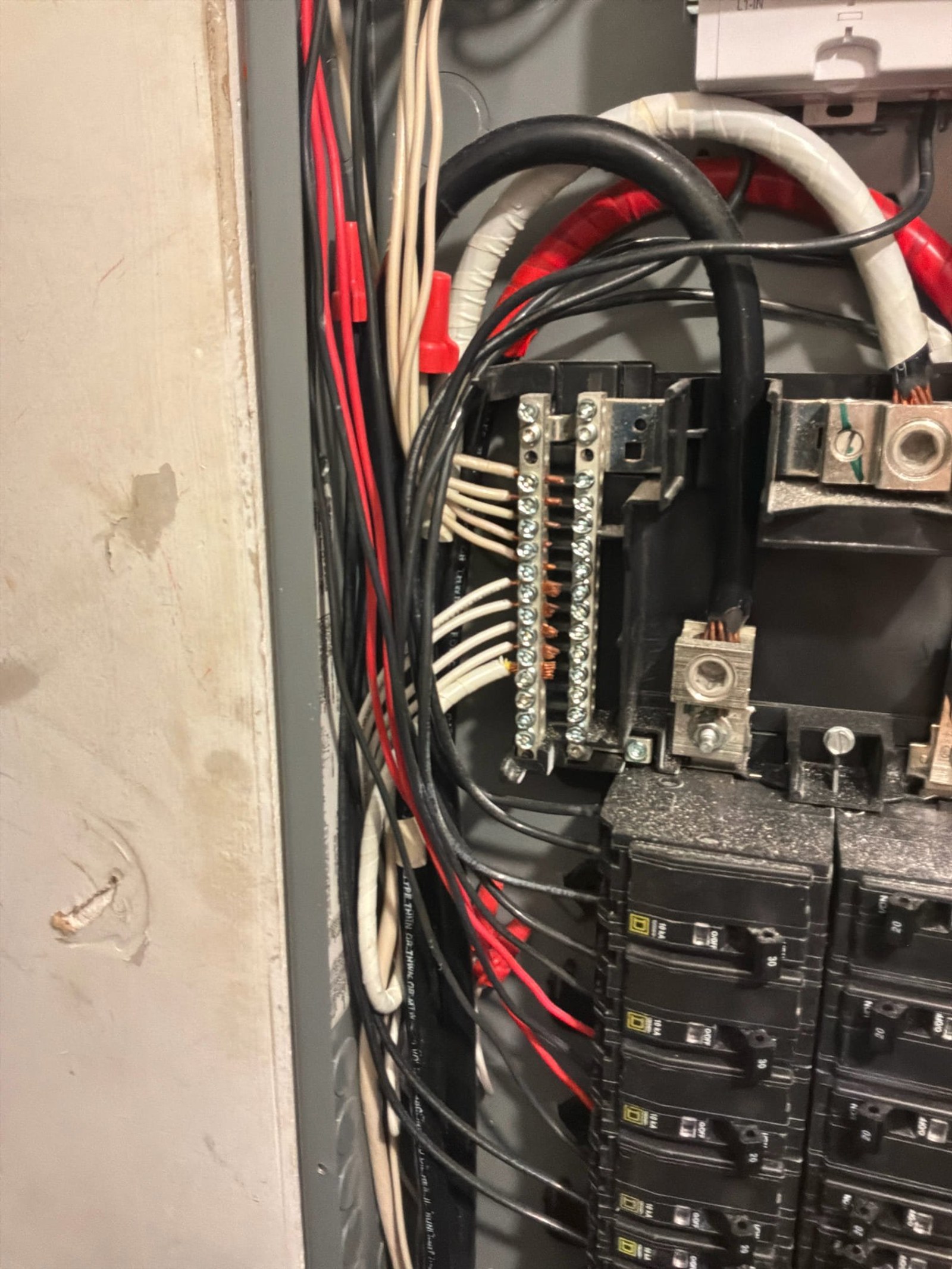
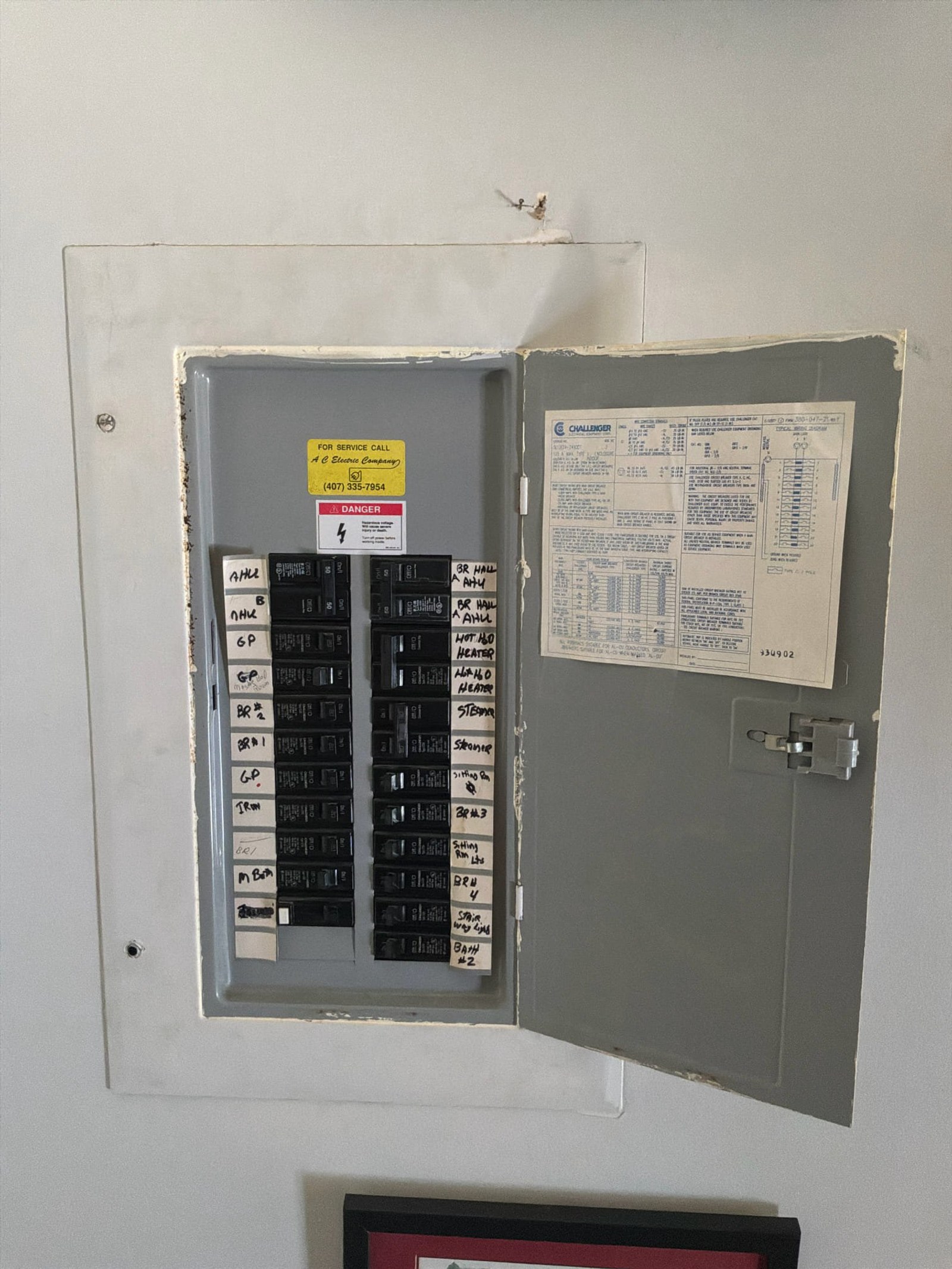
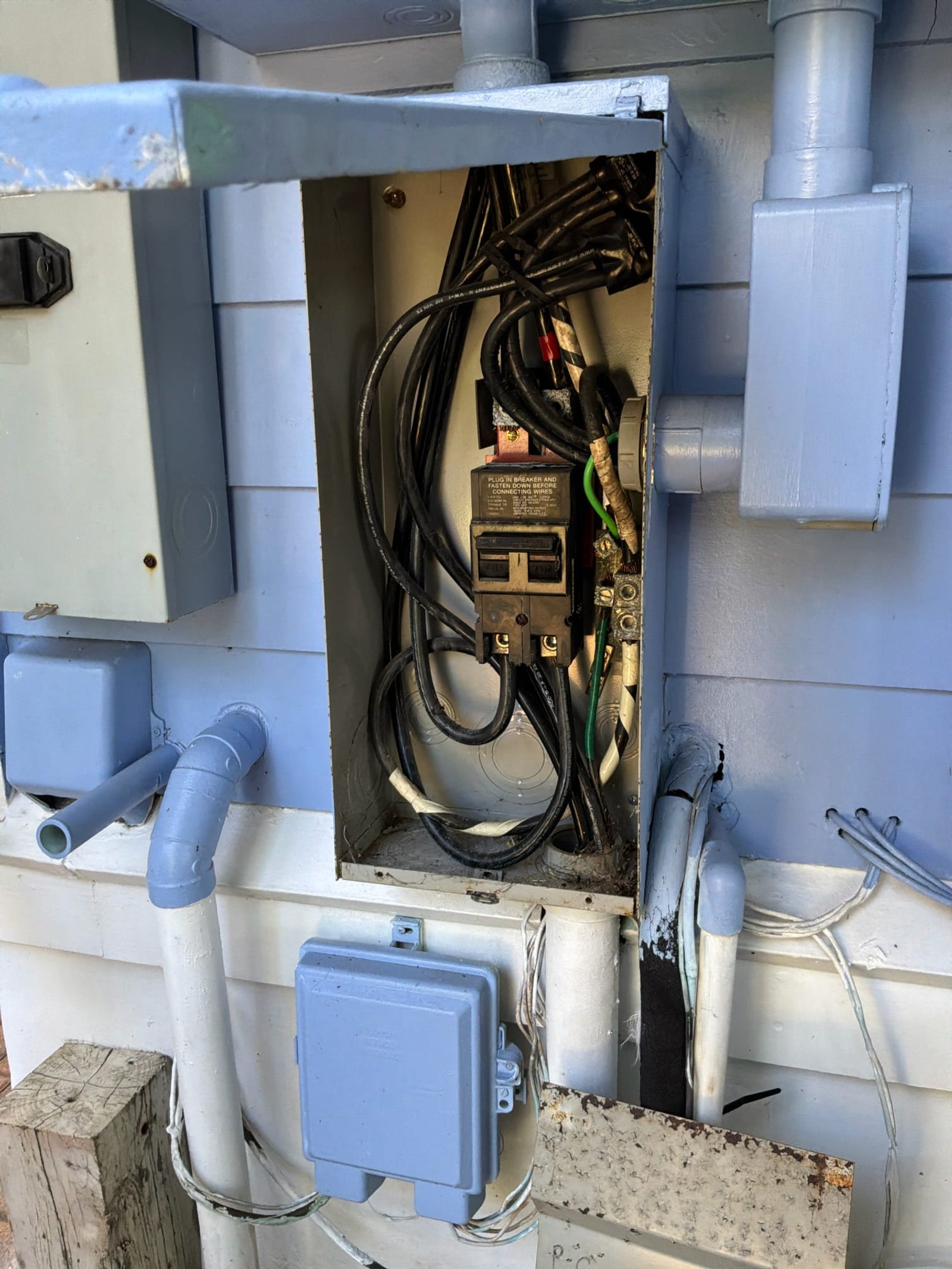
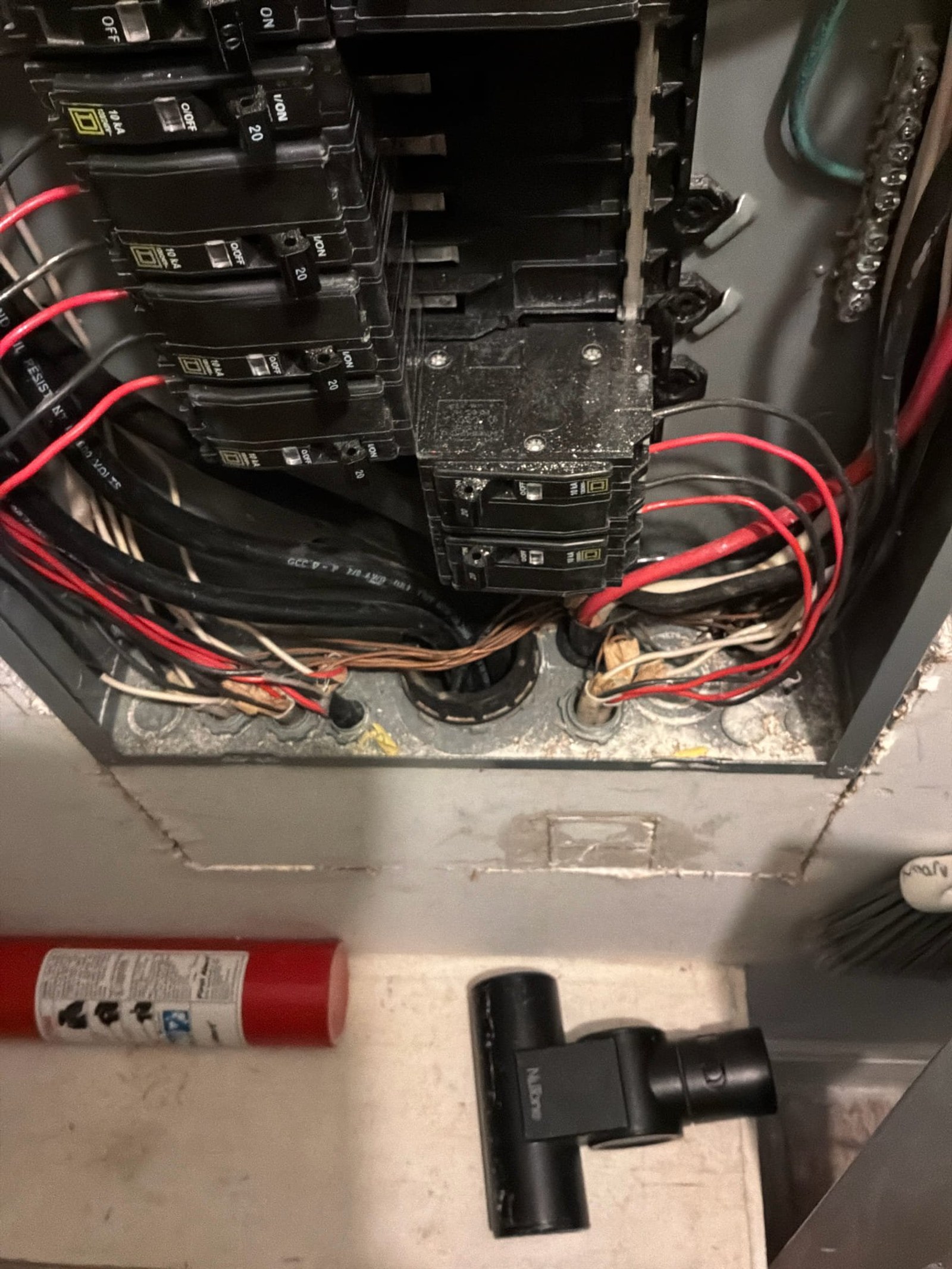
Opening the panel told a clear story. Photos from the visit show a Challenger enclosure with handwritten circuit labels and an old service-call sticker on the deadfront, consistent with DIY workmanship from a previous occupant or owner. Inside, corrosion was visible on the terminations and on the enclosure walls themselves. There was also evidence of water finding its way into the enclosure over time, which had left the weathered interior surfaces and conductors in a condition worth addressing.
The panel interior revealed branch conductors dressed to terminal lugs, including red, black, white, and green conductors, along with a 240-volt circuit for a dryer. Several breakers, including a 15-amp single-pole and a 40-amp two-pole, were due for replacement. A GE THQP 30-amp two-pole breaker was also identified as part of the work scope.
Additionally, a receptacle in the master area needed a new box and device, and a single-pole switch required replacement. None of the five smoke and carbon monoxide detectors in the home were current-generation interconnected units.
Solution Selected
Based on what the field team found, the homeowner chose a comprehensive scope that addressed the immediate lighting issue, modernized the panel’s breaker lineup, added whole-home surge protection, refreshed the affected receptacle and switch, and brought all five smoke and carbon monoxide detectors up to current interconnected smart-detector standards. This scope matched the findings directly and gave the household a clean, reliable starting point.
Work Performed
Our crew completed the following on this visit:
- Breaker replacements: Installed one Square D HomeLine HOM115 single-pole 15-amp breaker and one Square D HomeLine HOM240 two-pole 40-amp breaker, along with one GE THQP 30-amp two-pole breaker, all in the existing panel.
- Whole-home surge protection: Installed a PSP Vortex 120 kA whole-home surge protector on the single-phase residential panel, a plug-on neutral compatible unit that covers the entire electrical system from one point.
- Receptacle and box: Installed a new old-work single-gang box and a 15-amp tamper-resistant single receptacle at the existing location in the master area.
- Switch replacement: Replaced the single-pole Decora switch at the existing location.
- Cord cap: Installed a 15-amp, 125-volt NEMA 5-15P straight-blade plug on an existing cord.
- Smoke and CO detectors: Supplied and installed five 120-volt smart combination smoke and carbon monoxide detectors with interconnect capability and 10-year sealed lithium battery backup throughout the home.
Why Pricing Can Vary
Two homes with the same job on the invoice can land at different totals. On projects like this one, the total is driven by:
- Overhead versus underground service and the length of the run
- Meter can, weatherhead and mast condition
- Conductor size required for the service rating
- Utility disconnect and reconnect scheduling
- Grounding electrode system and bonding corrections
- Permit and inspection requirements in the jurisdiction
- Whether the panel is replaced in the same visit
Why This Palm City Panel Upgrade Matters for Homeowners
Corrosion inside a panel enclosure is a condition worth modernizing, especially when water has found its way in over time. What the photos from this job show is common in Florida homes that have seen years of humidity and weather cycling. Addressing the corroded terminations and replacing aged breakers gives the panel a clean slate and helps the household avoid the kind of intermittent behavior, like lights going out unexpectedly, that brought about this call in the first place.
The PSP Vortex surge protector adds a layer of whole-home protection that current NEC 230.67 now recommends for residential services. For a family in Palm City, where afternoon lightning storms are a regular part of life, that means the refrigerator, air conditioning, televisions, and computers all stay running smoothly through the weather, without anyone needing to think about it.
The five new interconnected smoke and carbon monoxide detectors mean that every room in the home communicates with every other room. If anything changes in one part of the house, the whole home knows at once. Per NFPA 72, interconnected detectors are the recommended standard for residential occupancies. For a household going about its morning routine or sleeping through the night, that kind of quiet coordination is exactly what peace of mind looks like.
Finally, the tamper-resistant receptacle installed in the master area meets current NEC 406.12 requirements for dwelling units, a standard that predates many of the homes in this zip code. Updates like this are a natural opportunity to bring the home in line with what today’s code asks for, so everything works the way the family expects it to, every day.
Code Compliance Cited in This Job
Every fix above maps to a specific section of NEC 2020. Each card links to NFPA’s public NEC index.
Surge Protective Device at Service
NEC 230.67 requires a listed surge protective device (SPD) to be installed at the service equipment of a dwelling unit. On this job, a PSP Vortex 120 kA whole-home surge protector was installed on the single-phase residential panel, satisfying this requirement and providing whole-home protection for the household’s appliances and electronics. NFPA reference ›
AFCI Protection for Dwelling Units
NEC 210.12 requires arc-fault circuit interrupter protection on branch circuits supplying outlets in dwelling unit bedrooms and living areas. The breaker replacements performed on this job, including the Square D HomeLine single-pole 15-amp breaker, were selected to be compatible with the panel’s plug-on neutral design, supporting AFCI-capable configurations in the affected circuits. NFPA reference ›
Tamper-Resistant Receptacles in Dwellings
NEC 406.12 requires tamper-resistant receptacles throughout dwelling units. The 15-amp single receptacle installed at the existing location in the master area is a tamper-resistant, specification-grade device, bringing that outlet into alignment with current code requirements. NFPA reference ›
Electrical Connections
NEC 110.14 addresses the integrity of electrical connections, including proper termination of conductors at terminal lugs. The corrosion visible on the terminations and enclosure interior in the before photos represents a condition worth addressing under this section, and the breaker replacements performed on this job involved fresh, properly terminated connections. NFPA reference ›
Replacement Receptacle Requirements
NEC 406.4(D) specifies that replacement receptacles must meet current code requirements for the location. Installing a tamper-resistant single receptacle at the existing master-area location satisfies this requirement and modernizes that outlet to today’s dwelling-unit standard. NFPA reference ›
Common Questions
Questions homeowners ask after seeing this kind of work.
What causes lights to go out intermittently in a master bedroom or bathroom?
Intermittent lighting in a specific area of the home often points to a loose or worn breaker connection, corrosion at the terminations inside the panel, or a failing breaker that no longer holds a steady circuit. In this Palm City home, the field team found corrosion inside the panel enclosure along with breakers due for replacement, both of which can contribute to the kind of flickering or outage the homeowner described. Replacing the affected breakers and refreshing the terminations restores steady, reliable power to those circuits. If your home is seeing similar symptoms, our team can schedule a same-day inspection to find the source.
What does a whole-home surge protector actually protect in a Florida home?
A whole-home surge protector, like the PSP Vortex 120 kA unit installed on this job, sits at the main panel and intercepts voltage spikes before they travel down the branch circuits to your appliances and electronics. In South Florida, where afternoon and evening lightning storms are common through much of the year, that covers everything from the air conditioning and refrigerator to televisions, computers, and smart-home devices. NEC 230.67 now recommends an SPD at the service equipment of every new dwelling. If your panel doesn’t have one yet, it’s a straightforward addition. Schedule online to get it added.
Why are interconnected smoke and carbon monoxide detectors recommended over standalone units?
Standalone detectors only alert in the room where they are installed. Interconnected detectors, like the five 120-volt smart units installed throughout this Palm City home, communicate with each other so that when one activates, all of them sound. NFPA 72 recommends interconnected detection in residential occupancies so that a household has the maximum amount of time to respond, no matter where in the home an event begins. Ten-year sealed lithium battery backup means the units stay operational even during a power outage. If your home’s detectors are more than 10 years old or are standalone units, our team can book a quick assessment to bring your home up to current standards.
Is corrosion inside a residential electrical panel a condition worth addressing right away?
Yes, it is worth addressing promptly. Corrosion on terminal lugs and enclosure surfaces increases resistance at the connections, which can contribute to intermittent circuit behavior and thermal stress on the conductors over time. When water has found its way into an enclosure, as was visible in the before photos on this job, the condition tends to worsen gradually rather than improve on its own. Refreshing the breakers and connections addresses the immediate symptom and gives the panel a clean starting point. If your panel shows similar signs of moisture or corrosion, our team can schedule a panel inspection to evaluate what’s needed.
How often should a home’s electrical system be inspected?
A yearly inspection is a good baseline for most homes. Homes built before 1990 and homes that have experienced recent storm activity may benefit from inspections more often, since older wiring systems and weather exposure can create conditions that develop gradually between visits. A licensed electrician can check breakers, terminations, panel condition, and detector status in a single visit, so the household stays ahead of any changes. Schedule online to get your annual inspection on the calendar.
Project Photos
Electrician and Technical Reviewer
Work performed by Jared, Thomas Edison Electric field electrician serving Jupiter / West Palm Beach.
Jared, the electrician on this job, is the technical reviewer of record for this case study.
Location
This project was completed in Palm City, Florida, in our Martin County service area.