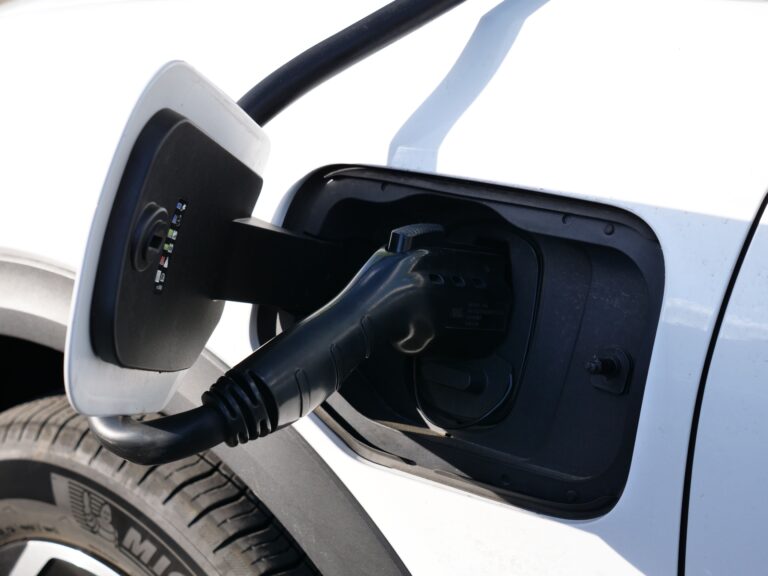
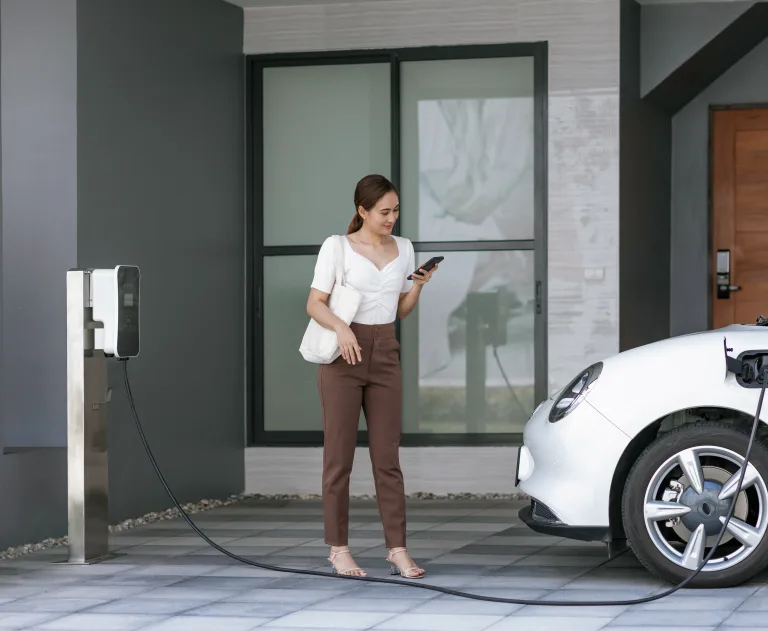
When you’re installing an electric vehicle (EV) charger at home, you have more than one option for connecting the charger to your electrical system. Depending on the equipment, you may be able to use plug-in EV chargers or have the charger hardwired directly into your electrical system.
Both options can work well, but they aren’t interchangeable in every situation. The best choice depends on the charger, your home’s electrical setup, where you plan to install it, and how you want to use your charging equipment.
Here’s what Florida homeowners should know about hardwired and plug-in EV chargers.
What Is a Plug-In EV Charger?
A plug-in EV charger connects to a dedicated electrical outlet rather than being permanently connected to the home’s wiring.
For example, some Level 2 chargers use a plug designed for a properly rated 240-volt outlet. The outlet is connected to a dedicated circuit in the electrical panel, and the charger plugs into it.
One advantage of this setup is flexibility. If you move or replace the charger in the future, you can unplug the equipment without having the hardwired connection disconnected.
However, the outlet and circuit still need to be properly installed and rated for the charger’s electrical requirements. An existing outlet shouldn’t automatically be assumed to be suitable for EV charging.
What Is a Hardwired EV Charger?
A hardwired EV charger is connected directly to the home’s electrical wiring rather than using a plug and receptacle.
The wiring runs from the electrical panel to the charger, where it is connected according to the manufacturer’s installation requirements.
Hardwired installations are common for homeowners who want a permanent charging setup, particularly when the charger will remain in one location.
Because there is no plug and receptacle, the installation can also provide a cleaner appearance.
Hardwired vs. Plug-In EV Chargers
Both options can provide reliable EV charging when installed correctly. The differences come down primarily to installation, flexibility, and the specific equipment being used.
| Plug-In Charger | Hardwired Charger | |
|---|---|---|
| Connection | Plugs into a dedicated outlet | Connected directly to wiring |
| Flexibility | Can be unplugged and replaced more easily | More permanent installation |
| Outlet required | Yes | No |
| Appearance | May have visible plug and cord connection | Typically cleaner appearance |
| Installation | Requires properly rated outlet and circuit | Requires direct electrical connection |
| Portability | Easier to move | Less portable |
| Outdoor installation | Depends on equipment and installation | Often a practical option for permanent installations |
Neither option is universally better. The right choice depends on the circumstances of your home and charger.
What Are the Advantages of a Plug-In EV Charger?
A plug-in charger may make sense if you want some flexibility in the future.
Easier to Replace
If your charger needs to be replaced, a plug-in model can generally be disconnected from the outlet without modifying the hardwired connection.
More Portable
If you move homes or want to take the charger with you, a plug-in model may be easier to relocate.
Easier Access to the Connection
A plug-in setup allows the charger to be disconnected from the electrical system without requiring an electrician to disconnect the wiring.
That doesn’t mean the installation is necessarily simpler, however. A properly rated dedicated circuit and outlet still need to be installed for the charger’s electrical requirements.
What Are the Advantages of Hardwired EV Chargers?
Hardwired installations can be a good choice for homeowners who want a permanent charging station.
Cleaner Installation
Without a large plug and receptacle connection, a hardwired charger can provide a cleaner appearance on a garage or exterior wall.
Fewer Connection Points
A hardwired installation eliminates the plug and receptacle between the charger and the home’s electrical wiring.
Permanent Charging Location
If you know where you want your charger and don’t expect to move it, hardwiring can provide a straightforward long-term setup.
May Be Better Suited to Some Outdoor Installations
Depending on the equipment and manufacturer’s requirements, hardwired charging equipment may be a practical choice for an outdoor installation.
Florida homeowners should make sure any outdoor equipment is specifically designed and approved for the intended environment and installed according to the manufacturer’s instructions.
Is a Plug-In EV Charger Less Safe Than a Hardwired Charger?
Not necessarily.
A properly installed plug-in EV charger can be safe and reliable. However, the outlet, wiring, circuit, and breaker all need to be appropriately sized for the charger’s electrical load.
EV charging can place a significant continuous demand on an electrical circuit. A loose connection, damaged outlet, improperly sized wiring, or unsuitable circuit can create problems regardless of whether the charger itself is plug-in or hardwired.
Professional installation helps ensure the entire charging circuit is appropriate for the equipment.
Can I Use an Existing 240-Volt Outlet?
Possibly, but don’t assume that an existing outlet is automatically suitable for EV charging.
The outlet, wiring, circuit breaker, and electrical panel all need to be evaluated against the charger’s requirements. The circuit also needs to be appropriate for the continuous load associated with EV charging.
If you already have a 240-volt outlet in your garage, an electrician can determine whether it is suitable for the charger you plan to use.
If it isn’t, a new dedicated circuit or other electrical work may be necessary.
Which Option Is Better for Outdoor EV Chargers?
Both hardwired and plug-in chargers can potentially be used outdoors, depending on the equipment and installation.
Outdoor charging in Florida comes with additional considerations, including exposure to rain, humidity, heat, and storms. The charger, electrical connections, and installation method all need to be appropriate for the location.
For a permanent outdoor charging station, a hardwired installation may provide a clean and practical solution. However, the specific charger and manufacturer’s requirements should determine the appropriate installation method.
Does a Hardwired Charger Charge Faster?
Not automatically.
Charging speed is primarily determined by the charger’s power output, the vehicle’s charging capabilities, and the electrical circuit supplying the charger.
Choosing a hardwired connection doesn’t inherently make an EV charge faster than a plug-in charger.
However, some higher-powered EV chargers may require a hardwired installation rather than a plug-in connection. In those cases, the charger’s specifications, not simply a preference for one installation method, will determine the appropriate setup.
Which EV Charger Installation Is Right for Your Home?
A plug-in charger may be a good choice if you:
- Want the ability to disconnect or move the charger.
- Prefer a more flexible installation.
- Have a suitable dedicated 240-volt circuit and outlet.
- Are using equipment designed for a plug-in connection.
A hardwired charger may be a better choice if you:
- Want a permanent charging station.
- Prefer a cleaner installation.
- Are installing the charger outdoors.
- Are using equipment that requires hardwiring.
- Don’t expect to move the charger.
If you’re unsure which option makes sense, an electrician can evaluate your home and the charger you’re considering before installation.
Get Professional EV Chargers Installed in Florida
Choosing between a hardwired and plug-in EV charger is only one part of planning a home charging installation. The electrical circuit, panel, wiring, charger specifications, and installation location all need to work together.
Thomas Edison Electric can evaluate your home’s electrical system, help determine the appropriate installation method, and install your EV charger according to applicable electrical requirements and manufacturer specifications.
Whether you choose a hardwired or plug-in setup, professional installation can help ensure your EV charger is ready for reliable use.