
This West Palm Beach electrical repair case study walks through the real diagnosis, the fix, and the code details from a recent service call. A homeowner in Stuart, FL had just moved in when she realized that none of the ceiling fans throughout the home were working. Our field team visited, traced the issue to an incompatible aftermarket control system, and installed four client-supplied fans while completing a full visual safety inspection of the electrical system.
The Problem
Settling into a new home should feel exciting, not frustrating. For this homeowner, every ceiling fan in the house was unresponsive, and she wasn’t sure whether they could be repaired or simply needed to be replaced.
“Multiple ceiling fans don’t work throughout the home. The previous owner installed an aftermarket controller for them. I need to know if they can be fixed or if they need to be replaced.”
The previous owner had added a third-party wireless control system to the fans. Unfortunately, that system was not compatible with the fans it was controlling, leaving every fan in the home non-functional when the new owner moved in.
Investigation
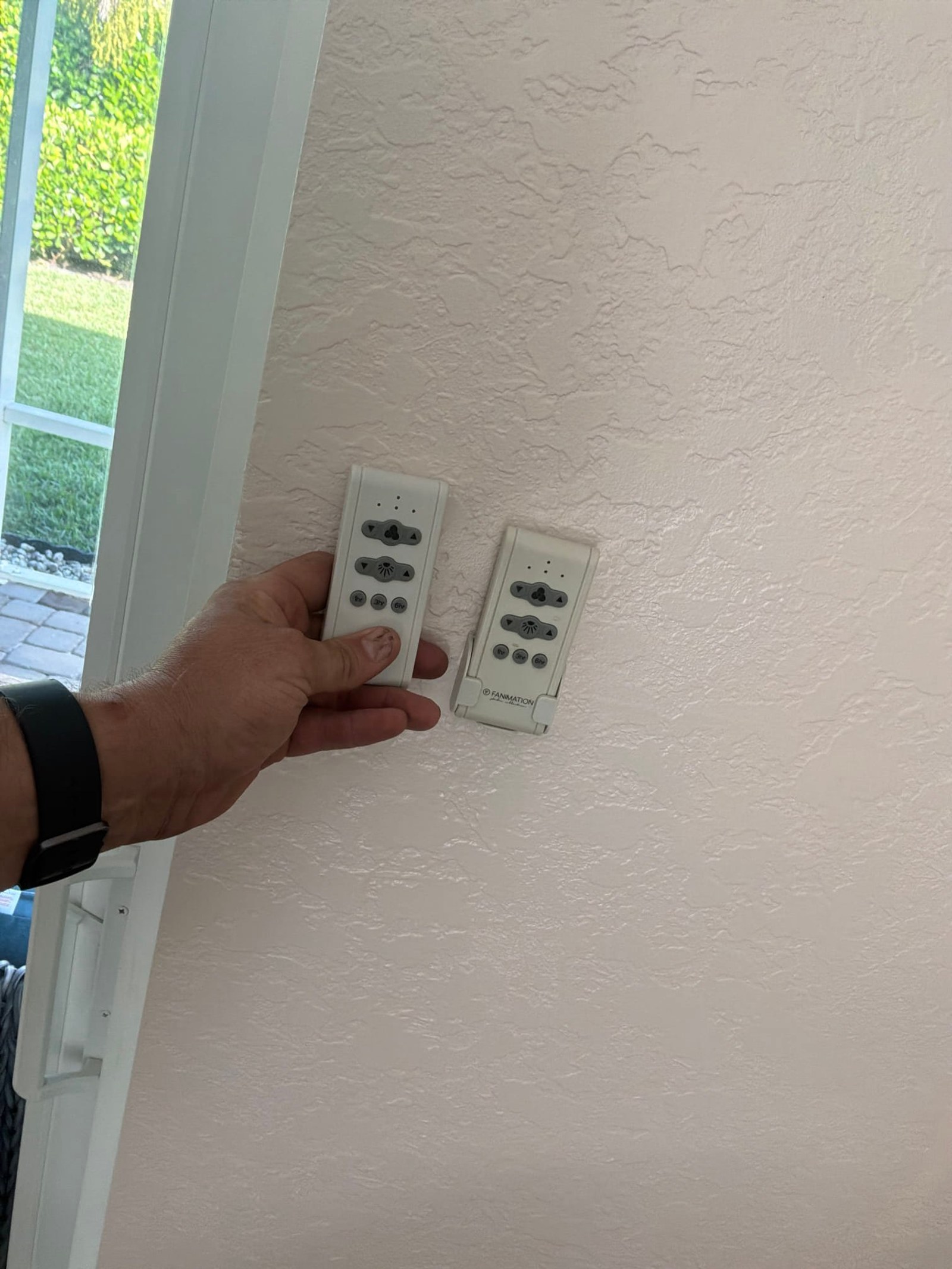
When our field team arrived, a quick look at the wall controls told most of the story. Two Fanmotion wireless remote switches were mounted on an interior wall, a recognizable brand in the aftermarket fan-control space. These three-way-style switches were wired into locations where the original fan controls had been, and they were simply not communicating properly with the installed fans.
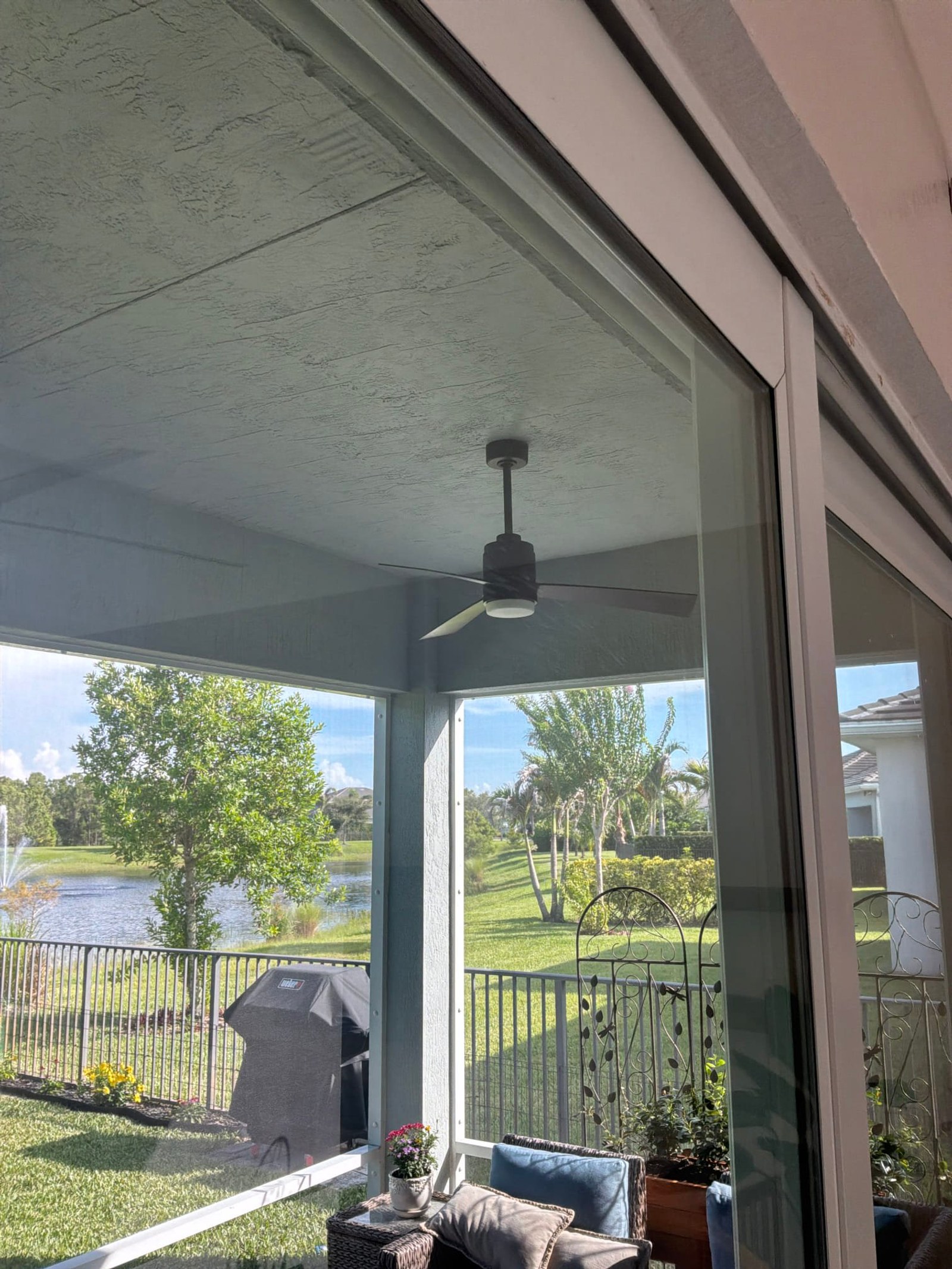
Outside on the covered patio, a black ceiling fan served the outdoor living area overlooking the landscape, and it shared the same problem. None of the four fans throughout the home would respond reliably to the existing control hardware.
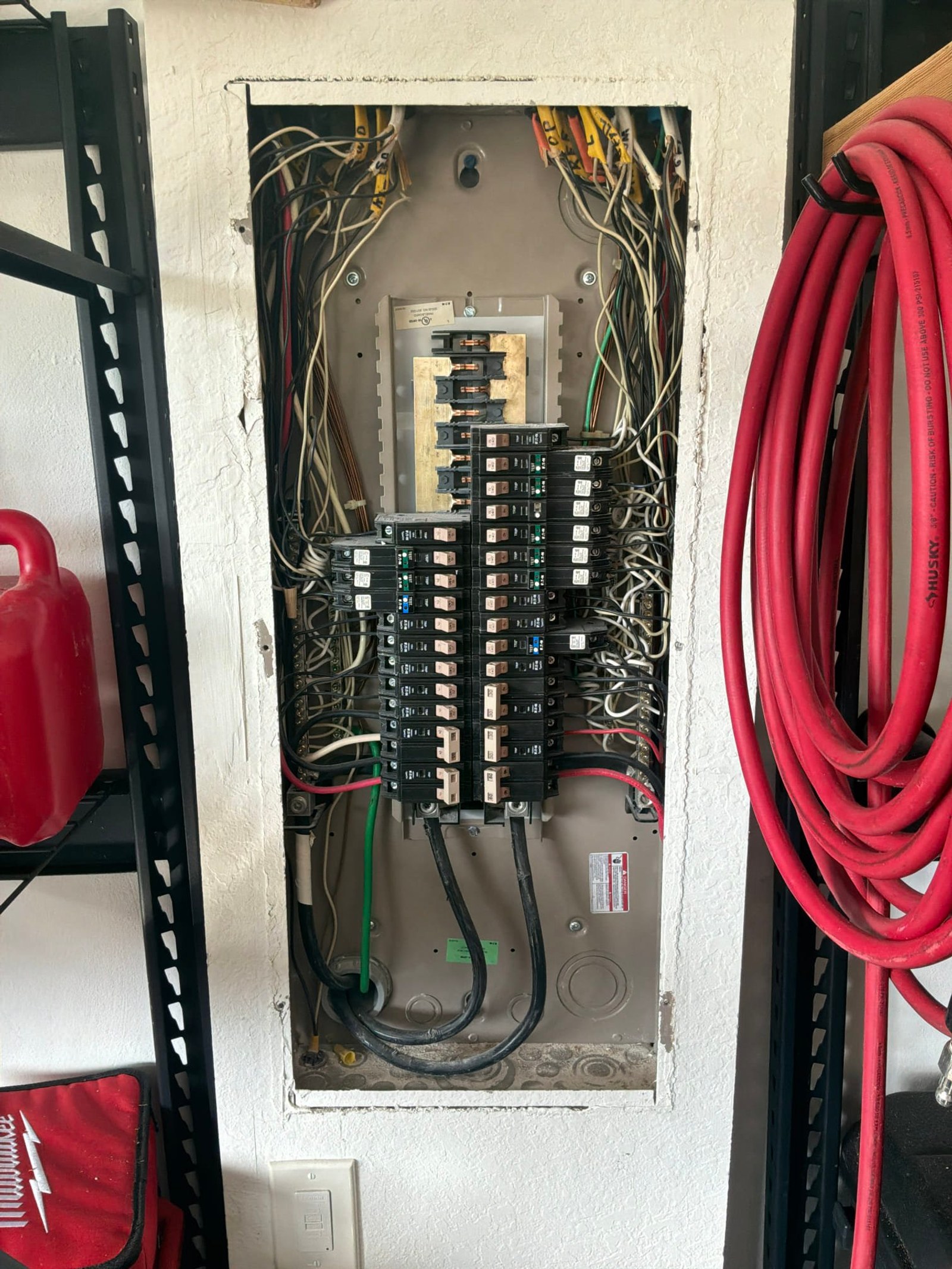
As part of every visit, our team also completed a full visual safety inspection of the home’s electrical system. The 200-amp Eaton CH tan-handle panel was reviewed and showed organized conductor routing, with red, green, and yellow conductors routed neatly through the enclosure. The nameplate was visible and the breakers showed no signs of corrosion or burning. Nearly every inspection point passed, which gave the new homeowner a confident picture of her home’s electrical baseline.
Two items came back as opportunities worth noting: no whole-home surge protection was present, and there was no standby generator or prewire for one. Neither condition affects daily function right now, but both are worth keeping in mind as the homeowner settles in and plans future improvements.
What We Fixed
Fan Replacement Throughout the Home
Rather than troubleshoot an incompatible control system piece by piece, the most reliable path forward was to install the four new fans the homeowner had already purchased. Our team removed the non-functioning units and installed all four client-supplied fans at their existing ceiling locations. The covered patio fan was among those replaced, restoring airflow to the outdoor living area as well.
With the new fans in place and connected directly to the existing wiring, every fan operates as expected. The homeowner now has reliable, consistent airflow in each room from day one in her new home.
Inspection Findings Shared Clearly
Beyond the fan work, our team walked the homeowner through the full inspection results. The panel, grounding system, GFCI coverage, smoke and carbon monoxide detectors, outlets, and breakers all passed review. The two flagged items, surge protection and generator readiness, were explained as upgrades to consider rather than immediate concerns. That kind of clear handoff helps a new homeowner understand exactly where her home stands.
Why This West Palm Beach Electrical Repair Matters for Homeowners
Moving into a home that someone else wired and configured can feel like opening a box you didn’t pack. Aftermarket additions, like a wireless fan control system installed by a previous owner, may work perfectly in some setups and fail entirely in others. When our team identifies the mismatch quickly, the family can move forward with confidence instead of wondering what else might not work.
For this household, four fans that had been collecting dust since move-in are now running smoothly. On warm Florida evenings, the covered patio fan makes outdoor time genuinely comfortable again. That kind of everyday reliability is exactly what a new home should feel like.
The whole-home inspection also gives this homeowner a clean starting point. She now knows her 200-amp Eaton CH panel is in good shape, her GFCI and AFCI protection is solid, and her detectors are up to code. The two items that came back flagged, surge protection and generator prewire, are documented so she can plan for them on her own timeline, without any guesswork about what the home still needs.
Adding whole-home surge protection in the future would be a natural next step. A properly installed Type 2 surge protective device at the service panel, as outlined under NEC 230.67, means the family’s appliances, electronics, and AC equipment ride through Florida’s storm season without skipping a beat.
Code Compliance Cited in This Job
Every fix above maps to a specific section of NEC 2020. Each card links to NFPA’s public NEC index.
Surge Protective Device at Service
The inspection found no whole-home surge protection present at this Stuart home. NEC 230.67 requires a listed surge protective device (SPD) at the service for new or upgraded dwelling-unit services. Adding one in the future would protect the home’s appliances and electronics from the voltage transients common during Florida storm season. NFPA reference ›
Replacement Receptacle Requirements
When receptacles are replaced in a dwelling, NEC 406.4(D) requires the new device to meet current code requirements, including GFCI protection where applicable. The inspection confirmed GFCI protection is already present in all required areas of this home, so no remediation was needed on this visit. NFPA reference ›
Tamper-Resistant Receptacles
NEC 406.12 requires tamper-resistant receptacles in all dwelling unit areas. The inspection confirmed that tamper-resistant outlets are in place throughout this Stuart home, which is consistent with current code and gives the household an added layer of protection. NFPA reference ›
Circuit Directory and Identification
NEC 408.4 requires that every circuit in a panelboard be legibly identified as to its purpose or the equipment it serves. The inspection of the Eaton CH panel at this home showed the nameplate and circuit labeling were visible and in order, making future service and troubleshooting straightforward. NFPA reference ›
Common Questions
Questions homeowners ask after seeing this kind of work.
Why would ceiling fans stop working after a previous owner installs an aftermarket controller?
Many aftermarket wireless fan controls use proprietary radio frequencies or wiring configurations that are not universally compatible with every fan model. When a previous owner installs one without confirming compatibility, the fans can become unresponsive entirely, as happened in this Stuart home. The most reliable fix is usually to replace either the control system or the fans with a matched set. If your fans stopped working after a control upgrade, our team can sort out the cause quickly. Schedule online and we will get you back to comfortable airflow.
How often should I have my home’s electrical system inspected?
A yearly inspection is a good baseline for most homeowners, and it is especially valuable when you have just moved into a home someone else wired and updated over the years. Homes built before 1990 and homes that have been through recent storm seasons may benefit from inspections more frequently. A visual safety inspection gives you a clear picture of what is working well and what is worth planning to modernize. Schedule online to book your annual review.
What is whole-home surge protection, and does my Florida home need it?
A whole-home surge protective device (SPD) installs at your main service panel and clamps voltage spikes before they can travel to your appliances, AC equipment, and electronics. Florida’s lightning activity makes this one of the most practical upgrades a homeowner can add. NEC 230.67 now requires it on new and upgraded services, and it is straightforward to add to an existing panel like the Eaton CH system in this Stuart home. Interested in adding one? Schedule online and our team can walk you through the options.
Can I supply my own ceiling fans and have a licensed electrician install them?
Yes. Many homeowners purchase fans they love and bring them to us for professional installation, which is exactly what happened in this Stuart job. Our team installed four client-supplied fans at existing ceiling locations, ensuring correct wiring, secure mounting, and proper balance. If you have fans sitting in boxes and want them hung correctly, schedule online and we will take it from there.
What should I check electrically when moving into a home in Florida?
When you move into a home in Florida, a full visual safety inspection is one of the best first steps. Key areas include the service panel condition and labeling, GFCI and AFCI coverage, smoke and carbon monoxide detector placement, and whether whole-home surge protection is present. This Stuart homeowner took exactly that approach on her first visit and walked away with a clear, confident baseline for her new home. Schedule online and our team can do the same for you.
Want to see more real jobs like this one? Browse our completed case studies or explore our services.