
This Lake Park outlet repair case study walks through the real diagnosis, the fix, and the code details from a recent service call. When a resident in Lake Park, FL wanted to rearrange furniture in a four-bedroom apartment, the existing outlet positions simply did not line up with the new layout. Our field team came out to assess the locations, evaluate the branch circuits involved, and relocate the receptacles so the space could function exactly the way the homeowner envisioned.
The Problem
The request was straightforward: outlets in their current positions were no longer practical after a furniture refresh. Extension cords were the only workaround, and the homeowner wanted a cleaner, more functional solution.
“I just need the outlets moved to new spots so they actually work with how I have the furniture set up now.”
Investigation
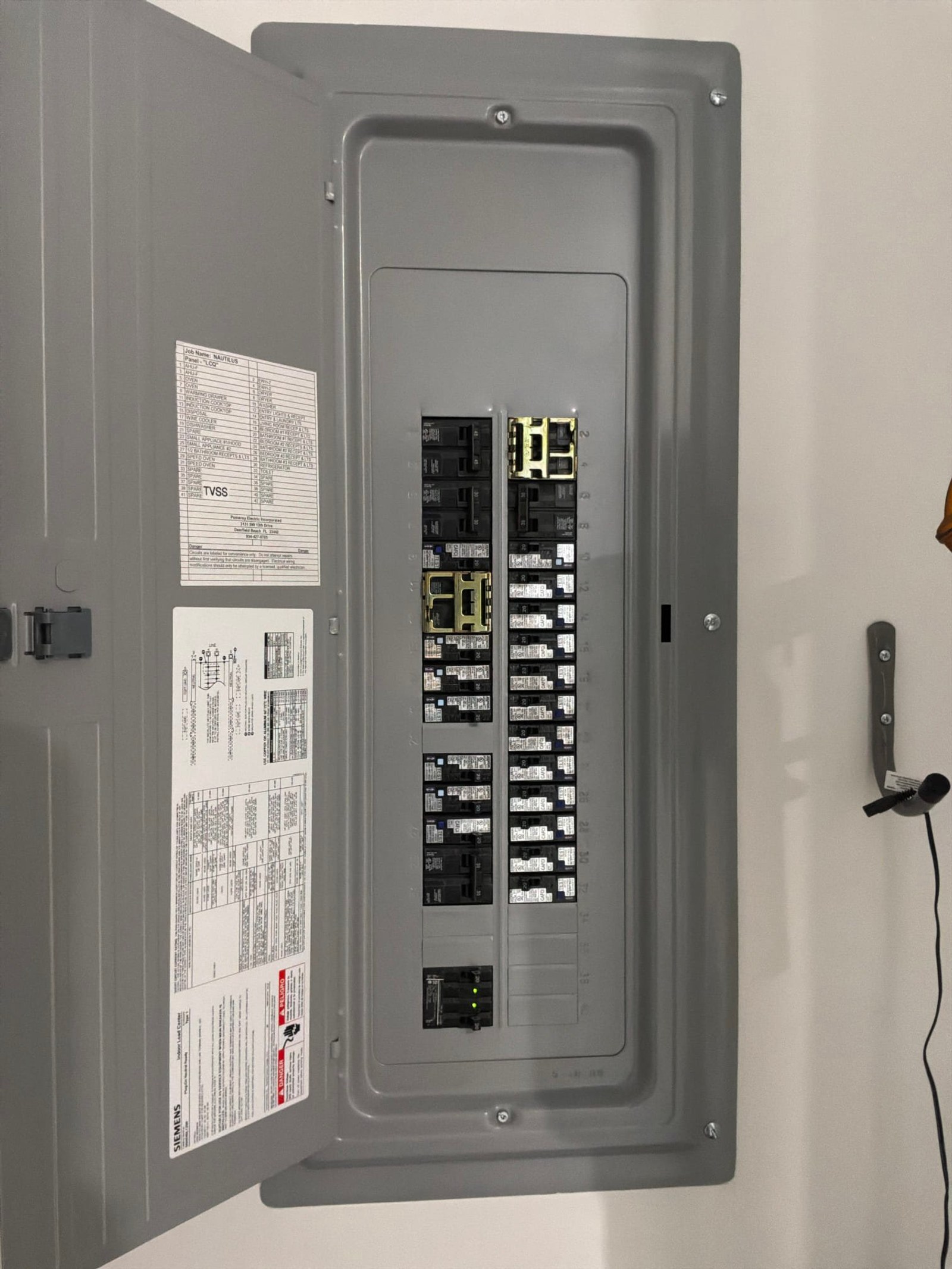
Our technician on-site started by reviewing the panel before touching any branch circuits. With the dead front removed, the interior showed branch conductors routed to a neutral bar, and breaker toggles organized across the load center. The nameplate and the layout of branch conductors gave the team a clear picture of which circuits served each room before any relocation work began.
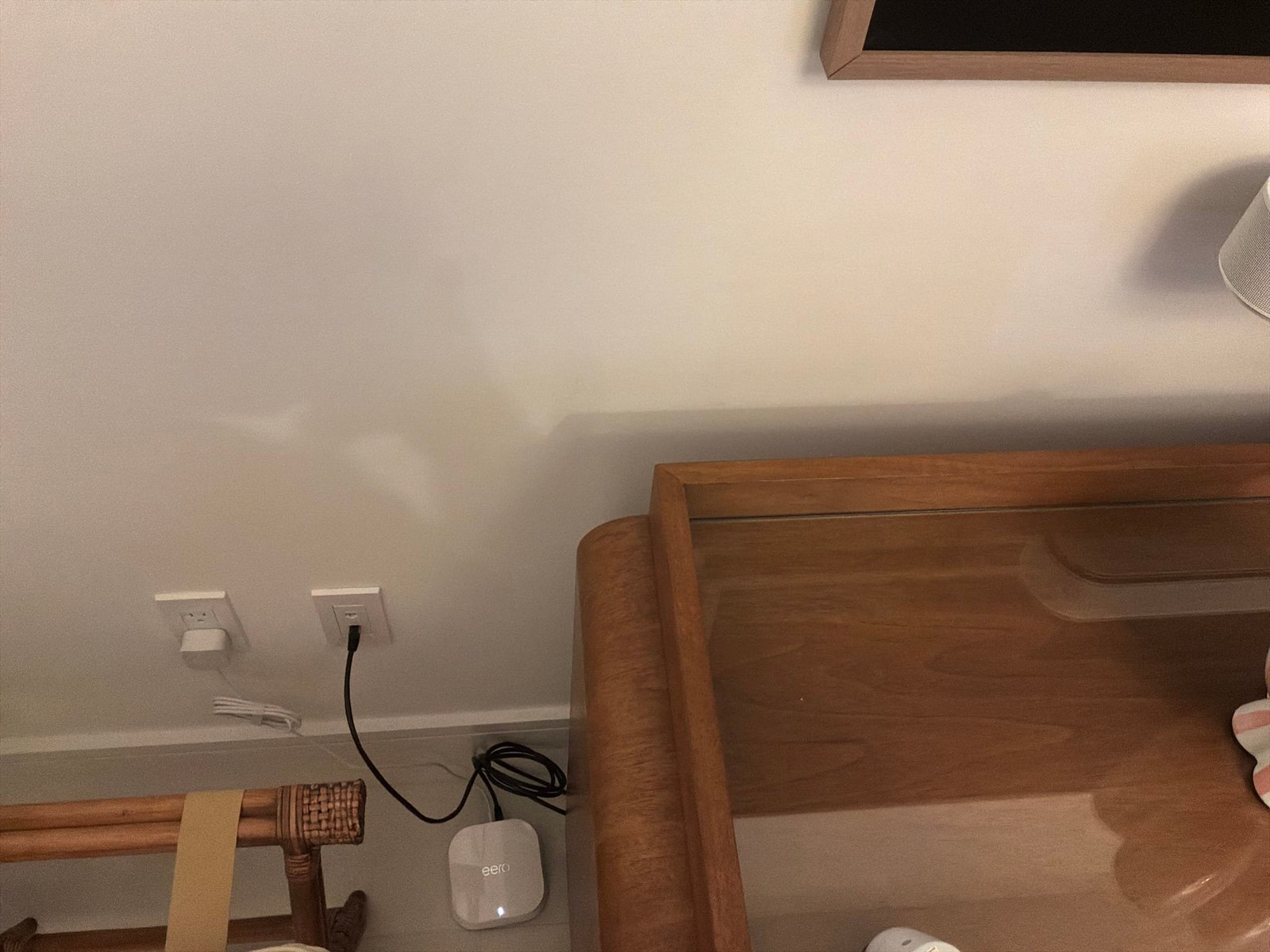
At the wall, the existing white receptacles were standard interior-wall units with white wall plates, mounted in drywall boxes. The team checked the outlet positions against the homeowner’s planned furniture arrangement, confirmed the circuit routing, and mapped out where the new box locations would land.
For an apartment setting like this one, outlet placement is guided by NEC 210.52, which sets spacing requirements so that no point along any wall is more than six feet from a receptacle. Relocating outlets is a good opportunity to verify those spacing standards are met in the new configuration.
What We Fixed
The crew relocated the outlets to the positions the homeowner selected. Each new box was set into the drywall at the correct depth, the branch conductors were re-routed to the updated locations, and white receptacles with matching white wall plates were installed to keep the finished look consistent with the rest of the apartment.
Additionally, the team confirmed that replacement receptacles met NEC 406.4(D) requirements, which means any outlet replaced in an existing dwelling must meet current standards for the location, including tamper-resistant protection where required by NEC 406.12.
With the outlets in their new spots, the furniture layout the homeowner planned could finally come together without workarounds.
Why This Lake Park Outlet Repair Matters for Homeowners
Outlet placement is easy to overlook until a furniture rearrangement makes it impossible to ignore. Extension cords run across walking paths are a nuisance, and relying on power strips tucked behind sofas is not a long-term solution. Moving the outlets to where the household actually needs them means the family can enjoy the space comfortably, without cords dictating where the couch or the bed can go.
For apartment residents specifically, a clean outlet relocation also means no visible surface wiring and no modifications that would raise concerns at move-out. The work is done inside the wall, with finished plates that match the existing interior.
Furthermore, any time outlets are touched during a relocation project, it is a natural moment to confirm they meet current placement and protection standards. That kind of routine modernization keeps the home running the way you expect it to, quietly and reliably, through everyday life and beyond.
Code Compliance Cited in This Job
Every fix above maps to a specific section of NEC 2020. Each card links to NFPA’s public NEC index.
Receptacle Outlet Locations in Dwellings
NEC 210.52 requires that no point along any wall in a dwelling unit be more than six feet from a receptacle outlet. When outlets are relocated to accommodate a new furniture layout, the team confirmed the updated positions still satisfy this spacing requirement so the apartment meets current placement standards. NFPA reference ›
Replacement Receptacles
NEC 406.4(D) states that when a receptacle is replaced in an existing dwelling, it must comply with current code requirements for that location. This job provided a practical opportunity to verify that the relocated outlets met up-to-date standards rather than simply carrying forward the prior installation as-is. NFPA reference ›
Tamper-Resistant Receptacles
NEC 406.12 requires tamper-resistant receptacles in all dwelling unit areas. Because the outlets were being relocated and new receptacles were installed, the team ensured the replacements met this requirement, which is particularly relevant in a multi-bedroom residential unit. NFPA reference ›
Common Questions
Questions homeowners ask after seeing this kind of work.
Can outlets be moved to any location on a wall, or are there code limits on placement?
NEC 210.52 sets spacing rules so that no point along a wall is more than six feet from an outlet. That means there is flexibility in choosing new positions, but the final layout still needs to meet that spacing standard. Our team maps the new locations against those requirements before any work begins. If you are planning a furniture rearrangement and want to know what is possible, schedule an assessment online and we can walk through your options.
Do I need a permit to move outlets in my apartment?
Permit requirements vary by municipality and building type. In Palm Beach County, even straightforward outlet relocations inside a dwelling unit may require a permit depending on the scope of work and whether the building is governed by a condo or apartment association. Our team can advise on what applies to your specific situation. Book a consultation online and we will help you understand what the local process looks like before work starts.
How long does it take to relocate a few outlets?
For a standard outlet relocation in an existing drywall interior, most moves take one to two hours per outlet, depending on how far the new position is from the original box and how the branch circuit is routed inside the wall. A cluster of outlets in the same room can often be handled in a single visit. Schedule online and our team can give you a realistic time estimate based on your layout.
How often should I have my electrical system inspected?
A yearly inspection is a good baseline for most homes and apartments. Older residences built before 1990 and any property that has been through a recent storm season can benefit from inspections more frequently than once a year. Routine check-ins catch small items before they become bigger projects and keep everything running smoothly for the whole household. Book a safety inspection online to get on the calendar.
Does moving an outlet mean I have to patch and repaint my wall?
The original box location will leave a hole that needs to be patched once the outlet is capped or removed. Our crew closes up the old opening cleanly, but finish painting to match the existing wall color is typically handled by the homeowner or a separate contractor. For many clients, the patch is a small trade-off for having outlets exactly where the room needs them. Schedule the electrical work online and we can talk through what the finished result will look like.
Want to see more real jobs like this one? Browse our completed case studies or explore our services.