
This Greenacres EV charger installation case study walks through the real diagnosis, the fix, and the code details from a recent service call. A homeowner in Greenacres, FL wanted to start their new-construction home off right: with a dedicated EV charging station already in the garage before the first car arrived. Our field team visited the property, reviewed the panel layout, and noted a condition at the exterior service disconnect worth keeping an eye on as the project moved forward.
The Problem
The homeowner had just moved into a brand-new home and wanted an EV charger installed in the garage from day one. Rather than rely on a standard 120V outlet and slow overnight charging, they wanted a proper Level 2 charging circuit built in while the project was still clean and straightforward.
“We just moved in and want to do this the right way from the start. A dedicated EV charger in the garage would make daily life so much easier.”
Investigation
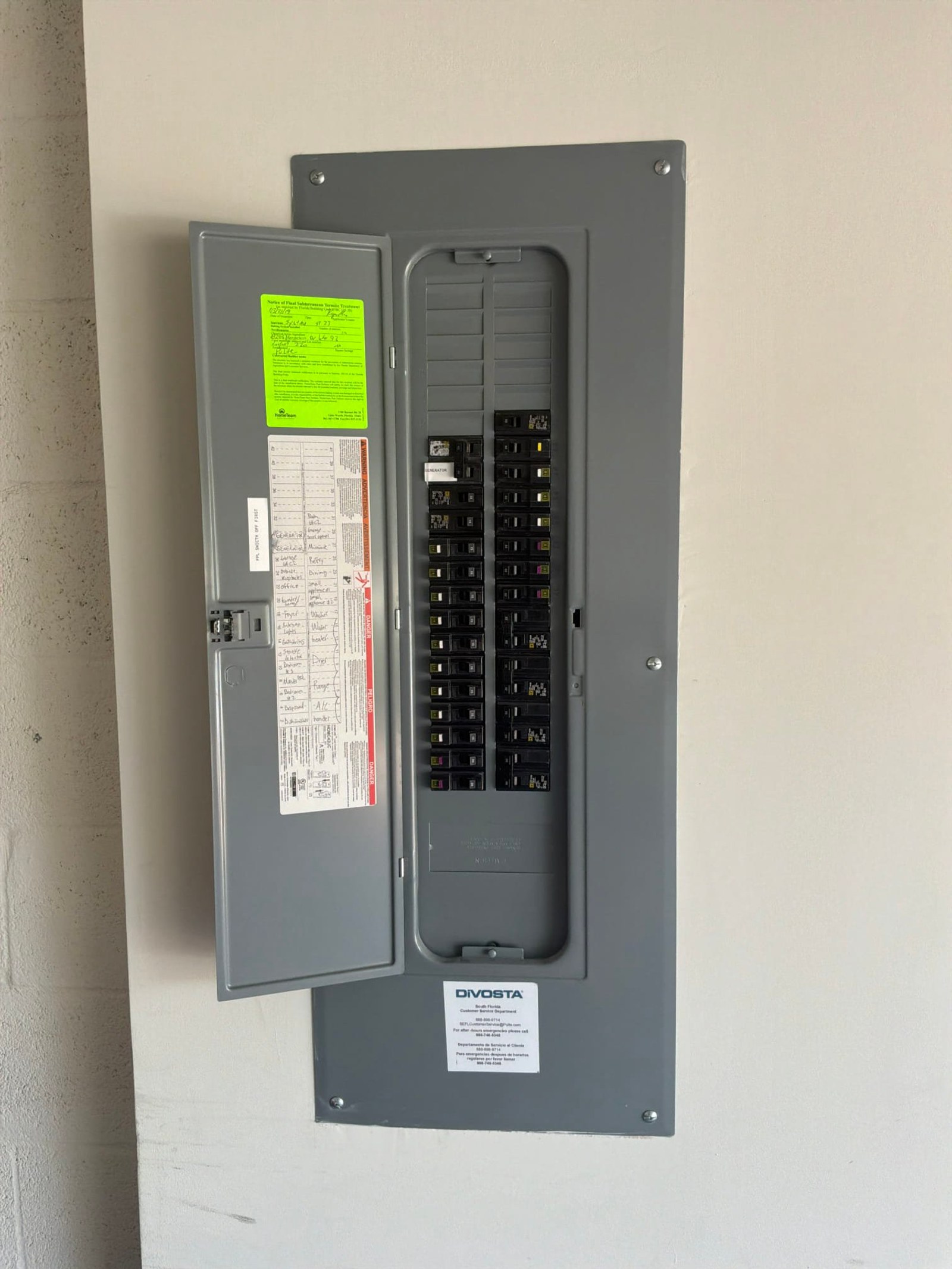
Because the home was newly built, the electrical system was in generally good shape. Our technician on-site reviewed the panel deadfront and circuit directory, noting the DiVosta-built home had a clearly labeled load center with available capacity. That is a good starting point for any EV charging addition.
Exterior Disconnect Observation
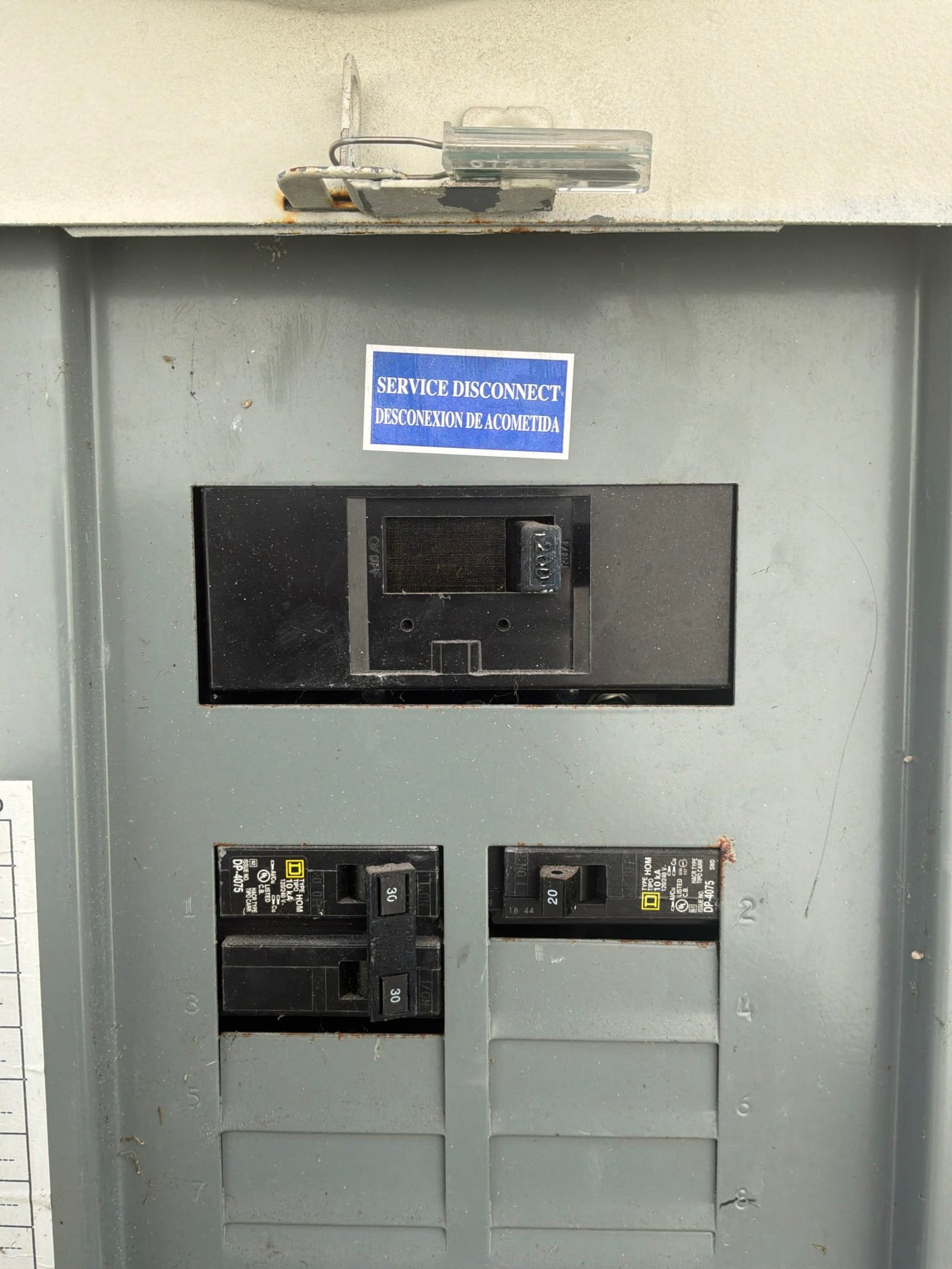
During the site walk, the team also photographed the exterior weatherproof disconnect switch. The photos show visible corrosion on the terminations and enclosure. In a coastal South Florida climate, surface oxidation on outdoor enclosures is a common condition, even on newer homes, because salt-laden humid air works quickly on metal surfaces. This type of finding is worth noting early so the homeowner can monitor it and address it proactively if the corrosion progresses toward the internal terminations over time.
The circuit directory card and inspection sticker on the panel were both visible and intact, which made load planning straightforward.
Load Capacity Review
Before sizing any new circuit, our team confirmed that the existing panel had the headroom needed. A Level 2 EV charger typically draws continuous load at 80% of the breaker rating, so proper circuit sizing matters from the start. Under NEC 625.41 and 625.42, EV charging circuits must be sized to handle continuous load, meaning the branch circuit ampacity and breaker rating have to account for the charger running for extended periods.
What We Fixed
Our crew installed a dedicated EV charging circuit in the garage, run cleanly from the panel to support a Level 2 charging station. The circuit was sized according to NEC 625.41 continuous-load requirements. The work was planned around the available capacity confirmed in the circuit directory, keeping the panel balanced and leaving room for other future loads the homeowner may add.
The exterior disconnect corrosion was documented and flagged for the homeowner’s awareness so they can keep an eye on it between visits.
Why This Greenacres Ev Charger Installation Matters for Homeowners
Adding EV charging to a new home is one of the smartest infrastructure decisions a family can make early in ownership. Doing it now, before walls are patched and finished surfaces are in the way, keeps the work clean and cost-effective. For a household that charges overnight, a properly sized Level 2 circuit means a full charge by morning, quietly, without any thought required.
Reliability is the real benefit here. A dedicated circuit handles the continuous draw of EV charging without borrowing capacity from the kitchen, the HVAC, or anything else running in the home. The family does not have to think about it. The car charges, the breaker stays put, and the morning routine starts on a full battery.
Finally, building this in correctly from day one gives the homeowner peace of mind that their electrical system is matched to the way they actually live. As more households add EVs, having the infrastructure already in place is one less thing to schedule, plan, or worry about later. Our team is licensed by the State of Florida and carries that credential to every job, new construction or otherwise.
Code Compliance Cited in This Job
Every fix above maps to a specific section of NEC 2020. Each card links to NFPA’s public NEC index.
EV Charging Branch-Circuit Ampacity
NEC 625.41 requires that EV charging equipment branch circuits be sized based on the continuous load rating of the charger. On this Greenacres installation, the circuit was designed so the breaker and conductor ampacity could handle the charger running for extended periods without nuisance tripping or thermal stress on the wiring. NFPA reference ›
EV Charging Continuous-Load Rating
NEC 625.42 classifies EV charging as a continuous load, meaning the equipment must be rated at no less than 125% of the maximum load it will carry. Our field team used this requirement to confirm proper breaker sizing before the circuit was roughed in, so the installation starts life correctly matched to the charger’s demands. NFPA reference ›
Receptacle Outlet Placement in Dwellings
NEC 210.52 governs where receptacle outlets must be placed in residential spaces, including garages. Confirming the garage circuit location against this section ensured the new EV outlet is both accessible and code-compliant for the intended use. NFPA reference ›
Circuit Directory and Panel Identification
NEC 408.4 requires that every circuit in a panelboard be legibly identified. The circuit directory on this DiVosta-built home’s panel was intact and visible, which made load planning straightforward and ensured the new EV circuit will be clearly labeled alongside the existing branch circuits. NFPA reference ›
Common Questions
Questions homeowners ask after seeing this kind of work.
What level of EV charger should I install in my home garage?
Most homeowners choose a Level 2 charger, which operates on a 240V dedicated circuit and can fully charge the average EV overnight. Level 1 charging from a standard 120V outlet works in a pinch, but it typically adds only 4 to 5 miles of range per hour. A Level 2 circuit, properly sized under NEC 625.41, gives you the daily convenience you actually want. Schedule online and our team can review your panel and recommend the right circuit size for your vehicle.
Can a brand-new home’s panel handle an EV charger without any upgrades?
In many cases, yes. New-construction homes are often built with service capacity that has room for an EV circuit, especially if the panel directory shows available slots. However, the answer depends on the total connected load and the panel’s rated amperage. Our team reviews the circuit directory and calculates the load before any work begins, so there are no surprises. Book a quick consultation to find out exactly what your panel can support.
How often should I have my home’s electrical system inspected?
A yearly inspection is a good baseline for most households. Homes that have recently weathered a storm, or that are adding significant new loads like an EV charger or hot tub, benefit from an inspection tied to that upgrade as well. In South Florida’s humid, salt-air climate, exterior components like weatherproof disconnect enclosures can develop surface corrosion even on newer homes, so annual eyes-on-the-system is time well spent. Schedule your annual inspection online and we will take care of the rest.
What is the difference between a dedicated EV circuit and plugging into a regular garage outlet?
A dedicated circuit is sized specifically for the continuous draw of EV charging, which can run for 8 to 10 hours overnight. A standard garage receptacle is typically a 15A or 20A general-purpose outlet shared with other loads. Running a high-draw charger on a shared circuit for long periods creates thermal stress on the wiring over time. A dedicated circuit keeps everything comfortable and properly loaded from the start. Schedule online to get yours planned correctly.
Does installing an EV charger require a permit in Florida?
Yes. In Florida, adding a new 240V circuit for EV charging is a permitted electrical installation in most jurisdictions, including Palm Beach County. Pulling the correct permit ensures the work is inspected and meets current NEC requirements, which also protects you at resale. Our licensed team handles the permit process as part of the installation. Book your EV charger install online and we will walk you through every step.
Want to see more real jobs like this one? Browse our completed case studies or explore our services.