
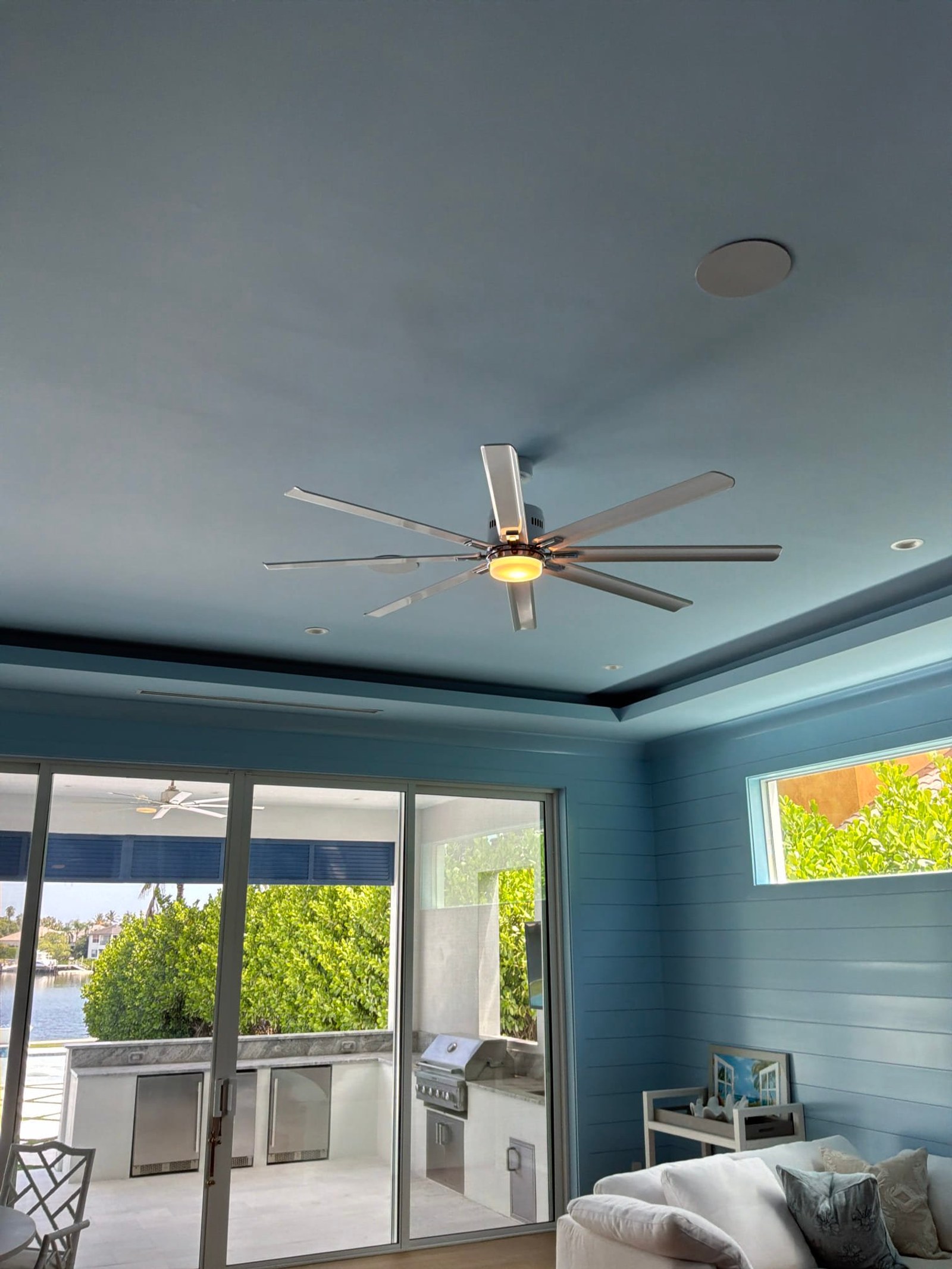
Before & After
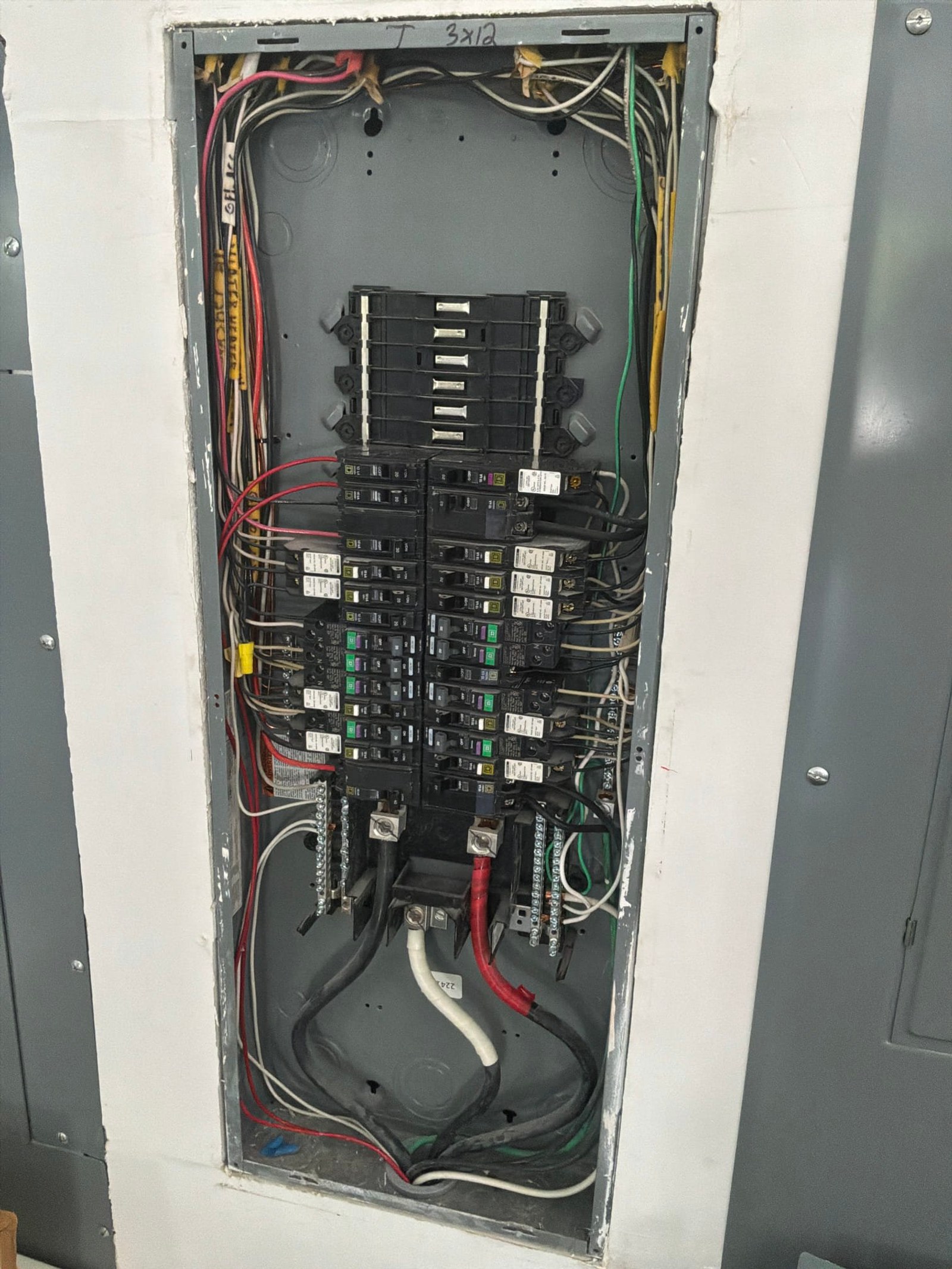 Before
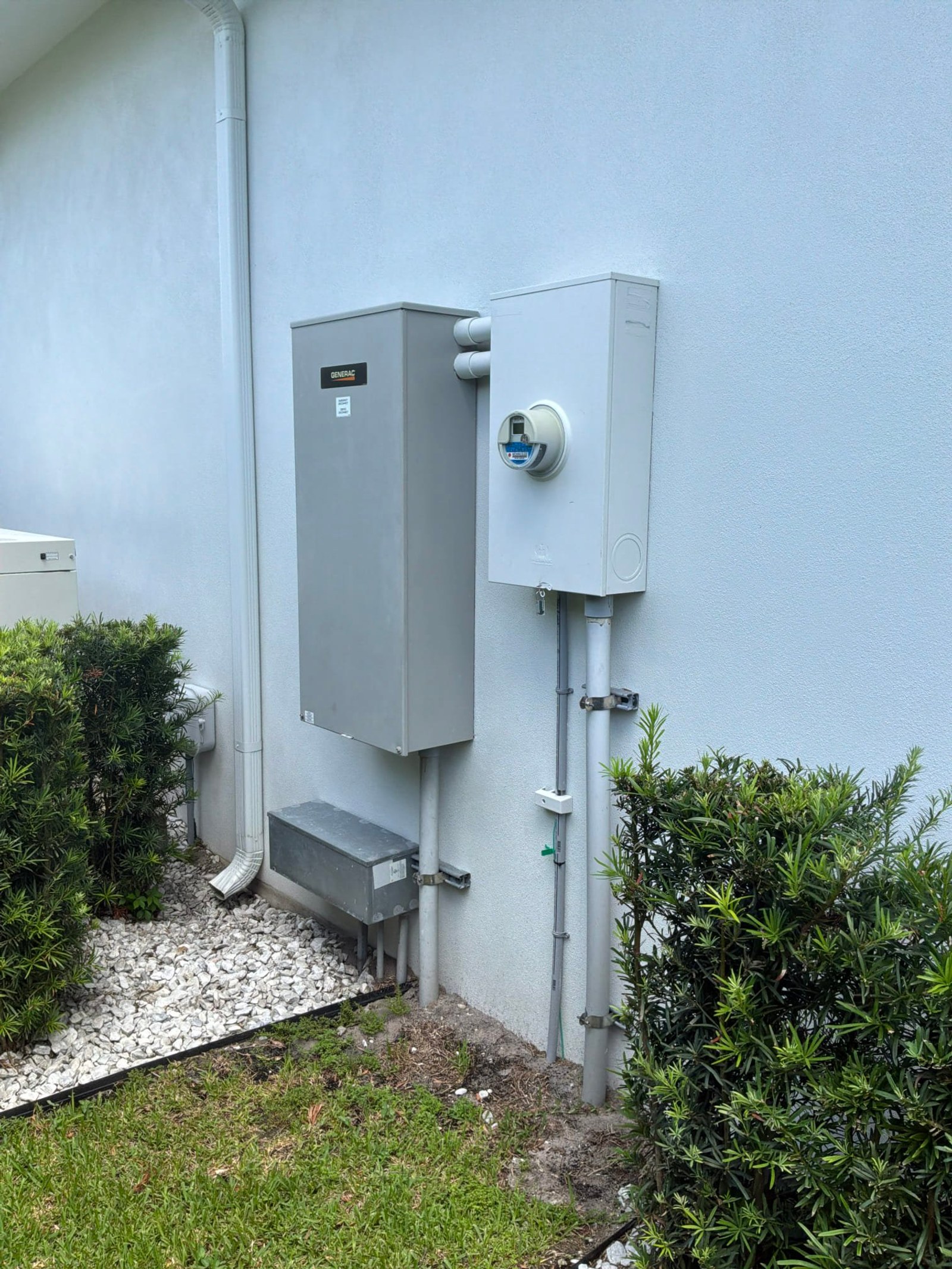 After
AfterThis Jupiter lighting installation case study walks through the real diagnosis, the fix, and the code details from a recent service call. A homeowner in Jupiter, FL called us about two ceiling fans that had stopped working and bathroom lights that kept blinking. Our field team visited the property, inspected the fixtures, and opened the panel for a closer look. What we found gave us a clear path forward and a few observations worth sharing with any homeowner in a similar situation.
The Problem
The homeowner described the situation simply and clearly:
“Two fans stopped working completely, and the bathroom lights keep blinking.”
Those two symptoms together pointed toward something upstream from the fixtures themselves. Ceiling fans and lights rarely fail at the same time by coincidence. The panel was the logical next stop.
Investigation
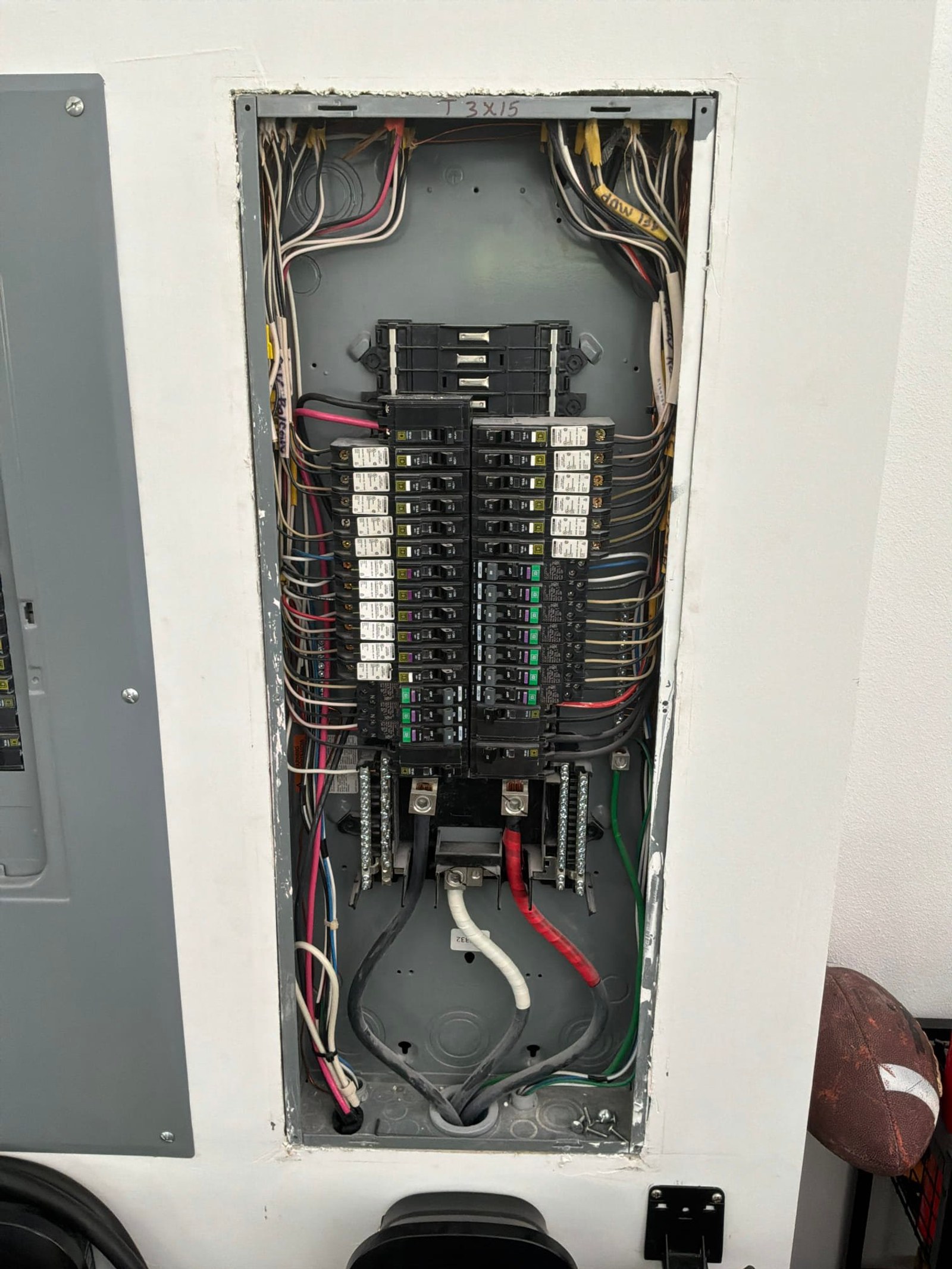
Our technician on-site started at the source: the circuit breaker panel.
Panel Interior Observations
With the dead front removed, the team had a clear view of the branch conductors, neutral bar, and ground bar. The wiring inside included a mix of red, green, yellow, and other multi-colored conductors, which is consistent with a panel that has seen multiple service calls and additions over the years.
Two conditions stood out during the visual inspection. First, there was visible corrosion on the terminations and on the interior surfaces of the enclosure itself. Second, there was evidence of water finding its way into the enclosure at some point. Both of these conditions are worth noting because moisture inside a panel can, over time, affect how well terminal connections hold their contact. Loose or corroded connections are a common cause of the kind of intermittent behavior, blinking lights and fans that cycle on and off or stop responding, that this homeowner was describing.
Neither condition is unusual in South Florida homes. The combination of humidity, seasonal rain, and the way many panels are positioned near exterior walls means that moisture intrusion is something our team sees regularly in this region. It does not mean the panel was poorly installed. It simply means conditions here are harder on electrical enclosures than in drier climates, and that periodic visual checks pay off.
Fixture-Level Check
The ceiling fans in the home were installed at a standard height of approximately 8 to 10 feet, which is typical for residential spaces and consistent with what we saw in the photos. The room shown in the after photo reflects a clean, modern interior with recessed lighting alongside the ceiling fan, a layout that puts real demand on the circuits feeding those fixtures. When connections at the panel degrade, fixtures at the end of those branch circuits are often the first to show symptoms.
What We Fixed
Our crew performed a Level 2 Troubleshooting inspection, which included removing the panel cover to test for proper voltages, visually inspect for any concerns, and check for issues such as double taps, corrosion, or signs of moisture intrusion. The team also inspected the meter socket to determine whether any part of the issue originated on the utility side of the service.
This kind of structured panel inspection is the right starting point for intermittent symptoms like flickering lights and fans that stop responding. Rather than replacing fixtures first and hoping for the best, the team worked from the source outward, which saves time and gives the homeowner accurate information about what is actually going on.
Why This Jupiter Lighting Installation Matters for Homeowners
For any family living in a Jupiter home, ceiling fans are not a luxury, they are a daily comfort tool. In South Florida, fans run for most of the year, and when two of them stop working at the same time the bathroom lights start acting up, it affects the whole household routine. Morning routines, evening wind-downs, and the simple expectation that the lights and fans will respond when you flip the switch: all of that depends on solid connections at the panel level.
Corrosion on panel terminations is common in coastal and humid climates, and it typically develops slowly over years. Homes in this region, especially those built before the 2010s, may not have had their panels opened and inspected since the original installation. A yearly visual inspection is one of the most straightforward ways to catch these kinds of developing conditions before they affect more fixtures or require more involved repairs.
With the inspection complete, the homeowner now has a clear picture of what is happening inside the panel and why the fixtures were behaving the way they were. That kind of clarity is what peace of mind actually looks like: not just fixed fans, but confidence that the home’s electrical system is understood and cared for. For older homes or homes that have been through recent storm seasons, an annual check-in with a licensed electrician is especially worthwhile. Florida’s weather is hard on enclosures, and a quick look every year keeps small findings from growing into bigger ones.
For reference, Thomas Edison Electric holds Florida electrical contractor license EC13015487, and all inspections follow current NEC 2020 guidelines. The Electrical Safety Foundation International also offers homeowner-friendly resources on what to look for between professional visits.
Code Compliance Cited in This Job
Every fix above maps to a specific section of NEC 2020. Each card links to NFPA’s public NEC index.
Electrical Connections
NEC 110.14(B) covers the integrity of terminal connections and splices. On this job, visible corrosion on the panel terminations is the kind of condition this section addresses: degraded contact surfaces increase resistance, which can contribute to the intermittent flickering and fixture drop-out the homeowner described. NFPA reference ›
Circuit Identification
NEC 408.4 requires that all circuits in a panel be clearly identified. The panel on this job contained multi-colored branch conductors including red, green, and yellow wiring, which the team noted during the visual inspection. Clear labeling supports accurate troubleshooting and helps future service calls go smoothly. NFPA reference ›
Grounding Electrode System
NEC 250.50 establishes the requirements for a complete grounding electrode system. When moisture has found its way into a panel enclosure over time, verifying the integrity of the neutral bar and ground bar connections, both of which were visible during this inspection, is a standard part of confirming the system is performing as intended. NFPA reference ›
Common Questions
Questions homeowners ask after seeing this kind of work.
Why would two ceiling fans stop working at the same time as bathroom lights start blinking?
When multiple fixtures on different parts of the home show symptoms at the same time, the issue is often upstream at the panel rather than in the fixtures themselves. Corroded terminals or a connection that has lost good contact can affect an entire branch circuit, causing fans to lose power and lights to flicker. A panel-level inspection is usually the fastest way to confirm the cause. If this sounds like what you are seeing at home, schedule a same-day inspection and we can trace it from the source.
How does moisture get inside an electrical panel, and is it common in South Florida?
In humid climates like South Florida, moisture can enter a panel through small gaps in the enclosure, through conduit runs that connect to the exterior, or through condensation during temperature swings. It is a fairly common finding in homes that have been in service for ten or more years in this region. The good news is that catching it early, before it progresses to significant corrosion, keeps the repair straightforward. If your panel is near an exterior wall or in a utility space, it is worth having a licensed electrician take a look before the next storm season.
How often should I have my home’s electrical system inspected?
Once a year is a solid baseline for most homes. Homes built before 1990 and homes that have been through recent storm seasons may benefit from inspections more often, since older wiring systems and weather stress can accelerate the kind of wear that shows up in a panel inspection. An annual check gives you a current picture of what is happening inside the enclosure and catches small findings early. Book a yearly inspection to keep your home running the way your family expects it to.
Can ceiling fan issues be fixed without replacing the fan?
In many cases, yes. Fans that stop working are often traced to a wiring connection, a breaker that has weakened, or a wall control issue rather than a failed motor. A structured troubleshooting visit that starts at the panel and works outward to the fixture can usually identify whether the fan itself needs replacement or whether a simpler fix at the connection level will restore it. Schedule a troubleshooting visit and we can give you a clear answer before recommending any replacement.
What does a Level 2 electrical troubleshooting inspection actually include?
A Level 2 inspection involves removing the panel cover to test for proper voltages, visually examining the interior for corrosion, double taps, water intrusion, and other conditions worth addressing, and inspecting the meter socket to see whether any part of the problem originates on the utility side. It is a thorough starting point for intermittent symptoms and gives the homeowner an accurate picture of what is happening at the source. If you have been noticing flickering lights or fixtures that behave unpredictably, book an inspection online and we will walk you through what we find.
Want to see more real jobs like this one? Browse our completed case studies or explore our services.