
This Jupiter panel upgrade case study walks through the real diagnosis, the fix, and the code details from a recent service call. A homeowner in Jupiter, FL reached out about a speaker hum on several outlets and wanted to explore whole-home surge protection. Our field team inspected the Eaton CH 150-amp panel, noted a few areas worth modernizing, and installed a PSP Vortex 120 kA whole-house surge protector along with a new tamper-resistant GFCI receptacle, giving the household a noticeably more reliable electrical foundation.
Customer’s Problem
The homeowner noticed an audible hum whenever a speaker was plugged into certain outlets throughout the home. He also wanted a professional opinion on whether whole-home surge protection made sense for his property. Both questions turned out to be related, since the condition of the panel and existing protective devices shaped the full picture.
What Our Electrician Found
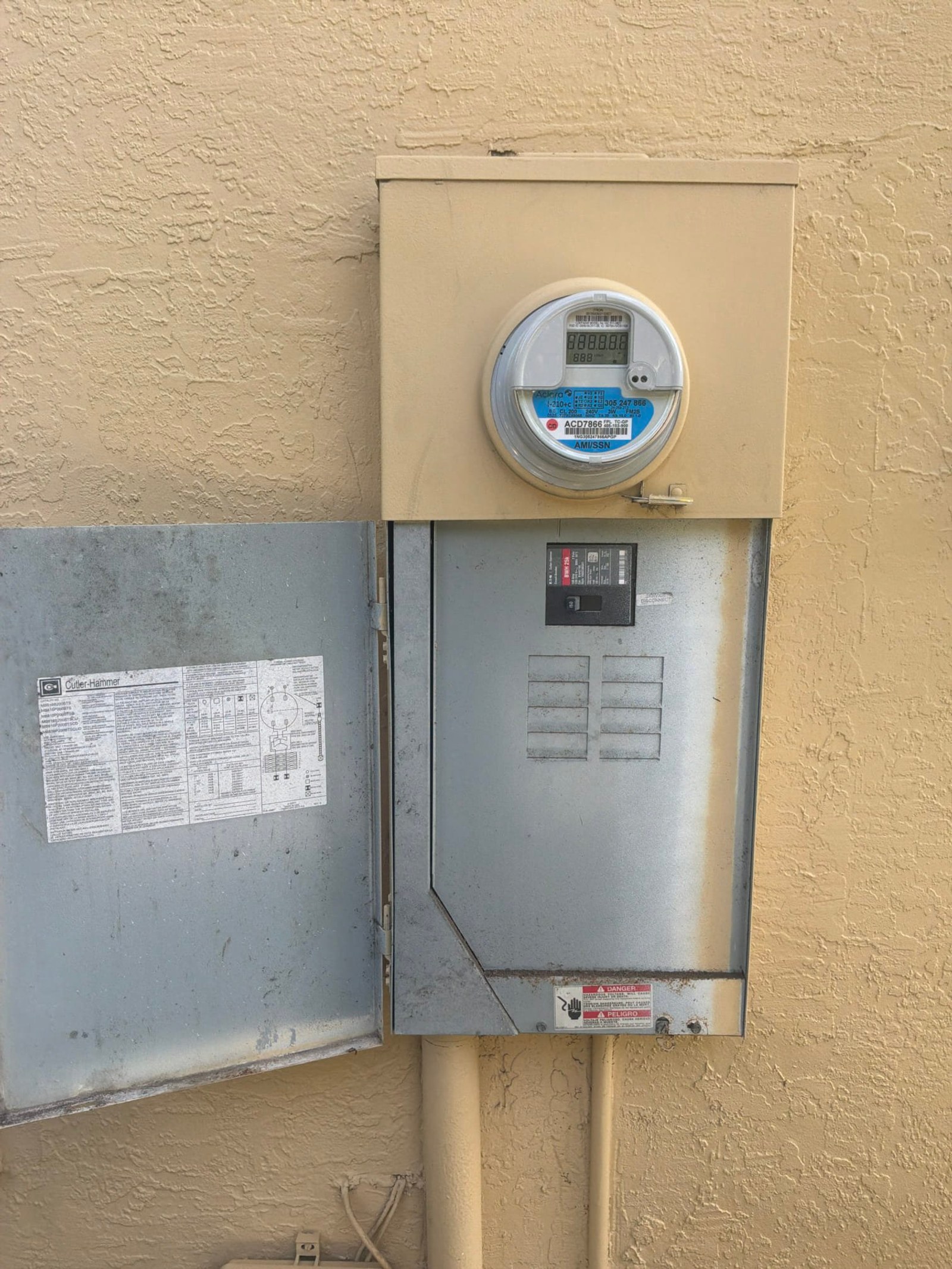
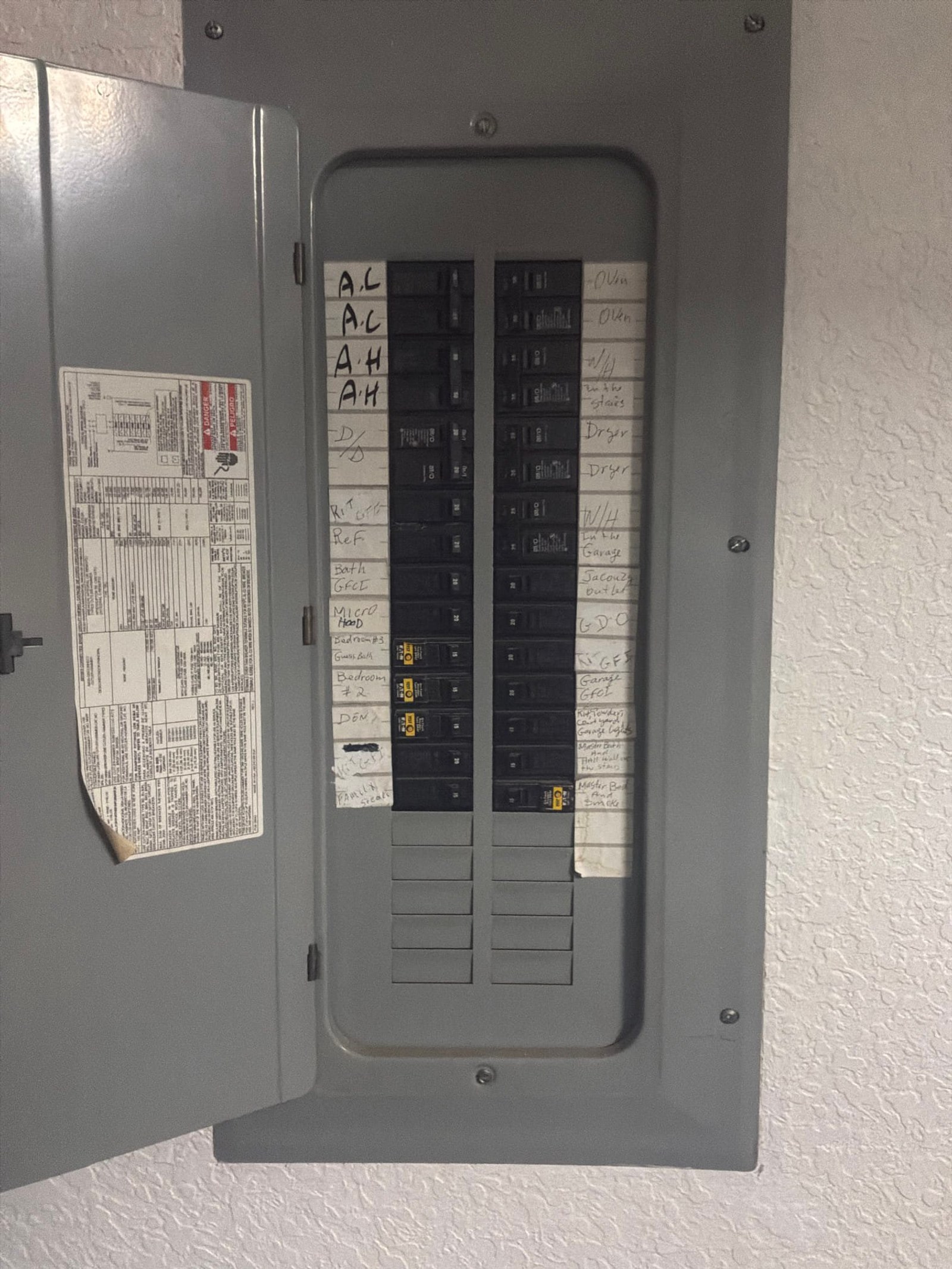
Our technician on-site started at the Eaton CH tan-handle 150-amp panel. The circuit directory showed handwritten labels, a common sign of owner-performed updates over the years. While that kind of DIY labeling is not unusual in homes that have changed hands or seen incremental improvements, it did prompt a closer look at whether the panel’s record matched its current configuration.
Two checklist items did not pass. First, no AFCI (arc-fault circuit interrupter) protection was present. AFCI technology became a code requirement for bedroom circuits under NEC 210.12 and has since expanded to cover additional living areas in newer code cycles. Homes wired before those updates were built to the standard of their era, but current NEC guidance recommends AFCI coverage as a meaningful upgrade.
Second, no whole-home surge protection was in place. Under NEC 230.67, new residential services are now required to include a surge protective device at the service entrance. The home predated that requirement, so its absence was consistent with the original installation. Even so, adding one now brings the home in line with current standards and covers every circuit in a single step.
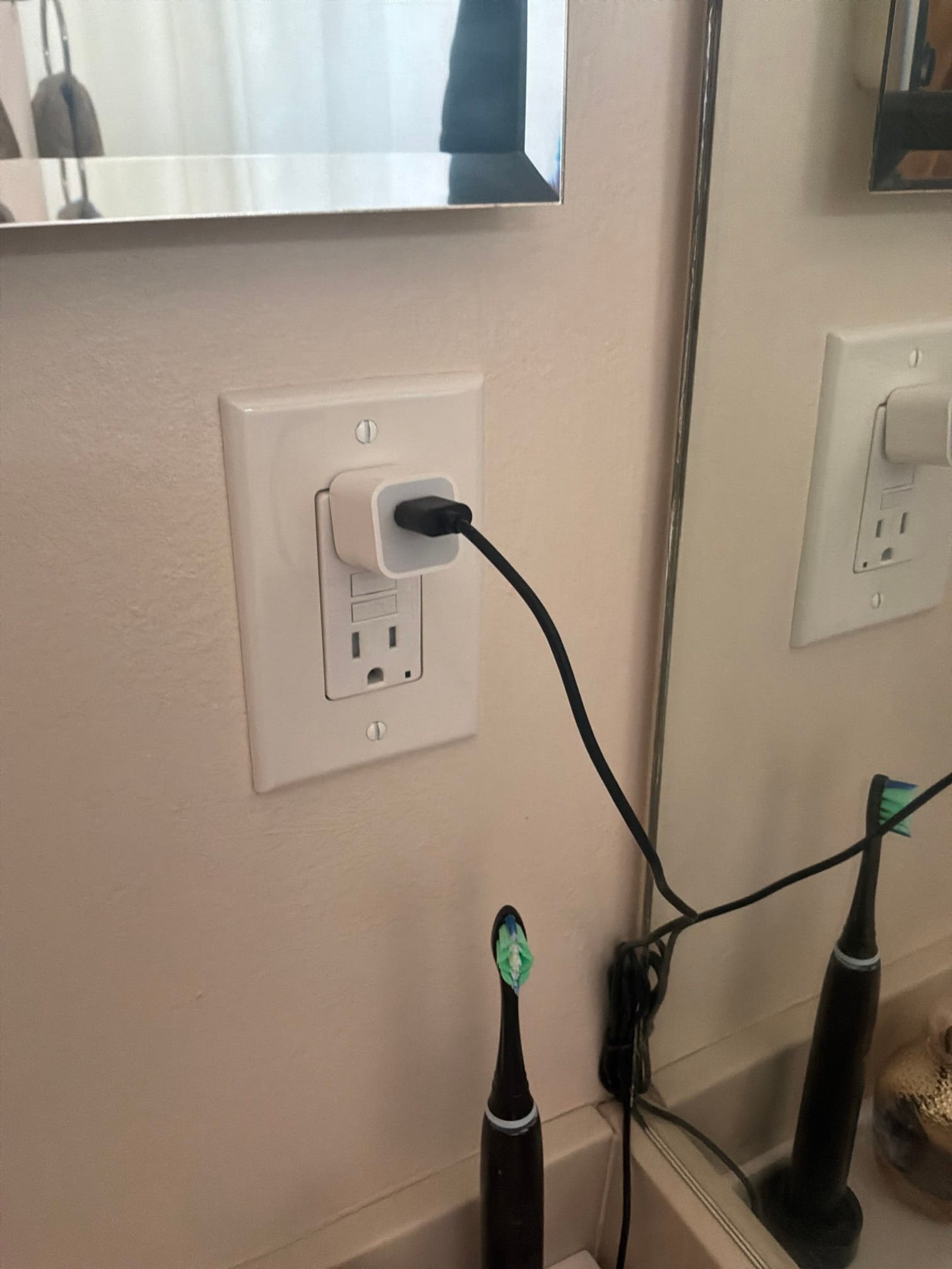
Two additional items were flagged as concerns. The breakers’ listing status warranted a closer look, and GFCI protection was not present in all required locations. In the bathroom, our team found the outlet above the sink was not yet a self-testing GFCI type. The digital utility meter and service equipment on the exterior wall were in good order, but the interior panel side offered the clearest opportunity for improvement.
On the speaker hum specifically: low-level audio hum on outlets often points to grounding quality or the presence of shared neutral paths. The inspection informed the appropriate next steps without requiring exploratory work beyond what the findings supported.
Solution Selected
Based on the inspection findings, the homeowner chose to move forward with the PSP Vortex 120 kA whole-house surge protector at the panel and a replacement GFCI tamper-resistant receptacle in the bathroom. These two line items directly addressed the two failed checklist items and one of the concerns, making them the most impactful starting point for this home.
Work Performed
Our crew installed one PSP Vortex 120 kA whole-house surge protector directly at the Eaton CH 150-amp panel. The device connects to all circuits in the panel, providing robust protection against transient voltage spikes from lightning, utility switching, and large appliances cycling on and off. All wiring connections were completed to the manufacturer’s specifications.
Additionally, the team installed one Pass and Seymour 1597-TRW 15A 125V self-testing tamper-resistant GFCI receptacle in the bathroom, replacing the existing outlet at the same location. The self-test feature means the device automatically verifies its own protection status, so the household does not need to remember to test it manually.
Why Pricing Can Vary
Two homes with the same job on the invoice can land at different totals. On projects like this one, the total is driven by:
- Surge device type and rating
- Whether the device mounts inside the panel or beside it
- Available breaker positions in the panel
- Panel condition and any corrections found when the cover is removed
- Layered protection at sensitive equipment
- Grounding system condition, which the device depends on
Why This Jupiter Panel Upgrade Matters for Homeowners
For a family in Jupiter, FL, storm season is a recurring reality. Lightning-induced voltage spikes and utility switching events happen without warning, and without a panel-level surge device, every appliance and piece of electronics connected to the home absorbs that energy directly. With a PSP Vortex 120 kA unit in place at the panel, the whole house is now covered from a single point. Refrigerators, smart TVs, computers, and the HVAC system all ride out those events without the household having to think about it.
The new GFCI receptacle in the bathroom is a small change with a lasting benefit. Current NEC 210.8 standards call for GFCI protection in bathrooms, kitchens, garages, and other wet or damp locations. The self-testing Pass and Seymour unit now installed meets that standard and matches what a homebuyer or inspector would expect to see today.
Finally, the handwritten circuit labels and the absence of AFCI protection are worth keeping in mind for future planning. Neither issue requires immediate action beyond what was already completed, but they give the household a clear, calm to-do list for the next service visit. Knowing what’s in the panel, and what the panel still has room to gain, is itself a form of peace of mind. Our team is happy to walk through next steps whenever the timing is right.
Code Compliance Cited in This Job
Every fix above maps to a specific section of NEC 2020. Each card links to NFPA’s public NEC index.
Surge Protective Device at Service
NEC 230.67 requires a listed surge protective device (SPD) at the service entrance of new residential installations. This Jupiter home predated that requirement, so no panel-level SPD was present. Installing the PSP Vortex 120 kA unit brings the home in line with current standards and covers all downstream circuits. NFPA reference ›
Type 2 SPD Installation Requirements
NEC 285.25 governs how a Type 2 SPD must be connected at the load side of the service disconnect. The PSP Vortex was mounted at the Eaton CH 150-amp panel and wired per this section’s connection and overcurrent requirements, ensuring the device performs as rated and coordinates properly with existing breakers. NFPA reference ›
GFCI Protection for Personnel
NEC 210.8 requires GFCI-protected receptacles in bathrooms, kitchens, garages, outdoor locations, and other areas subject to moisture. The bathroom outlet in this Jupiter home did not yet meet that requirement. Replacing it with a self-testing tamper-resistant GFCI receptacle addresses that gap and aligns the home with current code expectations. NFPA reference ›
AFCI Protection for Dwelling Units
NEC 210.12 requires arc-fault circuit interrupter protection on branch circuits serving bedrooms and, in recent code cycles, additional living areas in dwellings. No AFCI protection was present in this home, consistent with its original installation era. The finding was documented as a future upgrade opportunity for the household to consider. NFPA reference ›
Tamper-Resistant Receptacles
NEC 406.12 requires tamper-resistant receptacles throughout dwelling units. The replacement GFCI receptacle installed in the bathroom is a Pass and Seymour self-testing tamper-resistant model, satisfying both the GFCI requirement under NEC 210.8 and the TR requirement under this section in a single device. NFPA reference ›
Common Questions
Questions homeowners ask after seeing this kind of work.
What does a whole-home surge protector actually cover, and is one device enough?
A panel-mounted surge protector like the PSP Vortex 120 kA intercepts voltage spikes at the service entrance before they can travel to any circuit in the home. That means the refrigerator, HVAC system, televisions, computers, and smart-home devices all benefit from a single installation. For most homes, a single panel-level device provides solid baseline coverage, though high-value electronics sometimes benefit from a point-of-use device as a second layer. Schedule online and our team can assess what makes sense for your specific setup.
Why does a speaker hum when plugged into certain outlets?
An audible hum from audio equipment is often related to grounding quality, shared neutral conductors, or nearby circuits introducing interference. It can also point to outlets that predate current wiring standards. A licensed electrician can trace the cause quickly during a standard inspection and recommend the most targeted fix. If you’re hearing a similar hum at home, book a same-day inspection so we can confirm the source.
How often should I have my home’s electrical system inspected?
A yearly inspection is a solid baseline for most homes. Older homes built before 1990 and homes that have come through a busy storm season may benefit from a check more often, since aging wiring and repeated surge events can create conditions worth addressing sooner. An annual visit also gives you an up-to-date picture of what’s in the panel and what future upgrades might be worth planning. Schedule online to get your annual inspection on the calendar.
What is a self-testing GFCI receptacle, and why does it matter?
A self-testing GFCI receptacle automatically monitors its own protection circuit at regular intervals without requiring the homeowner to press the test button manually. If the device ever loses its ability to trip correctly, it signals a fault condition so you know it needs replacement. This is the current standard for bathroom and kitchen outlets under NEC 210.8, and it means one less maintenance task for the household to track. Unsure whether your outlets have self-test capability? Our team can take a look during a quick walkthrough.
Our panel has handwritten circuit labels. Is that something to address?
Handwritten labels are common in homes that have had outlets, fixtures, or appliances added over the years, and they are not a code issue on their own. However, NEC 408.4 does require that all circuits be legibly identified so the panel is safe and practical to work on. Updating the directory to an accurate, printed or clearly written label set is a small step that makes future service visits faster and gives the household a clearer picture of what each breaker controls. Schedule online and we can update the directory as part of a broader panel review.
Project Photos
Electrician and Technical Reviewer
Work performed by Slater, Thomas Edison Electric field electrician serving Jupiter / West Palm Beach.
Slater, the electrician on this job, is the technical reviewer of record for this case study.
Location
This project was completed in Jupiter, Florida, in our Jupiter / Juno Beach / Jupiter Island / Tequesta service area.