
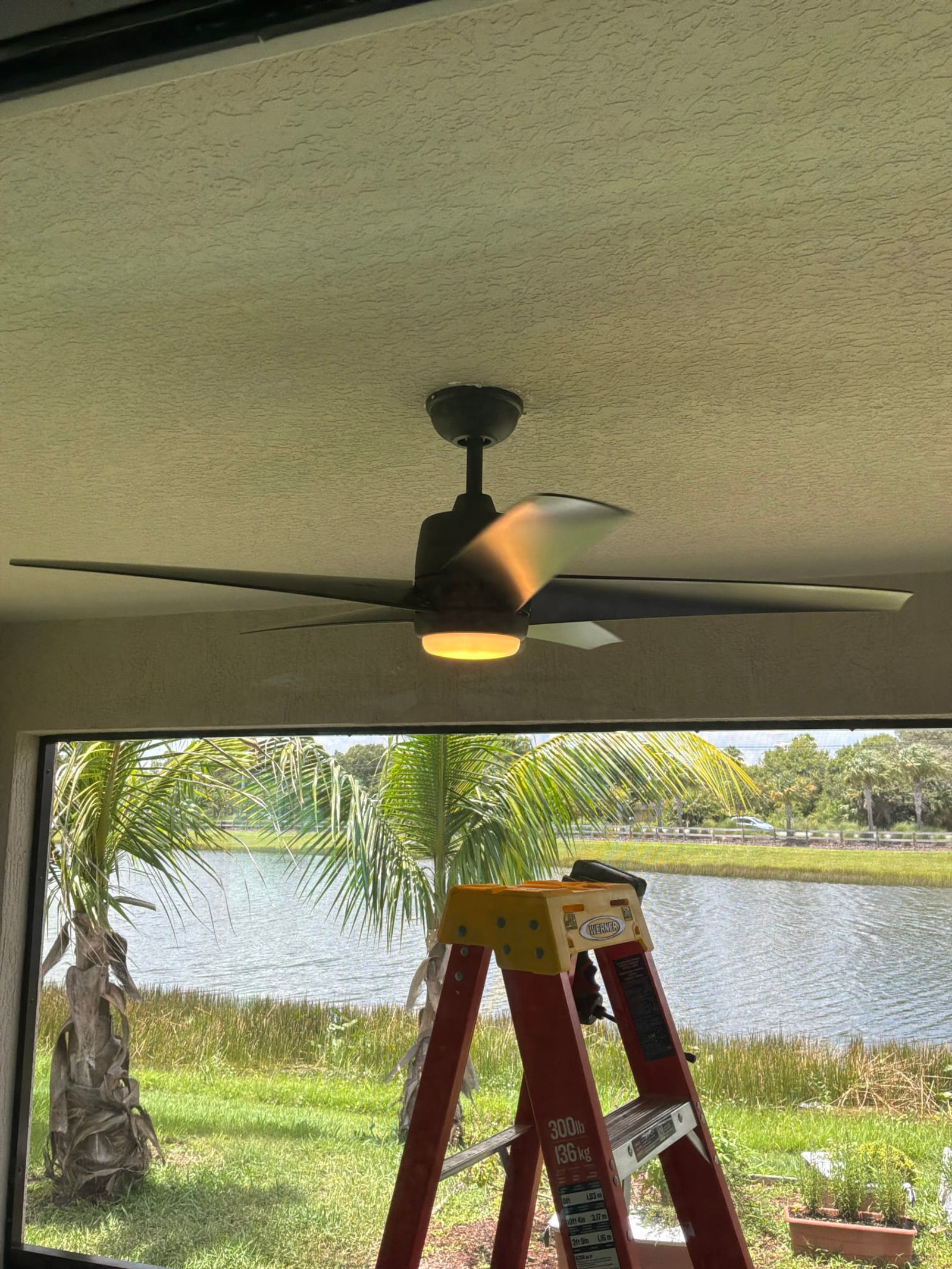
Before & After
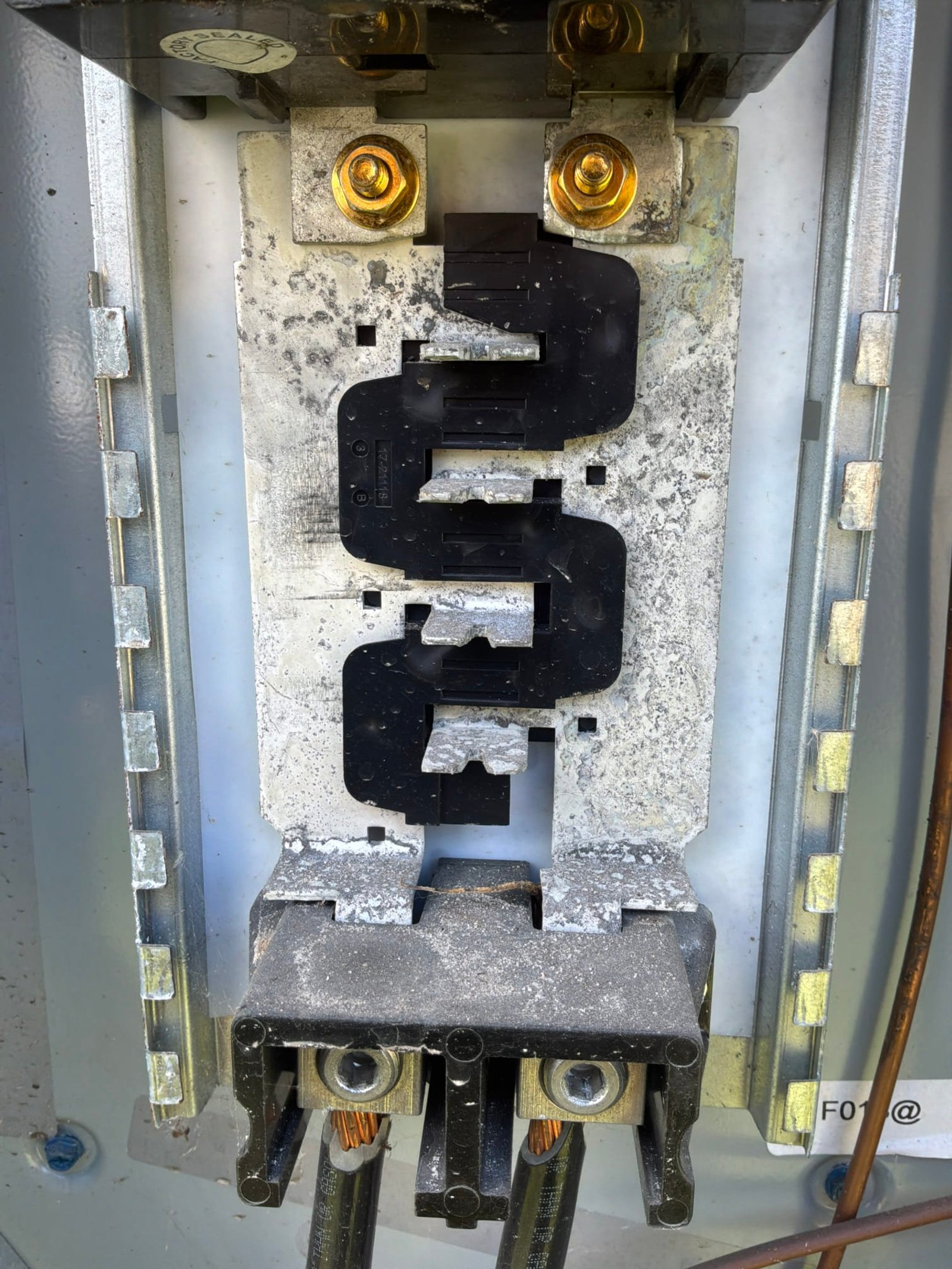 Before
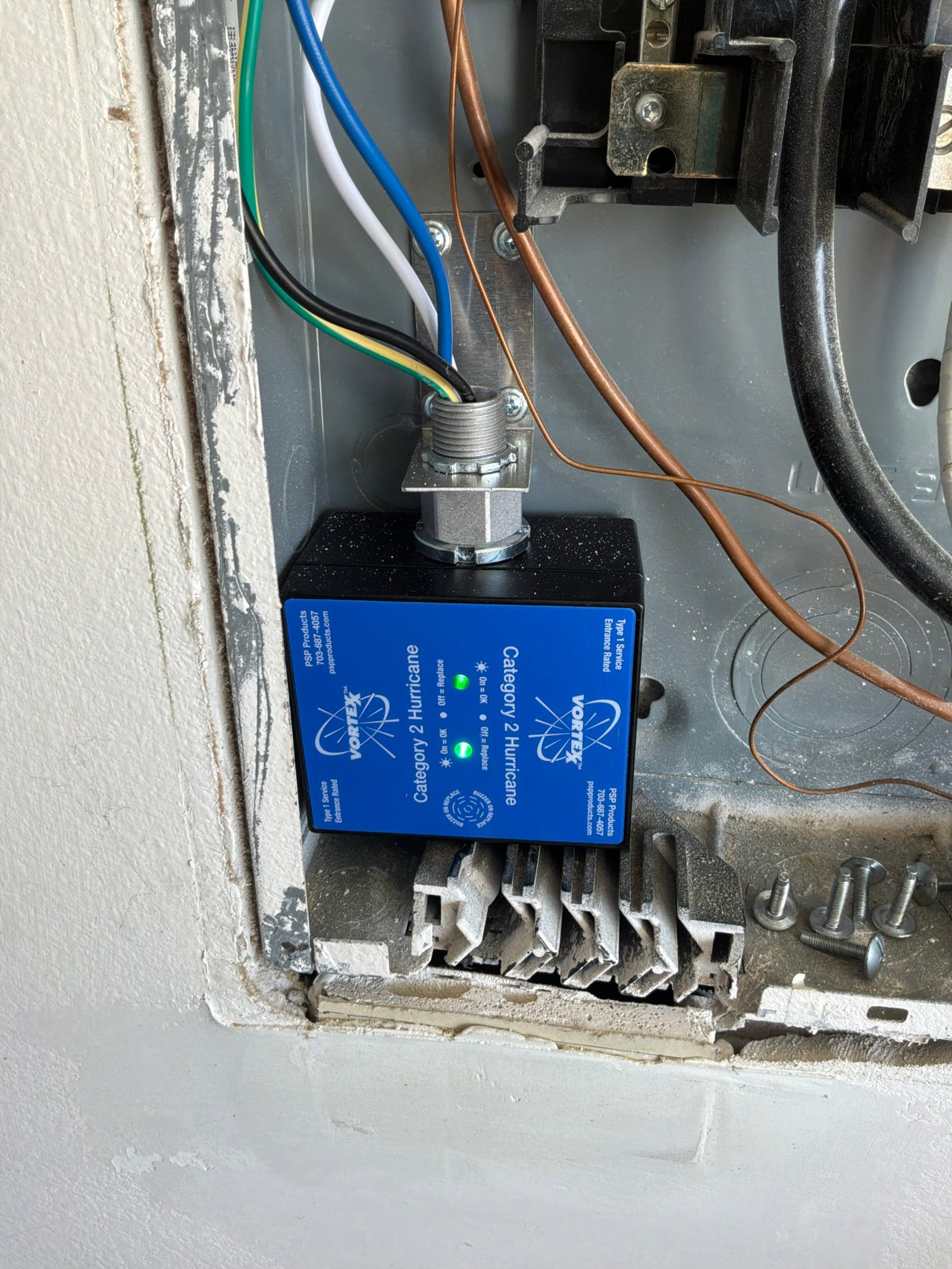 After
This Fort Pierce panel upgrade case study walks through the real diagnosis, the fix, and the code details from a recent service call. A homeowner in Fort Pierce, FL wanted a new ceiling fan on their outdoor lanai patio. When our field team opened the Square D Homeline 200-amp panel to complete the work, they found corrosion on the terminations and evidence of moisture inside the enclosure. The visit that started as a fan installation became an opportunity to add a PSP Vortex 120 kA whole-home surge protector and give the panel the attention it needed.
Customer’s Problem
The homeowner reached out about installing a client-supplied ceiling fan at an existing outdoor patio location on the lanai. The fan was being purchased separately, so the crew coordinated timing to make sure everything lined up on the day of the visit. The job was scheduled for a Wednesday morning window.
What Our Electrician Found
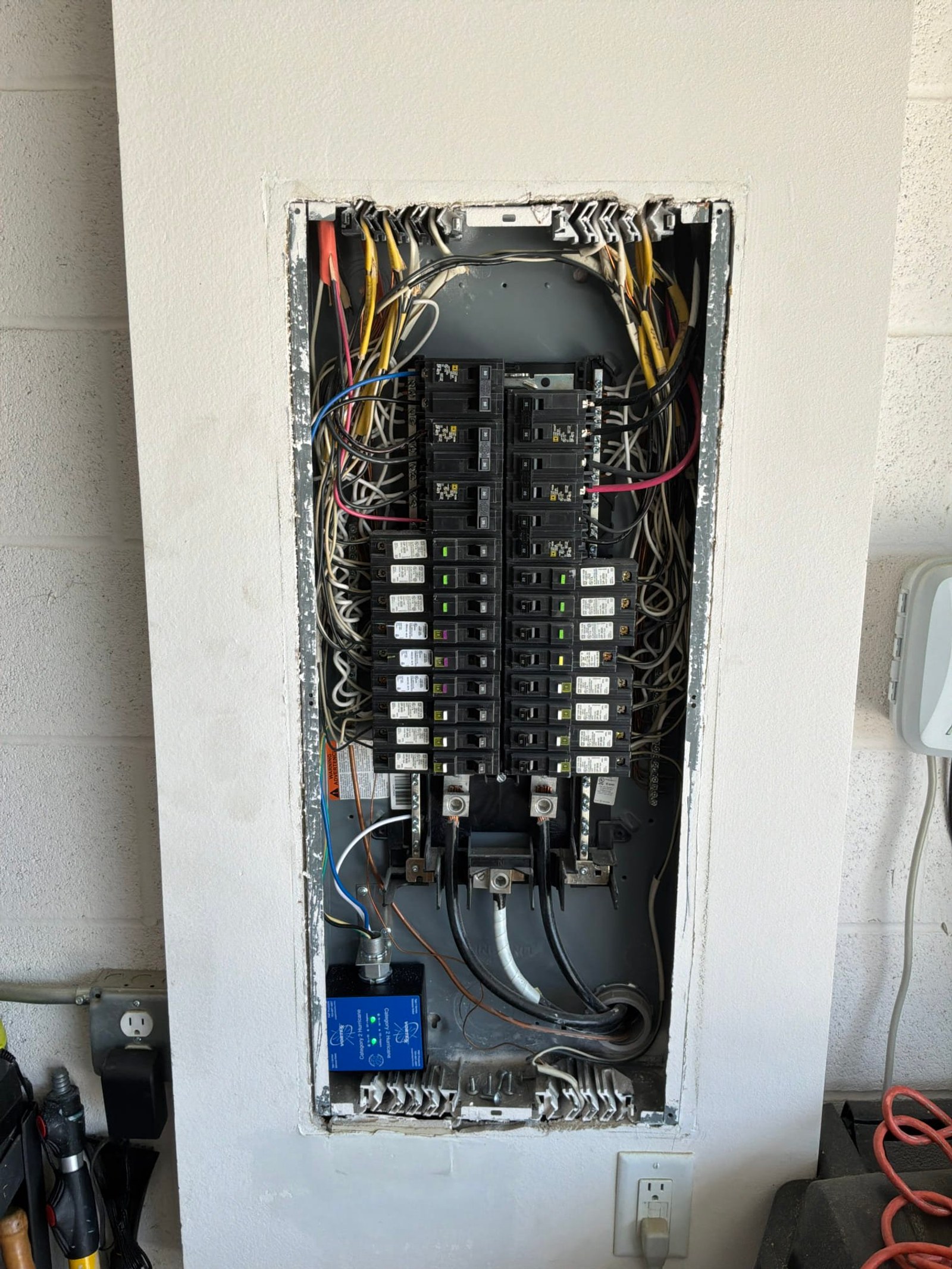
Once on site, the licensed electrician opened the Square D Homeline panel to assess the electrical system as part of a standard walkthrough. Several things stood out.
Moisture and Corrosion Inside the Enclosure
The panel’s interior showed corrosion on the gold lugs and brass terminals, along with a deteriorated backplate. There was also evidence of water finding its way into the enclosure over time. Moisture inside a panel enclosure is a condition worth addressing: it accelerates oxidation on the terminal surfaces, raises contact resistance, and can work against the long-term reliability of every circuit in the home. This is consistent with older panels in coastal and humid climates like Fort Pierce’s, where seasonal weather puts steady pressure on outdoor and semi-exposed electrical equipment.
No Whole-Home Surge Protection
The inspection confirmed no surge protective device was present at the panel. For a home in St. Lucie County, where afternoon thunderstorms and tropical weather are routine through much of the year, that leaves all the connected electronics, appliances, and HVAC equipment absorbing whatever the utility line delivers during a storm event. Under NEC 230.67, dwelling unit services are now required to have surge protection. Adding it is one of the most straightforward upgrades a homeowner can make.
No Generator Prewire or Standby Generator
The checklist also noted that no generator prewire or standby generator is currently in place. That is simply an observation for the homeowner’s awareness, not a condition that requires immediate action. It is worth knowing if the household ever wants to add a backup power source down the road.
AFCI Protection Noted as a Concern
AFCI (arc-fault circuit interrupter) protection was flagged as a concern during the walkthrough. Under NEC 210.12, AFCI protection is required for branch circuits in living areas, bedrooms, and kitchens in new construction and renovations. Homes wired before the current code cycle were not built to this standard, so the absence of AFCI breakers is common for the era. It is something to consider for a future visit.
Solution Selected
The homeowner moved forward with two items: the lanai ceiling fan installation using the fan they supplied, and a PSP Vortex 120 kA whole-home surge protector at the panel. Given the panel’s condition and the absence of any existing surge protection, adding the Vortex was a natural fit for the visit already in progress.
Work Performed
Lanai Ceiling Fan Installation The field team mounted the client-supplied ceiling fan with integrated LED light at the existing outdoor lanai location. The black-finish fan was installed on the interior lanai ceiling, visible in the job photos taken during the work.
PSP Vortex 120 kA Whole-Home Surge Protector The crew installed a PSP Vortex 120 kA surge protector at the Square D Homeline 200-amp panel. The device is mounted with a blue enclosure and features status LEDs that give a clear at-a-glance indicator of operational status. At 120 kA, the Vortex is rated for robust transient voltage suppression across all circuits in the panel. The nameplate on the device references Category 2 hurricane standards, which speaks directly to the conditions Fort Pierce homeowners navigate every storm season. All wiring connections were completed to manufacturer specifications to ensure reliable, long-term performance.
Why Pricing Can Vary
Two homes with the same job on the invoice can land at different totals. On projects like this one, the total is driven by:
- Surge device type and rating
- Whether the device mounts inside the panel or beside it
- Available breaker positions in the panel
- Panel condition and any corrections found when the cover is removed
- Layered protection at sensitive equipment
- Grounding system condition, which the device depends on
Why This Fort Pierce Panel Upgrade Matters for Homeowners
Fort Pierce sits in a region where summer storms arrive fast and lightning strikes close. Every appliance, smart device, TV, and HVAC unit in the home shares the same panel, and a single surge event can travel through every one of those circuits in an instant. With the PSP Vortex in place, the household’s electronics and appliances ride out those events without interruption. The family can leave for work, run errands, or simply go to sleep on a stormy night knowing the panel has a first line of defense they did not have before.
Additionally, the new lanai ceiling fan makes the outdoor patio genuinely comfortable to use. A shaded, breezy patio space becomes a real part of the home’s daily life when the airflow is reliable. Whether that means morning coffee, weekend dinners outside, or keeping kids cool after school, the difference a working patio fan makes is felt every single day.
Finally, the corrosion and moisture findings inside the panel are worth monitoring. The current work addressed the immediate priorities the homeowner selected. For the long term, scheduling a follow-up inspection gives the household a clear picture of where things stand and what, if anything, needs attention next. Peace of mind, for a lot of families, comes from simply knowing.
Code Compliance Cited in This Job
Every fix above maps to a specific section of NEC 2020. Each card links to NFPA’s public NEC index.
Surge Protective Devices at Dwelling Unit Services
NEC 230.67 requires a listed surge protective device at the service equipment of all dwelling units. The Fort Pierce home had no SPD present at the Square D Homeline 200-amp panel prior to this visit. Installing the PSP Vortex 120 kA surge protector brings the service in line with this current code requirement. NFPA reference ›
Type 2 SPD Installation Requirements
NEC 285.25 governs how Type 2 surge protective devices must be installed at the load side of service equipment. The PSP Vortex was connected at the Square D Homeline panel to protect all downstream branch circuits, consistent with the installation requirements in this section. NFPA reference ›
AFCI Protection for Dwelling Unit Branch Circuits
NEC 210.12 requires arc-fault circuit interrupter protection on branch circuits supplying living areas, bedrooms, and kitchens in dwelling units. The inspection noted AFCI protection as a concern, which is common in homes wired before the current code cycle made this a standard requirement. This is an item the homeowner may want to address in a future service visit. NFPA reference ›
Electrical Connections and Terminal Integrity
NEC 110.14 covers the integrity of electrical connections, including terminals, lugs, and splices. The panel interior in Fort Pierce showed corrosion on the gold lugs and brass terminals along with a deteriorated backplate, conditions that are consistent with prolonged exposure to moisture in a humid coastal environment and are worth monitoring during future inspections. NFPA reference ›
Common Questions
Questions homeowners ask after seeing this kind of work.
What does a whole-home surge protector actually protect in my house?
A whole-home surge protector, like the PSP Vortex 120 kA installed at this Fort Pierce home, connects directly to your main panel and covers every circuit in the home simultaneously. That includes your HVAC system, refrigerator, washer and dryer, televisions, computers, and any smart-home devices. When a transient voltage event travels through the utility line, the device absorbs and redirects it before it reaches your appliances. If you want to confirm what level of protection is already in place at your panel, our team can schedule a quick inspection to take a look.
Is it normal to find moisture or corrosion inside a residential electrical panel in Florida?
It is more common than many homeowners expect, particularly in coastal and humid areas like Fort Pierce. Seasonal storms, humidity, and temperature swings over many years can work moisture into enclosures that were not originally sealed against those conditions. The corrosion visible on the brass terminals and backplate in this home’s panel is consistent with long-term exposure in that environment. It is a condition worth monitoring and discussing with a licensed electrician. If you have noticed anything similar at your own panel, our team is happy to book a visual inspection so you know what you are working with.
Can a ceiling fan be installed on an outdoor covered lanai or patio?
Yes, and it is one of the most practical upgrades for Florida homes with covered outdoor spaces. The key is using a fan rated for damp or wet locations, depending on how directly the elements reach the area. The lanai fan installed at this Fort Pierce home went into an existing wired location, which kept the work straightforward. If your patio does not have an existing outlet or ceiling box, the crew can assess what roughing-in work would be needed. Schedule online and we can walk through the options for your space.
What is AFCI protection and why was it flagged during this inspection?
AFCI stands for arc-fault circuit interrupter. Under NEC 210.12, AFCI breakers are required on branch circuits in living areas, bedrooms, and kitchens for new construction and renovations under the current code cycle. Homes wired before that standard became common were not built to include them, which is why the absence shows up as a concern rather than a failure on older homes. It does not mean anything was done incorrectly when the home was originally wired. It simply means there is an opportunity to bring those circuits in line with current standards. If you want to know which circuits in your home would benefit from AFCI protection, our team can book an evaluation and walk you through the options.
How often should I have my home’s electrical system inspected?
Once a year is a solid baseline for most homes. Homes built before 1990 and those that have come through a recent storm season often benefit from inspections more frequently, since older wiring systems and weather-stressed enclosures can develop conditions that are easy to miss without a closer look. The visit at this Fort Pierce home is a good example: what started as a ceiling fan installation surfaced panel conditions worth knowing about. An annual check keeps the household informed and ahead of anything that might otherwise go unnoticed. Schedule online to get your home on the calendar.
Project Photos
Electrician and Technical Reviewer
Work performed by Jared, Thomas Edison Electric field electrician serving Jupiter / West Palm Beach.
Jared, the electrician on this job, is the technical reviewer of record for this case study.
Location
This project was completed in Fort Pierce, Florida.