
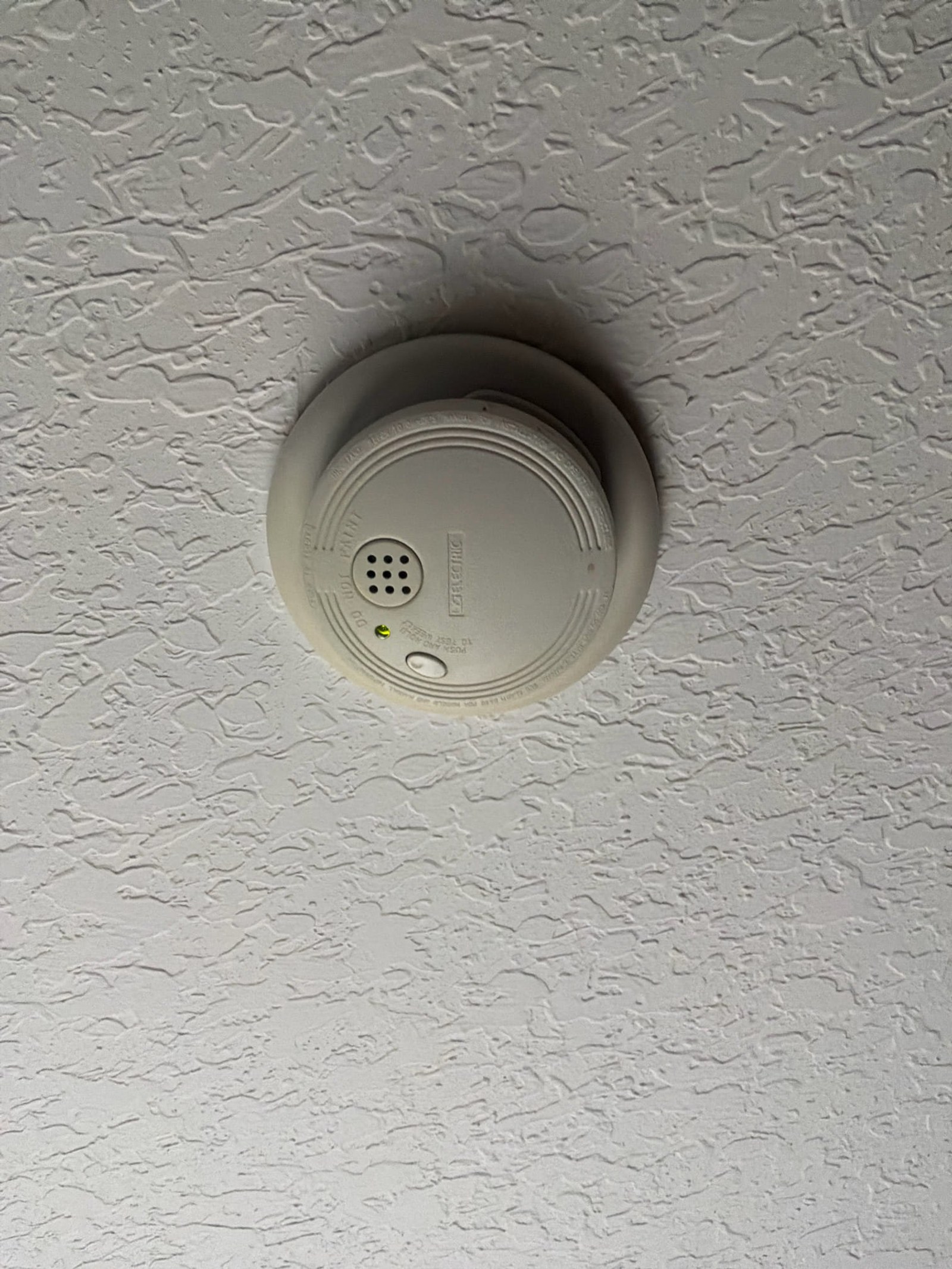
Before & After
 Before
 After
This Port St Lucie electrical repair case study walks through the real diagnosis, the fix, and the code details from a recent service call. A homeowner in Port St. Lucie, FL called our team to handle several small but meaningful upgrades in one visit: five hardwired smoke and CO detectors, a client-supplied Ring doorbell, a failed doorbell transformer, and two flood lights. Our field team completed every item the same day, leaving the home better connected and more comfortable from the front door to the ceiling of each main room.
Customer’s Problem
The homeowner wanted to replace aging detectors throughout the home and get a Ring doorbell working at the front entry. The existing doorbell had stopped functioning, and two outdoor flood lights also needed attention. Rather than schedule multiple visits, the family chose to bundle everything into one call.
What Our Electrician Found
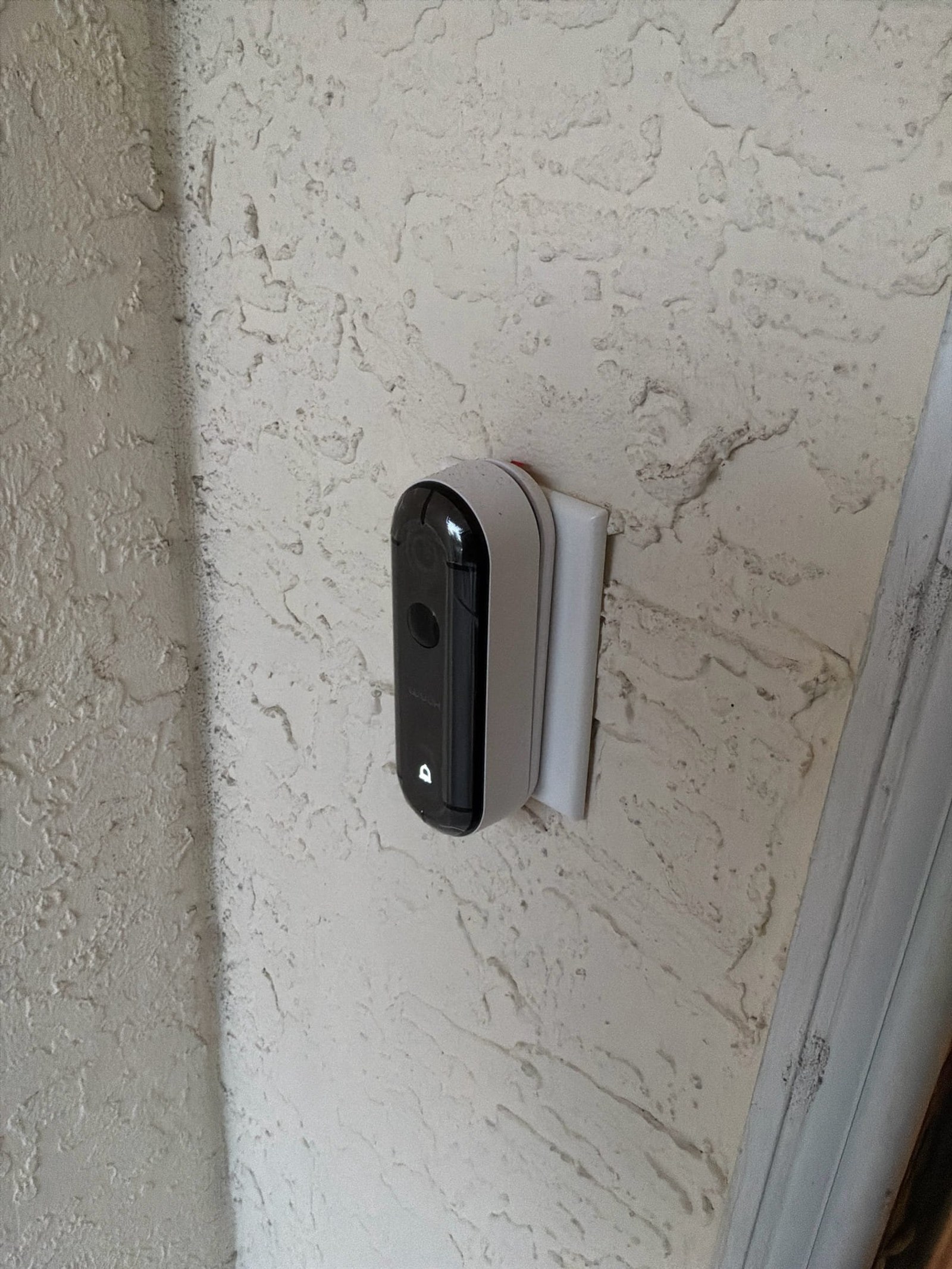
Our technician on-site found that the existing doorbell transformer had failed. A doorbell transformer steps 120VAC household current down to the low voltage a doorbell requires, typically 16 to 24 volts. When a transformer fails, the doorbell goes silent regardless of how new the button or chime may be. Without a working transformer, the Ring doorbell the homeowner had purchased could not be powered or activated.
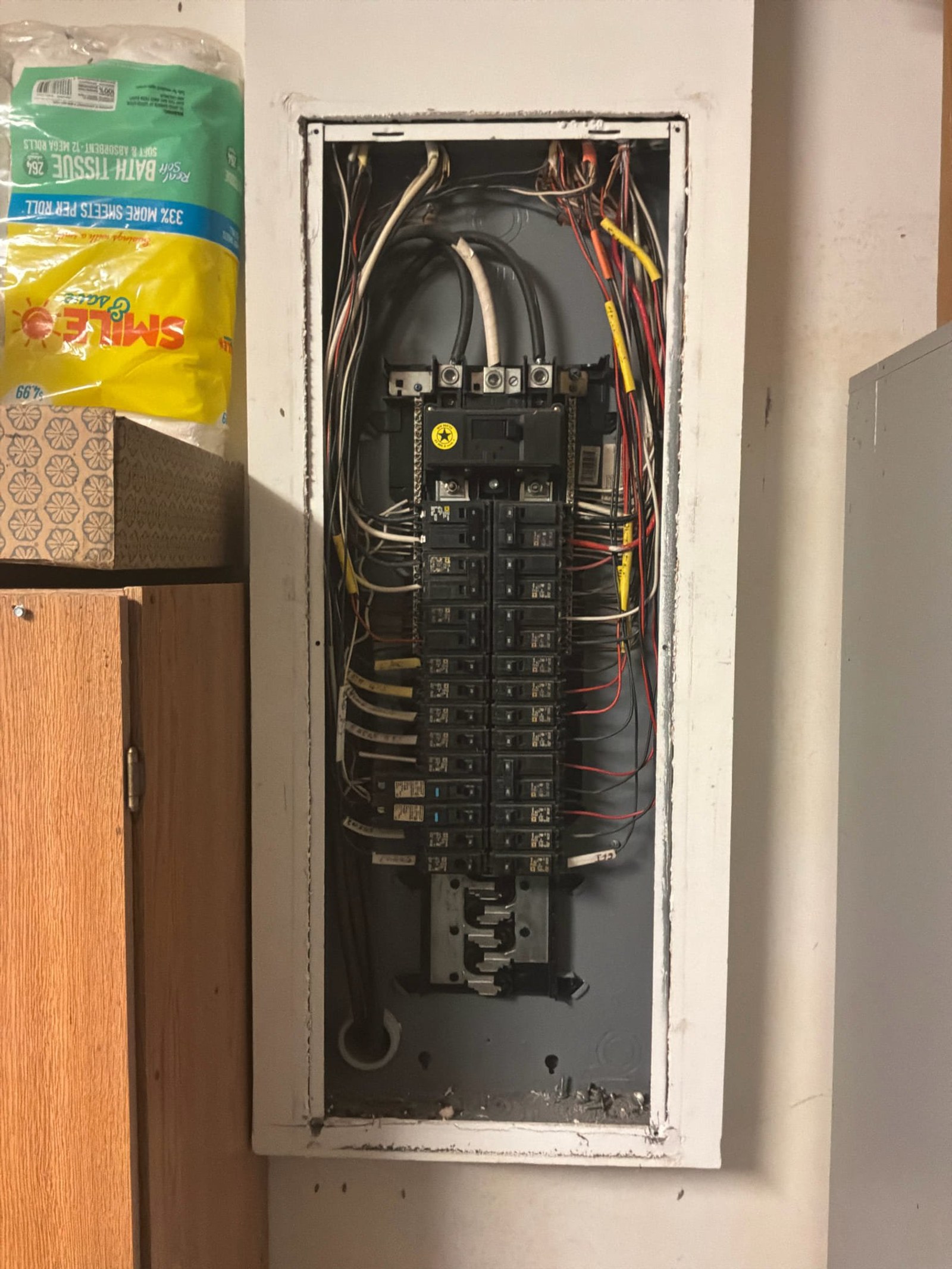
Inside the panel enclosure, our crew also noted wiring left in place from earlier work, with black, red, yellow, and white conductors visible. That condition is worth a note for any future service visit, so the team documented it for the homeowner’s records.
The existing smoke detectors were ceiling-mounted units that had reached the end of their useful service life. Current guidance from NFPA 72 recommends replacing smoke alarms every ten years from the manufacture date. Older units may still chirp and test at the press of a button, yet their sensing chambers can become less responsive over time. Replacing them proactively is the right move for any household.
Solution Selected
The homeowner chose to address all the items in a single visit: replace the doorbell transformer, install their Ring doorbell at the existing location, replace all five smoke and CO detectors with new hardwired Kidde units carrying 10-year sealed lithium backup batteries, and install two client-supplied flood lights at existing outdoor locations.
Work Performed
Our field team completed the following:
- Doorbell transformer replacement. The failed unit was swapped for a new 120VAC to 24VAC, 40VA transformer, giving the Ring doorbell the steady low-voltage supply it needs.
- Ring doorbell installation. The client-supplied Ring device was mounted at the existing front-door location on the textured interior wall, wired to the new transformer. The homeowner is responsible for confirming Wi-Fi signal strength at that location.
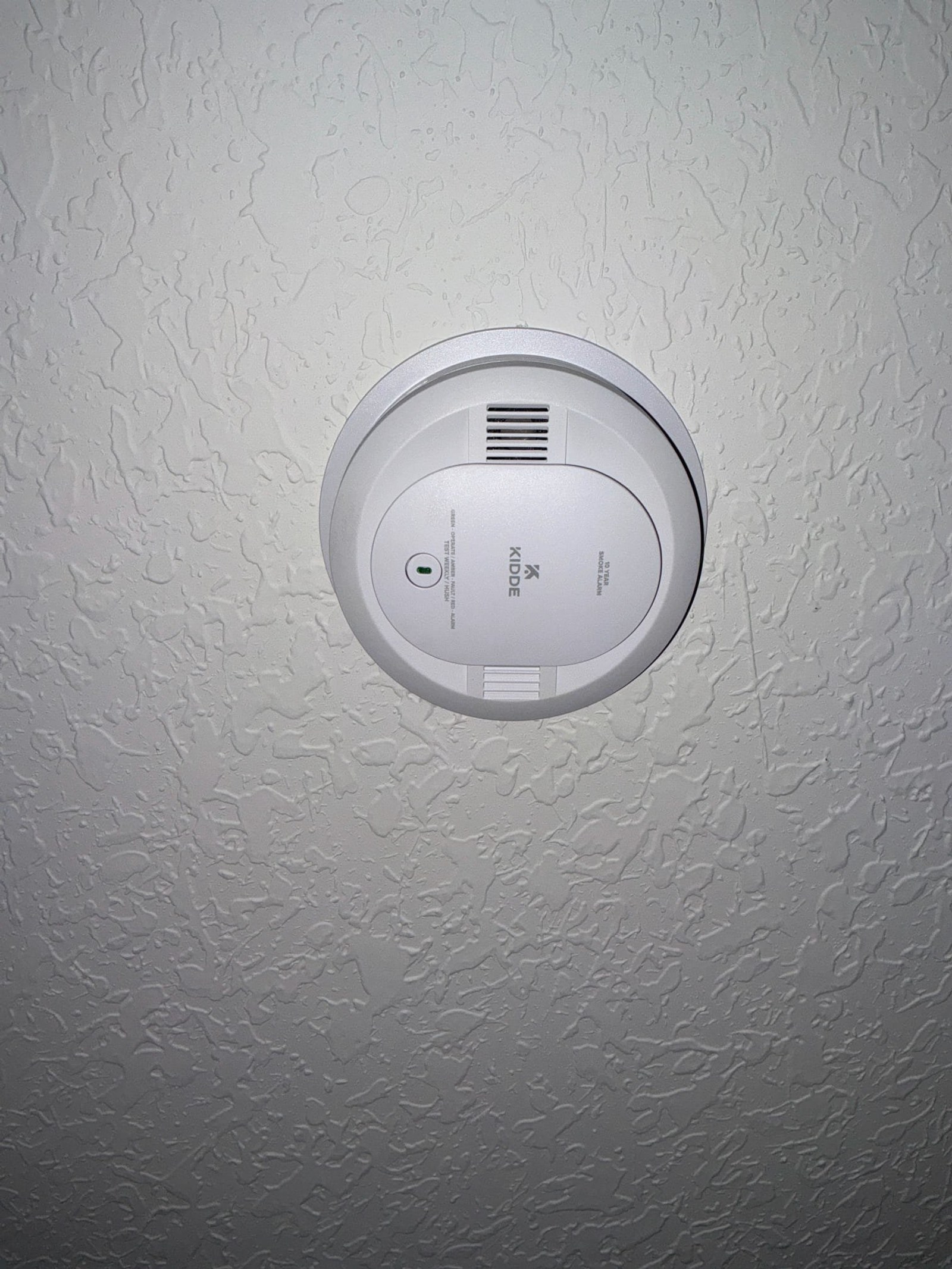
- Two Kidde combination smoke and CO detectors. The Kidde 21027536, 120V hardwired units with 10-year battery backup, were installed at two locations throughout the home.
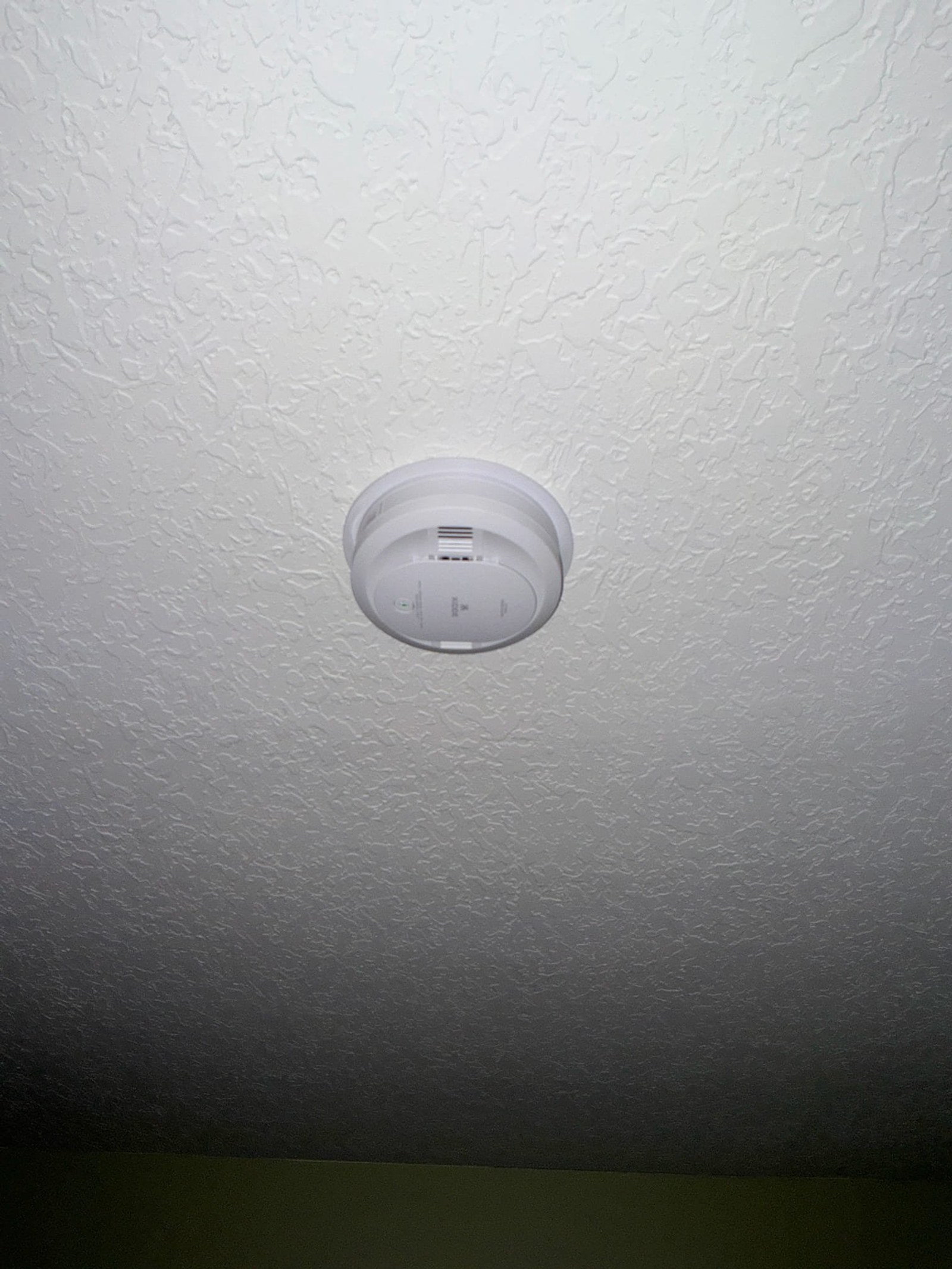
- Three Kidde basic smoke detectors. The Kidde 21027537, 120V hardwired units with 10-year battery backup, were installed at the remaining three locations, each ceiling-mounted on the textured drywall.
- Two flood lights. Client-supplied flood lights were installed at two existing outdoor locations, each less than twelve feet up, extending practical lighting coverage to the exterior of the home.
All five detector positions now carry hardwired Kidde units with sealed 10-year batteries, visible on the ceiling with a white housing consistent with the home’s interior finish.
Why Pricing Can Vary
Two homes with the same job on the invoice can land at different totals. On projects like this one, the total is driven by:
- Number of detectors and whether they are interconnected
- Hardwired versus battery or wireless-interconnect units
- Detector type (photoelectric, ionization, combination CO)
- Ceiling access and new wiring runs where none exist
- Code requirements triggered by the permit or the sale
Why This Port St Lucie Electrical Repair Matters for Homeowners
Smoke and CO detectors are the kind of home feature that works best when you never have to think about it. Hardwired units with 10-year sealed batteries mean the family does not need to remember annual battery swaps or wonder whether the unit chirping at 2 a.m. is a low-battery warning or an actual alert. Every morning routine, every weekend at home, the detectors are simply doing their job quietly in the background.
Interconnected hardwired detectors add another layer of reliability. When units are wired together on a shared circuit, a trigger at one location signals every unit in the home at once. That coverage is especially useful in a home with multiple rooms or levels, where a detector at one end of the house needs to be heard at the other.
The Ring doorbell and new transformer together mean the front entry now works the way the household expects it to. Deliveries, guests, and contractors are visible from any device connected to the homeowner’s Wi-Fi, adding daily convenience without any added complexity. Combined with the two new flood lights at the exterior, the home’s entry and outdoor areas are better lit and more welcoming through every season.
For homes in Port St. Lucie and the surrounding Treasure Coast area, keeping detectors current with NFPA 72 guidance and maintaining working doorbell and lighting systems is a straightforward way to give the whole household peace of mind. Our team at Thomas Edison Electric is licensed in Florida (EC13015487) and ready to help with jobs large and small in a single visit.
“I had the absolute pleasure of having Jared as an electrician. He was thoughtful, professional, considerate, and explained everything to me in a manner that was easy to comprehend. His professionalism is top notch and he’s an asset to this company. Would highly recommend.”
Code Compliance Cited in This Job
Every fix above maps to a specific section of NEC 2020. Each card links to NFPA’s public NEC index.
AFCI Protection for Dwelling Unit Branch Circuits
NEC 210.12 requires arc-fault circuit interrupter protection on branch circuits supplying outlets in dwelling unit living areas, bedrooms, and kitchens. When hardwired smoke detectors are replaced, the branch circuit powering them falls under this scope. Our team noted the panel interior wiring for documentation, supporting awareness of circuit protection status for future service. NFPA reference ›
Receptacle Outlet Placement in Dwellings
NEC 210.52 governs where receptacle outlets must be placed throughout a dwelling, which informs how branch circuits are laid out when detectors and lighting fixtures share wiring runs. Confirming outlet and fixture placement at each smoke detector location helps verify that the existing circuits serve each room as intended. NFPA reference ›
Receptacles in Damp or Wet Locations
NEC 406.9 requires receptacles and electrical devices in outdoor damp or wet locations to be housed in weatherproof enclosures. With two flood lights installed at exterior locations, any associated outdoor receptacles nearby are subject to this requirement, and the homeowner should confirm those outlets carry appropriate in-use covers. NFPA reference ›
Common Questions
Questions homeowners ask after seeing this kind of work.
How often should I have my home’s electrical system inspected?
A yearly inspection is a solid baseline for most homes. Homes built before 1990 and homes that have weathered recent storms may benefit from inspections more often, since older wiring and weather events can create conditions worth addressing before they develop further. Keeping up with annual check-ins means small findings get caught early and the household stays comfortable year-round. Schedule online to book your next inspection with our Port St. Lucie area team.
When should hardwired smoke and CO detectors be replaced?
NFPA 72 recommends replacing smoke alarms every ten years from the manufacture date printed on the back of the unit, and CO detectors typically carry a five to seven year service life. Even a unit that passes a button test may have a sensing chamber that has lost sensitivity over time. Staying current with those timelines keeps the home’s detection working the way the family expects. Schedule online if you’re not sure how old your detectors are.
What causes a Ring doorbell to stop working even after installation?
The most common cause is a failed or undersized doorbell transformer. A Ring doorbell requires a steady 16 to 24VAC supply at sufficient VA capacity, typically 30VA or more, to power the device and its chime. If the existing transformer is too small or has failed, the doorbell will not activate or will behave erratically. Replacing the transformer with a properly rated unit, as we did in this Port St. Lucie home, usually resolves the issue immediately. Schedule online if your video doorbell isn’t powering on.
Can hardwired smoke detectors work together as a system?
Yes. Hardwired smoke detectors wired on the same interconnect circuit communicate with each other, so an alarm at one unit triggers all units throughout the home at once. That whole-home response is especially helpful in larger homes or homes with multiple rooms where a single detector might not be audible everywhere. The five Kidde units installed in this Port St. Lucie home are configured to operate this way. Book a safety check if you want to confirm your detectors are interconnected.
Is it safe to leave old wiring inside a panel after earlier work?
Wiring left in place from prior work inside a panel enclosure is common and not automatically a concern, but it is worth documenting and reviewing during any future service visit. A licensed electrician can confirm that unused conductors are properly terminated and not creating unnecessary clutter inside the enclosure. Our team noted this condition in the Port St. Lucie home for the homeowner’s records. Schedule online if you’d like a licensed electrician to review your panel’s interior.
Project Photos
Electrician and Technical Reviewer
Work performed by Jared, Thomas Edison Electric field electrician serving Jupiter / West Palm Beach.
Jared, the electrician on this job, is the technical reviewer of record for this case study.
Location
This project was completed in Port St. Lucie, Florida, in our Greenacres / Royal Palm Beach service area.