
This Port St Lucie panel upgrade case study walks through the real diagnosis, the fix, and the code details from a recent service call. A Port St. Lucie homeowner noticed brown marks and a faint smoke smell coming from her electrical panel, not for the first time. Our licensed electrician arrived that same morning, assessed what was inside, and installed a Square D HEPD80 80kA whole-home surge protector to give every circuit in the home a reliable first line of defense against transient voltage.
Customer’s Problem
The homeowner called because her panel had started smoking and showed fresh brown marks on the enclosure. She mentioned it had happened before and wanted a lasting fix, not a temporary patch. She was on-site, available to walk through the findings, and ready to move forward the same day.
What Our Electrician Found
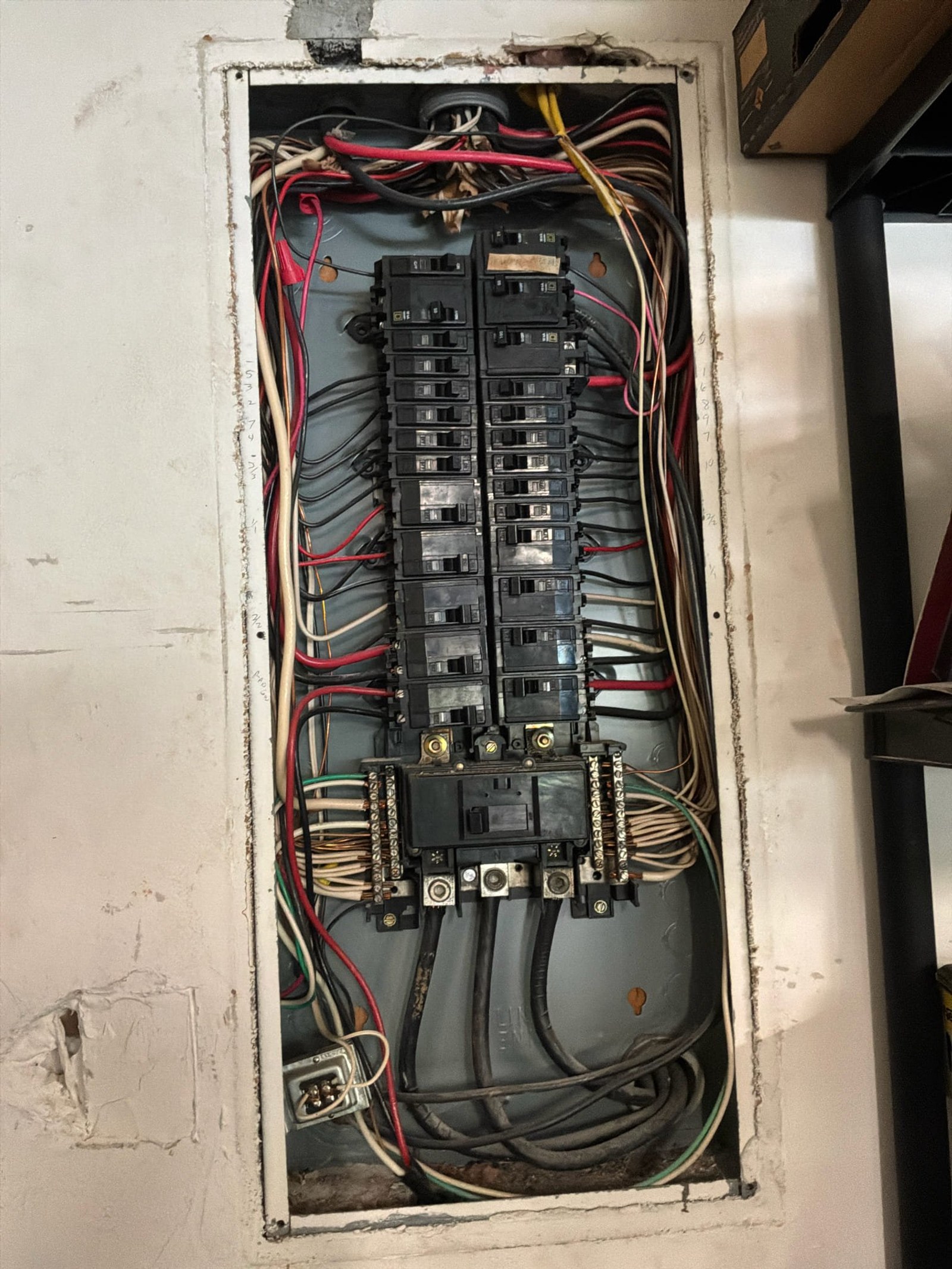
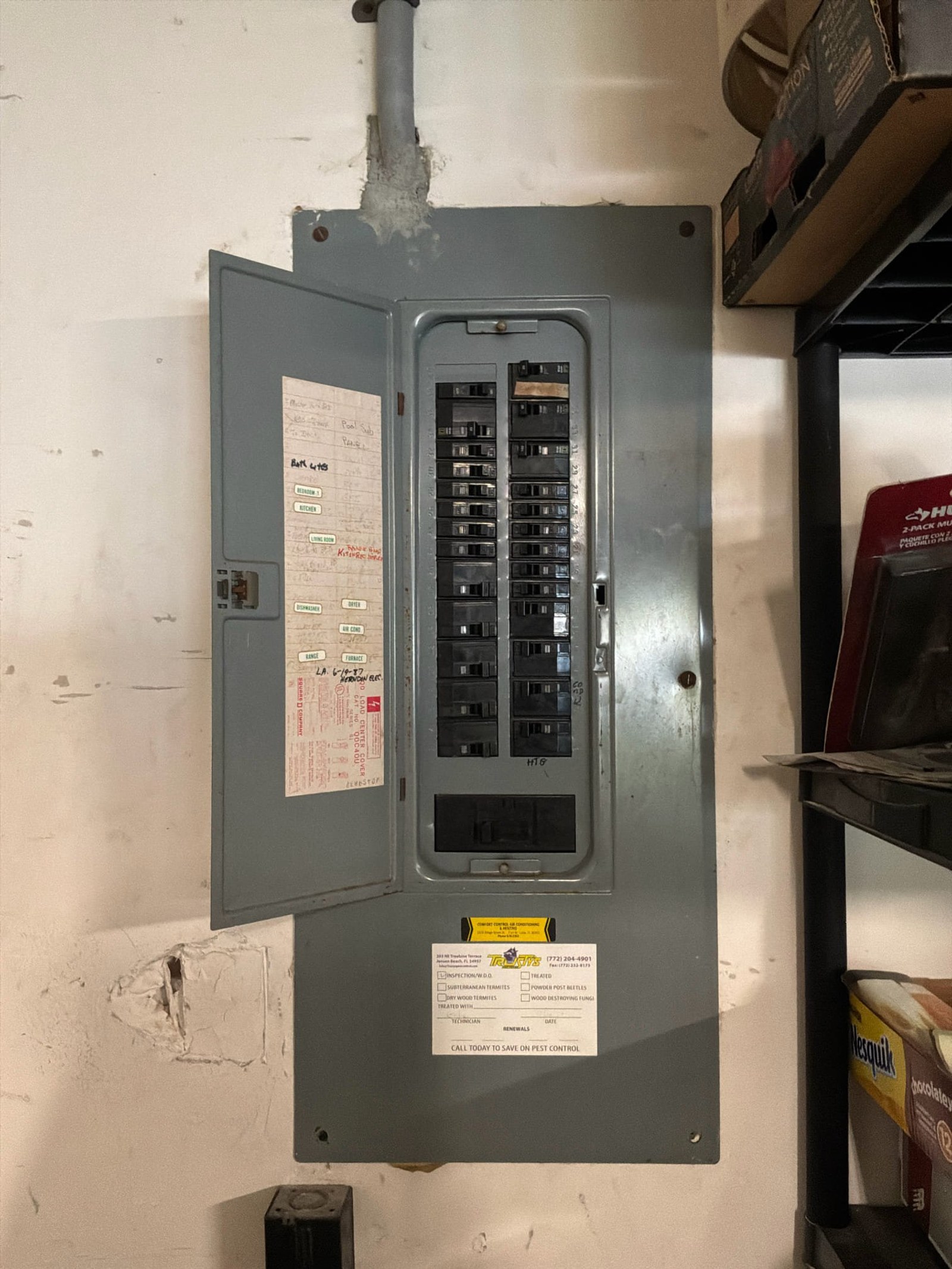
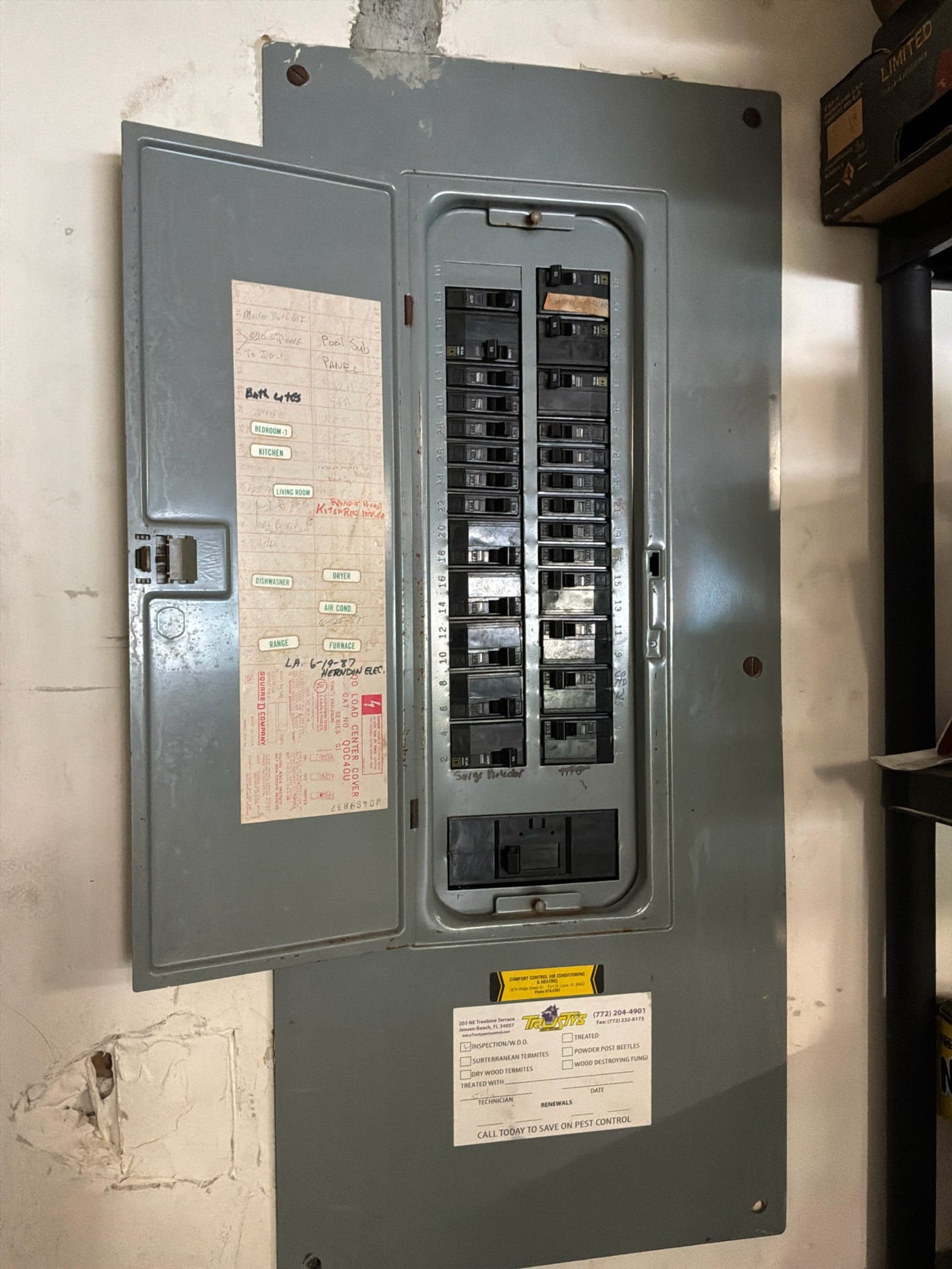
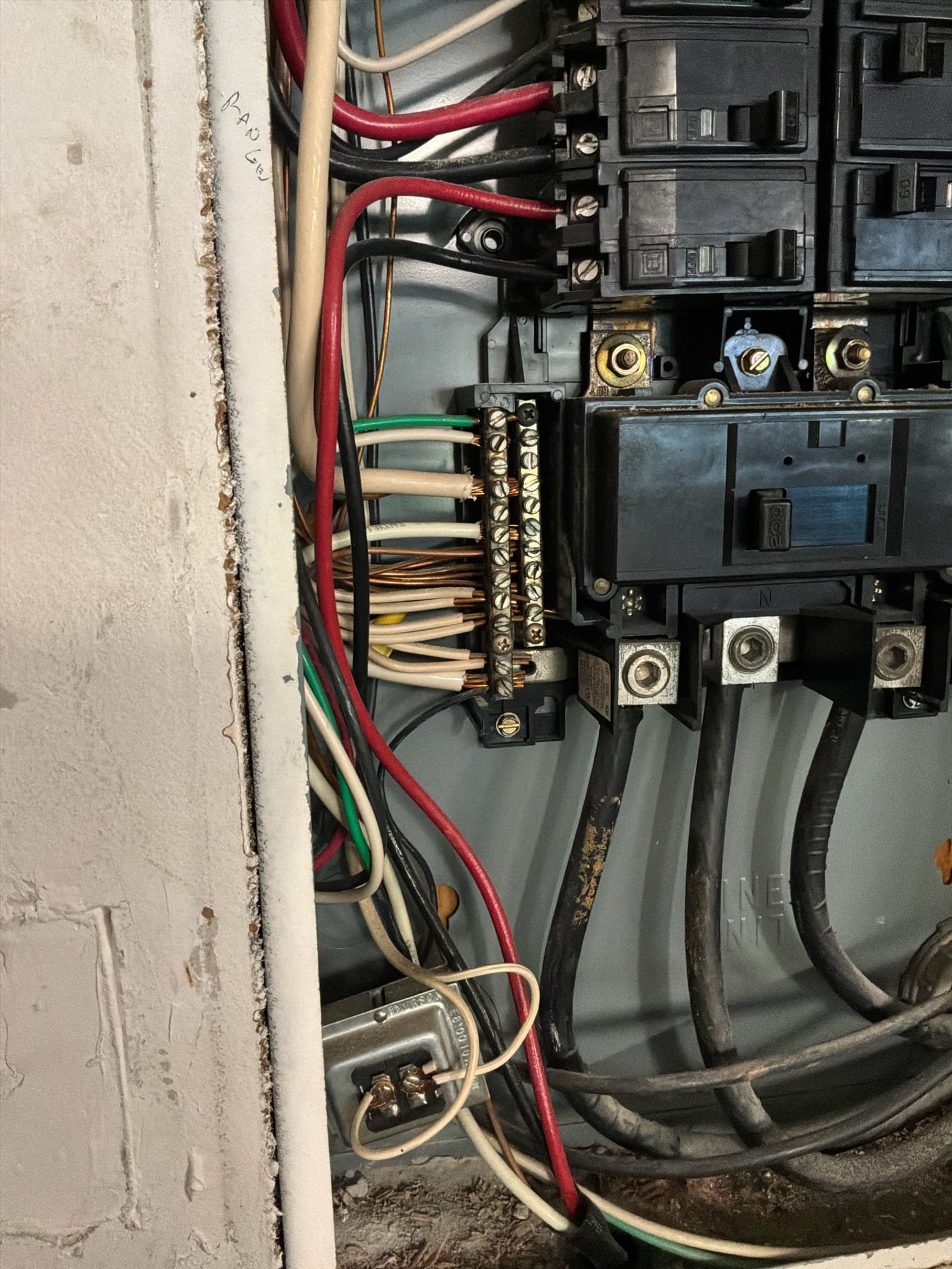
Opening the panel told a clear story. The brass lugs on the service conductors showed visible salt corrosion, and rust had developed on the metal enclosure itself. Red, black, yellow, and green conductors were present throughout the interior, and several terminations showed the kind of surface oxidation that builds up when moisture finds its way into the enclosure over time. The grey outer enclosure and the dead front both showed corrosion along the edges, and a layer of paint had been applied over part of the device at some point, which is consistent with DIY-era maintenance common in older Florida homes. The handwritten circuit-directory labels on the door card also pointed to a long service history with multiple owners making their own additions along the way.
None of these conditions meant the panel had failed outright. However, they did show a system that had worked hard for many years in a coastal-influenced climate and was ready for a meaningful upgrade. Moisture intrusion into an enclosure is worth addressing promptly: over time it accelerates oxidation on terminations and raises contact resistance across the lugs, which is consistent with the intermittent heat and discoloration the homeowner described.
Additionally, the panel had no dedicated surge protective device installed. In South Florida, where afternoon thunderstorms are routine from May through October, transient voltage events are among the most common sources of wear on modern electronics, appliances, and HVAC equipment.
Solution Selected
The homeowner chose to move forward with a whole-home surge protector installation at the panel. Given the visible signs of wear inside the enclosure and the home’s history of recurring heat marks, adding a Square D HEPD80 at the panel-level was the right scope: it addresses the root concern about transient voltage stress on every circuit in one visit.
Work Performed
Our field team installed one Square D HEPD80 80kA two-pole whole-home surge protector directly at the residential panel. The device mounts inside the panel enclosure and connects to a dedicated two-pole breaker, placing it at the first point of entry for any voltage spike arriving from the utility line. At 80kA surge current capacity, the HEPD80 meets the Type 2 SPD requirements under NEC 230.67, which now requires surge protection at the service for new and upgraded dwelling-unit panels. Every branch circuit in the home, from the kitchen appliances to the HVAC system to entertainment electronics, now routes through that protection.
Why Pricing Can Vary
Two homes with the same job on the invoice can land at different totals. On projects like this one, the total is driven by:
- Surge device type and rating
- Whether the device mounts inside the panel or beside it
- Available breaker positions in the panel
- Panel condition and any corrections found when the cover is removed
- Layered protection at sensitive equipment
- Grounding system condition, which the device depends on
Why This Port St Lucie Panel Upgrade Matters for Homeowners
Port St. Lucie sits squarely in one of the most lightning-active corridors in the country. Surge events do not have to be dramatic to cause real wear: a utility switching event or a nearby strike can send a brief voltage spike through the service entrance, and sensitive electronics absorb that stress silently over time. A panel-mounted surge protector intercepts those spikes before they reach any downstream device.
For this household, that means the refrigerator, the AC system, the washer and dryer, and any smart-home devices all have a consistent buffer working in the background. The family does not have to think about it. When a summer storm rolls through in the evening, the home keeps running the way they expect it to.
Older Florida panels often carry the marks of years of hard service: coastal humidity, multiple owners, and decades of daily load cycling. Seeing corrosion on the enclosure or DIY-era wiring is common in homes of this vintage, and it is not a reason for alarm. It is, however, a good prompt to make sure the protection layer is current. The Electrical Safety Foundation International notes that whole-home surge protection is one of the most cost-effective improvements a homeowner can make for long-term appliance reliability. With the Square D HEPD80 now in place, this Port St. Lucie home is well-positioned for every storm season ahead, giving the homeowner the peace of mind she was looking for when she made that first call.
“Excellent friendly service from Jared”
Code Compliance Cited in This Job
Every fix above maps to a specific section of NEC 2020. Each card links to NFPA’s public NEC index.
Surge Protective Devices at Services
NEC 230.67 requires a listed surge protective device at the service of all new or upgraded dwelling-unit electrical services. On this job, the panel had no existing SPD, so installing the Square D HEPD80 brought the service into alignment with this requirement. The device is connected at the point where utility power enters the panel, intercepting transient voltage before it can reach any branch circuit. NFPA reference ›
Electrical Connections
NEC 110.14(B) addresses the integrity of terminal connections and splices, requiring that connections be made in a manner that avoids thermal stress from loose or corroded contacts. The visible salt corrosion and oxidation on the brass lugs and enclosure observed on this job are consistent with moisture exposure over time, which elevates contact resistance at terminations. Proper connection of the new SPD followed these requirements. NFPA reference ›
Circuit Identification
NEC 408.4 requires that every circuit in a panelboard be legibly identified as to its purpose or use. The panel on this job had handwritten labels on an aged circuit-directory card, which is common in homes that have passed through multiple owners. Clear, accurate circuit labeling helps any technician or inspector work safely and efficiently at the panel. NFPA reference ›
Common Questions
Questions homeowners ask after seeing this kind of work.
What does a whole-home surge protector actually protect in my house?
A panel-mounted surge protector like the Square D HEPD80 sits at the point where utility power enters your home and intercepts transient voltage spikes before they travel down any branch circuit. That covers every outlet, appliance, HVAC unit, and hardwired device fed from that panel: refrigerators, televisions, smart-home hubs, and EV chargers alike. It works quietly in the background every day, not just during major storms. If your panel does not yet have one, our team can schedule an installation visit at a time that works for your household.
Why did my electrical panel show brown marks and a smoke smell?
Brown marks and a smoke smell near a panel are typically signs of thermal stress at a connection point, often from a loose terminal, corroded lug, or a breaker that has been cycling under load stress for years. In coastal Florida climates, moisture intrusion into the enclosure accelerates oxidation on brass lugs and metal surfaces, which raises contact resistance over time. If you are seeing those signs, it is worth having a licensed electrician open the panel and document the condition. Book an inspection online so we can take a look and walk you through what we find.
How often should I have my home’s electrical panel inspected?
A yearly inspection is a good baseline for most households. Homes built before 1990 and homes in coastal or high-humidity areas like Port St. Lucie may benefit from a closer look more often, since moisture and salt air accelerate wear on enclosures, lugs, and conductors. After a significant storm season, an additional visual check is a reasonable step. Schedule your annual inspection online and our team will document everything we find.
Is corrosion inside an electrical panel normal for older Florida homes?
Surface corrosion on panel enclosures and lug hardware is common in homes that have been exposed to Florida’s humidity and salt air over many years. It was not a code concern when those panels were installed, and many of them have served households reliably for decades. Today’s standards and best practices, however, ask that corroded connections be evaluated and addressed, since oxidation on terminations can increase resistance over time. If your panel shows rust or white salt deposits, our team can assess the condition and walk you through your options.
Does Florida require whole-home surge protection on residential panels?
NEC 230.67, which Florida has adopted as part of its electrical code update cycle, requires a listed surge protective device at the service entrance for new and substantially upgraded residential services. Existing panels that have not been modified may predate this requirement, but adding a device like the Square D HEPD80 is a straightforward upgrade that brings the service in line with current standards and adds a layer of protection for every appliance and device in the home. Book a visit online if you would like us to confirm whether your panel already has one in place.
Project Photos
Electrician and Technical Reviewer
Work performed by Jared, Thomas Edison Electric field electrician serving Jupiter / West Palm Beach.
Jared, the electrician on this job, is the technical reviewer of record for this case study.
Location
This project was completed in Port St. Lucie, Florida, in our Saint Lucie County service area.