
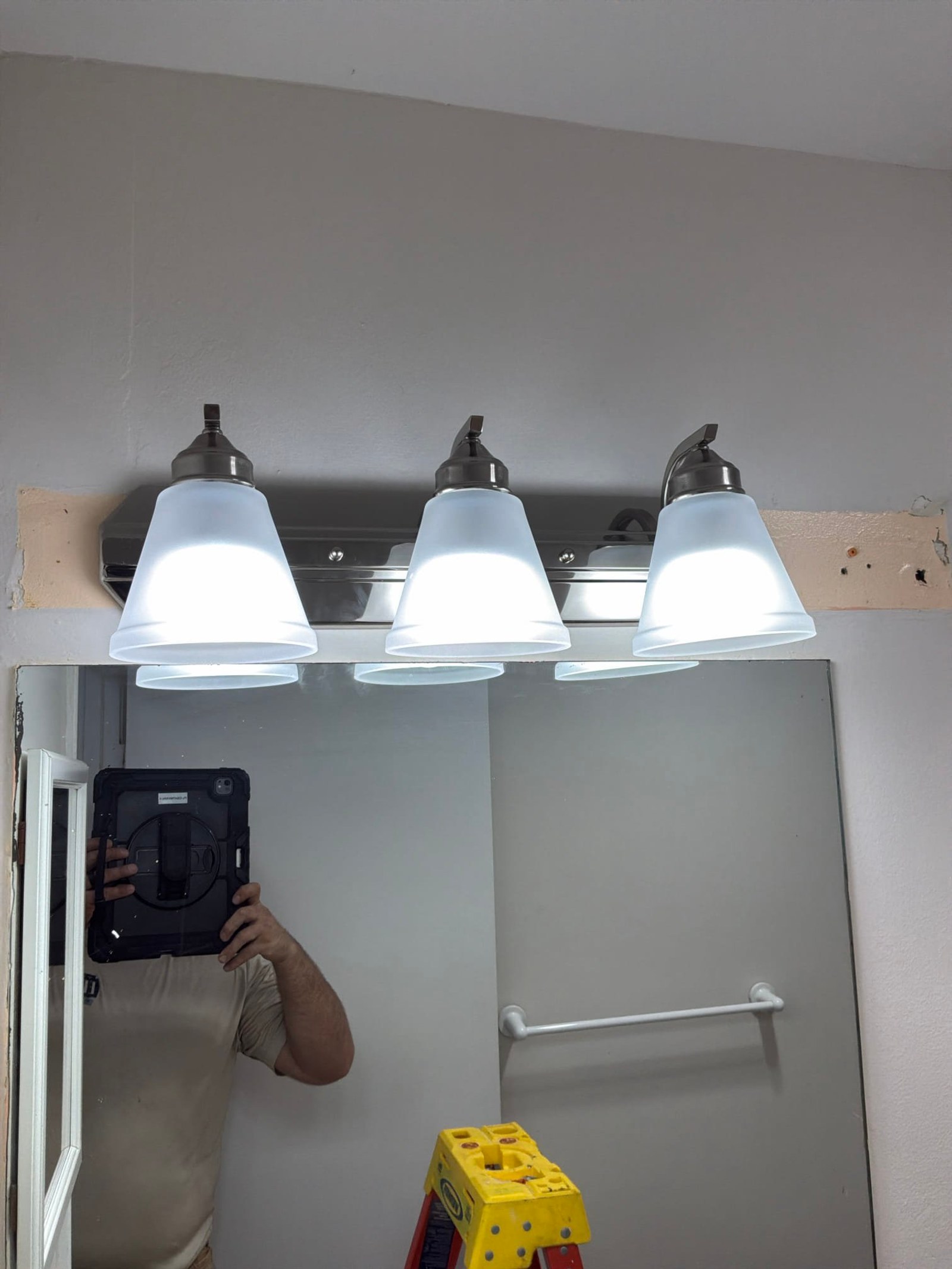
Before & After
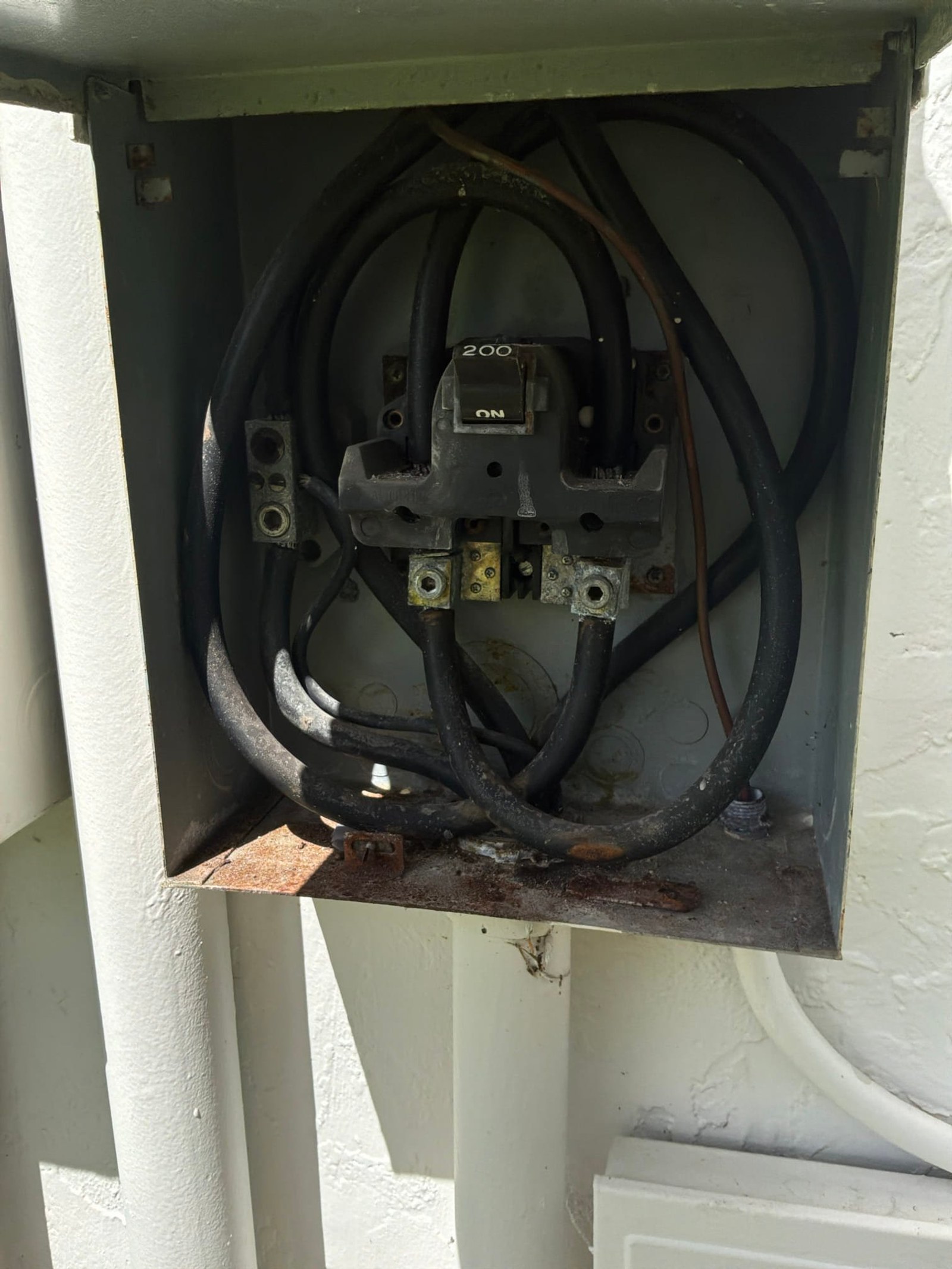 BeforeAfter
This Delray Beach GFCI protection case study walks through the real diagnosis, the fix, and the code details from a recent service call. A homeowner in Delray Beach, FL called about a handful of kitchen conveniences that had quietly stopped working the way they should: an outlet tucked behind the refrigerator that was nearly impossible to reach, a couple of GFCI receptacles due for replacement, and kitchen lights that flickered whenever hot water ran. Our field team visited, assessed the situation, and left the kitchen more comfortable and code-aligned than before.
Customer’s Problem
The homeowner wanted an outlet moved from behind the refrigerator to a more practical spot, a few GFCI receptacles updated, and the flickering kitchen lights looked at. Each of these is a common ask in South Florida homes, and together they pointed to a kitchen that had simply aged past what the original wiring layout was designed to handle. The homeowner also noticed the lighting issue seemed tied to water use, which gave our technician on-site a useful clue to start with.
What Our Electrician Found
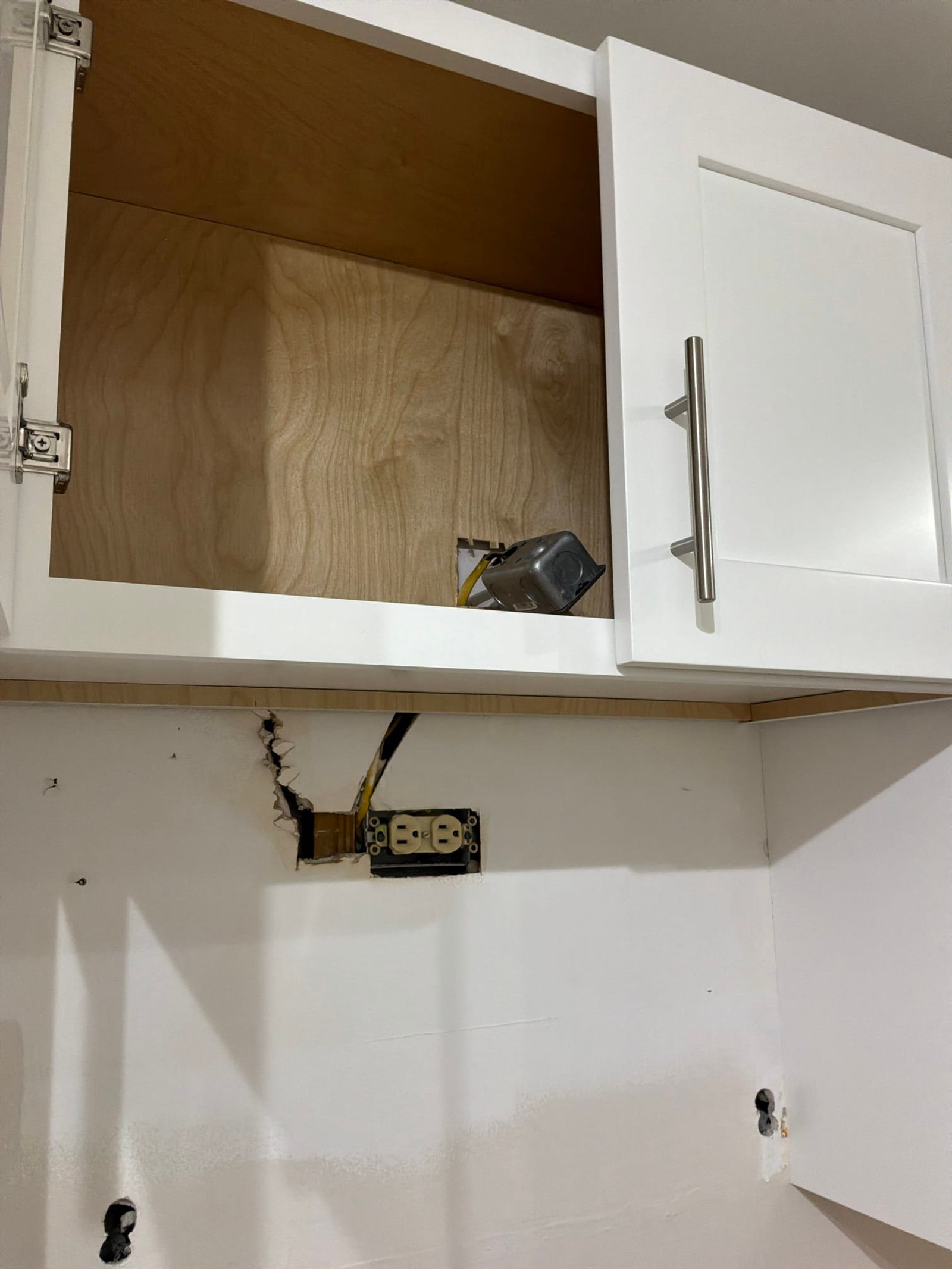
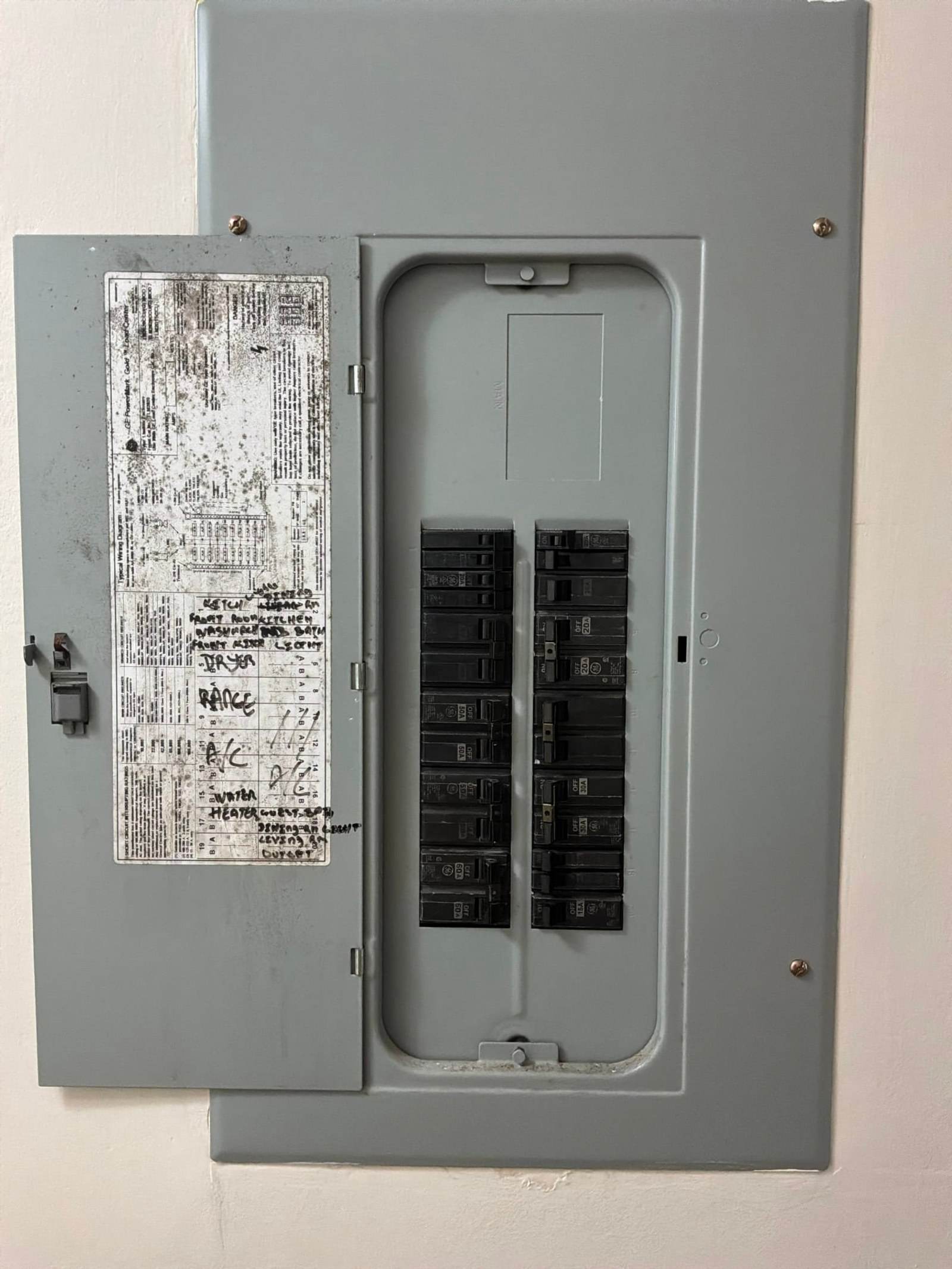
Before the work began, the team documented conditions around the service entry and panel area. The exterior showed corrosion on the terminations and enclosure, along with a cover plate that was not fully in place, exposing internal components to the elements. These are worth noting because South Florida’s humidity accelerates corrosion on any enclosure left open to outside air. The panel area also showed handwritten circuit labels and workmanship consistent with previous DIY modifications, which meant the team needed to verify the wiring before extending any new circuit.
Inside, the rough-in area where the outlet relocation was planned showed standard stud-bay access, and the team confirmed enough existing wire to work with. Importantly, nothing failed any inspection checklist item, so the findings were about context and condition rather than any immediate deficiency.
Options We Presented
The team brought eight estimate options to the conversation. The choices ranged in scope from simply swapping the GFCI receptacles at their current locations, all the way up to relocating the refrigerator outlet with new conduit and wire, installing a junction box to extend the circuit cleanly, and running additional 12/2 Romex where needed. The homeowner could pick the level of improvement that matched their goals and budget. Smaller scopes addressed the GFCI updates alone; larger scopes tackled the relocation and new wiring run at the same time.
Solution Selected
The homeowner chose the scope that combined both GFCI replacements with the full outlet relocation package. That meant new conduit, a new junction box, a metal 4-square box for the relocated position, and a short Romex run to tie everything together neatly. The choice made sense given the findings: with corrosion visible at the exterior and DIY wiring already in the mix, a clean, properly supported extension was the right way to move the outlet rather than a quick splice.
Work Performed
Here is what the field team completed:
- Replaced two 20-amp GFCI tamper-resistant duplex receptacles at their existing kitchen locations.
- Replaced one additional 20-amp tamper-resistant duplex receptacle at an existing location.
- Installed a small junction box and connected it to the existing wiring to support the circuit extension.
- Ran approximately five feet of 12/2 Romex (20-amp circuit) through open area to reach the new outlet position.
- Installed a metal 4-square box at the new outlet location.
- Ran liquid-tight flexible non-metallic conduit (3/4 inch) through open area up to five feet for a weatherproof, code-appropriate transition.
The result: the refrigerator outlet now sits in an accessible spot, and both GFCI positions are updated with tamper-resistant 20-amp devices.
Important Materials and Equipment
Materials and equipment on the invoice for this project:
- Strap EMT 3/4" 1H (quantity 2)
- Carflex 3/4" Str Conn
- Carflex 3/4" NM (quantity 2)
- CU THHN 10 Solid Black Price Per Foot (quantity 5)
- CU THHN 10 Solid White Price Per Foot (quantity 5)
- CU THHN 10 Solid Red Price Per Foot (quantity 5)
- RACO 191, 1900 Box 1-1/2D – 3/4KO
- Mulberry 76101, 1G Duplex Semi Gloss White Metal Plate
Why Pricing Can Vary
Two homes with the same job on the invoice can land at different totals. On projects like this one, the total is driven by:
- Number of devices replaced
- Device type (standard, GFCI, AFCI, tamper-resistant, USB, smart or dimmer)
- Condition of the boxes and wiring behind the devices
- Backstabbed or aluminum connections that need correction
- Access and the number of rooms involved
Why This Delray Beach Gfci Protection Matters for Homeowners
GFCI receptacles have a finite lifespan. Most manufacturers rate the internal test-and-reset mechanism for around ten years of reliable operation. In a South Florida kitchen, heat and humidity can shorten that window further. Replacing them on a predictable schedule means the family never walks into a kitchen where the coffee maker, blender, or countertop appliance just won’t turn on. That kind of quiet reliability is easy to take for granted until it disappears.
Relocating an outlet from behind a large appliance is one of those small changes that improves a morning routine more than the effort suggests. Reaching behind a refrigerator every time a cord needs to be plugged in or checked is a nuisance at best. With the outlet moved and secured in a proper metal box with a clean conduit run, the circuit is stable, accessible, and supported the way a permanent installation should be.
Finally, the corrosion and open cover plate noted at the exterior enclosure are a reminder that South Florida’s climate treats outdoor electrical components differently than the rest of the country. A weatherproof enclosure kept closed and maintained keeps moisture out of the service entry, which in turn keeps the whole system running consistently, through every storm season, every year. Homeowners in this zip code who notice discoloration, rust, or missing covers on exterior boxes are doing their household a favor by getting those assessed early, before a rainy season adds more moisture to the equation.
For families in Delray Beach, FL and the surrounding 33445 area, these kinds of updates add up to a home that simply works: lights that stay steady, outlets where they are needed, and a kitchen wired to handle modern daily life without surprises.
Code Compliance Cited in This Job
Every fix above maps to a specific section of NEC 2020. Each card links to NFPA’s public NEC index.
GFCI Protection for Personnel
NEC 210.8 requires GFCI protection on all kitchen countertop receptacles in dwelling units, as well as receptacles in garages, bathrooms, and outdoor locations. On this Delray Beach job, the two 20-amp GFCI tamper-resistant receptacles replaced at existing kitchen locations bring those outlets in line with current personnel-protection requirements. Homes wired before earlier GFCI code cycles may have had standard receptacles in these positions, which is common for the era. NFPA reference ›
Tamper-Resistant Receptacles in Dwellings
NEC 406.12 requires that receptacles installed in dwelling units be of the tamper-resistant type. All three receptacles installed on this job, including the two GFCI devices and the single standard 20-amp device, were tamper-resistant models. This ensures that replacement outlets meet the current standard for residential installations rather than the specifications in effect when the home was originally wired. NFPA reference ›
Replacement Receptacles Must Meet Current Requirements
NEC 406.4(D) states that when a receptacle is replaced in a location that requires GFCI protection under current code, the replacement device must itself provide that protection. This applied directly to the two GFCI positions in this kitchen: swapping in new 20-amp GFCI tamper-resistant devices ensures the replacement meets today’s standard, not just the older one that was in place. NFPA reference ›
Electrical Connections
NEC 110.14(B) covers the integrity of splices and terminations, requiring that connections be made in an approved manner inside an approved enclosure. Installing a proper junction box and a metal 4-square box for the circuit extension on this job keeps every new splice contained and accessible, consistent with these requirements. This is especially relevant here because the previous wiring showed signs of DIY modification, where enclosure discipline is sometimes inconsistent. NFPA reference ›
Common Questions
Questions homeowners ask after seeing this kind of work.
How do I know when a GFCI receptacle needs to be replaced rather than just reset?
A GFCI receptacle that trips repeatedly, fails its test-and-reset cycle, or simply does not respond when the reset button is pressed is telling you the internal mechanism has worn out. Most GFCI devices are rated for roughly ten years of reliable operation, and South Florida’s heat and humidity can shorten that window. If your kitchen or bathroom GFCI outlets are original to a home wired more than a decade ago, it is worth having a licensed electrician take a look. Schedule online and our team can check every GFCI position in one visit.
Why would kitchen lights flicker when hot water is running?
Flickering lights tied to water use often point to a shared circuit where the water heater or a pump momentarily pulls enough current to cause a voltage dip on a nearby lighting branch. It can also indicate a loose connection somewhere along the circuit that becomes more pronounced under load. Neither cause is something to ignore, because consistent voltage fluctuation adds wear over time to both the fixtures and the devices on the circuit. If you are seeing the same symptom, our team can trace it back to the source. Book a diagnostic visit to get a clear answer.
Is it worth moving an outlet that is already working but in an inconvenient location?
Absolutely. An outlet behind a large appliance is effectively unavailable for daily use, and reaching around a refrigerator to plug or unplug something puts wear on the cord at the plug end. Relocating the outlet to an accessible position, with proper conduit and a supported box, means the circuit is both usable and correctly installed. The work on this Delray Beach job combined the relocation with the GFCI updates in a single visit, which is often the most efficient approach. Schedule online to bundle similar tasks into one appointment.
What should I do if I notice corrosion or a missing cover on an outdoor electrical box?
An exterior enclosure that is open to the elements or showing corrosion on its terminations benefits from attention before rainy season arrives. South Florida humidity moves quickly through any unsealed opening, and persistent moisture in an outdoor panel or disconnect can affect connection reliability over time. This was consistent with what the team observed on this Delray Beach job. If you see rust, discoloration, or a missing cover on any outdoor box at your home, it is a good time to have a licensed electrician assess it. Book a safety check so you know exactly what you are working with.
How often should I have my home’s electrical system inspected?
A yearly inspection is a solid baseline for most homes, and it gives a licensed electrician the chance to catch small issues, like aging GFCI devices or weathered exterior enclosures, before they become bigger projects. Homes built before 1990 and homes that have weathered recent storms may benefit from inspections more often, since older wiring and storm-related moisture both add to the pace of wear. Schedule online to set up an annual visit and keep your household running the way you expect it to.
Project Photos
Electrician and Technical Reviewer
Work performed by Jared, Thomas Edison Electric field electrician serving Jupiter / West Palm Beach.
Jared, the electrician on this job, is the technical reviewer of record for this case study.
Location
This project was completed in Delray Beach, Florida, in our Boynton Beach service area.