
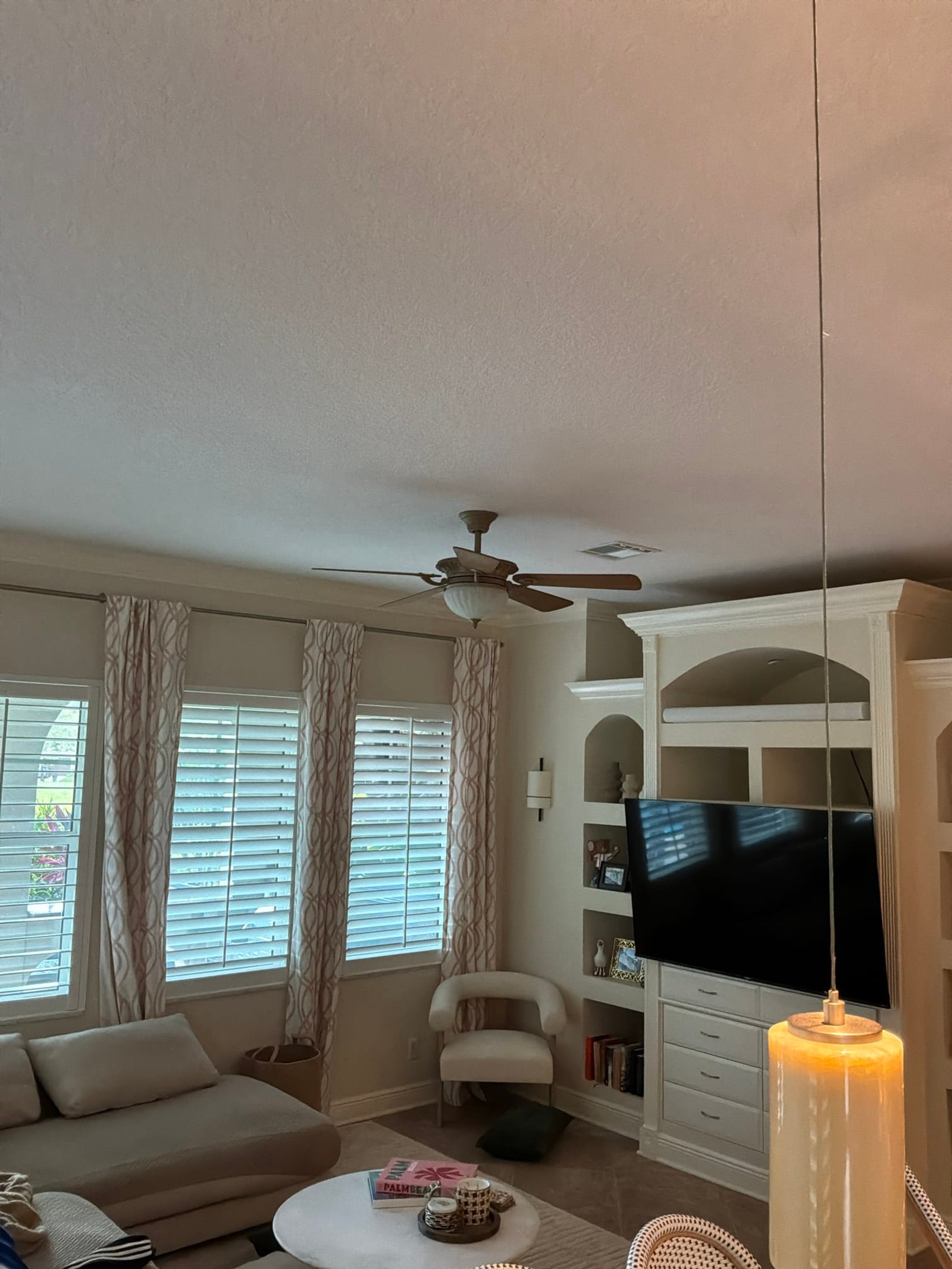
Before & After
 Before
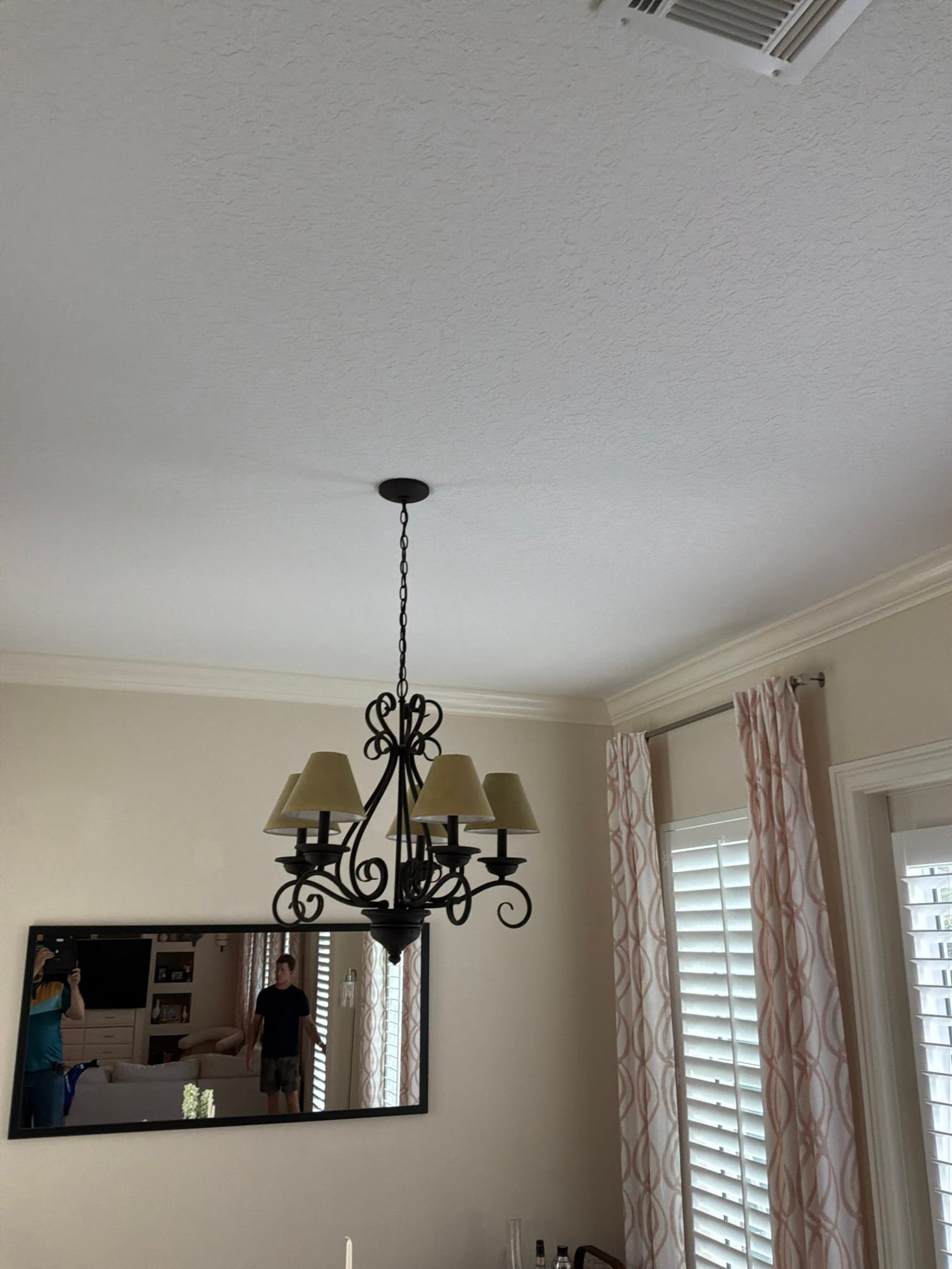 After
AfterThis West Palm Beach electrical repair case study walks through the real diagnosis, the fix, and the code details from a recent service call. A homeowner in Palm Beach Gardens, FL, called us to replace several ceiling fans and explore a chandelier swap for a future estimate. Once our field team arrived, the work expanded naturally: new fixtures went up throughout the home, a five-arm chandelier found its place in the dining area, and a complimentary visual safety walkthrough surfaced a couple of items worth noting for the future.
The Problem
The homeowner had outgrown the existing ceiling fans. Some units were already on site; others were arriving soon. The goal was straightforward: swap the fans, hang a new chandelier, and get a licensed set of eyes on the overall electrical system while the team was there.
“I need to replace a few ceiling fans and I have a chandelier I’d like to put up too. I may have some additional work coming down the road.”
Investigation
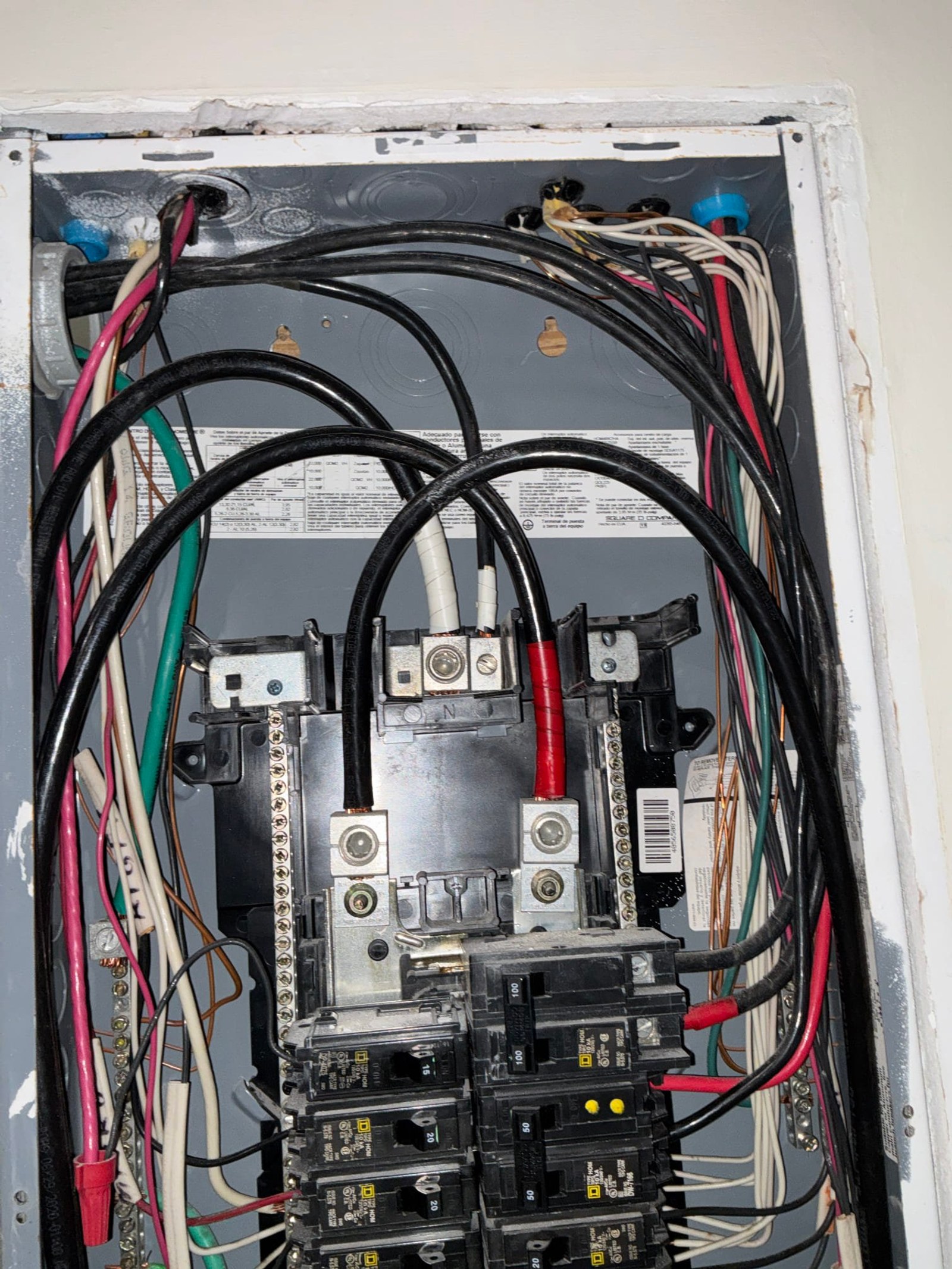
Before touching a single fixture, our technician on-site conducted a visual walkthrough of the electrical system. Most items came back green across the board. The 200-amp Square D QO panel was properly labeled, breakers were correctly sized, GFCI protection was present in required areas, and the grounding system checked out well.
Panel Observations
Two items in the inspection photos stood out as worth a conversation. The panel interior showed corrosion on the terminations and enclosure, along with a loose lug. Corrosion at panel terminations is a common finding in Florida homes, where humidity cycles year-round. It does not mean the panel needs immediate replacement, but it is the kind of condition that benefits from periodic monitoring and, when the time is right, cleaning or re-terminating the affected connections. A loose lug is a straightforward mechanical correction: the connection point between a conductor and its terminal needs firm, consistent contact to perform reliably over time.
Tamper-Resistant Receptacles and AFCI Protection
Two inspection items came back as opportunities for improvement. First, the outlets throughout the home are not yet tamper-resistant. Current code under NEC 406.12 requires tamper-resistant receptacles in all dwelling-unit locations. Homes built or last renovated before that requirement was adopted were perfectly code-compliant at the time. Upgrading the receptacles now simply brings the home in line with what today’s standards recommend.
Second, AFCI protection was not present on the branch circuits. Under NEC 210.12, living spaces, bedrooms, and kitchens in dwelling units require arc-fault circuit interrupter protection. Again, this is a common finding in homes wired before that requirement entered the code cycle. Adding AFCI breakers to the Square D QO panel is a clean, contained upgrade that gives the home’s circuits an extra layer of protection.
What We Fixed
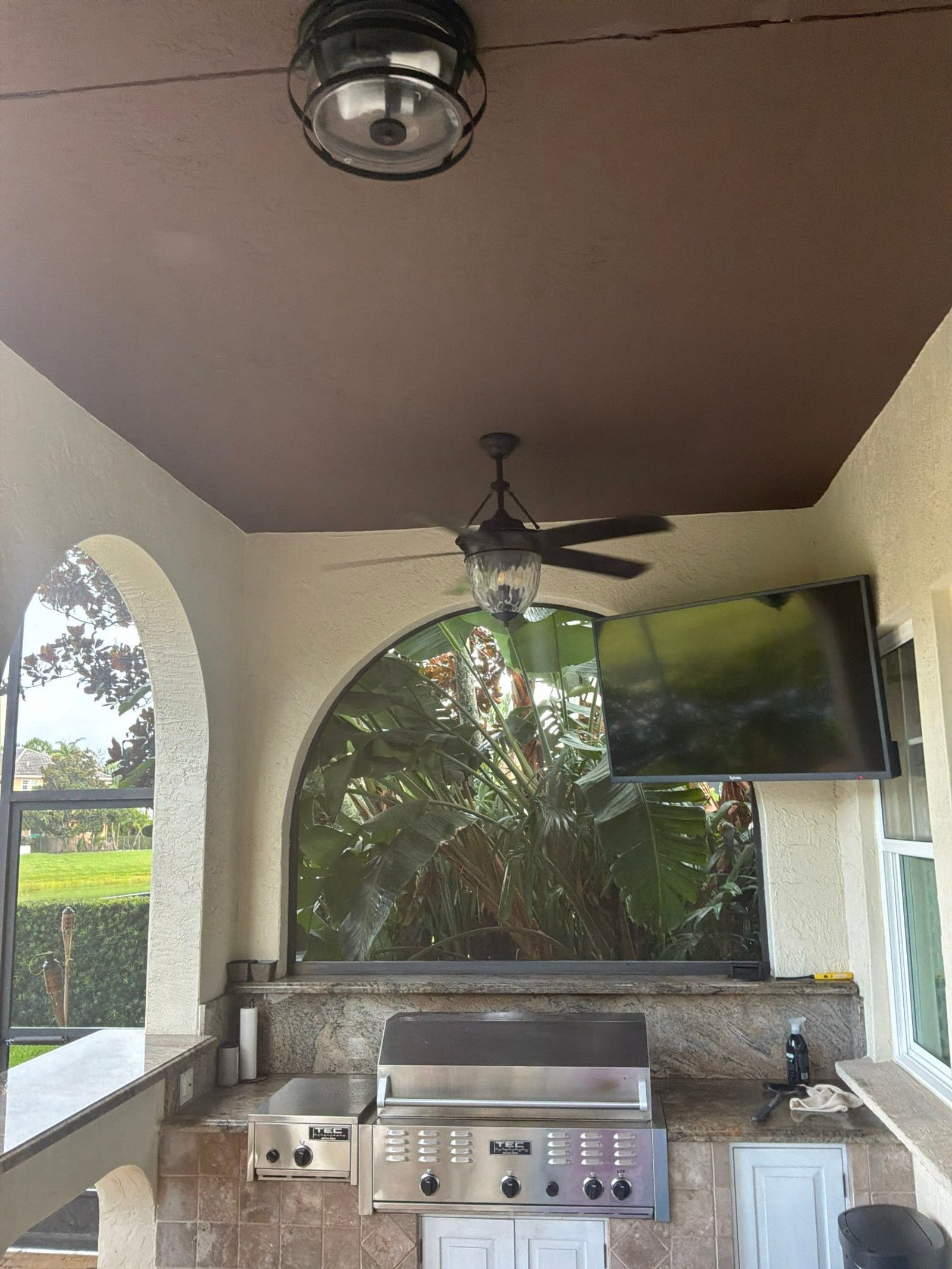
Our crew replaced the ceiling fans in the living room and on the covered exterior patio, giving both spaces a fresh, functional update. The living room now features a modern ceiling fan alongside the existing recessed lighting and built-in entertainment center. Out on the patio, a new fan keeps air moving over the outdoor seating area, which overlooks the landscaped grounds.
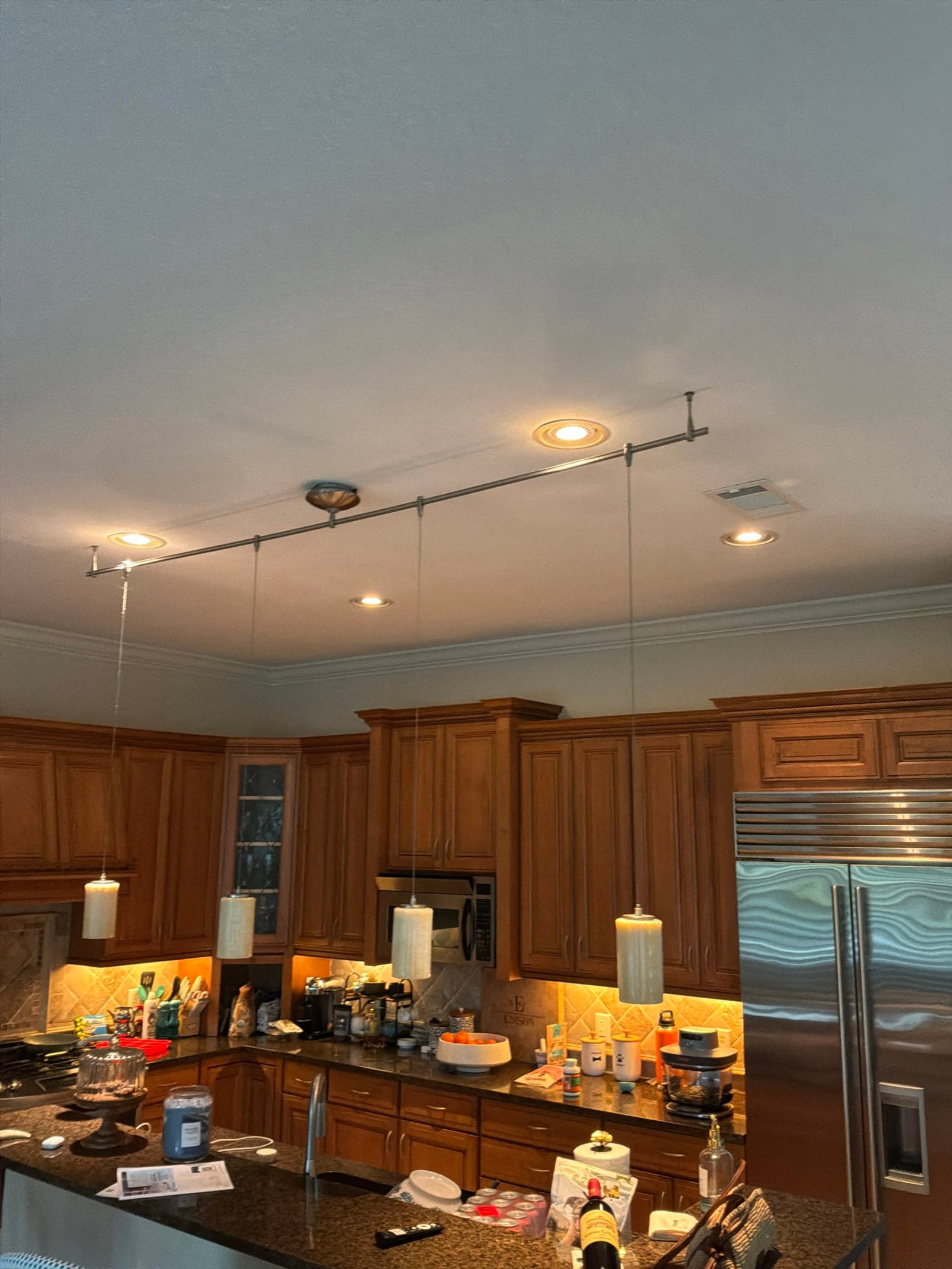
Inside, the kitchen received attention as well: recessed lighting, pendant fixtures, and under-cabinet lighting were all reviewed and confirmed to be working as expected, with the warm-white color temperature giving the space a polished, cohesive look.
The centerpiece of the visit was the five-arm chandelier with a black finish and fabric shades, now installed and lit in the dining area. Ceiling fan and chandelier swaps may seem simple, but proper installation means confirming the existing electrical box is rated for the fixture’s weight, verifying the wiring connections are secure, and making sure the new fixture operates correctly on the existing switch circuit.
Why This West Palm Beach Electrical Repair Matters for Homeowners
Lighting and ceiling fans are the fixtures a household interacts with every single day. A fan that wobbles, flickers, or hums is a low-grade annoyance that adds up over time. When everything is installed correctly, those small frustrations simply disappear. The family gets comfortable rooms, a well-lit kitchen, and a patio that stays pleasant even on warm Florida evenings.
The safety walkthrough is a routine step our team takes on every visit. For this household, it confirmed that the electrical system is in solid overall shape. The two items noted, tamper-resistant receptacles and AFCI protection, are not urgent emergencies; they are modernization opportunities that can be addressed on the homeowner’s own timeline. Knowing about them now means the family can plan ahead calmly rather than react to something unexpected later.
Finally, the panel observations are a good reminder that Florida’s humidity is worth staying ahead of. Keeping an eye on termination condition once a year is a small habit that pays off in long-term reliability. With a 200-amp Square D QO panel already in place, this home has a strong foundation. A little routine attention keeps it performing the way the household expects, quietly and consistently, through every season.
Code Compliance Cited in This Job
Every fix above maps to a specific section of NEC 2020. Each card links to NFPA’s public NEC index.
Tamper-Resistant Receptacles
NEC 406.12 requires tamper-resistant receptacles in all areas of a dwelling unit. The receptacles in this Palm Beach Gardens home predate that requirement and were compliant when installed. Upgrading them brings the home in line with current standards. NFPA reference ›
AFCI Protection
NEC 210.12 requires arc-fault circuit interrupter protection on branch circuits serving living areas, bedrooms, and kitchens in dwelling units. AFCI protection was not present at this home, which is consistent with homes wired before the requirement entered the applicable code cycle. The Square D QO panel accepts compatible AFCI breakers, making this a straightforward future upgrade. NFPA reference ›
Replacement Receptacle Requirements
NEC 406.4(D) states that replacement receptacles must meet current requirements, including tamper resistance. When the homeowner is ready to replace outlets in this home, each new receptacle installed must meet the tamper-resistant standard regardless of the original installation date. NFPA reference ›
Electrical Connections
NEC 110.14 covers proper terminal connections, including the requirement for secure, low-resistance contact between conductors and lugs. The loose lug observed in the panel interior during this visit is the type of mechanical condition this section addresses, and it is worth correcting to maintain reliable, consistent connections over time. NFPA reference ›
Common Questions
Questions homeowners ask after seeing this kind of work.
How difficult is it to replace a ceiling fan if the existing wiring is already in place?
In most cases, swapping a ceiling fan for a new one is a clean, contained job when the existing box is rated for fan use and the wiring is already sized correctly. The key steps are confirming the box is fan-rated for the new fixture’s weight, securing all connections properly, and verifying the fan operates correctly on the existing switch. If you are unsure about your box rating or wiring, our team can walk through it quickly. Schedule online and we will handle the details.
What are tamper-resistant receptacles and does my home need them?
Tamper-resistant receptacles have internal shutters that only open when a plug is inserted into both slots simultaneously, which reduces the chance of small objects being inserted by curious children. NEC 406.12 now requires them throughout dwelling units. If your home was built or last renovated before that requirement was adopted, your existing outlets were fine under the code of that era, but upgrading them now brings the home to current standards. Book a safety check and we can identify which outlets in your home would benefit from an upgrade.
What is AFCI protection and why might my panel not have it?
Arc-fault circuit interrupter breakers monitor for the kind of irregular electrical arcing that can develop in aging wiring or at loose connections, and they trip the circuit before the issue compounds. NEC 210.12 requires AFCI protection on circuits serving living areas, bedrooms, and kitchens in dwelling units, but many homes were wired before that requirement applied to their permit year. If your panel accepts AFCI-compatible breakers, adding them is a straightforward upgrade. Schedule online and we can review what your panel currently has and what would make sense to add.
How often should I have my home’s electrical system inspected?
Once a year is a good baseline for most homes. Older homes built before 1990 and homes that have come through recent storms may benefit from a more frequent look, since humidity, age, and weather cycling can all affect connections and components over time. An annual walkthrough gives you a current picture of the system and lets you plan any updates calmly, on your own schedule. Book a yearly inspection to stay ahead of anything worth addressing.
I noticed some corrosion inside my electrical panel. Is that something I should act on right away?
Corrosion on panel terminations and enclosures is a common finding in Florida homes, where humidity levels stay high year-round. It does not always mean immediate action is required, but it is worth having a licensed electrician assess the extent and location of the corrosion and whether any connections need to be cleaned or re-terminated. Catching it early keeps the panel performing reliably for years to come. Schedule an inspection and our team will give you a clear, honest picture of what is there.
Want to see more real jobs like this one? Browse our completed case studies or explore our services.