
This West Palm Beach electrical repair case study walks through the real diagnosis, the fix, and the code details from a recent service call. A homeowner in Jupiter, FL called us after a smoke alarm started chirping late at night and a breaker in the garage panel kept tripping. Our crew arrived the same day, traced both issues to their sources, and left the home running quietly and reliably before the end of the afternoon.
The Problem
The homeowner had been woken up by a smoke alarm chirping from a ceiling-mounted unit that was simply too high to reach safely on their own. Resetting it brought only temporary quiet before the chirping started again. Around the same time, a breaker in the garage panel was tripping intermittently. On their own, either issue would be worth a call. Together, they pointed to a morning that deserved a prompt, same-day look.
“I keep resetting it when it starts chirping again but it’s high up and not safe for me to handle on my own. Also possibly related but a fuse is tripping in the electrical panel in the garage.”
Investigation
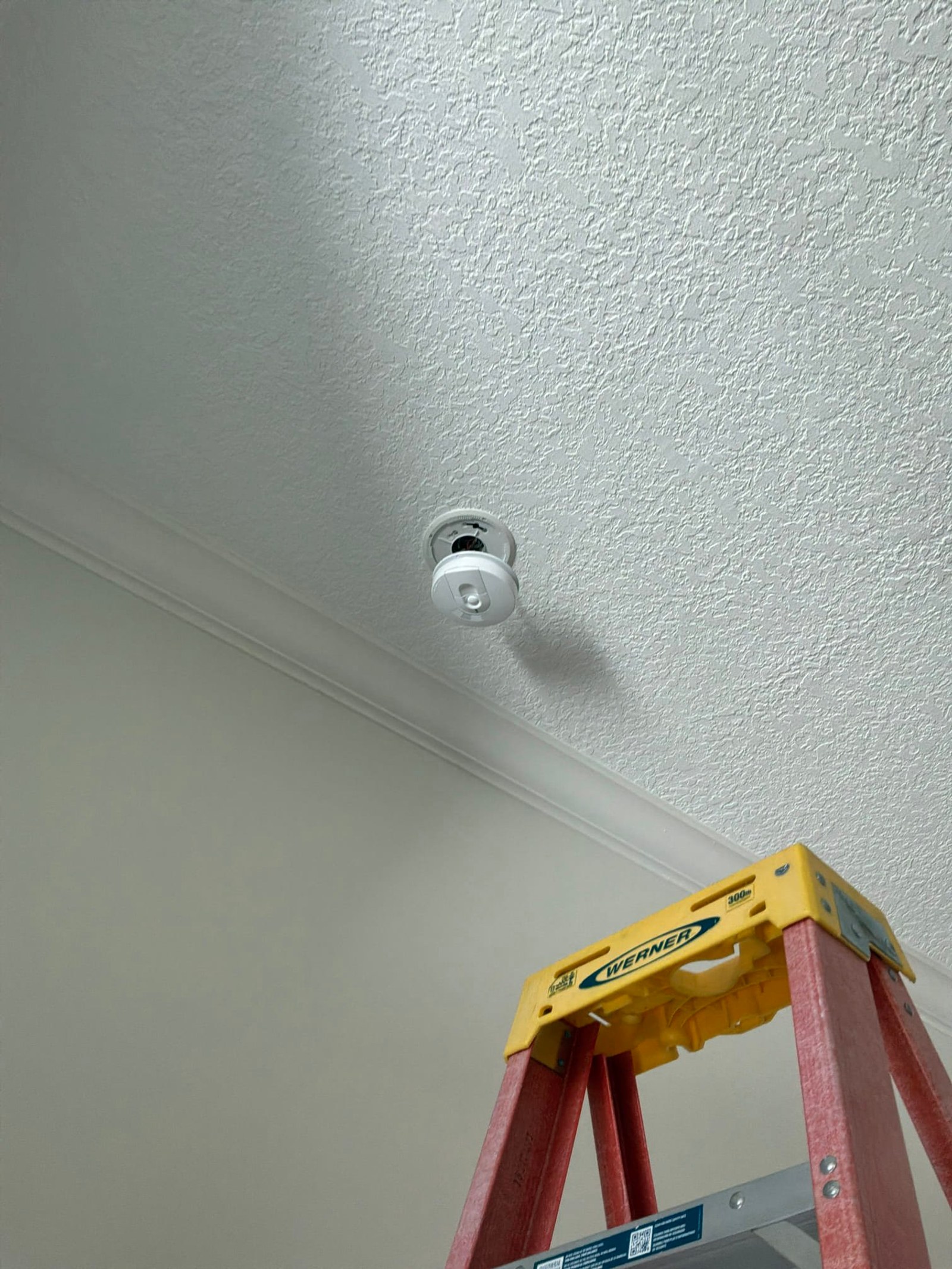
Our technician on-site started at the smoke detector. The ceiling-mounted unit, white against a textured drywall ceiling, was clearly at an awkward height for a solo homeowner to reach without a proper ladder. A persistent chirp that returns after resetting almost always points to one of two things: a battery that can no longer hold a charge, or a detector that has reached the end of its rated service life. Both conditions are worth addressing regardless of which one is the active cause.
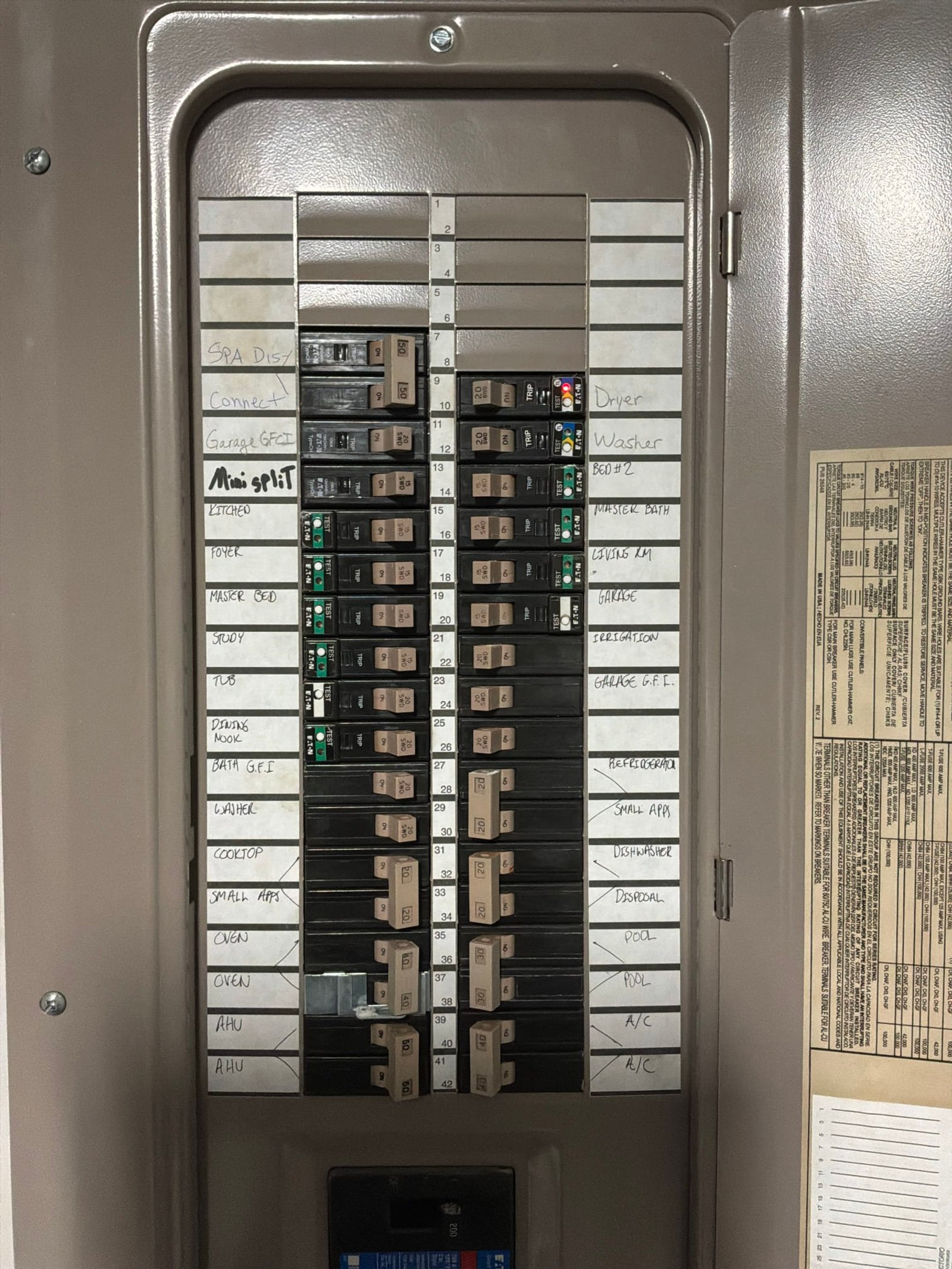
Next, the crew moved to the garage panel. The panel deadfront was in place, and the circuit directory showed a mix of printed and handwritten labels. One breaker was identified as the source of the intermittent tripping. During minor troubleshooting, the team pulled one device on that circuit, reset the breaker, and checked for the root cause. The investigation pointed to the breaker itself as the component that had lost reliable function.
It is worth noting that panel directories with handwritten labels are extremely common in homes of this era. Current standards, including NEC 408.4, call for clear, legible circuit identification. A clearly labeled panel makes future troubleshooting faster and more comfortable for any licensed electrician who works in the home.
What We Fixed
For the breaker, the crew installed an Eaton CHFN120AF 20-amp Combination AFCI Single Pole Breaker as a direct replacement. Combination AFCI breakers monitor the circuit for the kind of subtle arc patterns that older-style breakers were never designed to detect. This is the current standard for branch circuits in living spaces, and the Eaton CH series is a well-regarded fit for CH-compatible panels. The replacement restores reliable circuit protection and brings that slot in the panel in line with what current code asks for.
For the smoke detector, the crew replaced the ceiling-mounted unit safely and correctly. A fresh detector in the right location means the household gets the early-warning coverage it is supposed to have, without any more late-night chirping disruptions.
Why This West Palm Beach Electrical Repair Matters for Homeowners
An intermittently tripping breaker and a chirping smoke alarm can both feel like minor annoyances. In practice, each one is the home’s way of asking for attention. A breaker that trips without a clear load reason is often one that has worn past its reliable operating range. Swapping it for a combination AFCI breaker means the circuit now has a more capable layer of protection, one that watches for arc conditions that a standard breaker would simply pass through unnoticed.
Smoke detectors have a recommended service life, typically around ten years, as outlined by NFPA 72, the national standard for fire alarm and detection systems. After that window, the sensing chamber can drift and the device may chirp or respond unpredictably. Replacing a detector on schedule keeps the home’s early-warning system functioning the way the family depends on it to, without surprise interruptions at two in the morning.
For this household, the combination of same-day service and two completed repairs means the evening routine is back to normal. The family can sleep comfortably knowing the detector overhead is fresh and the breaker in the garage is doing its job reliably. That kind of quiet reliability is exactly what a well-maintained home should feel like, every night, through every season.
Code Compliance Cited in This Job
Every fix above maps to a specific section of NEC 2020. Each card links to NFPA’s public NEC index.
AFCI Protection
NEC 210.12 requires arc-fault circuit-interrupter protection on branch circuits supplying outlets in dwelling-unit living areas, kitchens, and bedrooms. On this job, the tripping breaker was replaced with an Eaton CHFN120AF combination AFCI breaker, bringing that circuit slot in line with current requirements and adding a layer of arc-detection capability the original breaker lacked. NFPA reference ›
Circuit Directory Identification
NEC 408.4 requires that every circuit in a panelboard be legibly identified as to its clear, evident purpose. The garage panel on this job showed a mix of printed and handwritten labels, a condition common in homes that have had incremental work done over the years. Clear labeling makes future troubleshooting faster and more straightforward for any electrician or inspector who works in the home. NFPA reference ›
Terminal Connections
NEC 110.14(B) addresses the integrity of electrical connections, including proper termination at breaker lugs and splices. When installing the replacement Eaton CH AFCI breaker, the crew followed proper termination practices to ensure a reliable, code-consistent connection at the panel. NFPA reference ›
Common Questions
Questions homeowners ask after seeing this kind of work.
Why does a smoke alarm keep chirping even after I reset it?
A smoke alarm that returns to chirping shortly after a reset is usually signaling one of two things: a battery that can no longer hold a sufficient charge, or a detector that has reached the end of its rated service life (typically around ten years per NFPA 72). Resetting the unit clears the immediate alert but does not address the underlying condition. A licensed electrician can safely remove the unit, assess its age, and install a fresh replacement at the correct height. If your detector keeps chirping, schedule an inspection and we can take care of it the same day.
How often should I have my home’s electrical system inspected?
A yearly inspection is a solid baseline for most households. Homes built before 1990 and homes that have been through recent storm activity may benefit from a closer look more than once a year, since older wiring and weather stress can both introduce conditions worth monitoring. Annual check-ins give a licensed electrician the chance to catch small items, like a wearing breaker or an aging detector, before they become an inconvenience. Book a safety check to get on the calendar.
What is an AFCI breaker and how is it different from a standard breaker?
A standard circuit breaker responds to overloads and short circuits by tripping when current exceeds a set threshold. A combination AFCI breaker does all of that and also monitors the circuit for arc signatures, the kind of subtle electrical discharge that can occur inside a worn cord or a loose connection without ever triggering a standard breaker. Current NEC 210.12 requirements call for AFCI protection on branch circuits in living spaces of new and updated installations. If you are unsure whether your panel’s breakers meet current standards, our crew can take a look during a quick visit.
Is it safe to reset a tripping breaker on my own, or should I call an electrician?
Resetting a breaker once after an obvious overload (say, too many appliances on one circuit) is generally fine. However, a breaker that trips repeatedly without a clear load reason, or one that feels warm, hums, or does not reset firmly, is worth having a licensed electrician evaluate. The breaker may have worn past its reliable operating range, as was the case in this Jupiter home. Continuing to reset a breaker in that condition simply delays the diagnosis. Schedule online and we can identify the cause on the same visit.
How do I know when my smoke detectors are due for replacement?
NFPA 72 recommends replacing smoke detectors no later than ten years from their manufacture date, which is printed on a label on the back or side of the unit. Combination smoke and CO detectors follow a similar schedule. If your detectors predate that window, or if you are unsure of their age, a quick inspection can confirm whether they are still within their rated service life. Our team can check every unit in the home during a single visit and replace any that are past their prime. Book a detector check to get peace of mind before the next storm season.
Want to see more real jobs like this one? Browse our completed case studies or explore our services.