
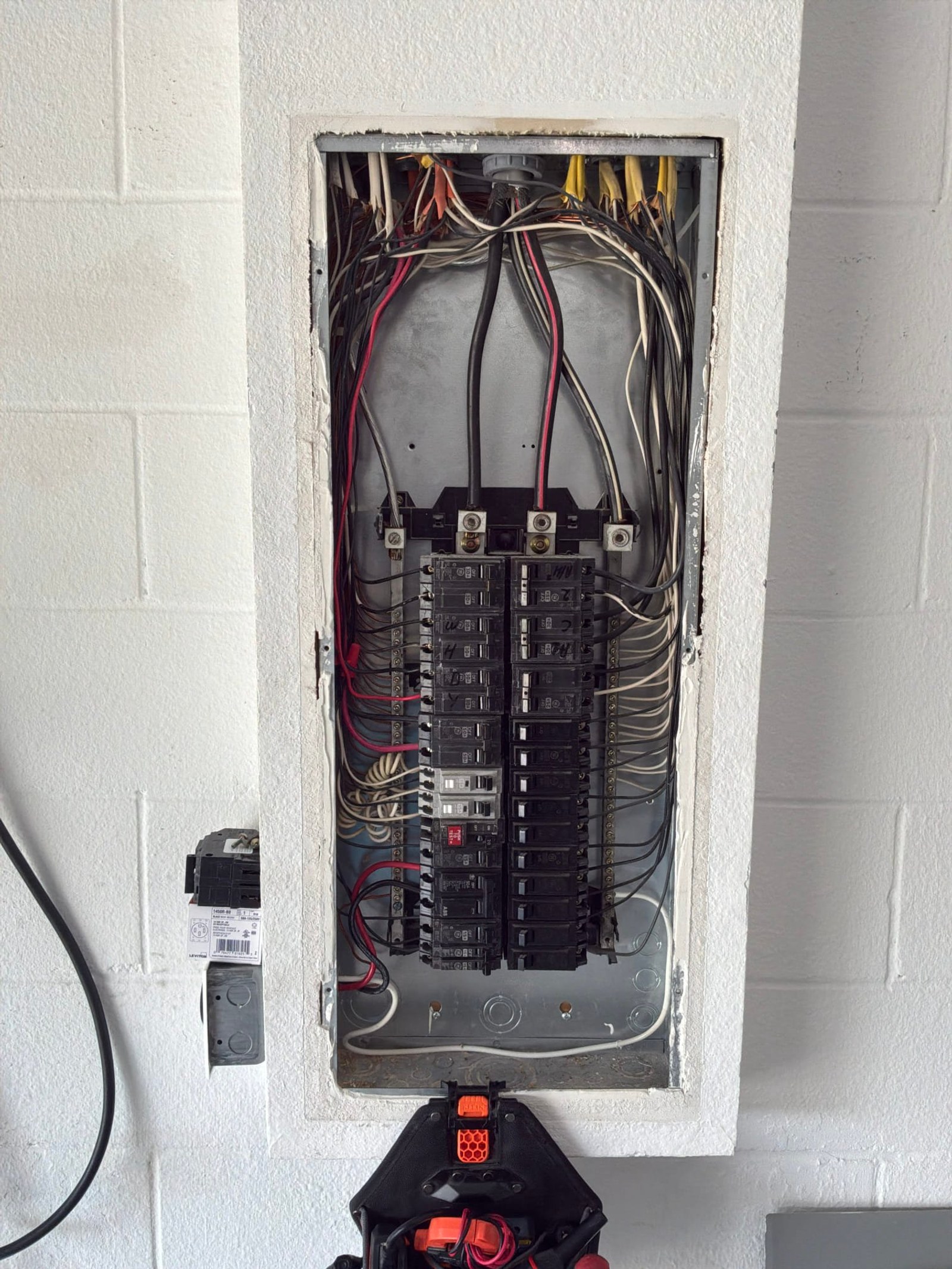
Before & After
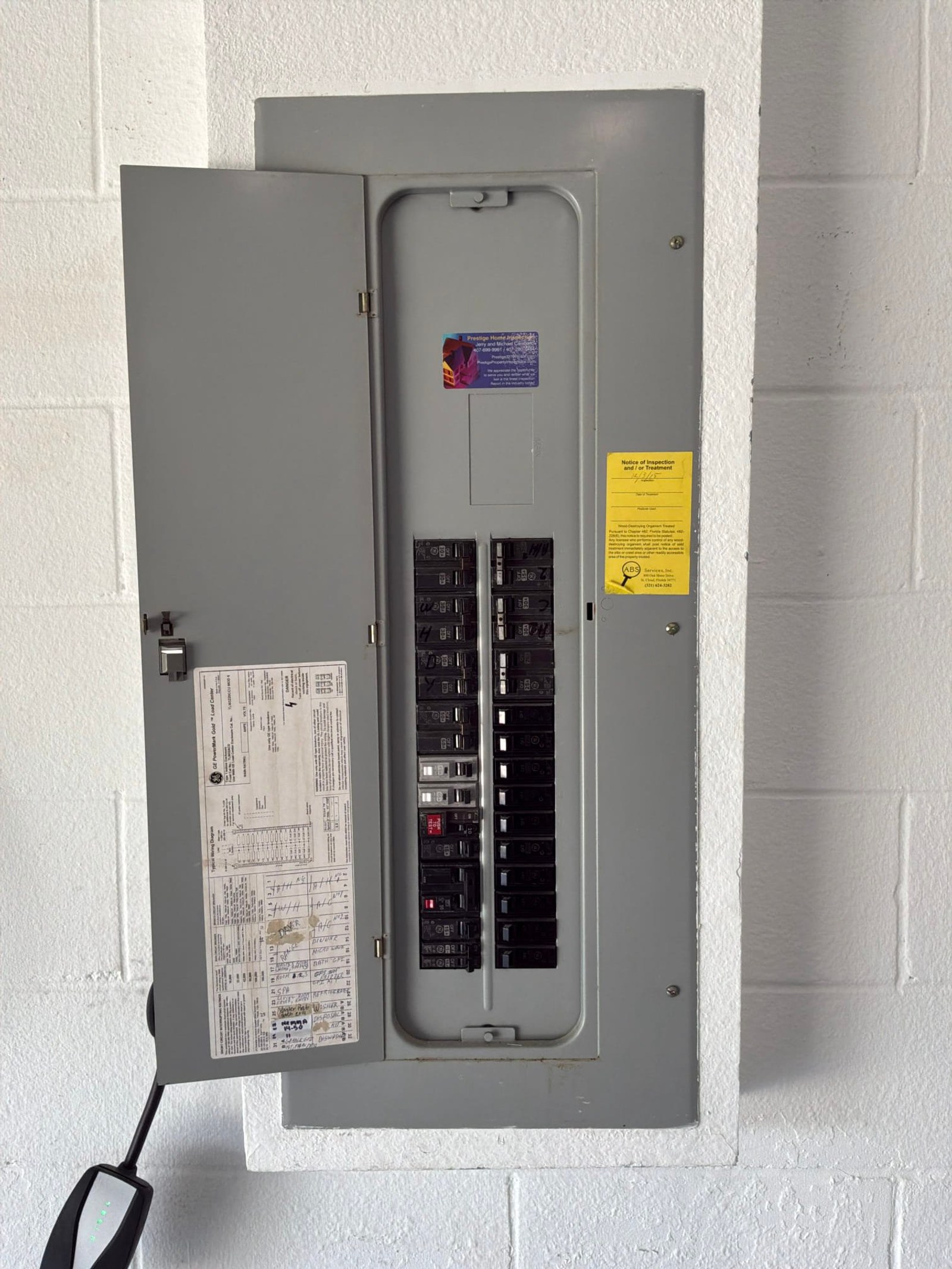 Before
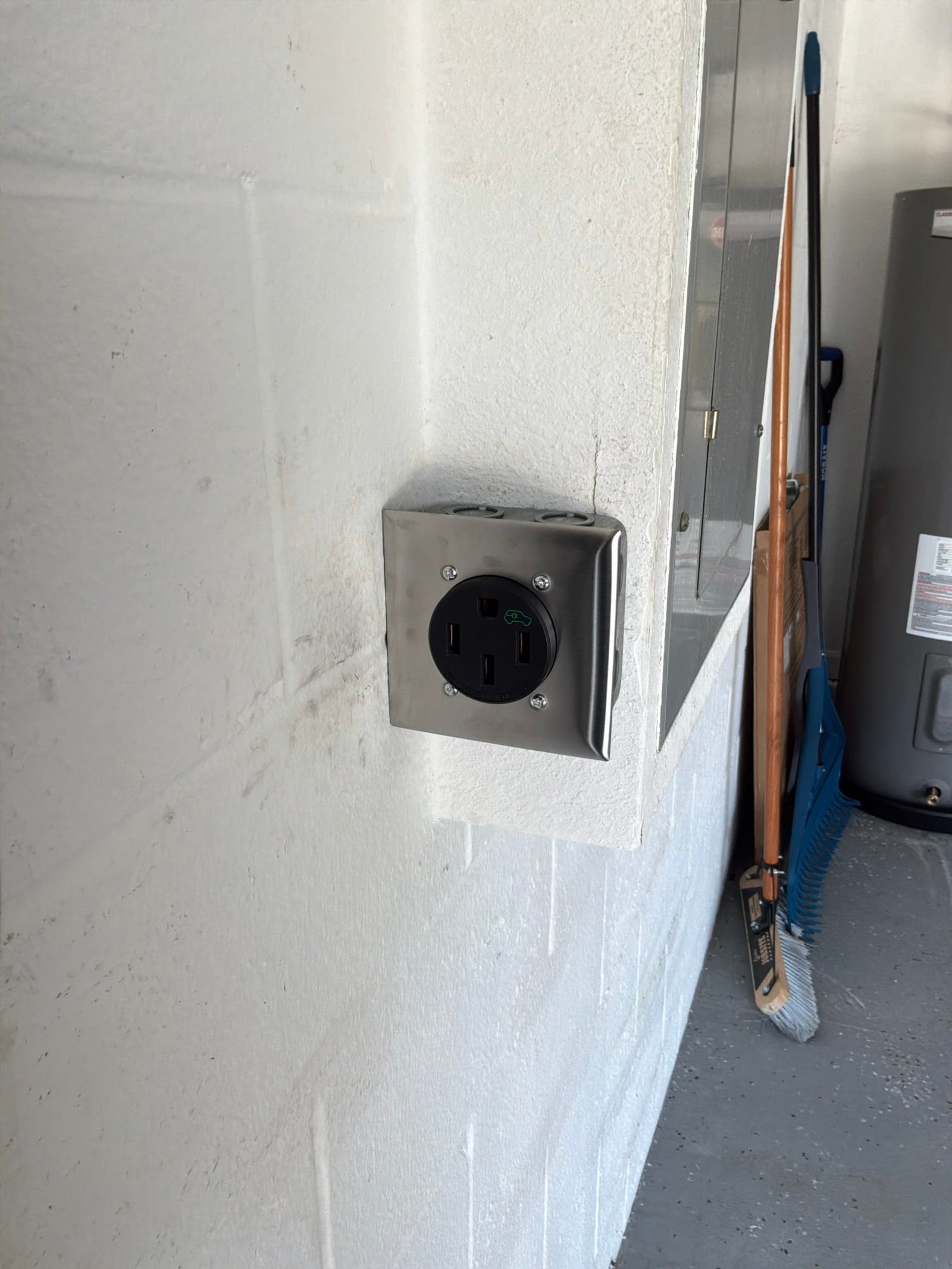 After
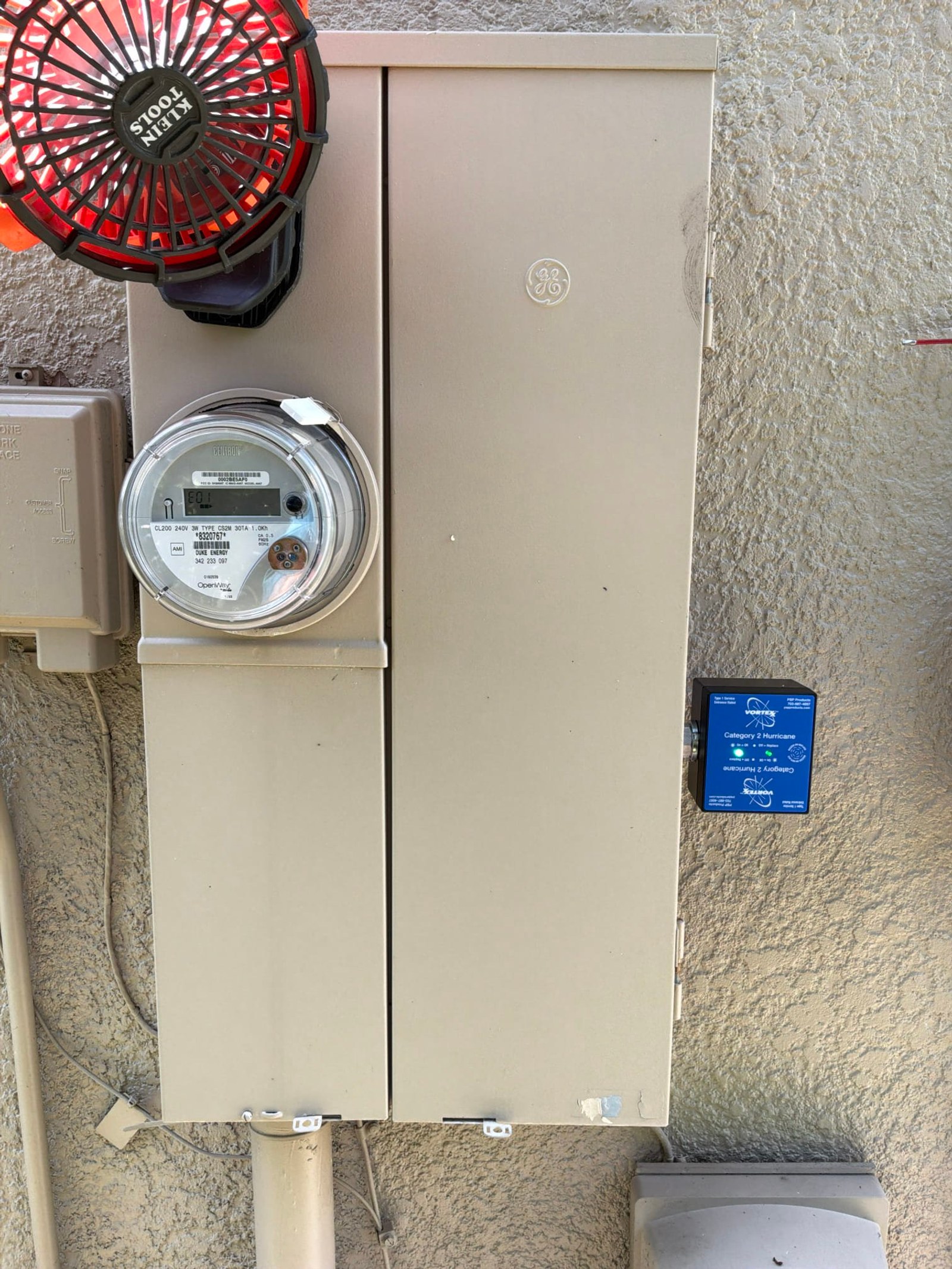
AfterThis Winter Garden GFCI protection case study walks through the real diagnosis, the fix, and the code details from a recent service call. A homeowner in Winter Garden, FL called us about an EV charger outlet that had been running warm to the touch. When our field team arrived, they found the overheating receptacle was just the starting point. The panel also had wiring left in place from earlier work, and no GFCI protection on the garage circuit. By the time the visit was done, the home had a properly rated 50-amp outlet, a Siemens GFCI breaker, and a PSP Vortex 120 kA whole-home surge protector.
The Problem
The homeowner noticed their EV charger outlet felt warmer than it should after a charging session. They also wanted to make sure the garage circuit had proper GFCI protection and that the panel as a whole was in good shape for the home’s modern electrical load.
“I need to install a circuit breaker to protect the house. I also need a GFCI breaker in the electric panel in the garage. And the outlet for my car charger is overheating.”
Investigation
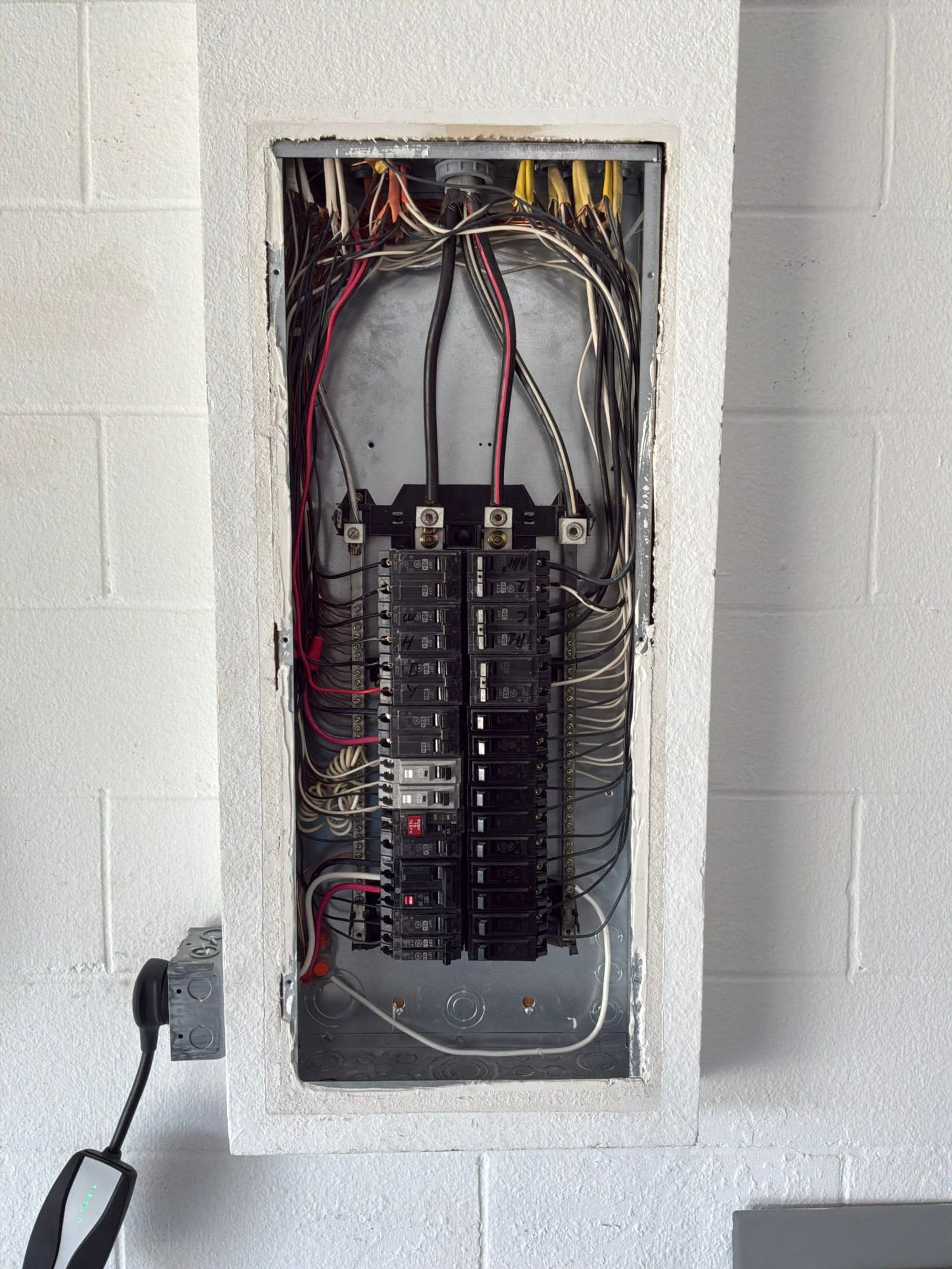
Our technician on-site pulled the deadfront from the panel and took a close look at what was there. The panel’s circuit directory and nameplate were visible on the door, with inspection labels already in place, a sign the panel had seen some attention over the years. Inside, the branch conductors, including yellow, black, and red conductors routed to the two-pole breakers, were generally intact. However, wiring left in place from earlier work was visible in the panel interior. That kind of legacy conductor is common in homes that have had incremental electrical updates over the years. It doesn’t necessarily reflect a problem with the current circuits, but it is worth documenting and tidying up so the panel stays organized and easy to service going forward.
The garage circuit, meanwhile, had no GFCI protection on its breaker. Homes of this vintage often predate the NEC requirement that expanded GFCI coverage to garage-serving branch circuits at the panel level. Current code now asks for that layer of protection, and adding it here was a straightforward upgrade.
The EV charger outlet itself was the clearest concern of the visit. A receptacle that runs warm during charging is typically undersized or improperly terminated for the load it carries. The existing outlet was not rated to handle continuous EV charging current at the level the vehicle demands.
What We Fixed
EV Charger Outlet Replacement
Our crew replaced the old outlet with a properly rated 50-amp, 125/250V, NEMA 14-50R four-wire receptacle. The new outlet is installed in a two-gang range/dryer box with a Mulberry 76222 metal cover plate, giving it a clean, secure, and code-appropriate fit in the garage wall. The stainless steel box and black receptacle visible in the after photo reflect the finished installation. A 50-amp, four-wire configuration gives the EV charger the ampacity it needs to run a full charging session without the outlet working harder than it should.
GFCI Breaker for the Garage Circuit
For the garage circuit, our team installed a Siemens BR 30-amp two-pole GFCI breaker at the panel. This puts GFCI protection at the source rather than at individual outlets, covering every receptacle downstream on that circuit. It aligns with current NEC 210.8 requirements and gives the homeowner confidence that the garage is protected consistently.
Whole-Home Surge Protection
Finally, the crew added a PSP Vortex 120 kA whole-home surge protector at the panel. This Type 2 device connects at the service entry point and intercepts transient voltage spikes before they travel to downstream circuits. Central Florida sees its share of afternoon thunderstorms, and a panel-level surge protector means the refrigerator, HVAC system, EV charger, and home electronics ride through those events without interruption.
Why This Winter Garden Gfci Protection Matters for Homeowners
An EV charger runs at a continuous high load, often for several hours overnight. That’s a different demand than most household circuits see. A properly rated 50-amp, four-wire outlet and a correctly sized breaker mean the family can plug in each night and wake up to a full charge, without the outlet running warm or the breaker cycling unexpectedly.
GFCI protection at the panel level is one of those updates that works quietly in the background. The garage is now covered by a single breaker that monitors the entire circuit, so the household doesn’t have to think about it. Whether the kids are using power tools, the car is charging, or the space is being used as a workspace on a rainy weekend, the circuit responds the way it should.
The PSP Vortex surge protector adds a layer of reliability that covers every circuit in the home simultaneously. Florida’s storm season is long, and surge events aren’t limited to direct lightning strikes. A panel-mounted device rated at 120 kA handles the kind of transient spikes that slip through during near-miss storms and utility switching events. With this in place, the household’s electronics, appliances, and the EV charger itself are all covered from a single point of protection, quietly, through every storm and season.
Code Compliance Cited in This Job
Every fix above maps to a specific section of NEC 2020. Each card links to NFPA’s public NEC index.
GFCI Protection for Personnel
NEC 210.8 requires GFCI protection for receptacles in garages of dwelling units. The existing garage circuit lacked this protection, which is common in homes wired before recent code cycles. Installing the Siemens GFCI breaker at the panel brings the circuit into alignment with current requirements. NFPA reference ›
Surge Protective Devices at Services
NEC 230.67 requires a surge protective device at the service of new dwelling units and is the basis for best-practice recommendations on existing homes. The PSP Vortex 120 kA unit was installed at the panel to fulfill this function and protect all downstream circuits from transient voltage events. NFPA reference ›
Type 2 SPD Installation Requirements
NEC 285.25 governs the installation of Type 2 surge protective devices connected on the load side of the service. The PSP Vortex was installed in accordance with these requirements, mounted at the panel and wired to cover all branch circuits served by that enclosure. NFPA reference ›
EV Charging Branch-Circuit Ampacity
NEC 625.41 sets the ampacity requirements for EV charging branch circuits, treating EV charging as a continuous load. The upgraded 50-amp, four-wire circuit and properly rated NEMA 14-50R receptacle address the load demand an EV charger places on the circuit during extended charging sessions. NFPA reference ›
Electrical Connections and Terminations
NEC 110.14 covers proper termination of conductors at devices and equipment. Replacing the undersized outlet with a correctly rated 50-amp receptacle and new outlet box ensures the termination is matched to the circuit conductors and the load, reducing resistive heating at the connection point. NFPA reference ›
Common Questions
Questions homeowners ask after seeing this kind of work.
Why would an EV charger outlet get warm during charging?
An outlet that heats up during EV charging is usually a sign that the receptacle is undersized for the continuous load, the terminations have loosened over time, or the circuit itself isn’t rated for the ampacity the charger draws. EV charging is treated as a continuous load under NEC 625.41, which means the outlet, wiring, and breaker all need to be sized accordingly. Replacing the outlet with a properly rated 50-amp, four-wire receptacle and pairing it with a correctly sized breaker resolves the issue at its source. If your EV outlet feels warm after a charging session, our team can schedule a same-day inspection to assess the circuit.
What does a GFCI breaker do that a standard breaker doesn’t?
A standard breaker protects against overcurrent, tripping when too much current flows through the circuit. A GFCI breaker does that and also monitors for ground faults, tiny imbalances in current that can occur when electricity finds an unintended path. Garages, kitchens, bathrooms, and outdoor areas are all locations where NEC 210.8 requires this added layer of protection. Installing a GFCI breaker at the panel covers every outlet on that circuit at once, rather than requiring individual GFCI outlets at each location. If your garage circuit doesn’t have GFCI protection, our team can book a quick panel check to confirm what’s there.
How does a whole-home surge protector differ from a plug-in surge strip?
A plug-in surge strip only protects the devices plugged directly into it, and most consumer strips have a relatively low joule rating. A panel-mounted Type 2 surge protector like the PSP Vortex 120 kA intercepts transient voltage at the point where electricity enters the home, covering every circuit simultaneously, including hard-wired appliances like HVAC systems and EV chargers that can’t be plugged into a strip. The two devices work best together: the panel unit handles large surge events, and a quality strip manages any residual transient energy at sensitive electronics. To find out whether your home has panel-level surge protection already in place, schedule an inspection and we’ll check it during the visit.
How often should I have my home’s electrical system inspected?
A yearly inspection is a good baseline for most homes. Homes built before 1990 and homes that have been through recent storms may benefit from inspections more often, since older wiring systems and surge events can both introduce conditions worth reviewing. An annual visit gives a licensed electrician the chance to note any circuits that have been modified over time, verify that protection devices like GFCI breakers are still functioning, and confirm that high-draw circuits like EV chargers are holding up under regular use. To get on the calendar, schedule your yearly inspection online and we’ll take care of the rest.
Is it normal to find old wiring left in a panel from previous electrical work?
It’s actually quite common, especially in homes that have had incremental updates over the years. When circuits are rerouted or removed, the original conductors are sometimes left in the panel rather than pulled out entirely. This was a standard practice in many older installations. While abandoned conductors don’t always affect how active circuits perform, organizing and documenting them makes the panel easier to service in the future and helps avoid confusion during any subsequent work. If you’ve noticed your panel looks crowded or has conductors that don’t seem to connect to anything, our team can take a look and give you a clear picture of what’s there.
Want to see more real jobs like this one? Browse our completed case studies or explore our services.