
This Fort Pierce panel upgrade case study walks through the real diagnosis, the fix, and the code details from a recent service call. When a homeowner in Fort Pierce, FL lost power to an outdoor fan switch and a nearby outlet at the same time, the pattern pointed toward a shared circuit. Our licensed electrician on site traced the fault, documented what was visible in the GE 200-amp panel, and gave the homeowner a clear picture of what the system looked like today and where it could benefit from future attention.
Customer’s Problem
The homeowner reported that an outdoor switch had stopped controlling a ceiling fan and that a nearby outlet had also gone dead. Both symptoms appeared at the same time, which suggested a common upstream cause rather than two separate device failures. Our field team arrived during a Friday afternoon window to investigate.
What Our Electrician Found
Our technician on site worked through the circuit methodically. Two checklist items came back as failures worth addressing right away.
Outlet Condition at the Source
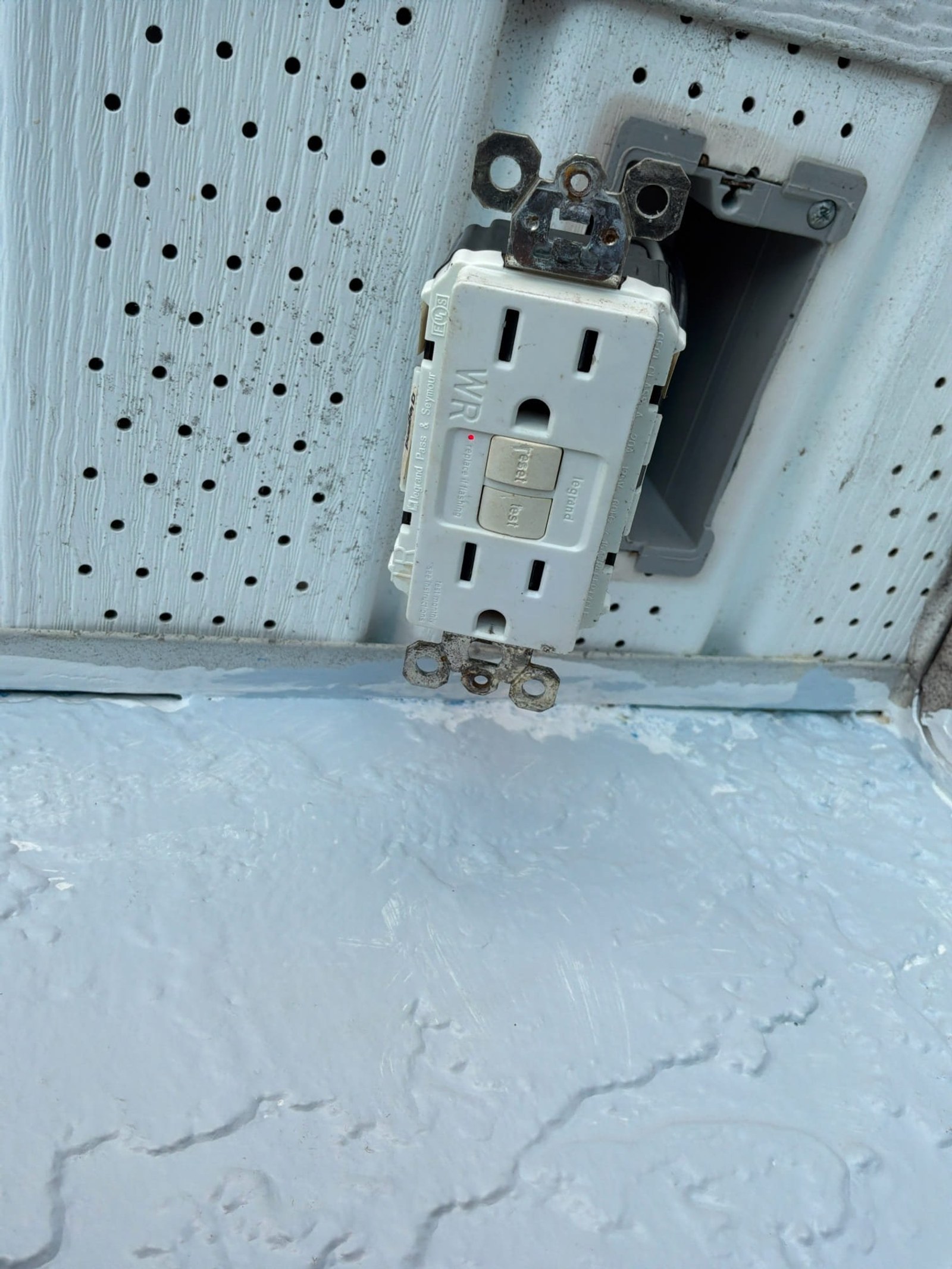
The outlets serving the affected area were found to be backstabbed. Backstabbing, where a wire is pushed into a spring-tension port on the back of a receptacle rather than wrapped around a screw terminal, was a widely used shortcut in residential wiring for decades. Over time the spring tension eases, contact resistance climbs, and the result is exactly the kind of intermittent or complete loss of power the homeowner described. Additionally, the outlets in the home were not tamper-resistant, which is now the standard for dwelling-unit receptacles under NEC 406.12. The photos show a white GFCI outlet installed in a weatherproof box, consistent with outdoor or damp-location placement.
Ceiling Fan and Pendant Light Circuit
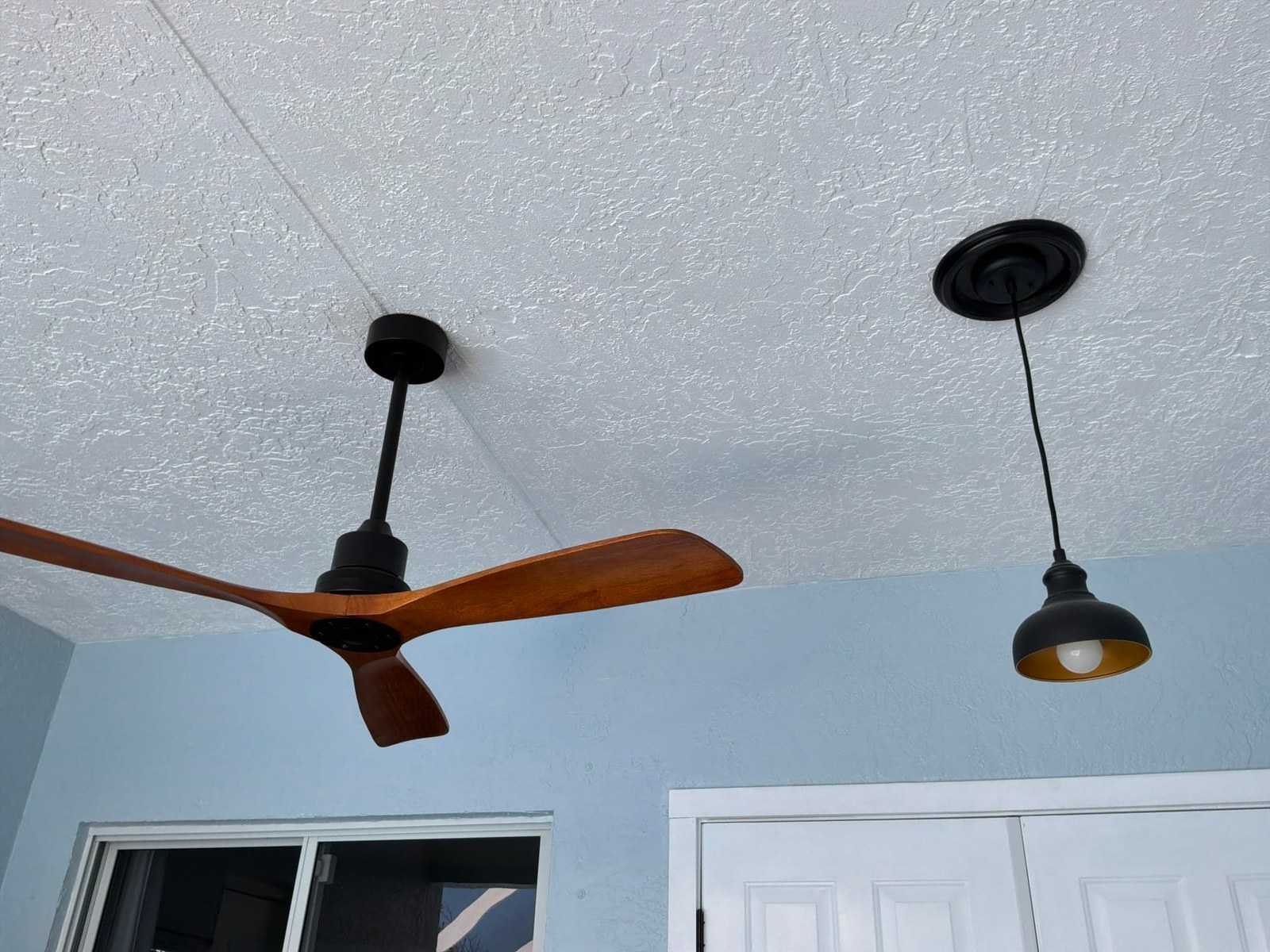
The ceiling fan with wood blades and black motor housing, visible in the job photos alongside a pendant light fixture, had lost its control signal at the wall switch. Once the backstabbed connection issue was identified upstream, the fan circuit behavior made sense. No separate fault was found in the fan itself.
Panel Interior Observations
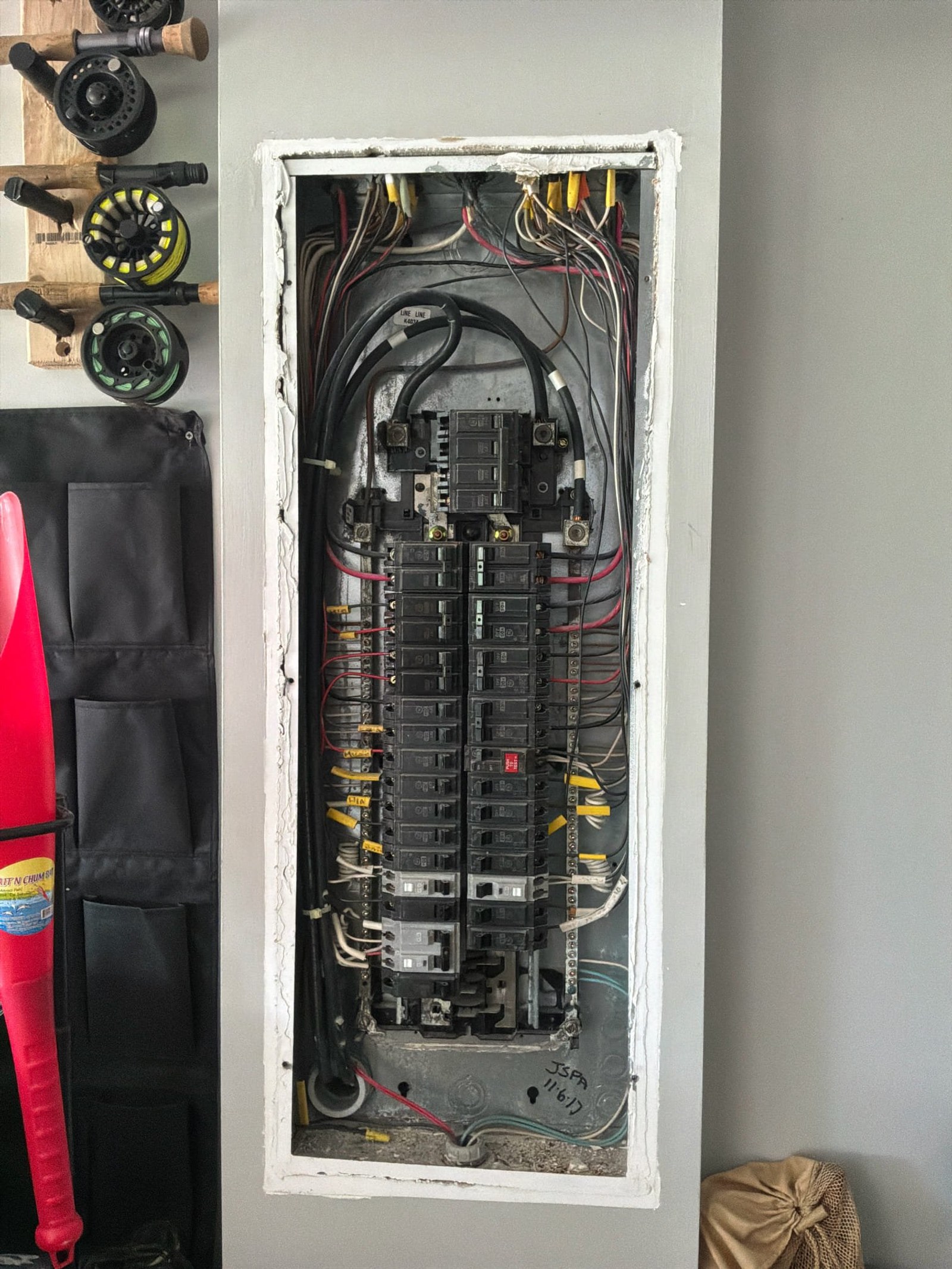
Inside the GE 200-amp panel, the photos show multiple breakers, branch conductors in yellow, red, and black, along with visible corrosion on the terminations and enclosure. Corrosion on panel terminations is a condition worth monitoring. It can develop gradually in coastal and humid environments like Fort Pierce, and current best practice is to address it before it affects connection quality. This observation was logged as a concern for future planning.
Several additional items were flagged as concerns during the broader safety walkthrough: AFCI protection, surge protection, grounding system verification, smoke and carbon monoxide detector coverage, weatherhead condition, and the absence of a standby generator prewire. None of these represent immediate failures, but each is an opportunity to bring the home closer to current code and to improve reliability over the long term. These were documented and shared with the homeowner for future reference.
Work Performed
Our field team diagnosed the electrical fault affecting the outdoor fan switch and the adjacent outlet. The backstabbed outlet connections were identified as the primary condition contributing to the loss of power. The GFCI outlet in the weatherproof box was confirmed present in the affected area. The GE 200-amp panel interior was inspected and the corrosion on terminations and enclosure was documented. All findings were presented to the homeowner with notes on which items were immediate concerns and which were longer-range recommendations.
Why Pricing Can Vary
Two homes with the same job on the invoice can land at different totals. On projects like this one, the total is driven by:
- How intermittent the symptom is and how long it takes to reproduce
- Number of circuits or devices that have to be checked
- Access to junction boxes, attics and crawlspaces
- Whether the repair is completed in the same visit
- Parts needed once the cause is found
Why This Fort Pierce Panel Upgrade Matters for Homeowners
For a household in Fort Pierce, a dead outdoor outlet and a fan that will not respond to its switch can disrupt the daily rhythm quickly, especially heading into summer. An outdoor living space that works reliably makes a real difference to the family’s comfort in the evenings and on weekends.
Backstabbed connections are one of the most common findings in homes of this era. They were code-permissible when installed, but today’s standards favor screw-terminal connections because they maintain consistent contact over years of use. Swapping them out is a straightforward repair that restores the dependability the household expects from every switch and outlet.
The panel-side observations, particularly the corrosion on terminations, are worth keeping on the radar. Addressing corrosion early keeps the panel performing well through every storm season, so the family does not have to wonder whether the system will hold up when it matters most. The additional concerns around AFCI protection, surge protection, and the grounding system give the homeowner a clear roadmap for future upgrades, all at a pace that fits their plans. Peace of mind comes from knowing exactly where the system stands, and that is what this visit delivered.
“Jared did an excellent job helping us diagnos a multiple problems and repaired them in under an hour. Thank you!”
Code Compliance Cited in This Job
Every fix above maps to a specific section of NEC 2020. Each card links to NFPA’s public NEC index.
Tamper-Resistant Receptacles
NEC 406.12 requires tamper-resistant receptacles throughout dwelling units. The outlets found on this job did not meet this current standard, which is common in homes wired before the requirement became widespread. Upgrading to tamper-resistant devices brings the home in line with current code. NFPA reference ›
Replacement Receptacle Requirements
NEC 406.4(D) states that replacement receptacles must meet current requirements, including GFCI protection where applicable. When the backstabbed outlets on this job are replaced, the work is an opportunity to install code-compliant devices throughout the affected circuits. NFPA reference ›
AFCI Protection
NEC 210.12 requires arc-fault circuit interrupter protection on branch circuits in dwelling units, including living areas and bedrooms. AFCI protection was noted as a concern on this job, consistent with many homes that predate the current code cycle’s expanded AFCI requirements. NFPA reference ›
Surge Protective Device at Service
NEC 230.67 requires a surge protective device at the service for new and replacement dwelling-unit installations. Surge protection was flagged as absent on this job. Adding a whole-home SPD at the GE 200-amp panel would protect the household’s electronics and appliances through every storm season. NFPA reference ›
Grounding Electrode System
NEC 250.50 defines the required grounding electrode system for a dwelling. The grounding system was noted as a concern during this inspection, and verification of the electrode system is part of the recommended follow-up work documented for the homeowner. NFPA reference ›
Common Questions
Questions homeowners ask after seeing this kind of work.
Why would an outdoor fan switch and a nearby outlet stop working at the same time?
When two devices on the same circuit fail simultaneously, the cause is almost always upstream of both of them. A tripped breaker, a failed GFCI device that protects downstream outlets, or a poor connection at a shared receptacle or junction point can cut power to everything on that leg at once. In this Fort Pierce home, backstabbed outlet connections were identified as a contributing factor. If you are seeing the same pattern at your home, our team can trace the circuit and pinpoint the cause. Schedule online to get on the calendar.
What are backstabbed outlets and why do they matter?
Backstabbed outlets use a spring-tension port on the back of the device instead of a screw terminal to hold the wire in place. This method was common in residential wiring for many years and was permissible under the code at the time. Over time the spring tension can ease, contact resistance increases, and the outlet becomes unreliable or stops working entirely. Replacing backstabbed connections with proper screw-terminal devices is a straightforward repair that restores consistent, dependable performance. If your home was wired before roughly 2005, it is worth having a licensed electrician take a look to see whether backstabbing is present.
How serious is corrosion inside an electrical panel?
Corrosion on panel terminations and the enclosure is a condition worth monitoring, particularly in coastal and humid environments like Fort Pierce. It develops gradually and in its early stages does not mean the panel has failed. However, as corrosion progresses it can affect the quality of electrical connections, so catching it early and addressing it on a planned schedule keeps the panel performing reliably through every season. Our team documented the corrosion visible in this GE 200-amp panel so the homeowner has a clear baseline for future maintenance. If you have noticed discoloration or a sulfur smell near your panel, schedule a visual inspection so we can assess where things stand.
How often should I have my home’s electrical system inspected?
A yearly inspection is a good baseline for most homes. Older homes built before 1990 and homes that have come through recent storms often benefit from inspections more frequently, since aging wiring and weather events can accelerate wear on connections and equipment. An annual check gives your household the confidence that everything is running the way it should, and it surfaces smaller concerns before they require larger repairs. Schedule online to book your next inspection with our licensed team.
What is whole-home surge protection and does a Fort Pierce home need it?
A whole-home surge protective device installs at the main panel and absorbs voltage spikes before they reach branch circuits, protecting appliances, electronics, and HVAC equipment throughout the house. Fort Pierce sits in a region with frequent afternoon thunderstorms, making surge protection a practical addition for any household that wants its electronics and appliances to keep running reliably season after season. NEC 230.67 now calls for SPDs on new and replacement service installations. If your panel does not yet have one, our team can book a consultation to review your options.
Project Photos
Electrician and Technical Reviewer
Work performed by Jared, Thomas Edison Electric field electrician serving Jupiter / West Palm Beach.
Jared, the electrician on this job, is the technical reviewer of record for this case study.
Location
This project was completed in Fort Pierce, Florida, in our Saint Lucie County service area.