
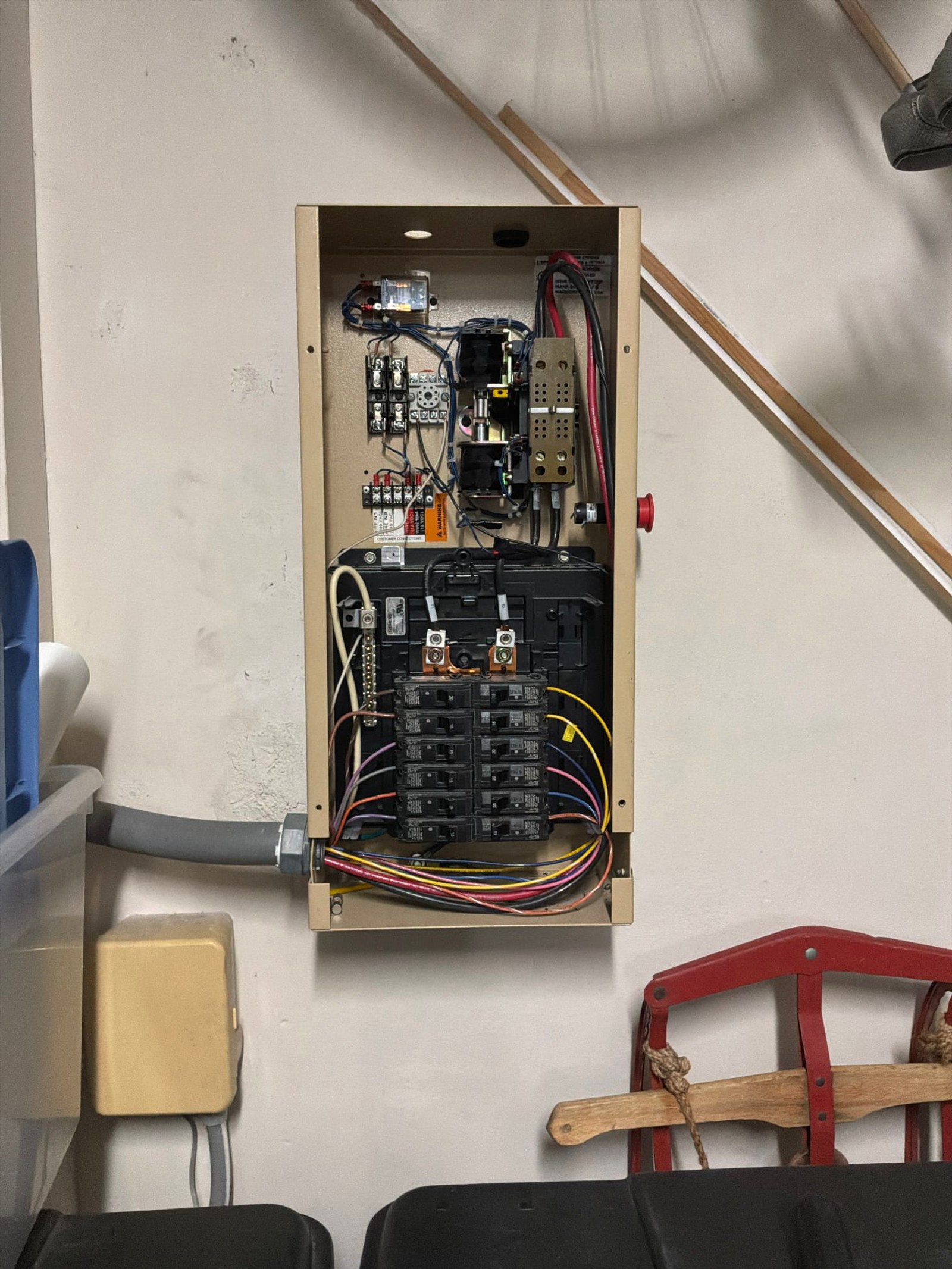
Before & After
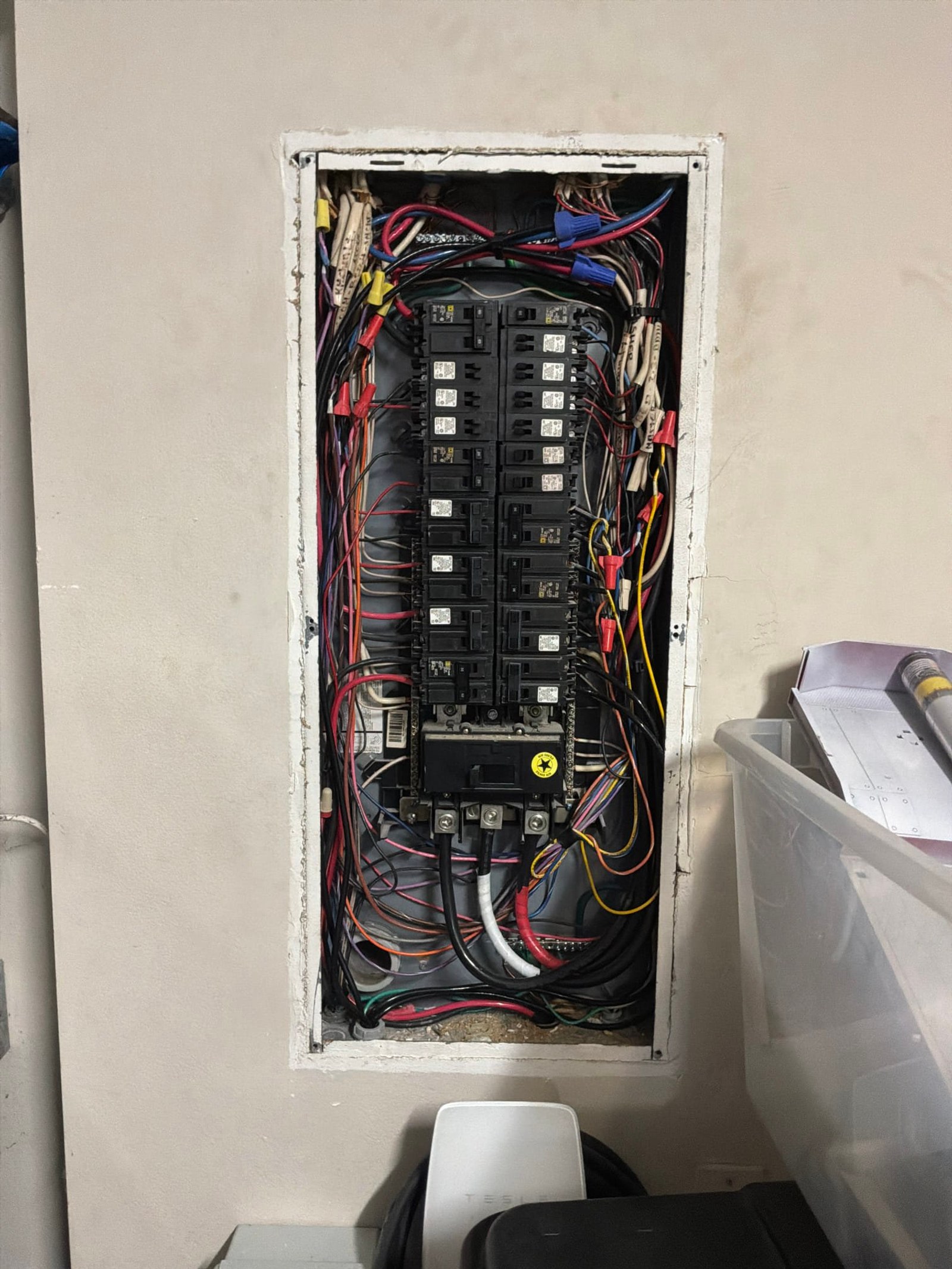 Before
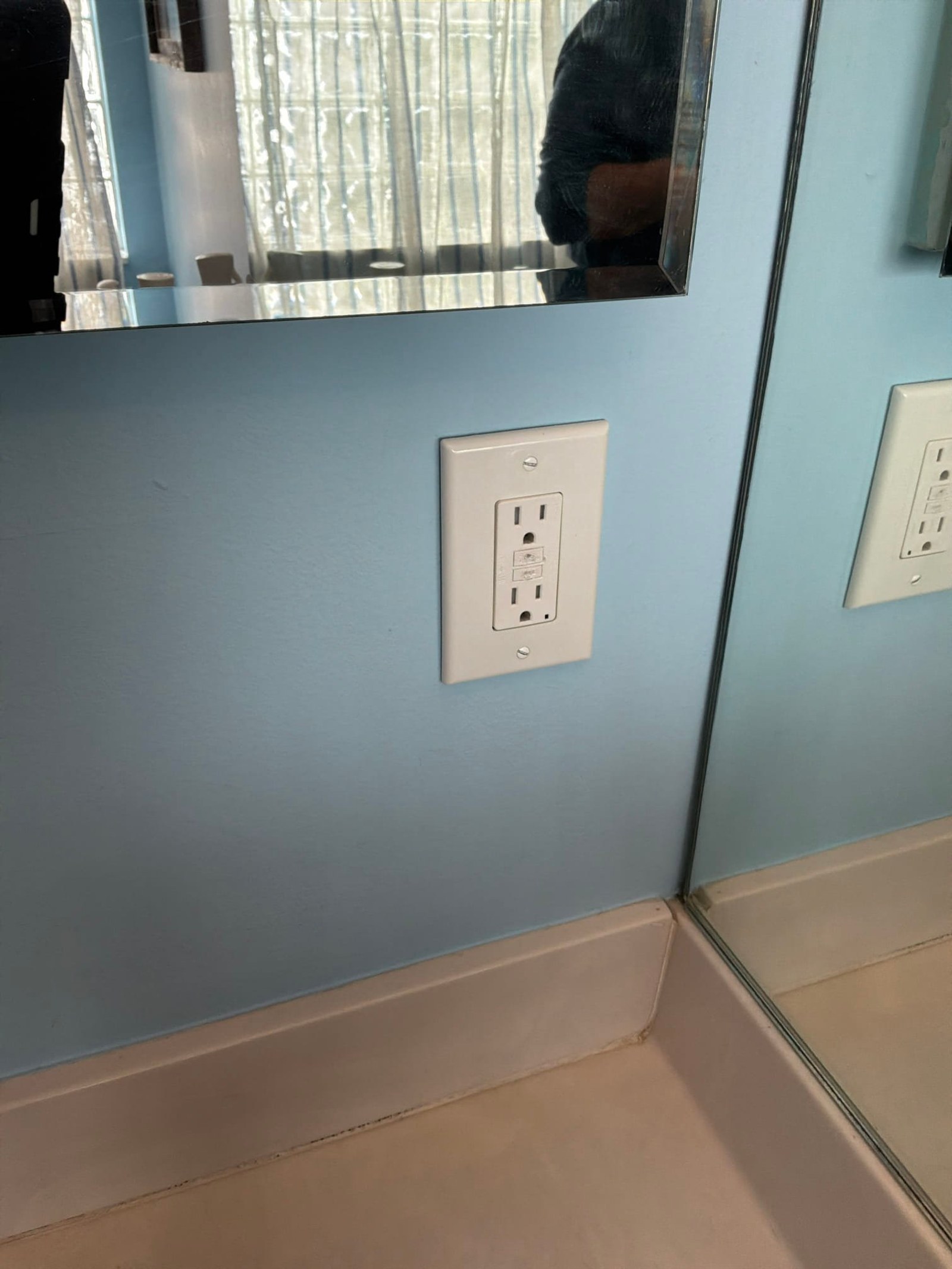 After
AfterThis Jupiter panel upgrade case study walks through the real diagnosis, the fix, and the code details from a recent service call. A homeowner in Jupiter, FL called us about an outlet that had stopped working. What started as a straightforward outlet check led our field team to a bathroom GFCI receptacle and a panel interior worth a closer look. A minor troubleshooting visit gave the homeowner clear answers and a path forward.
The Problem
The homeowner scheduled a morning appointment after noticing an outlet was no longer responding. Nothing dramatic had happened. The outlet simply stopped working, and they wanted to know why.
“One of my outlets just quit working and I need someone to figure out what’s going on.”
Investigation
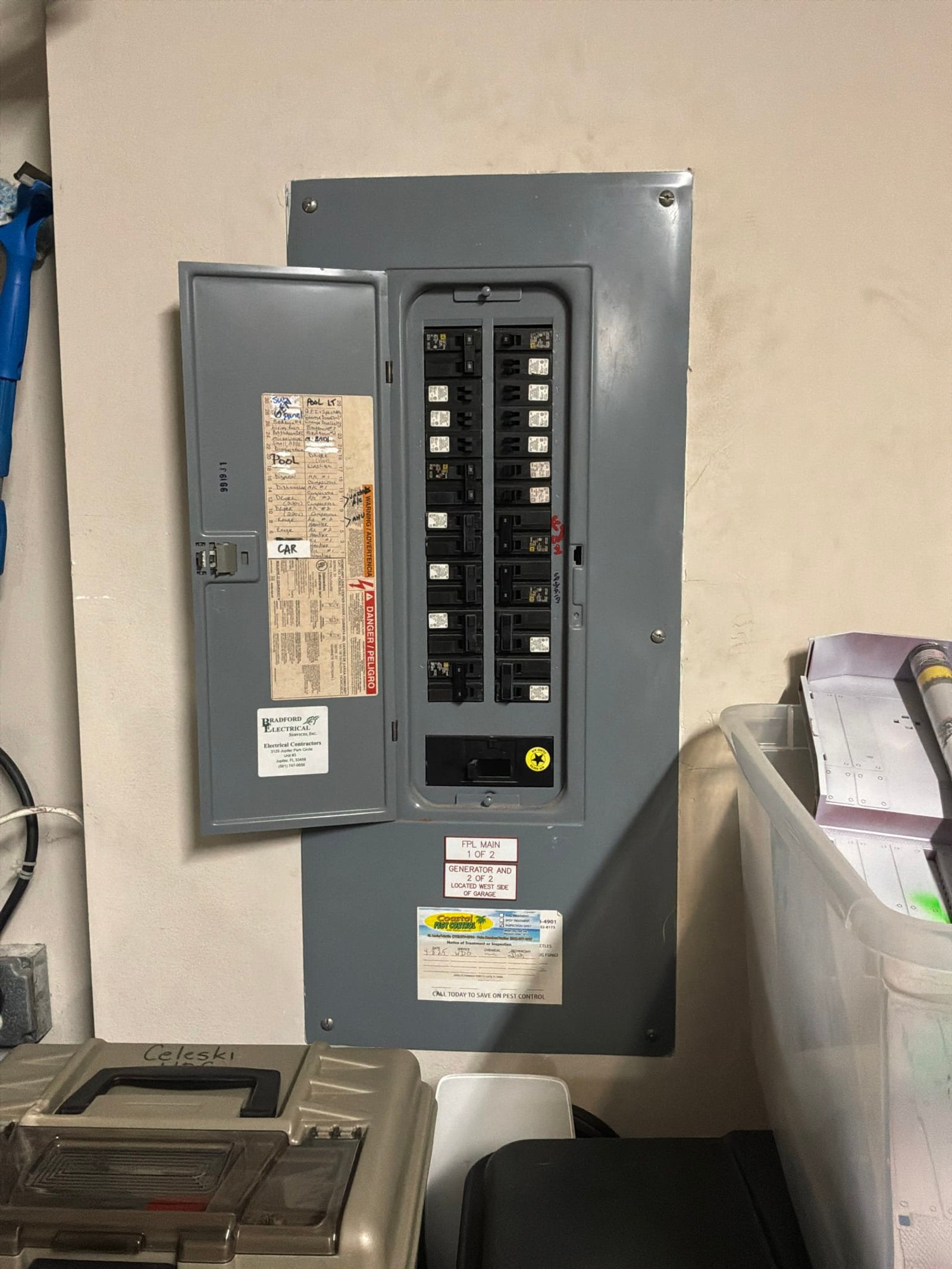
Our technician on-site started with the basics: checking the affected circuit, pulling the device, and looking for the upstream cause.
What the Outlet Showed
The field team found a bathroom GFCI receptacle that had tripped and was not resetting as expected. GFCI receptacles in bathrooms are required under NEC 210.8, and a device that will not reset is a clear sign the receptacle itself may have reached the end of its service life. This is common in bathroom environments where humidity cycling accelerates wear on the internal electronics.
What the Panel Revealed
Opening the panel to check the feeding circuit gave the team a broader view of the home’s electrical system. The photos from this visit show a panel interior with tangled wiring: red, blue, yellow, and black conductors running in no clear order among the breaker rows. The circuit directory on the dead front listed handwritten labels, some of them annotated in ways that suggested the panel had seen work from multiple hands over the years.
Additionally, the wiring arrangement and overall workmanship visible in the panel are consistent with DIY work done at some point in the home’s history. That kind of work is not unusual in homes of this era, and much of it may have been perfectly acceptable at the time. However, today’s standards under NEC 408.4 ask for clear, accurate circuit identification so that any future technician or inspector can work safely and efficiently.
One additional detail worth noting: the circuit directory card showed signs of paint over the device area, which can obscure breaker labels and make accurate identification harder over time. This is a small but meaningful opportunity for improvement when the homeowner is ready to address the panel more fully.
For today’s call, the team focused on the reported problem: the bathroom outlet.
What We Fixed
The licensed electrician on-site performed minor troubleshooting, pulling the bathroom GFCI receptacle to assess the device and the wiring behind it. The GFCI receptacle in the bathroom was the root cause of the dead outlet. The team documented conditions in the panel and provided the homeowner with a clear picture of what they found, including the wiring organization and labeling considerations that would be worth addressing in a follow-up visit.
The homeowner now has a working bathroom outlet and a straightforward record of what was observed in the panel, so any future decisions about upgrades are well-informed rather than guesswork.
Why This Jupiter Panel Upgrade Matters for Homeowners
A single dead outlet can feel like a small annoyance, but tracing it properly often surfaces other details worth knowing. In this case, the bathroom GFCI was the immediate answer. The panel observations are a longer-term conversation.
For any household, a clearly labeled panel is one of those quiet upgrades that pays off every single day. When the power blinks during a summer storm and someone needs to reset a breaker at 10 PM, a readable circuit directory makes that a two-minute task instead of a guessing game. Furthermore, organized wiring in the panel makes every future repair faster and more straightforward for any technician who comes to the home.
GFCI protection in bathrooms is one of those features that simply works in the background so the family does not have to think about it. A fresh, properly functioning GFCI receptacle resets cleanly, protects the circuit downstream, and meets the current requirements families and home inspectors expect to see. With that in place, the morning routine around the bathroom runs the way it should, reliably and without interruption.
For homeowners in Jupiter and the surrounding area, the Electrical Safety Foundation International offers helpful guidance on what a healthy home electrical system looks like, and what to ask a licensed electrician when planning updates. Florida license verification for electrical contractors is also available at the Florida Department of Business and Professional Regulation.
Code Compliance Cited in This Job
Every fix above maps to a specific section of NEC 2020. Each card links to NFPA’s public NEC index.
GFCI Protection for Personnel
NEC 210.8 requires GFCI protection for receptacle outlets in bathrooms of dwelling units. On this job, the bathroom GFCI receptacle had stopped resetting, which removed the protection the circuit was designed to provide. Replacing or restoring a functioning GFCI device brings the outlet back in line with this requirement. NFPA reference ›
Circuit Identification
NEC 408.4 requires that every circuit in a panelboard be legibly identified as to its clear, evident purpose. The panel observed at this Jupiter home had a handwritten circuit directory with annotations suggesting multiple rounds of DIY work. Accurate, current labeling is a straightforward improvement that makes every future service call faster and more reliable. NFPA reference ›
Replacement Receptacle Requirements
NEC 406.4(D) states that when a receptacle outlet is replaced in a location requiring GFCI protection, the replacement must also provide GFCI protection. This applies directly to the bathroom outlet serviced on this call, ensuring the replacement device meets current standards rather than simply matching the old one. NFPA reference ›
Common Questions
Questions homeowners ask after seeing this kind of work.
Why would a bathroom outlet stop working even if the breaker has not tripped?
Bathroom outlets are typically protected by a GFCI receptacle, which has its own internal trip mechanism separate from the breaker panel. If the GFCI trips or the device wears out internally, the outlet goes dead even though the breaker still shows in the on position. Resetting the GFCI button is always the first step, but if the device will not reset or hold, the receptacle itself likely needs to be replaced. If this sounds familiar, our team can confirm the cause quickly. Schedule online to get on the calendar.
How often should I have my home’s electrical system inspected?
A yearly inspection is a good baseline for most homes. Older homes built before 1990 and homes that have come through recent storms may benefit from checks more often, since aging wiring and weather stress can surface issues between routine visits. Annual inspections also give you a current picture of your panel, which is especially useful if the home has seen any DIY work over the years. Schedule online to book your next inspection.
Is a tangled or disorganized panel something I need to fix right away?
Not necessarily right away, but it is worth addressing on your timeline. Disorganized wiring in a panel does not always point to an immediate problem, but it does make troubleshooting slower and future repairs more complex. Accurate circuit labeling and tidy conductor routing are improvements that pay off every time a technician or inspector opens the panel. Our team can assess your panel and walk you through options. Schedule online to talk it through.
What does a DIY electrical panel look like, and should I be concerned?
DIY panel work often shows up as tangled branch conductors, mismatched wire colors, and handwritten circuit labels that have been updated multiple times. Much of this work may have been done with good intentions and may have been acceptable under older standards, but today’s code asks for organized, clearly identified wiring. If your home has had multiple owners or additions over the years, a professional review can give you an accurate picture. Book a visual inspection and we will tell you exactly what we see.
How long does a GFCI receptacle typically last in a bathroom?
Most GFCI receptacles are rated for many years of normal use, but bathroom environments introduce humidity and temperature cycling that can shorten that span. A device that trips frequently, will not reset, or shows physical wear is ready to be replaced. Keeping functioning GFCI protection in wet areas is one of the simplest ways to keep a bathroom running the way a household expects. If yours is showing signs of age, schedule a quick check and we can assess it on the spot.
Want to see more real jobs like this one? Browse our completed case studies or explore our services.