
This Jupiter surge protection case study walks through the real diagnosis, the fix, and the code details from a recent service call. A homeowner in Jupiter, FL had lived in their home for about 35 years and knew the electrical system needed attention. Appliances had cycled through over the years, a second AC unit was on its way, and intermittent power issues had been a quiet frustration for a long time. Our field team came out to review the full system, found several areas worth modernizing, and left the home with a cleaner, more reliable electrical foundation.
The Problem
The homeowner reached out asking for a thorough professional review of the home’s electrical system. Power had always felt inconsistent, especially when running larger appliances.
“We’ve gone through various stoves and have another AC unit coming in. There have always seemed to be issues with power going to things.”
The goal was straightforward: have a licensed electrician look at everything and take care of whatever needed updating.
Investigation
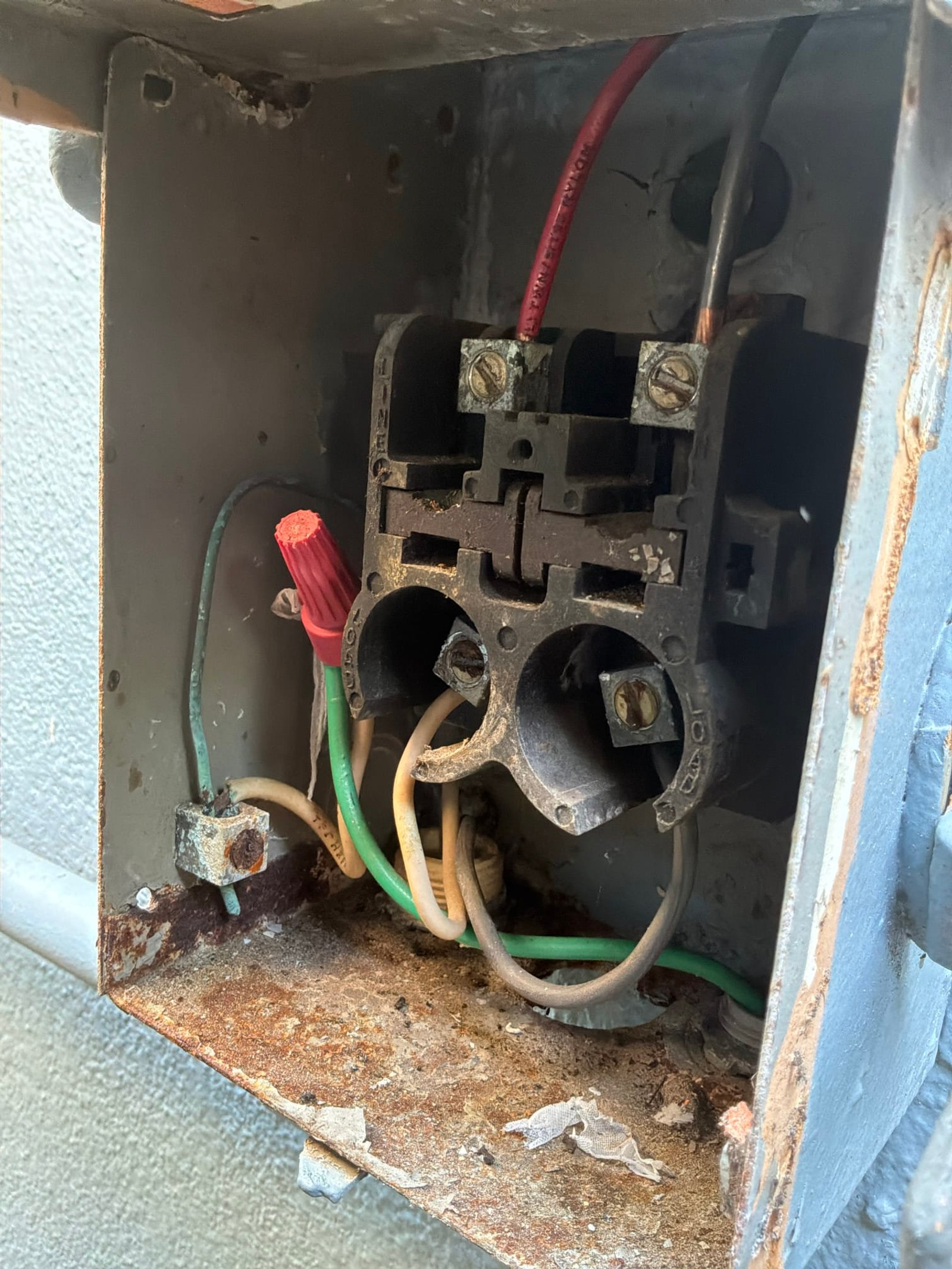
Our technician on-site worked through the entire system from the service entrance to the pool equipment.
Panel and Service Entrance
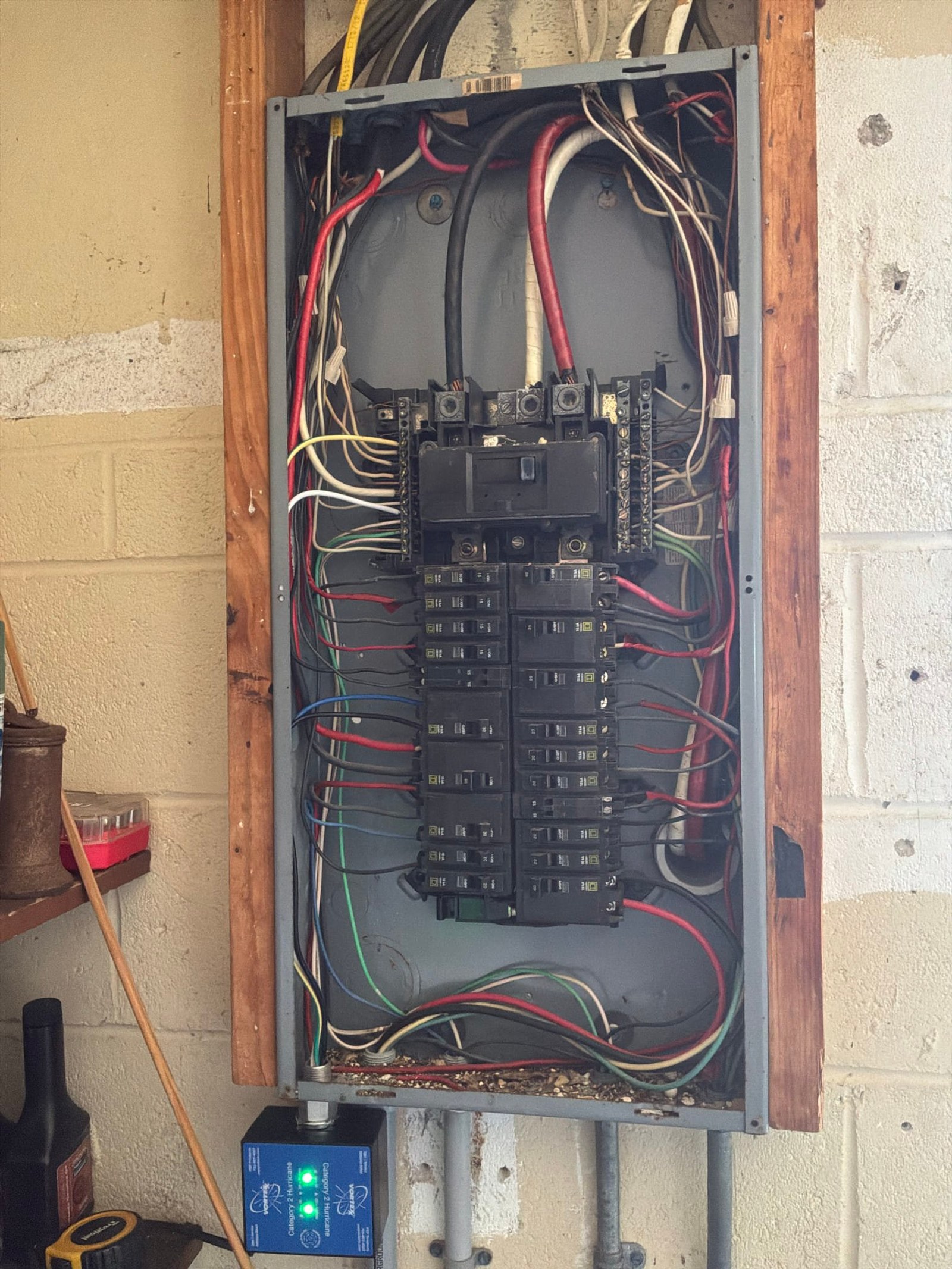
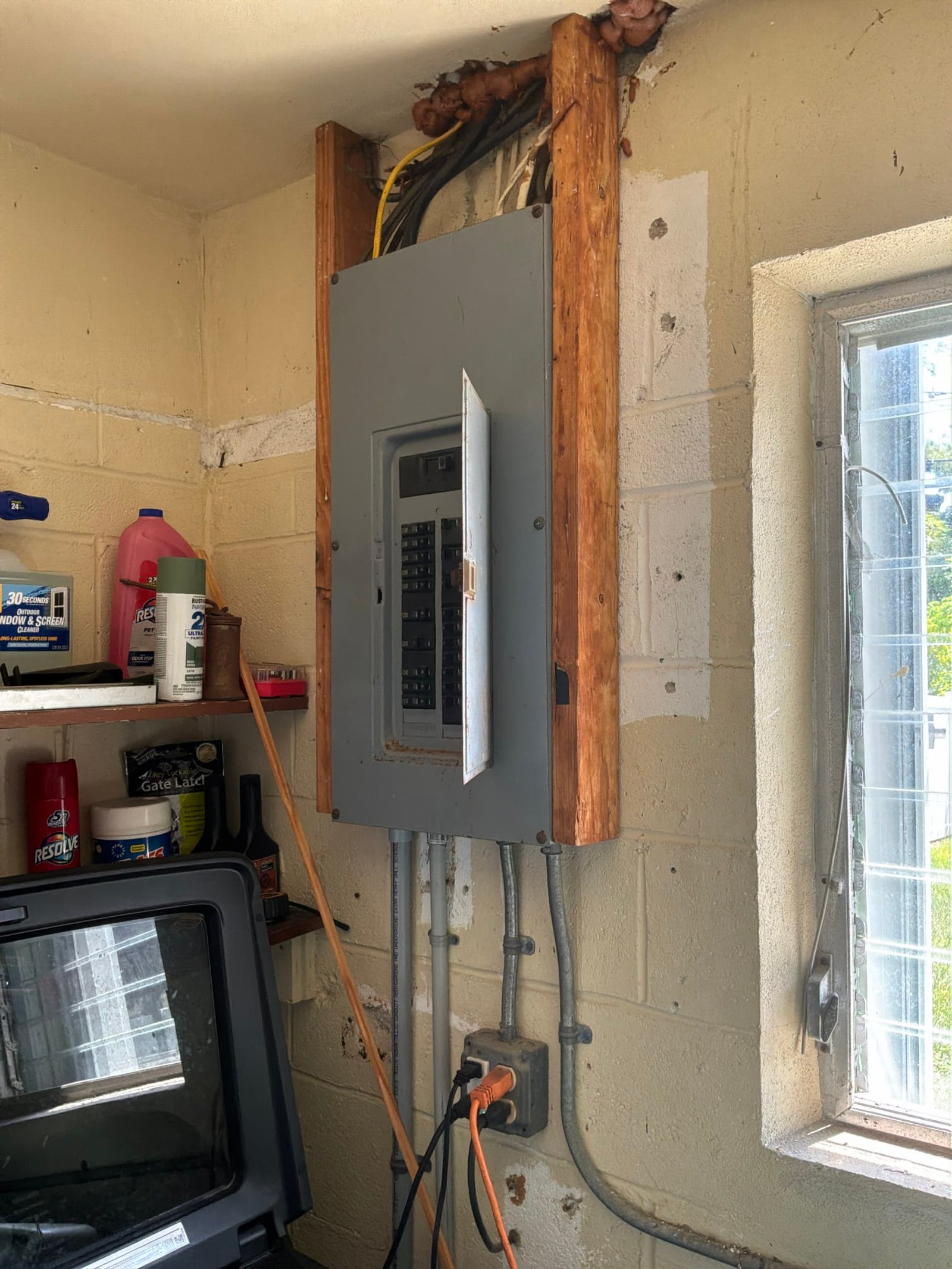
The panel interior showed corrosion on the terminations and enclosure, along with clear evidence of water finding its way in over time. The service entrance lugs, visible on a wooden mounting frame in the garage, showed the same pattern: rust, deterioration, and moisture staining on the conductors. This is a condition consistent with Florida’s humidity and the home’s age. It was not unusual when the system was installed, but current standards call for clean, dry terminations to maintain reliable contact resistance and long-term performance.
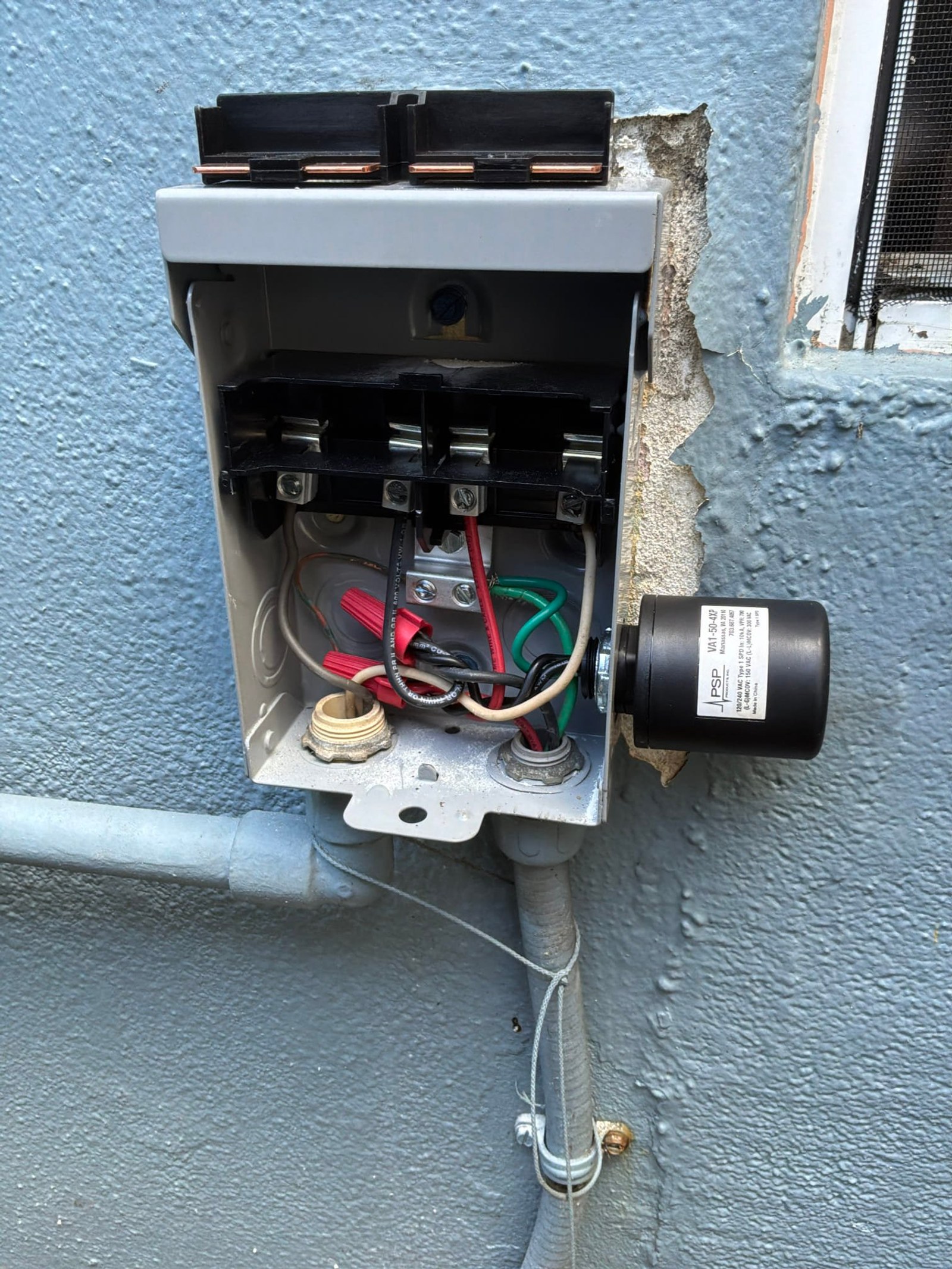
The exterior disconnect box, a weatherproof black enclosure, showed similar corrosion around the terminal lugs. In older installations, weatherproof enclosures were considered sufficient protection on their own. Over decades, however, the seals and housings on these boxes can allow moisture to work in around the edges.
Pool Equipment
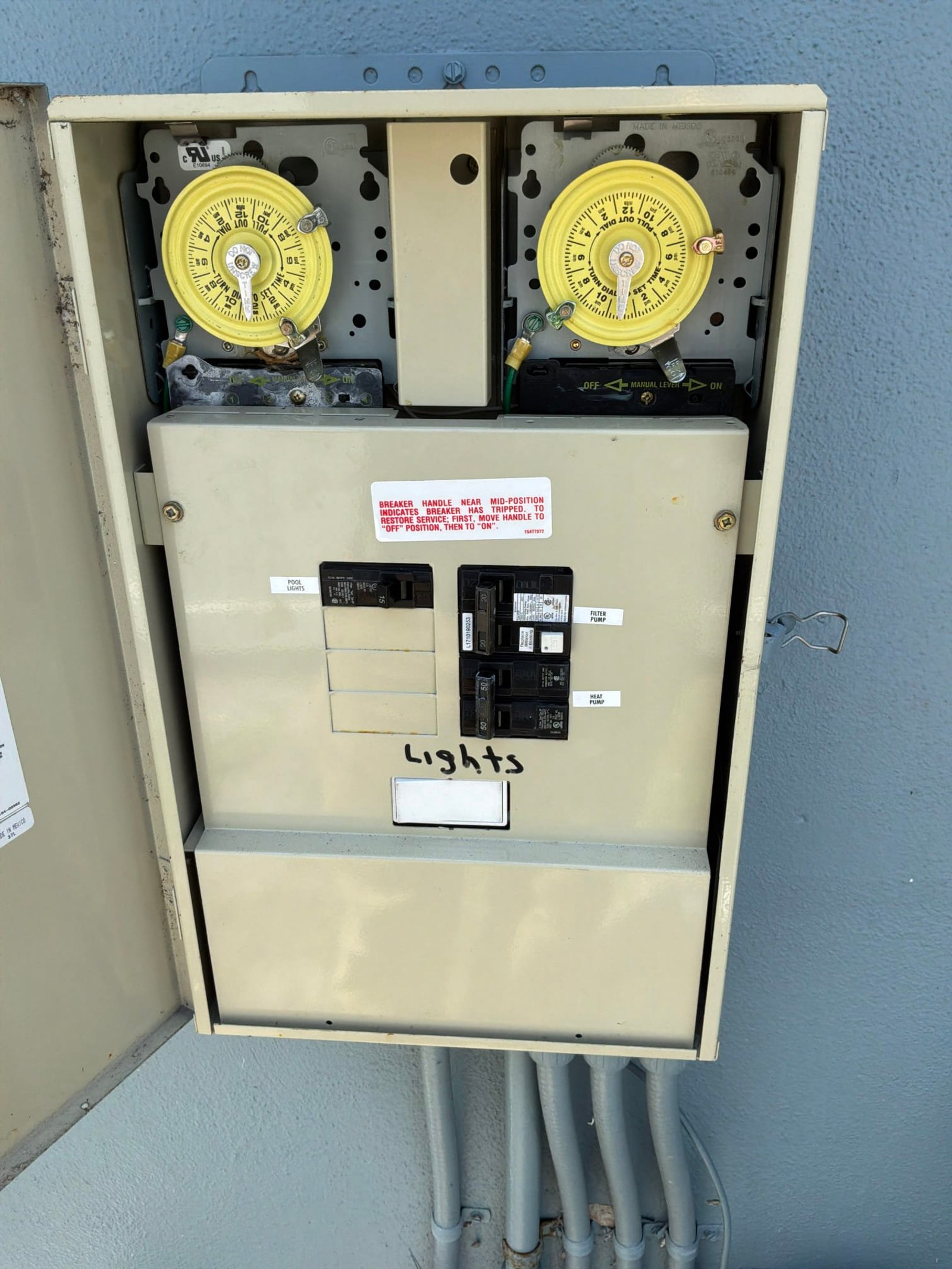
The pool equipment area included mechanical timers with yellow dial controls. One of the breakers in that enclosure appeared to have tripped, and the housing itself showed corrosion consistent with long-term outdoor exposure. For a home that has had ongoing load issues with appliances, the pool-side wiring was worth a careful look as part of the overall picture.
Grounding System
The existing grounding system did not meet the full requirements of current code. Adding a proper grounding electrode system, including new copper ground rods and an intersystem bonding bridge, brings the home in line with what the NEC now requires for dwelling unit services.
What We Fixed
Our crew addressed each of the identified areas systematically.
Whole-Home Surge Protection: We installed a PSP Vortex 120 kA whole-house surge protector at the main panel. In a Florida home where lightning and grid fluctuations are a real seasonal factor, this device sits at the panel and intercepts transient voltage spikes before they reach any circuit in the house. We also installed a PSP VA1-50-4XP 50 kW secondary surge protector at 120/240V, adding a second layer of protection at the panel level. Together, the two devices cover both high-energy surges and the smaller, repetitive spikes that are harder on electronics and appliances over time.
Grounding System: We installed two new 5/8-inch copper ground rods with Acorn direct-burial clamps, ran 25 feet of 4-gauge stranded copper THHN conductor, and added an intersystem bonding bridge (ARLGB5) along with a zinc ground clamp. This replaces an undersized or aging grounding electrode system with a complete, code-compliant setup.
Disconnects: We installed a new 30A un-fused AC pull-out disconnect and a Midwest UO65P / Eaton 60A single-pole pull-out disconnect. Providing properly rated disconnects at the equipment locations keeps service and maintenance straightforward for any technician working on the AC units going forward.
Breaker Replacement: We installed a Square D QO1515 tandem 15/15A single-pole breaker to resolve a space constraint in the panel and restore clean overcurrent protection on two circuits.
Why This Jupiter Surge Protection Matters for Homeowners
For a family that has lived with intermittent power issues for decades, the most important outcome is simple: the home’s electrical foundation is now in much better shape to handle everyday life. The second AC unit that was arriving the next morning now has a properly rated disconnect in place. The appliances, electronics, televisions, and computers the household depends on are now backed by two stages of surge protection at the panel. That means a summer thunderstorm rolls through Jupiter and the family does not need to think twice about what it might do to the refrigerator or the home office equipment.
Corroded terminations and water intrusion in enclosures are common in Florida homes of this era. The humidity, salt air, and decades of thermal cycling all take a toll on older metalwork. Addressing those conditions now, before adding new load to the system, means the new AC unit starts its life on a cleaner, more reliable circuit than what was there before.
Peace of mind is the real deliverable here. When the grounding system meets current NEC standards and surge protection is in place at the panel, the household can go about its morning routine, weekends, and daily life without the quiet background worry of “is the power going to do something strange again.” The Electrical Safety Foundation International notes that older homes benefit significantly from periodic professional reviews, and this inspection was a good example of why: a methodical look at everything surfaced several areas worth modernizing that the homeowner had not been able to pinpoint on their own.
Code Compliance Cited in This Job
Every fix above maps to a specific section of NEC 2020. Each card links to NFPA’s public NEC index.
Grounding Electrode System
NEC 250.50 requires that all available grounding electrodes at a service be bonded together into a single grounding electrode system. The home’s existing grounding arrangement did not fully meet this requirement, which is common in older Florida installations. Installing two new copper ground rods and bonding them together with proper conductors and clamps brings the service into alignment with this section. NFPA reference ›
Grounding Electrodes
NEC 250.52 specifies acceptable grounding electrode types, including driven ground rods of at least 5/8-inch diameter and 8 feet in length. Our crew installed two new 5/8-inch copper ground rods with direct-burial Acorn clamps to satisfy this requirement at this Jupiter service. Ground rods of this specification are the most straightforward electrode type to install at an existing home. NFPA reference ›
Surge Protective Devices at Dwelling Unit Services
NEC 230.67 requires a listed SPD to be installed at the service of all new or upgraded dwelling unit electrical services. Installing the PSP Vortex 120 kA whole-house surge protector at the main panel directly addresses this requirement. The secondary PSP VA1-50-4XP adds a second stage of protection consistent with best practices for Florida homes exposed to frequent lightning activity. NFPA reference ›
Type 2 SPD Installation Requirements
NEC 285.25 governs the installation of Type 2 surge protective devices, which are mounted on the load side of the service disconnect. Both the PSP Vortex 120 kA unit and the PSP VA1-50-4XP 50 kW secondary unit were installed at the panel in accordance with this section, with all wiring connections made to ensure reliable long-term operation. NFPA reference ›
Electrical Connections
NEC 110.14(B) requires that connections be made in a manner that does not impair the ability of the conductors to carry their rated current. The corrosion observed on the terminations, enclosures, and service entrance lugs at this Jupiter home is the kind of condition that can raise contact resistance over time. Addressing the grounding system and disconnect hardware ensures that new connections are clean and properly made. NFPA reference ›
Common Questions
Questions homeowners ask after seeing this kind of work.
How often should a homeowner have their electrical system inspected?
For most homes, a professional inspection once a year is a good baseline. Older homes built before 1990, like this one in Jupiter, and homes that have been through recent storm seasons can benefit from more frequent check-ins. An annual visit gives a licensed electrician the chance to catch small changes in the system before they become bigger projects. If your home has not had a professional review recently, schedule online to get on the calendar.
What does whole-home surge protection actually protect against?
A panel-mounted surge protector intercepts voltage spikes before they reach any circuit in the house. In Florida, those spikes come from lightning, utility switching, and the brief surges that happen every time a large motor like an AC compressor starts and stops. The PSP Vortex and secondary PSP VA1-50-4XP units installed here cover both large-energy events and the smaller, repetitive spikes that wear on electronics and appliances over time. If your panel does not yet have this layer of protection, book a 30-minute visual inspection and we can walk you through the options.
Why would water get inside a panel or disconnect enclosure in Florida?
Florida’s humidity, afternoon rain, and temperature swings put a lot of stress on enclosure seals over decades. Weatherproof and rainproof ratings on older enclosures were sufficient when they were installed, but the gaskets and housing materials age over time. Once moisture works into a termination area, it accelerates corrosion on the metalwork and can raise contact resistance on the conductors. This is a common finding in homes of this era throughout South Florida. Schedule an inspection if your home is in a similar age range and you want to know where things stand.
Do I need a disconnect at my AC unit and why does it matter?
Yes. A properly rated disconnect within sight of each piece of HVAC equipment is required by current code and is also a practical necessity for any technician who needs to service the unit safely. An undersized or missing disconnect means the next service call on the AC unit starts with a complication. Installing a correctly rated pull-out disconnect at each unit keeps future maintenance straightforward. If you have a new or replacement AC unit being installed and are not sure about the disconnect, reach out to schedule a quick check.
What is an intersystem bonding bridge and do I need one?
An intersystem bonding bridge provides a single, accessible bonding point where cable TV, internet, and telephone service providers can bond their grounding conductors to the home’s grounding electrode system. Without it, different service providers sometimes attach to different points, which can create small voltage differences between systems. The ARLGB5 bonding bridge installed at this Jupiter home gives every low-voltage provider one clean, code-recognized bonding location. If your home was built or last updated before this requirement was added to the NEC, it is worth a look. Book a visual inspection and we can confirm what is in place.
Want to see more real jobs like this one? Browse our completed case studies or explore our services.