
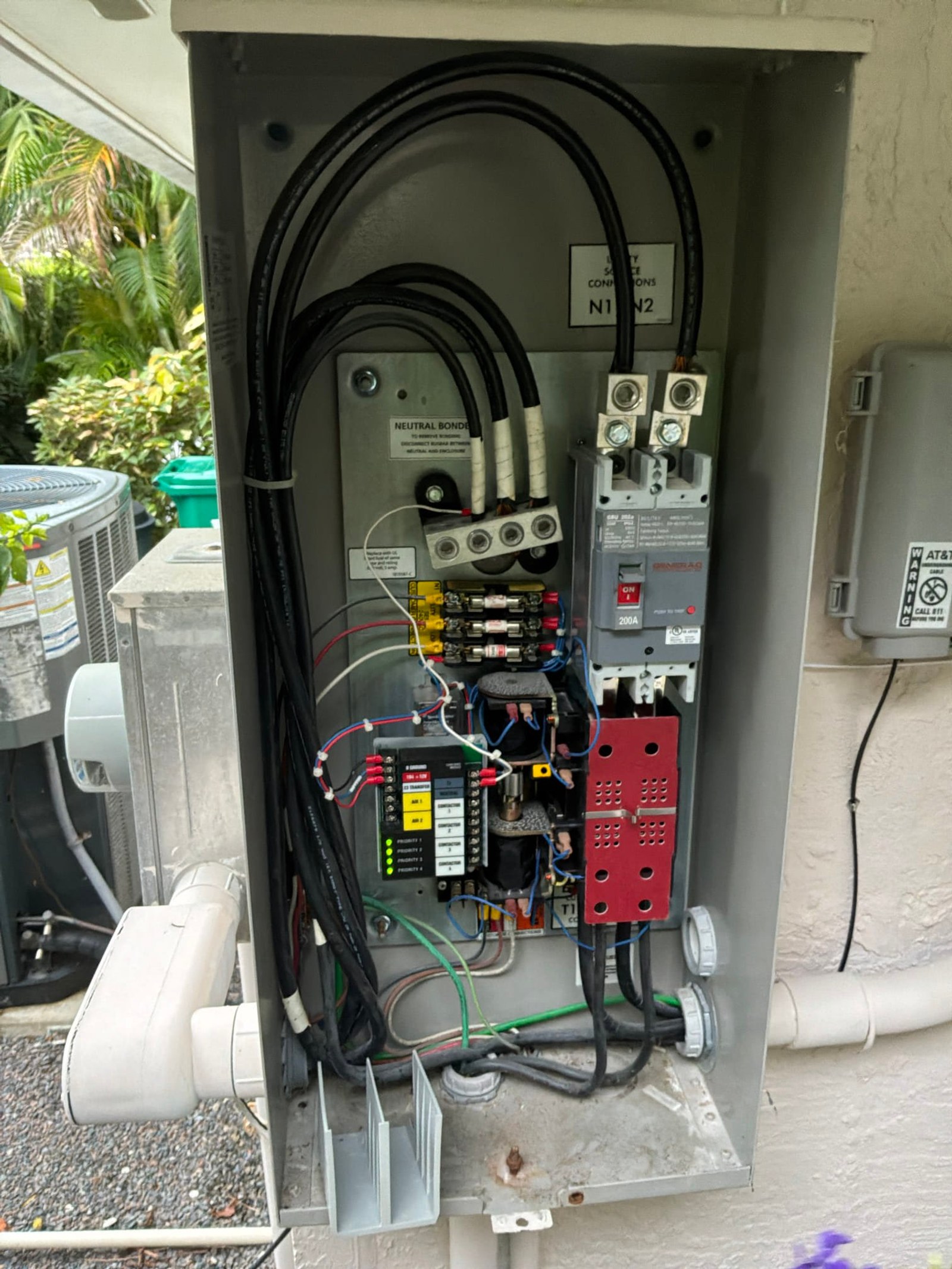
Before & After
 Before
 After
This Jupiter surge protection case study walks through the real diagnosis, the fix, and the code details from a recent service call. When a homeowner in Jupiter, FL lost half their home’s power on a Sunday afternoon, our field team responded the same day. After tracing the problem to a failed main breaker, the crew replaced it, then added a PSP Vortex 120 kA whole-home surge protector so the family could count on reliable power going forward.
Customer’s Problem
On a Sunday in late September, the lights in the home started to dim, recovered briefly, then dimmed again before going out completely. Half the home still had power, but the appliances had nothing. The homeowner suspected the 240-volt supply had dropped out on one leg. They approved an emergency dispatch so the crew could get on-site the same afternoon.
What Our Electrician Found
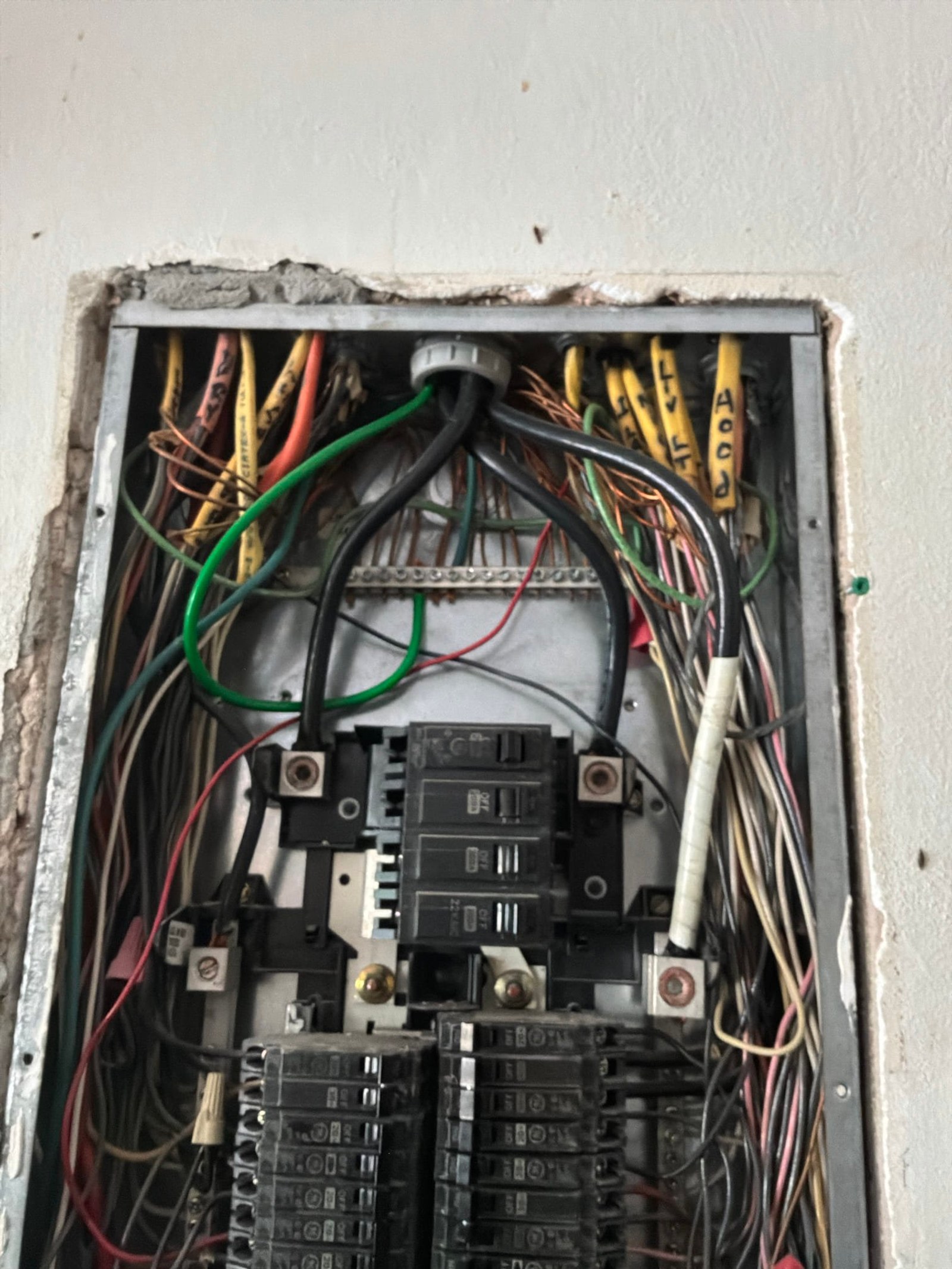
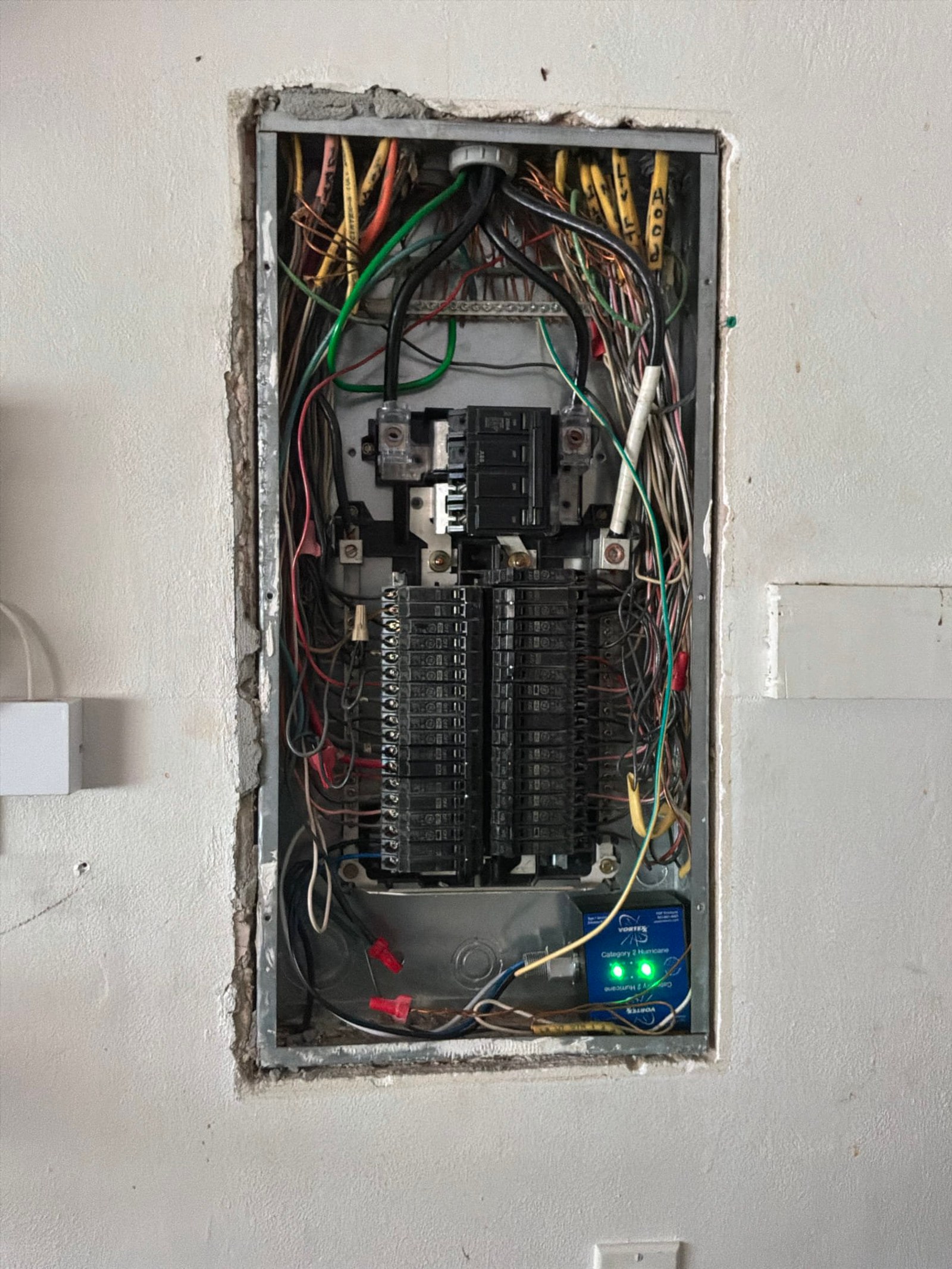
With the dead front removed, the field team had a clear view of the panel interior: multi-colored branch conductors running to the neutral bar, the service entrance conductors, and the main breaker assembly. Among those conductors, the crew noted wiring left in place from earlier work, a pattern consistent with homes that have had multiple service calls or DIY modifications over the years. The interior was overcrowded and tangled in sections, which is common in panels that have been worked on incrementally rather than organized at one time.
The main breaker itself was the immediate culprit. A failed main breaker is exactly the kind of fault that produces the symptom the homeowner described: one leg of the 240-volt service drops, lights flicker on half the home, and large appliances that need both legs simply stop working.
The exterior weatherproof enclosure, including the neutral bond connections at the N1 and N2 terminals, was also visible and in frame during the work.
Options We Presented
The team put four estimates in front of the homeowner. The options ranged in scope from addressing the immediate main breaker failure on its own, to pairing that repair with whole-home surge protection at the panel. A narrower option covered only the breaker replacement. A broader option added the surge device and ensured all new work met current standards. The homeowner had the chance to weigh a quick fix against a more complete modernization before deciding.
Solution Selected
The homeowner chose the option that paired the main breaker replacement with a whole-home surge protector. Given that the panel had already experienced an unexpected failure, adding a layer of protection for the rest of the home’s circuits made sense. The PSP Vortex installation was bundled into a single visit so the family did not need to schedule a second trip.
Work Performed
The licensed electrician on-site completed the following:
- Main breaker replacement: Installed a GE THQMV200EP 200-amp main breaker to restore full 240-volt service to the home.
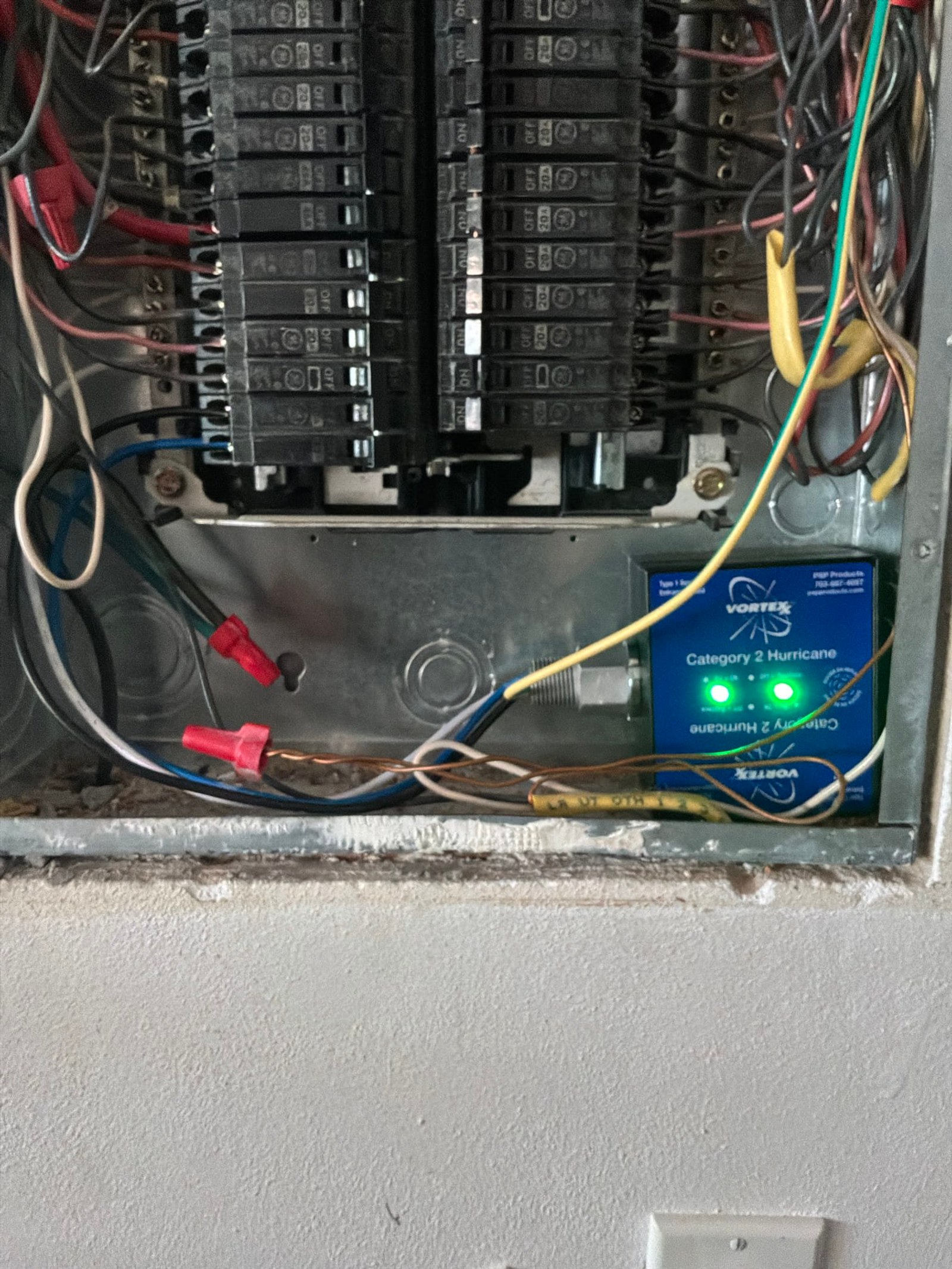
- Whole-home surge protection: Installed a PSP Vortex 120 kA whole-home surge protector at the panel. The blue enclosure with green status LEDs was mounted at the panel, wired to safeguard all branch circuits. The status LEDs give the homeowner a visual confirmation at a glance that the device is active.
All connections were made at the panel interior, including the branch conductors and neutral bar, as visible in the job photos.
Important Materials and Equipment
Materials and equipment on the invoice for this project:
- PSP Vortex 120 kA Whole House Surge Protector
- GE 200 Amp Main Breaker Conversion Kit THQMV200EP
Why Pricing Can Vary
Two homes with the same job on the invoice can land at different totals. On projects like this one, the total is driven by:
- Surge device type and rating
- Whether the device mounts inside the panel or beside it
- Available breaker positions in the panel
- Panel condition and any corrections found when the cover is removed
- Layered protection at sensitive equipment
- Grounding system condition, which the device depends on
Why This Jupiter Surge Protection Matters for Homeowners
A main breaker failure is one of the more disorienting things a household can experience, especially on a weekend. Half the lights work, half do not, and it is not obvious why. In Jupiter and the broader South Florida coast, the combination of aging panels, high summer humidity, and frequent lightning activity puts extra wear on main breaker assemblies over time. Replacing a failed breaker is the direct fix, and the home was back to full power the same afternoon.
Additionally, the PSP Vortex 120 kA surge protector addresses something many homeowners do not think about until after a storm: transient voltage spikes that ride in through the service entrance. Florida averages more lightning strikes per year than almost any other state, and a single spike can quietly degrade appliances, HVAC systems, and electronics over time. With the PSP Vortex in place, every circuit in the home is now buffered against that kind of transient stress. The green status LEDs on the blue enclosure mean the family can check protection status without opening the panel.
For a household running a modern load, including a refrigerator, central AC, and everyday electronics, that reliability translates directly to peace of mind. The family can get through storm season knowing the panel is equipped to handle what comes in from the grid. NEC 230.67 now requires surge protection at the service for new dwelling-unit installations, and adding it here brings the home in line with that current standard.
Finally, the wiring left in place from earlier service calls is worth noting. It did not cause the immediate failure, and it was not the scope of this visit to reorganize the full panel interior. However, if the homeowner ever wants a panel cleanup or full inspection, that is a straightforward next step that can improve long-term serviceability. The Electrical Safety Foundation International recommends periodic inspections for homes that show evidence of accumulated DIY work, and our team is always available for a follow-up visit.
Code Compliance Cited in This Job
Every fix above maps to a specific section of NEC 2020. Each card links to NFPA’s public NEC index.
Surge Protective Device at Service
NEC 230.67 requires a listed surge protective device at the service of all new dwelling-unit installations. On this Jupiter job, the homeowner elected to add a PSP Vortex 120 kA surge protector at the panel, bringing the home in line with this current requirement and protecting all branch circuits from transient voltage events. NFPA reference ›
Type 2 SPD Installation
NEC 285.25 governs the installation requirements for Type 2 surge protective devices mounted at or downstream of the service panel. The PSP Vortex installed on this job is a Type 2 device, and its connections to the panel were completed per this section to ensure reliable, long-lasting performance. NFPA reference ›
Circuit Directory and Identification
NEC 408.4 requires that every circuit in a panelboard be legibly identified. During this visit, the crew worked through a panel interior that showed evidence of accumulated branch conductors from earlier work. Accurate circuit identification supports safe future serviceability for any licensed electrician who opens this panel. NFPA reference ›
Electrical Connections
NEC 110.14(B) addresses the integrity of terminal connections and splices. With a new 200-amp main breaker installed and surge device wiring terminated at the panel, proper connection practices at the neutral bar and branch conductor terminations help ensure the new equipment performs as intended over the long term. NFPA reference ›
Common Questions
Questions homeowners ask after seeing this kind of work.
What causes a home to lose power on only half its circuits at once?
This pattern almost always points to a problem with one leg of the 240-volt service coming into the home. Each leg of the service feeds roughly half the branch circuits, so when one leg drops, half the lights and outlets stop working while the other half stay on. Large appliances like HVAC units and dryers that require both legs will also go offline. A licensed electrician can confirm the exact cause quickly with a voltage check at the main breaker. If this matches what you are seeing, schedule an inspection online so we can get on-site the same day.
How does a whole-home surge protector at the panel actually protect appliances?
A panel-mounted surge protector like the PSP Vortex works by clamping voltage spikes at the point where power enters the home. When a transient surge rides in through the service entrance, the device absorbs and redirects that excess energy before it can travel down the branch circuits to your refrigerator, HVAC system, or electronics. The result is that everyday appliances keep running the way the household expects, through storm season and beyond. If you would like one added to your panel, book a visit online and we can typically complete the installation in a single trip.
Is a main breaker replacement something that can wait, or should it be handled right away?
A main breaker that has already failed and cut power to part of the home is worth addressing promptly rather than leaving in a degraded state. The main breaker is the first line of overcurrent protection for the entire panel, so a breaker that trips unexpectedly or fails to carry full load affects the reliability of every circuit downstream. On this Jupiter job, the crew replaced the breaker the same afternoon the homeowner called. Schedule online if your home is showing similar symptoms and we will get a technician out quickly.
How often should I have my home’s electrical system inspected?
A yearly inspection is a solid baseline for most homes. Homes built before 1990, or homes that have gone through multiple rounds of DIY work over the years, can benefit from inspections more often since accumulated changes are harder to track over time. South Florida homes that see active storm seasons are also good candidates for more frequent check-ins, given the wear that lightning activity and humidity put on panels and connections. Book a safety check online and our team can give you an honest picture of where things stand.
What should I know about wiring from previous repairs left inside the panel?
Conductors left in place from earlier service calls are common in homes that have had multiple electricians work on them over the years. In most cases the abandoned wiring is harmless on its own, but it does make the panel harder to service and can obscure the active circuits. Current best practice is to remove conductors that are no longer connected to any active device, which keeps the panel organized and easier to work in safely. If your panel looks crowded or disorganized, our crew can schedule a panel cleanup visit to sort it out.
Project Photos
Electrician and Technical Reviewer
Work performed by Jared, Thomas Edison Electric field electrician serving Jupiter / West Palm Beach.
Jared, the electrician on this job, is the technical reviewer of record for this case study.
Location
This project was completed in Jupiter, Florida, in our Jupiter / Juno Beach / Jupiter Island / Tequesta service area.