
This Jupiter electrical repair case study walks through the real diagnosis, the fix, and the code details from a recent service call. A homeowner in Jupiter, FL called us after a previous installation left their EV charger dormant and their 200-amp Square D QO panel in questionable shape. Our field team arrived, assessed what was actually going on inside the panel, and installed a dedicated 50-amp circuit along with a Generac 7000 Smart Management Module (SMM) so the EV charger and the home’s generator loads could share available capacity without tripping each other out.
Customer’s Problem
The homeowner had hired a previous contractor to add an EV charger. After that work, the charger sat unused because the panel appeared to be overloaded. The customer wanted a sub-panel installed to support the charger and get their EV charging up and running reliably.
What Our Electrician Found
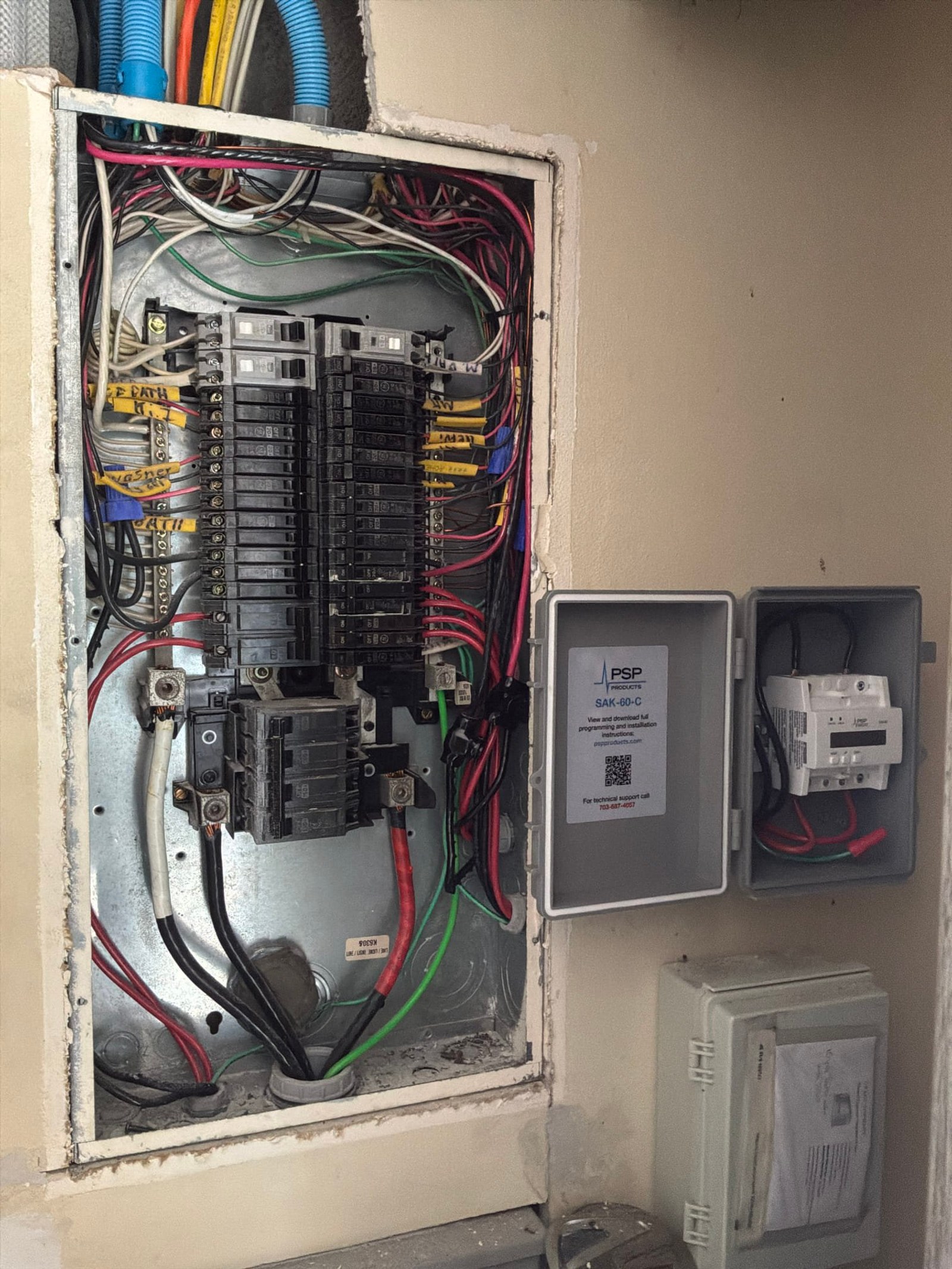
With the dead front removed from the Square D QO 200-amp panel, our crew got a clear look at the interior. A few things stood out.
Backstabbed Outlets
The inspection flagged backstabbed connections in the home. Backstabbing was a common wiring shortcut used widely before roughly 2005. Rather than wrapping conductors around screw terminals, installers would push them into spring-loaded holes on the back of the device. Over time, that spring tension relaxes, contact resistance climbs, and you get the intermittent performance issues the homeowner described. Replacing backstabbed connections with properly screw-terminated devices is a straightforward fix and one of the most durable improvements on a home of this era.
Panel Interior Conditions
The photos from the inspection show multicolored conductors, including black, red, green, and white branch wiring, running through the panel alongside the utility entrance. Corrosion was visible on the terminations and the enclosure itself, which is worth addressing over time because corroded connections add resistance and make future service work harder. The photos also show workmanship from prior visits that included improper support of the conductors inside the enclosure. None of these conditions are unusual in a panel that has seen multiple hands over the years, but they are worth noting as opportunities to bring things in line with current standards.
Additional Concerns Noted
The inspection also flagged that the home lacked AFCI protection on applicable circuits, tamper-resistant receptacles were not confirmed throughout, and no carbon monoxide detector was present. A generator pre-wire and a standby generator were also listed as concerns, which is consistent with why the homeowner called us. These items give the household a clear roadmap for future improvements.
Solution Selected
The homeowner chose to move forward with the generator circuit and Smart Management Module installation. This addressed the root cause of the dormant EV charger: insufficient load management between the generator and the charger’s 50-amp demand. A new 50-amp dedicated circuit was added to route power cleanly, and the Generac SMM was installed to automate load sharing.
Work Performed
Our team installed the following:
- Dedicated 50-amp circuit using 6/3 Romex NM wire and 6/3 UF wire (15 feet of each), run through an open area within the available path.
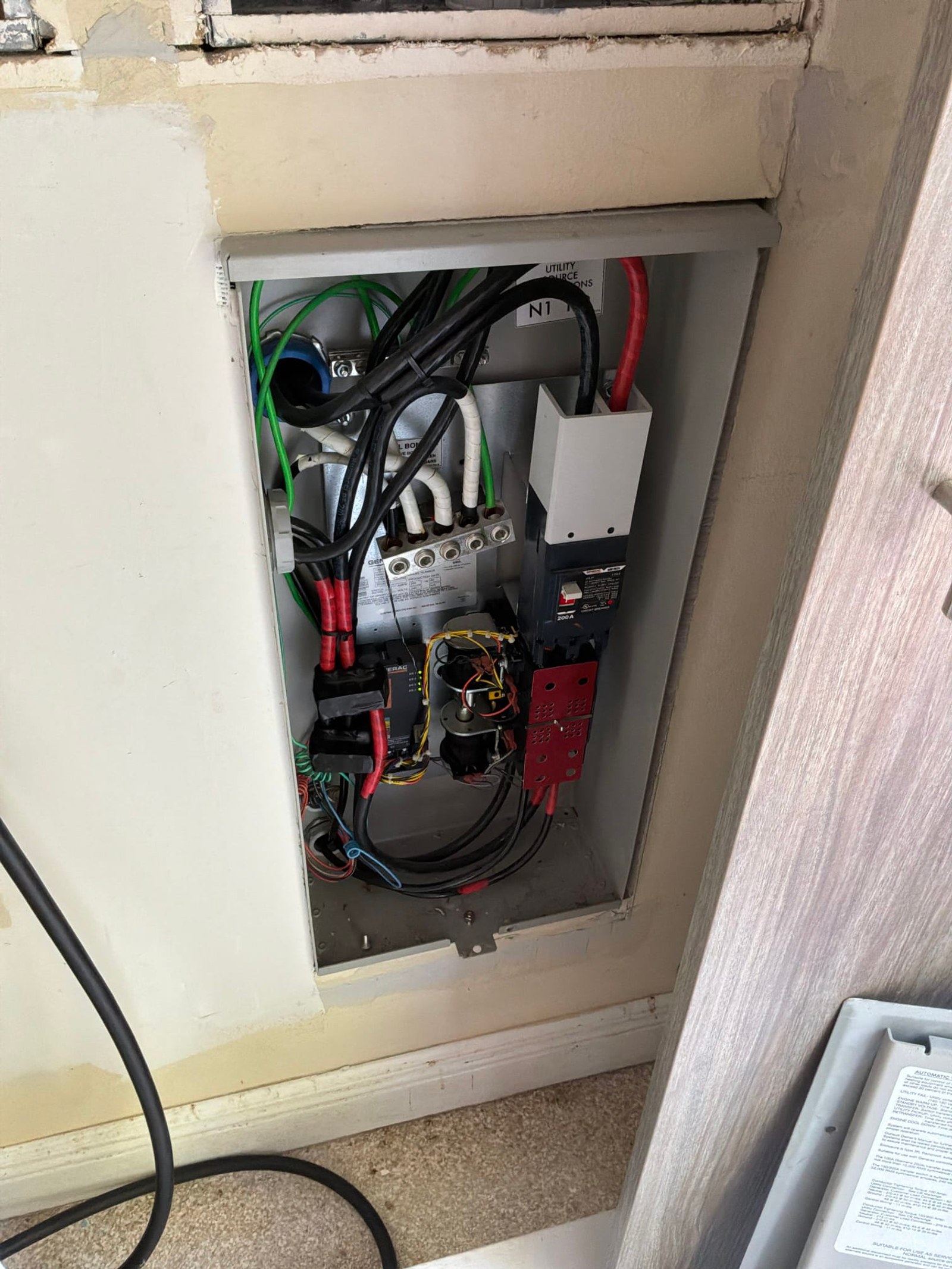
- Generac 7000 50A Smart Management Module (SMM) installed in coordination with the generator. The SMM monitors total load and automatically adjusts what the generator powers at any given moment, so the EV charger and the home’s other generator-backed loads share capacity intelligently without manual intervention.
- 50-amp circuit termination completed as part of the SMM installation, giving the EV charger a proper, code-sized home on the circuit.
Why Pricing Can Vary
Two homes with the same job on the invoice can land at different totals. On projects like this one, the total is driven by:
- Generator size and fuel type (natural gas versus propane)
- Transfer switch type and whether the whole home or selected circuits are backed up
- Distance from the generator pad to the panel and to the gas meter or tank
- Pad, clearances and setbacks required at the placement site
- Gas piping and plumbing coordination
- Load management devices needed to protect the service size
- Permit, inspection and utility requirements
- Panel or service upgrades required to accept the transfer switch
Why This Jupiter Electrical Repair Matters for Homeowners
The Generac Smart Management Module is more than a convenience feature. It means the family does not have to choose between charging the car and keeping the air conditioning running when the grid is out. The SMM watches the total generator load in real time and scales EV charging up or down so nothing trips. For a household in Jupiter that lives through a full Atlantic hurricane season every year, that kind of automatic load intelligence is the difference between a generator that truly covers the home and one that trips at the worst moment.
Additionally, putting the EV charger on its own properly sized 50-amp circuit, rather than sharing capacity with whatever the previous installer had pieced together, means the charger runs at its rated speed every night. The morning routine is simpler: the car is charged, no guesswork needed.
Finally, the inspection findings give this homeowner a clear, prioritized list of what to address next, from AFCI protection to tamper-resistant outlets to a CO detector. None of those items require emergency action today, but having the list in hand means the household can plan improvements one season at a time, with full confidence in what is already done. That is the kind of peace of mind that makes home ownership feel manageable rather than overwhelming.
Code Compliance Cited in This Job
Every fix above maps to a specific section of NEC 2020. Each card links to NFPA’s public NEC index.
EV Charging Branch-Circuit Ampacity
NEC 625.41 requires that the branch circuit supplying an EV charging station be sized at 125 percent of the continuous load. On this job, a 50-amp, 6 AWG circuit was installed to meet the charger’s rated demand and satisfy the continuous-load calculation. This ensures the circuit can sustain full charging current without nuisance trips or conductor overheating. NFPA reference ›
EV Charging Continuous-Load Rating
NEC 625.42 classifies EV charging as a continuous load, meaning the circuit must be rated for operation at full current for three hours or more. The 6 AWG conductors and 50-amp overcurrent device installed on this job align with that classification, giving the charger a dedicated path sized for continuous use rather than an add-on to an existing circuit. NFPA reference ›
Surge Protective Device at Service
NEC 230.67 now requires a surge protective device at the service entrance of new and replaced dwelling-unit services. With a standby generator and Smart Management Module added to this home, reviewing the service entrance for an SPD is a natural next step. The corrosion visible on the panel terminations in the inspection photos underscores the value of a clean, well-protected service going forward. NFPA reference ›
AFCI Protection
NEC 210.12 requires arc-fault circuit-interrupter protection on branch circuits serving living areas, bedrooms, kitchens, and similar spaces in dwelling units. The inspection flagged AFCI protection as a concern on this home, which is consistent with panels wired before the AFCI requirements expanded in successive code cycles. Adding AFCI breakers to the Square D QO panel in the future would bring those circuits in line with current standards. NFPA reference ›
Tamper-Resistant Receptacles
NEC 406.12 requires tamper-resistant receptacles throughout dwelling units. The inspection noted that tamper-resistant outlets were not confirmed in this home, which is common in residences wired before this requirement became standard. Replacing standard receptacles with tamper-resistant versions at the same time backstabbed connections are corrected is an efficient way to address both concerns in one visit. NFPA reference ›
Common Questions
Questions homeowners ask after seeing this kind of work.
Why did the EV charger stop working after the previous installation?
When an EV charger is added without properly accounting for the panel’s available capacity, the circuit can appear to work initially but trip repeatedly or simply not energize under load. In this case, a Generac Smart Management Module was installed alongside a properly sized dedicated 50-amp circuit so the charger and the generator’s other loads share capacity automatically. If your EV charger is sitting dormant after an install, our team can diagnose the cause. Schedule online to get on the calendar.
What does a Generac Smart Management Module actually do?
The Generac SMM watches the total output of your standby generator in real time and throttles the current sent to the EV charger up or down so the generator never gets overloaded. When other high-draw appliances like your AC or water heater cycle on, the SMM reduces EV charging temporarily, then restores full charging speed when headroom returns. The result is a home that keeps running smoothly without you having to manage anything manually. If you have a standby generator and an EV charger, book a consultation to see whether a Smart Management Module fits your setup.
What are backstabbed outlets and why do they matter?
Backstabbed outlets use a spring-loaded hole on the back of the device rather than a screw terminal to hold the conductor. This method was widely used before roughly 2005 and was permissible under the code at the time. Over years of use, the spring tension eases and contact resistance increases, which can cause intermittent performance. Replacing them with screw-terminated connections is a straightforward upgrade that brings the outlets in line with current standards. If your home was wired before 2005, it is worth having a licensed electrician take a look to confirm what you have.
How often should I have my home’s electrical system inspected?
Once a year is a solid baseline for most homes. Homes built before 1990 and homes that have come through recent storms may benefit from inspections more often, since older wiring systems and weather-related stress can introduce conditions that develop gradually and are easy to catch early with a trained eye. An annual visit also gives you a running record of what has been addressed and what is on the horizon. Schedule online to set up your next inspection.
Does adding a standby generator require changes to my existing panel?
In most cases, yes. A standby generator connects to your home through a transfer switch or a Smart Management Module, both of which require dedicated wiring sized for the generator’s output and the loads it will carry. On this Jupiter installation, 6 AWG wiring and a Generac 50A SMM were added to give the generator circuit its own properly sized path. The specifics depend on your panel brand, available space, and the loads you want covered. Book a consultation and our team can walk you through what your home needs.
Project Photos
Electrician and Technical Reviewer
Work performed by Jared, Thomas Edison Electric field electrician serving Jupiter / West Palm Beach.
Jared, the electrician on this job, is the technical reviewer of record for this case study.
Location
This project was completed in Jupiter, Florida, in our Jupiter / Juno Beach / Jupiter Island / Tequesta service area.