
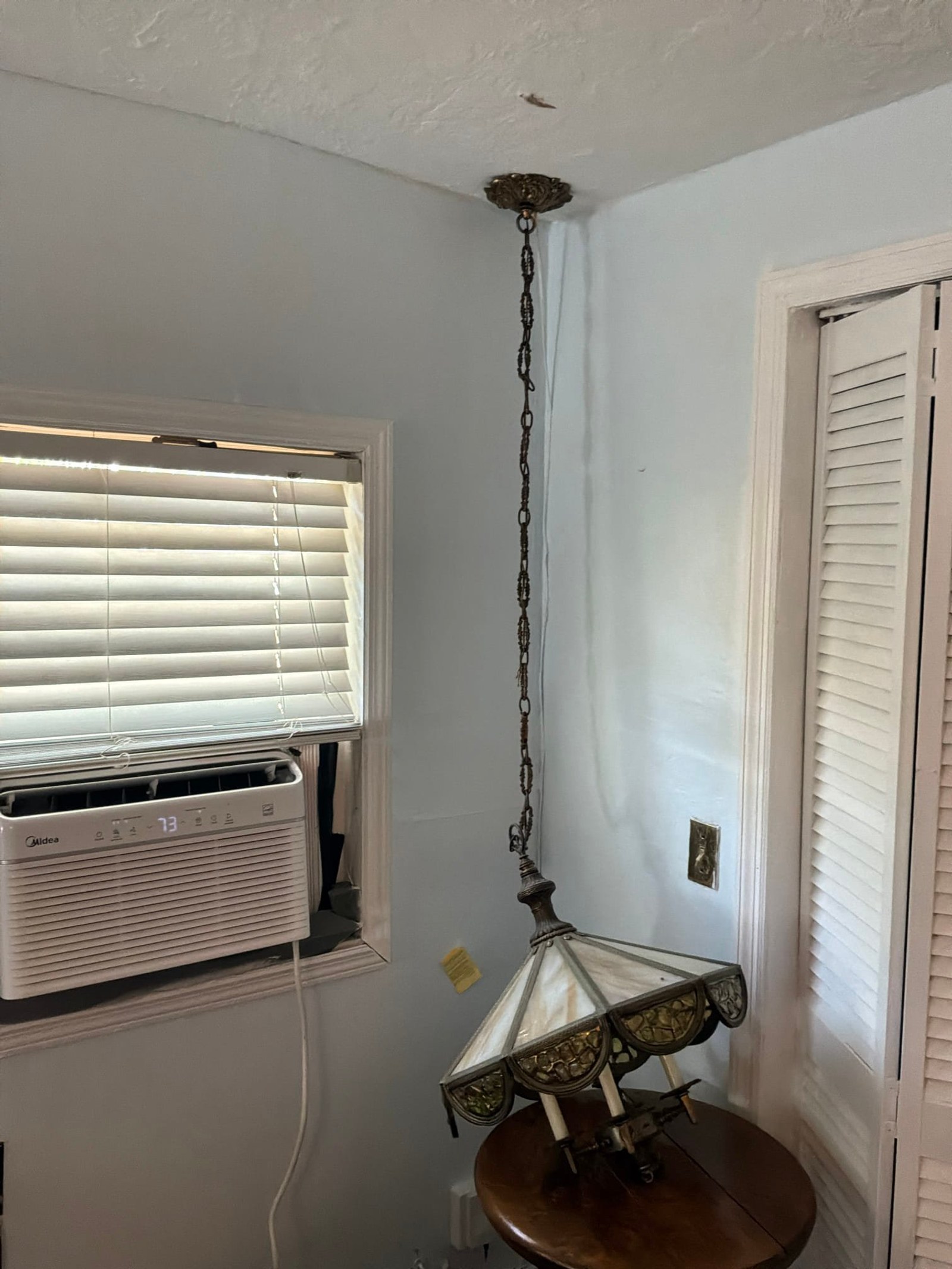
This West Palm Beach outlet repair case study walks through the real diagnosis, the fix, and the code details from a recent service call. A homeowner in Lake Worth Beach, FL reached out with two straightforward requests: remove an older decorative chandelier and cap the junction box cleanly, then address an outlet that had worked its way out of the wall. Simple on the surface, but clean fixture and device work depends on doing each step correctly, because those details affect how reliably everything functions for years to come.
The Problem
The homeowner described the situation clearly: a brass pendant-style chandelier was no longer wanted, and an outlet had begun to protrude from the wall box, leaving an unsecured connection that needed to be set right.
“I want the chandelier taken down and the box capped off, and I have an outlet sticking out that needs to be fixed.”
Investigation
Our field team started at the fixture. The photo taken on-site shows a decorative brass pendant light hanging by a chain, consistent with a style common in homes from the 1980s and 1990s. Fixtures of this type are often mounted to a standard ceiling box with a chain-canopy kit. Before any work begins, the team confirms that the circuit feeding the fixture is de-energized at the panel and verifies the box mounting to understand whether a blank cover plate or a finished cap is the right next step.
Outlet Condition
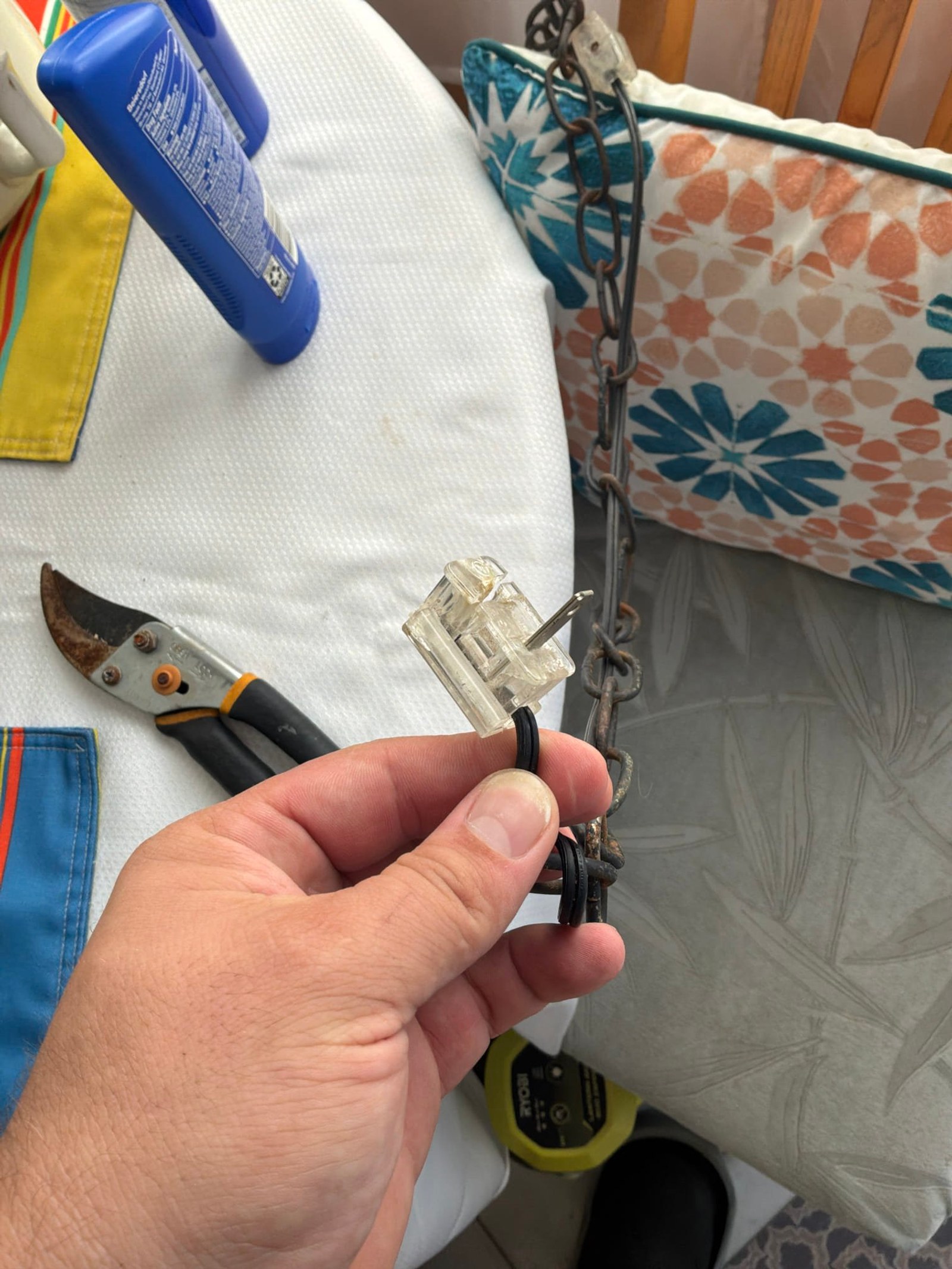
A second photo documents the connection work at the outlet location, showing a lug screw termination with black-insulated conductors. Outlets that have shifted forward from the wall box are common in older construction. Over time, mounting screws can loosen, or the box itself may sit slightly too deep after drywall work. The result is a device that no longer sits flush. Beyond aesthetics, a protruding outlet puts mechanical stress on the wiring connections inside the box, which is worth correcting whenever it is noticed. This is a condition that predates current code requirements around secure device mounting, and correcting it now brings the installation in line with current expectations.
What We Fixed
Our crew safely removed the brass pendant chandelier and its chain mounting hardware. The ceiling junction box was then capped with a listed blank cover plate, leaving the circuit properly closed and the ceiling surface clean and finished.
For the outlet, the team re-secured the device properly within the box, ensuring the face plate sits flush with the wall surface and the internal wiring connections are correctly seated. Screw-terminal connections were confirmed at the device, which is the recommended method for a durable, long-lasting termination under NEC 110.14(B).
Both items were addressed in a single visit, and the homeowner’s space was left clean and tidy.
Why This West Palm Beach Outlet Repair Matters for Homeowners
Fixture removals and device repairs might feel like minor tasks, but they are a chance to make sure every connection in the home is doing exactly what it should. A capped junction box means no open wiring is left behind inside a ceiling cavity. A flush, securely mounted outlet means the household can plug in appliances and charge devices without a loose fitting that wiggles with every use.
For a family going through a refresh or renovation, small details like these add up to a home that just works. Every outlet, every ceiling box, every switch plate either contributes to daily ease or quietly introduces a nuisance. Our team’s goal on every visit is to leave the home a little more reliable than we found it.
Additionally, taking care of items like a protruding outlet before repainting or installing new furniture means one less thing to revisit later. Peace of mind comes from knowing that what is behind the walls and plates has been handled correctly, so the household can focus on the parts of the renovation that are actually fun.
Code Compliance Cited in This Job
Every fix above maps to a specific section of NEC 2020. Each card links to NFPA’s public NEC index.
Electrical Connections
NEC 110.14(B) covers the proper method for splices and terminations at electrical devices. On this job, the outlet was re-secured and its screw-terminal wiring connections were properly seated, consistent with the durable termination method the code prefers over less reliable alternatives. NFPA reference ›
Dwelling Unit Receptacle Outlets
NEC 210.52 governs where receptacle outlets must be placed in dwellings to serve living areas adequately. Ensuring the existing outlet was correctly mounted and fully functional keeps the homeowner’s room in line with the placement intent of this section. NFPA reference ›
Unused Openings
NEC 408.7 requires that unused openings in electrical enclosures be closed. Capping the chandelier’s ceiling junction box with a listed blank cover plate after fixture removal follows the same principle: every box opening should be properly closed when a device or fixture is no longer present. NFPA reference ›
Common Questions
Questions homeowners ask after seeing this kind of work.
Can any ceiling junction box be capped off after a light fixture is removed?
In most cases, yes. The box must be accessible and covered with a listed blank cover plate rather than buried behind drywall. If the box is not rated for the location or is too small for the conductors inside, it may need to be replaced before capping. Our crew assesses the box condition before finishing the work. If you have a fixture you want removed, schedule online and we can take a look.
Why does my outlet stick out from the wall?
Outlets protrude when the mounting screws loosen over time, when the electrical box sits deeper than the finished wall surface, or after drywall repairs that shifted the wall thickness. It is a common finding in older homes and in rooms that have been renovated. Re-securing or shimming the device usually resolves it quickly. Book a visit online and our team can confirm the cause and fix it in the same appointment.
How often should I have my home’s electrical inspected?
A yearly inspection is a solid baseline for most households. Homes built before 1990 and homes that have come through a recent storm season may benefit from a check more often, since older wiring and weather events can shift conditions inside the walls. An annual visit lets our team catch small items, like a loose outlet or an aging fixture connection, before they become inconveniences. Schedule your annual inspection online to stay ahead of it.
Is it safe to leave a ceiling box open after removing a chandelier?
An open junction box should always be capped before the work is considered complete. A listed blank cover plate keeps the conductors inside the box properly enclosed and the ceiling surface finished. Leaving a box uncovered is a condition that does not meet current code, regardless of whether the circuit is live or capped at the breaker. Reach out online if you have an open box you need closed properly.
What is the difference between a backstabbed outlet connection and a screw-terminal connection?
Backstabbed connections use spring-loaded holes in the back of the device to grip the wire, a method that was common in homes wired before roughly 2005. Over time, spring tension in those connections can ease, leading to intermittent issues. Screw-terminal connections wrap the wire around a threaded screw and clamp it firmly, which provides a more durable contact point. When our team services an outlet, we use screw-terminal terminations for a longer-lasting result. Schedule online if you would like your outlets inspected.
Want to see more real jobs like this one? Browse our completed case studies or explore our services.