
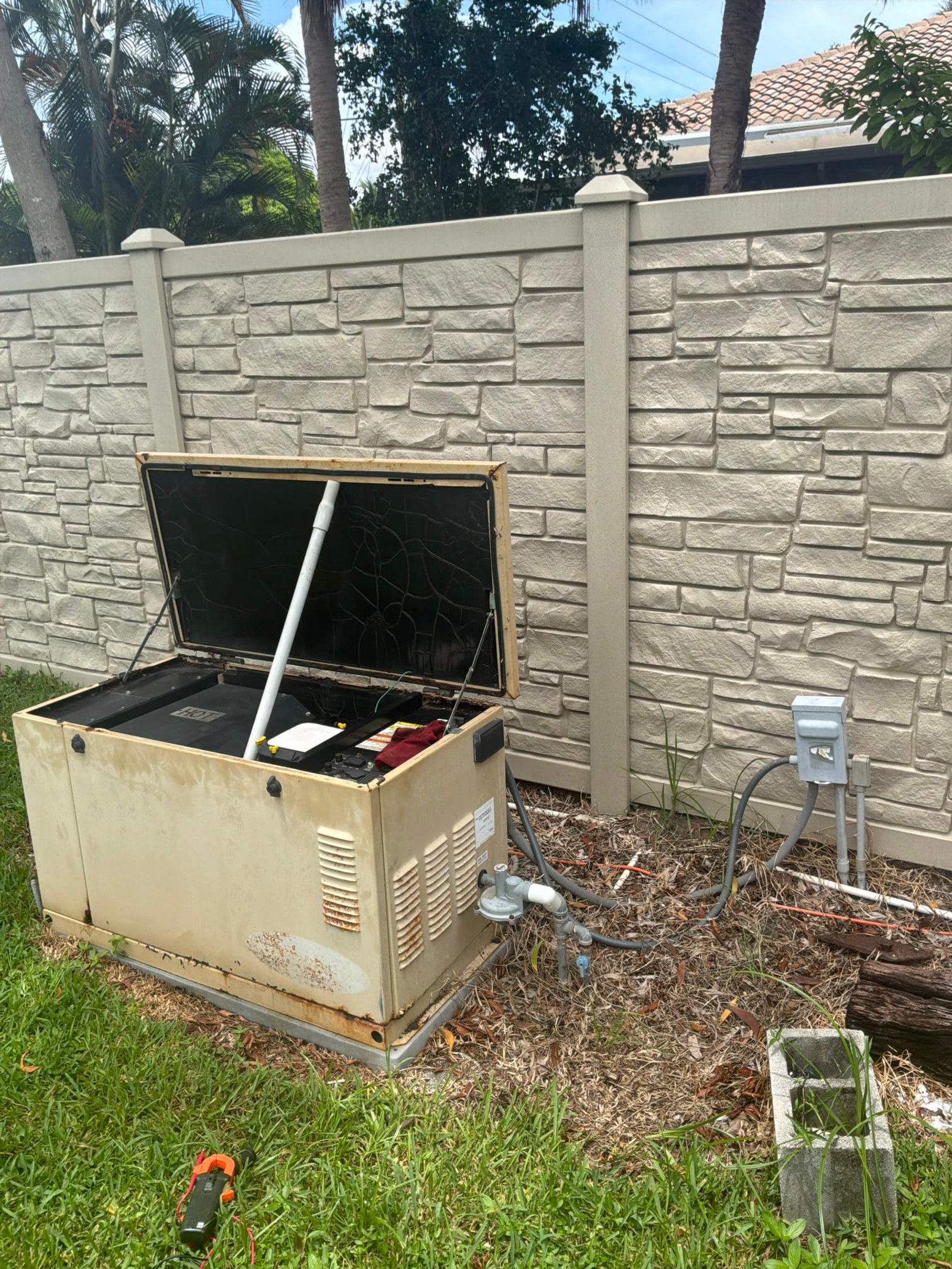
This Wellington Generac generator installation case study walks through the real diagnosis, the fix, and the code details from a recent service call. A homeowner in Wellington, FL noticed their Generac standby generator would crank but shut off before reaching normal operation. Our field team visited the pad-mounted unit to assess the situation and walked the homeowner through their options for next steps.
The Problem
The homeowner described a consistent pattern: the generator would attempt to start, the engine would turn over, and then the unit would cut off before settling into a run cycle.
“It cranks and shuts off. I just want to know what’s going on with it.”
That kind of symptom, where the engine fires but doesn’t sustain, can point to several things inside a standby generator. Getting eyes on the equipment is always the right first move.
Investigation
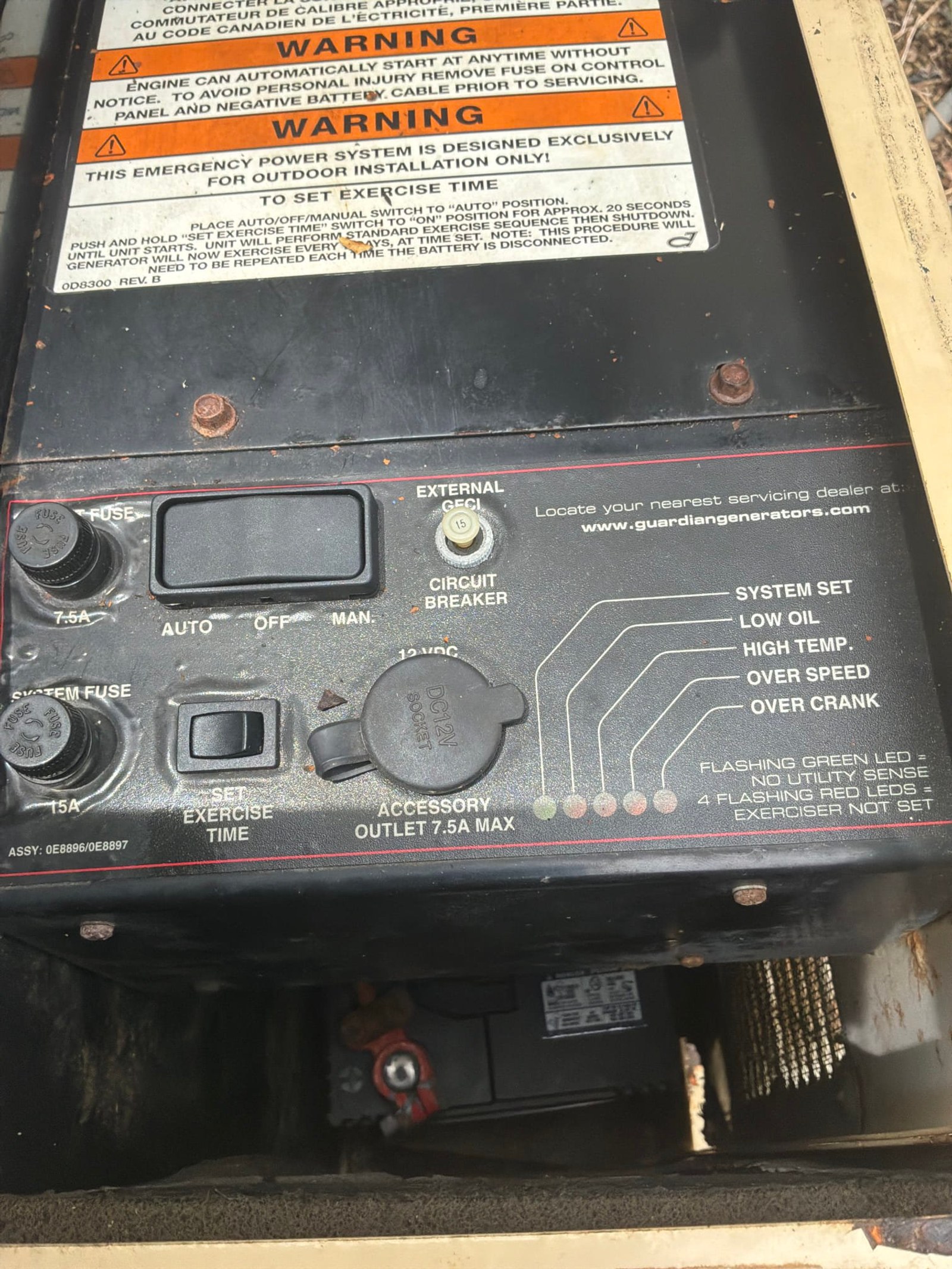
Our technician on-site examined the exterior of the weatherproof enclosure and the control panel visible on the outdoor installation. The unit is pad-mounted beside a concrete fence, with electrical service connections accessible from outside. Notably, the control panel showed the exercise timer and a 12VDC circuit breaker, both visible and intact from the outside.
A standby generator that cranks but doesn’t hold a run can reflect conditions in the fuel delivery system, the battery circuit, the oil pressure sensor, or the control board itself. The exercise timer setting is also worth reviewing: if the unit hasn’t been running its scheduled exercise cycle correctly, that can mask developing issues until they surface at an inconvenient time.
After reviewing the unit and discussing the situation with the homeowner, the homeowner chose to decline further troubleshooting at this visit. That is a perfectly reasonable decision, and it does not mean nothing useful came from the call. Understanding what a generator is doing, and what the possible causes are, helps an owner make an informed choice about timing and next steps.
Because the homeowner opted out of the diagnostic work-up at this visit, there is no verified root cause to report. The observations above are visual and contextual only.
What We Fixed
No repair work was performed at this visit. The homeowner declined troubleshooting, which means no workmanship guarantee or warranty applies to this service call. If the unit continues to exhibit the same crank-and-cut-off behavior, a full diagnostic is the logical next step. That would typically include checking the battery voltage, inspecting the oil level and pressure switch, reviewing fault codes stored in the control panel, and verifying the fuel supply.
Why This Wellington Generac Generator Installation Matters for Homeowners
Standby generators are there for one reason: to keep the household running when the grid goes down. In a community like Wellington, where summer storm seasons can bring extended outages, a generator that cranks but doesn’t stay on is not much different from no generator at all, at least until it’s sorted out.
For families who rely on the unit to keep the AC running, the refrigerator cold, and the lights on through a multi-day outage, peace of mind comes from knowing the system has been properly checked and is ready to respond. A generator sitting on a pad and looking fine from the outside does not always tell the whole story. The control panel, the battery, the fuel path, and the sensors all need to be in good shape for the unit to perform when it counts.
Additionally, most generator manufacturers and service professionals recommend scheduling an annual maintenance visit that includes a full load test, oil and filter service, spark plug inspection, and a review of the exercise timer settings. Keeping up with that schedule means the household is covered every storm season, not just the ones where everything happened to work out.
If a full diagnostic is scheduled in the future, our team can walk through each possible cause systematically and recommend only the repairs that are actually needed.
Common Questions
Questions homeowners ask after seeing this kind of work.
Why does my standby generator crank but then shut off?
A generator that starts and then cuts out is usually responding to a protective shutdown. Common causes include a low oil level triggering the oil pressure sensor, a weak or failing 12VDC battery that can’t sustain cranking through ignition, a fault code stored in the control board, or an issue in the fuel delivery path. Each of these requires a hands-on diagnostic to confirm. If your generator is doing this, it’s worth having a licensed electrician or generator technician trace it before the next storm season arrives. Schedule online to get a diagnostic on the calendar.
How often should a standby generator be serviced?
Most manufacturers recommend a full service visit once a year. That typically covers an oil and filter change, spark plug inspection, battery load test, air filter check, and a review of the exercise timer. Homes in South Florida that see frequent storm activity may benefit from a mid-season check as well, especially after a unit has run for an extended period during an outage. Staying current on maintenance means the generator is ready when the household needs it most. Schedule online to book your annual generator service.
What does the exercise timer on a standby generator do?
The exercise timer tells the generator to run itself on a set schedule, usually once a week for a short period, so the engine stays lubricated, the battery stays charged, and any small issues surface during a routine cycle rather than during an actual outage. If the exercise cycle has been skipped or disabled, the unit may develop conditions that only become apparent when it’s called upon to run under load. Checking and setting the exercise schedule is a quick step during any service visit. Book a generator checkup if you’re not sure whether yours is set correctly.
Is it okay to decline troubleshooting during a generator service call?
Yes, absolutely. A homeowner always has the right to pause and think through next steps before authorizing diagnostic work. Declining at one visit simply means no warranty or workmanship guarantee applies to that interaction, and the root cause remains open. When you’re ready to move forward, the diagnostic process picks up right where things left off. There’s no downside to taking a day to consider your options. When you’re ready, schedule online and we’ll get back out to the unit.
How often should I have my home’s electrical system inspected?
A full electrical inspection once a year is a solid baseline for most homes. Older homes built before 1990 and homes that have come through a recent storm season may benefit from inspections more frequently, since aging wiring and weather-related stress can both create conditions worth reviewing. A yearly inspection gives the household a current, documented picture of where things stand. Schedule online to put an annual inspection on the calendar.
Want to see more real jobs like this one? Browse our completed case studies or explore our services.