
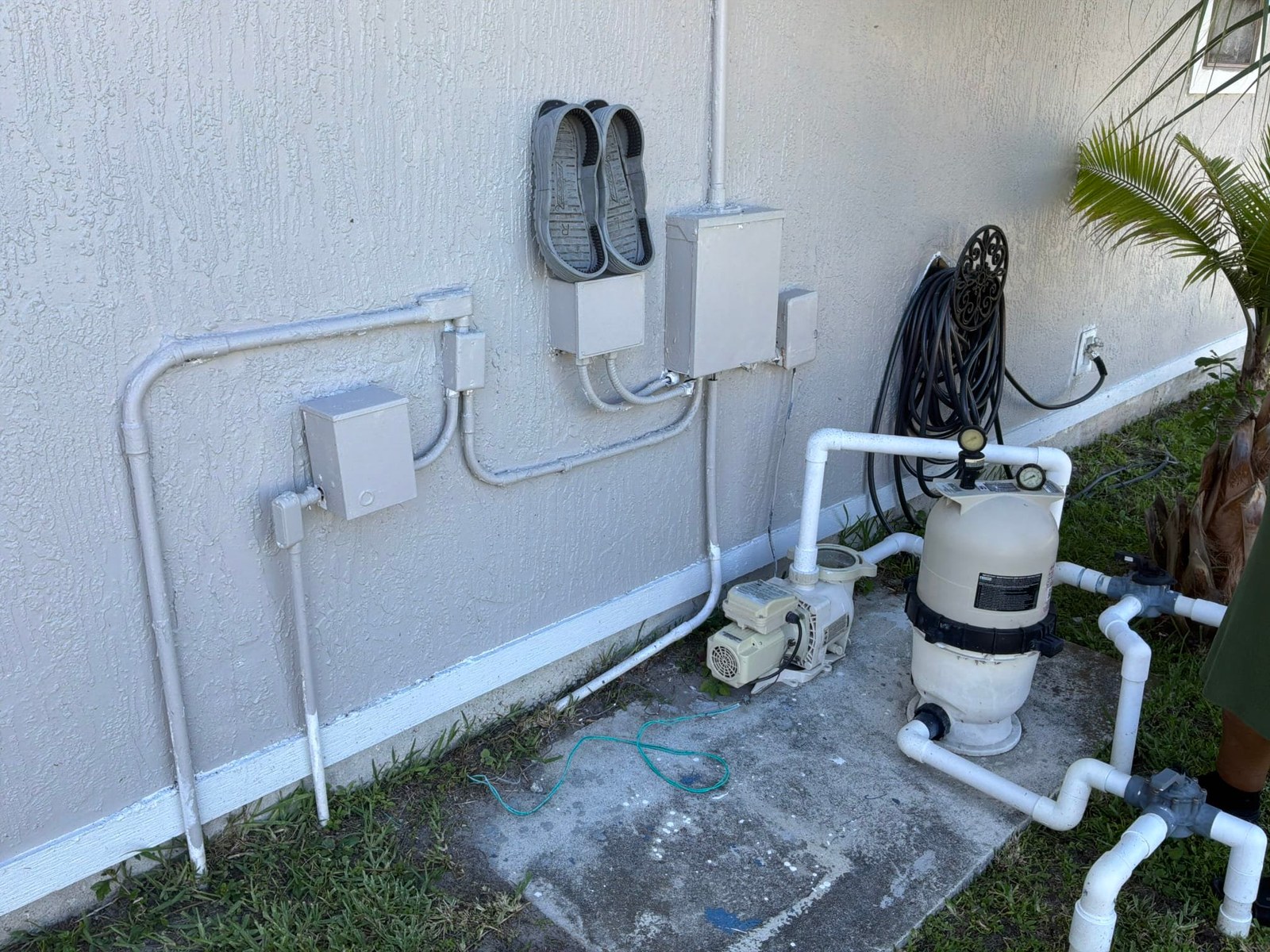
This Port St. Lucie pool wiring case study walks through the real diagnosis, the fix, and the code details from a recent service call. A homeowner in Port St. Lucie, FL had been living with a pool pump that ran sluggishly or not at all for some time. Our field team traced the fault to the branch circuit feeding the pump equipment, replaced a failed Siemens BR 15-amp two-pole breaker, and documented several conditions in both the main panel and an exterior sub-panel that are worth addressing on a future visit.
Customer’s Problem
The homeowner reached out because the electrical side of the pool pump system had been delivering little to no power for quite a while. The pool pump and filter sat on an exterior pad, served by white PVC plumbing and electrical conduit, and the pump simply was not performing the way it should. With the customer available after 5 p.m., our team scheduled the visit to fit that window and got to work diagnosing the root cause.
What Our Electrician Found
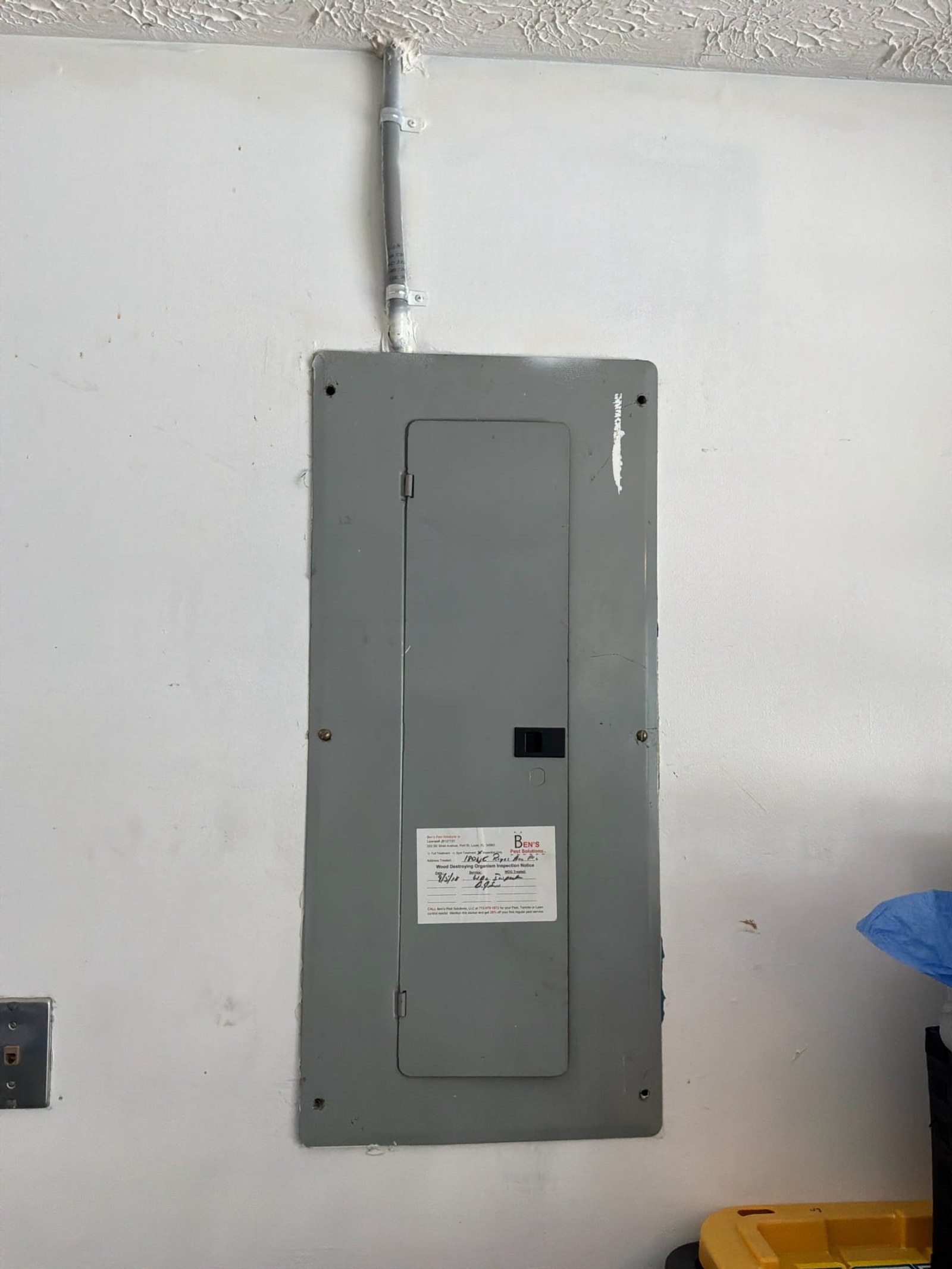
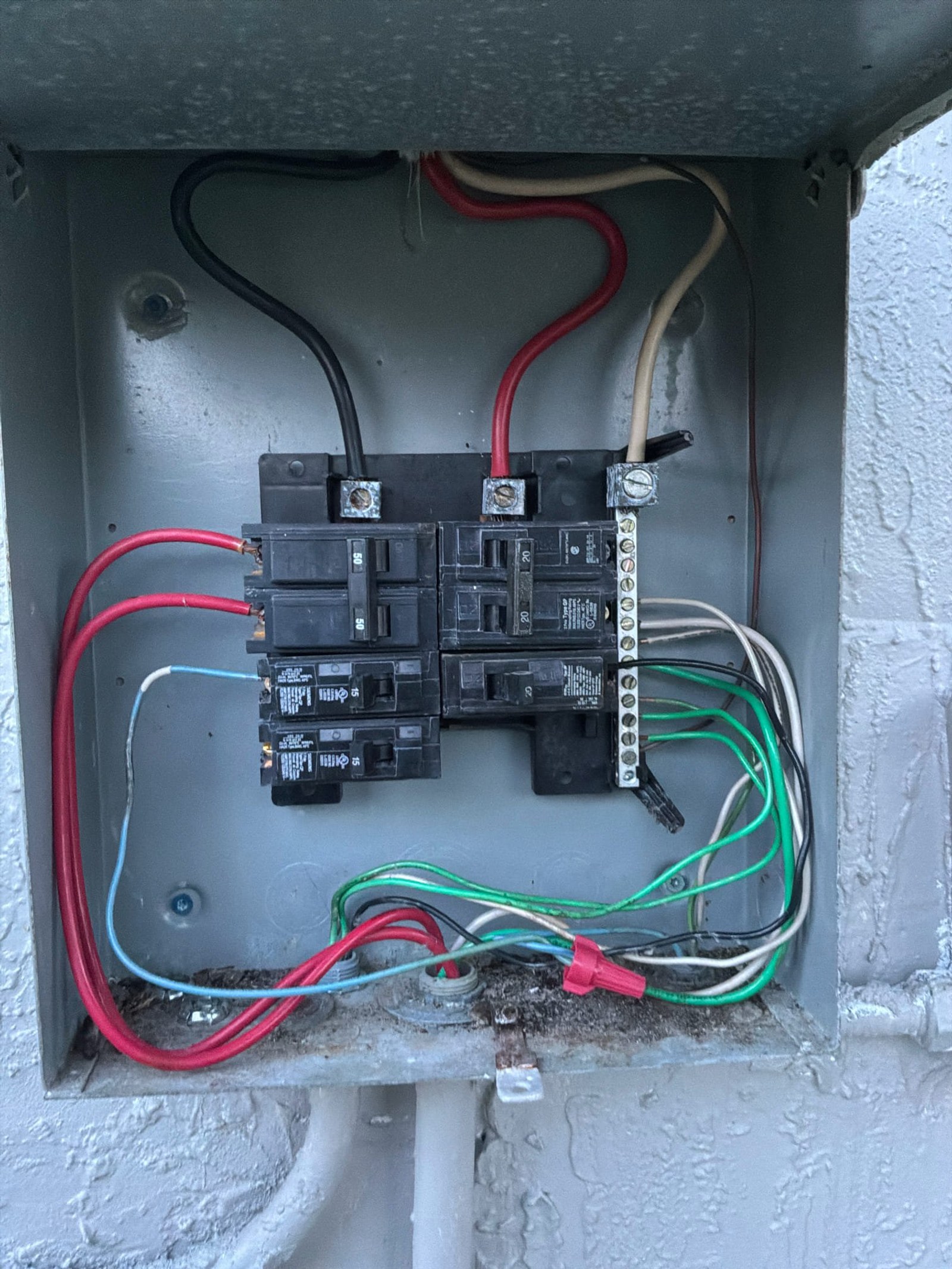
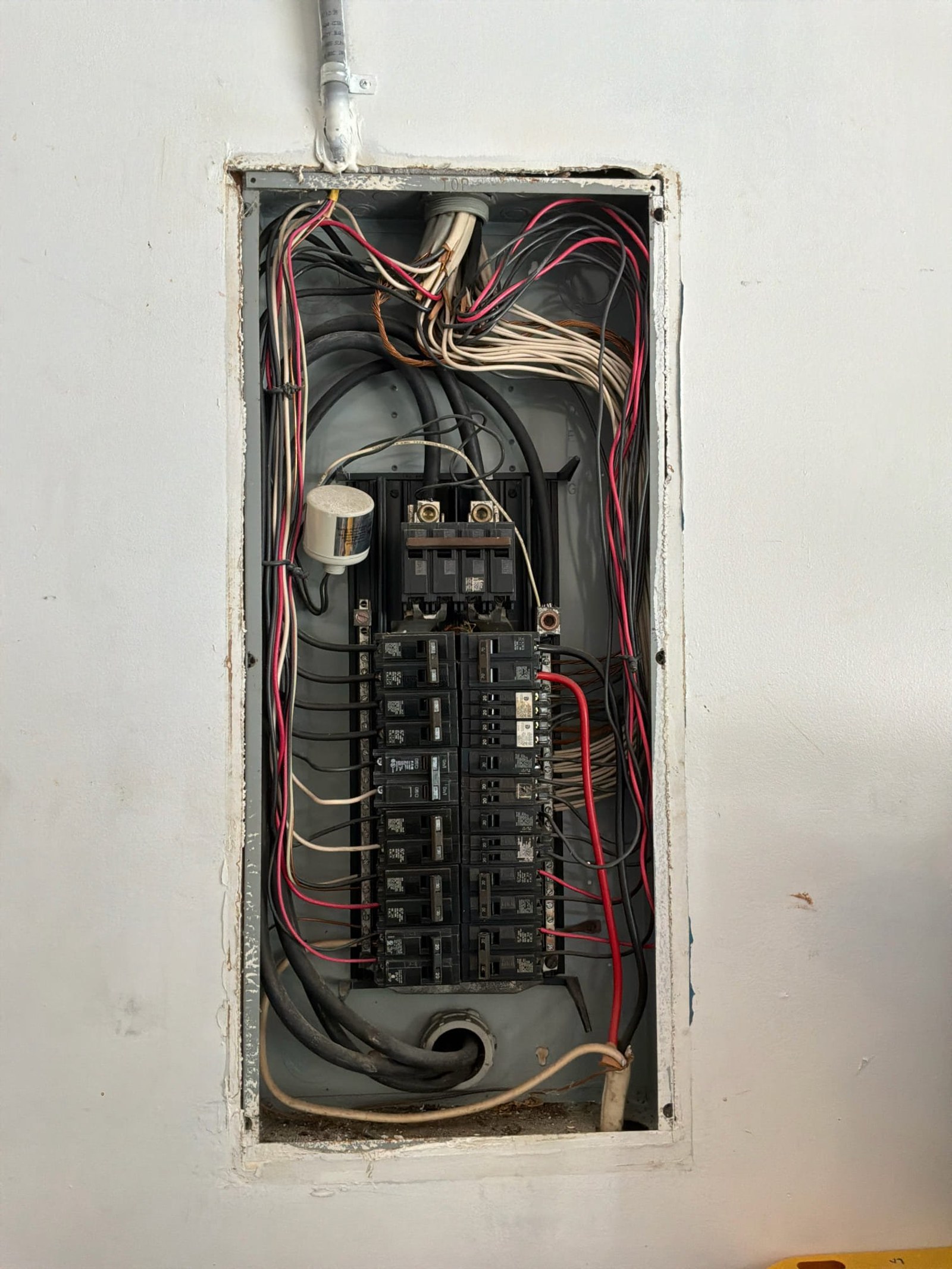
The licensed electrician on site opened the main 150-amp Square D QO panel and immediately noted corrosion on the terminations and enclosure walls, along with evidence of water finding its way into the enclosure over time. The interior photos show black, red, and tan conductors feeding multiple breakers, with visible staining and oxidation at several lug points. Corrosion at termination points raises contact resistance gradually, which is exactly the kind of condition that can starve a motor circuit of the voltage it needs to run reliably.
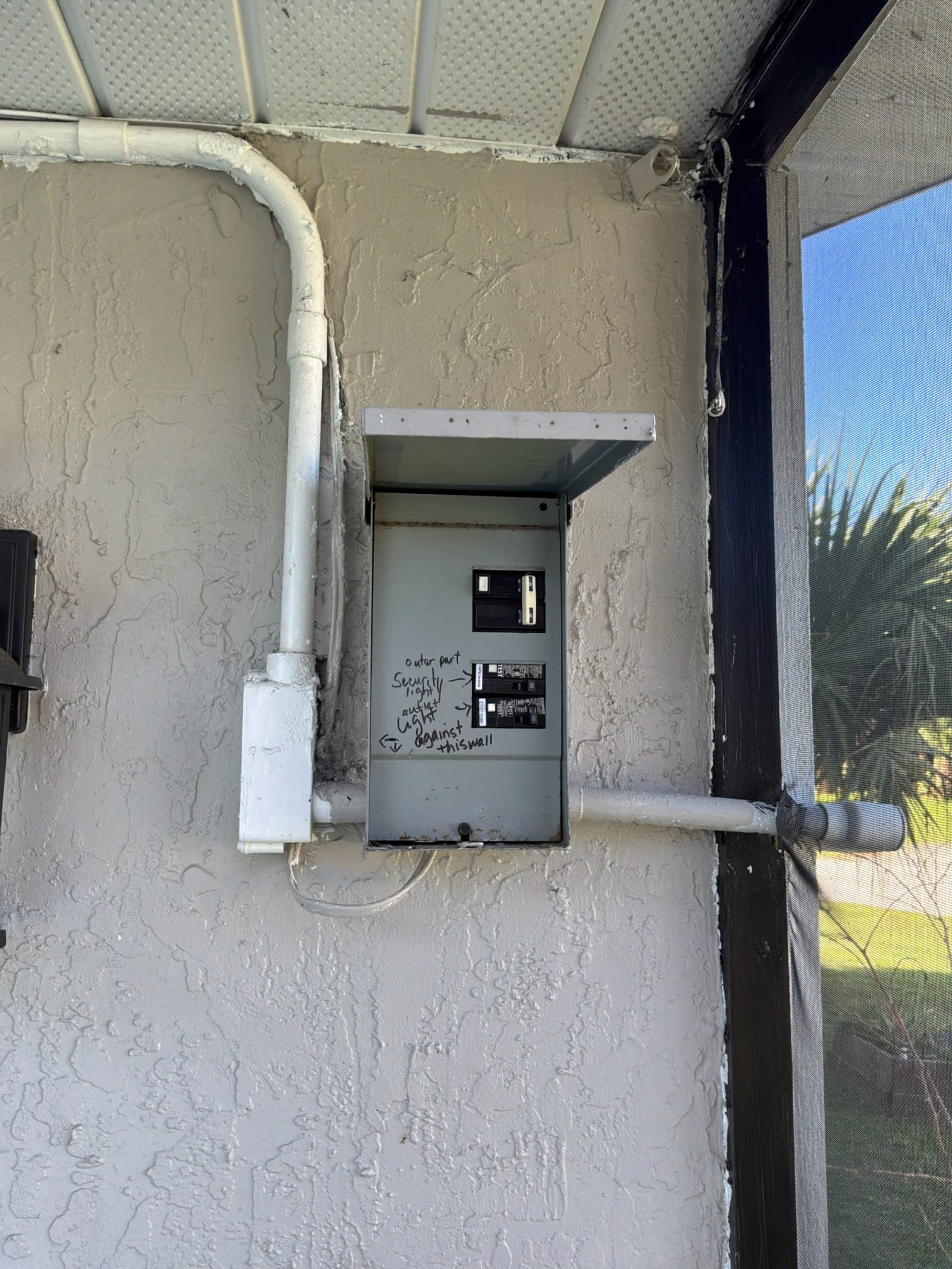
The team also documented an exterior sub-panel serving the pool equipment. That enclosure showed weathered surfaces, handwritten labeling, and paint overspray covering portions of the device. Paint over electrical hardware is a workmanship concern because it can obscure labels, interfere with proper seating of covers, and make future service work harder than it needs to be. The handwritten markings and overall condition suggest the panel has received DIY attention at some point in its history.
Pool Circuit and Breaker Condition
The branch circuit breaker feeding the pool wiring was the direct source of the pump’s power problem. The Siemens BR 15-amp two-pole breaker serving that circuit had failed and was no longer delivering consistent power to the pump and filter. That finding explained the long-running underperformance the homeowner had described.
Additional Observations Worth Noting
Beyond the immediate fault, the inspection checklist flagged several items as concerns rather than failures. These included questions about GFCI protection in required areas, AFCI protection on branch circuits, proper grounding, tamper-resistant outlets, smoke and carbon monoxide detector coverage, and correct breaker sizing for equipment. None of these concerns stopped the job, but they represent areas where the home’s electrical system predates current NEC recommendations. Most of them are entirely consistent with homes of this era and were installed to the standard of their time. Current code now asks for more, and a follow-up visit would be the right moment to work through them systematically.
Solution Selected
After diagnosing the pool pump circuit, the homeowner approved the replacement of the failed breaker. The team sourced a matching Siemens BR 15-amp two-pole breaker to restore the circuit and get the pool pump back to full operation.
Work Performed
Our crew installed one Siemens BR 15-amp two-pole breaker in the Square D QO 150-amp main panel, replacing the failed unit on the pool pump branch circuit. The replacement brought that circuit back to full function, restoring consistent power to the pump and filter equipment on the exterior pad.
Why Pricing Can Vary
Two homes with the same job on the invoice can land at different totals. On projects like this one, the total is driven by:
- How intermittent the symptom is and how long it takes to reproduce
- Number of circuits or devices that have to be checked
- Access to junction boxes, attics and crawlspaces
- Whether the repair is completed in the same visit
- Parts needed once the cause is found
Why This Port St. Lucie Pool Wiring Matters for Homeowners
Pool equipment runs on a dedicated branch circuit for a reason. The motor in a pool pump draws a steady load every time it cycles, and that load depends on a breaker that trips when it should and holds when it should. A failed two-pole breaker on that circuit does not always trip cleanly; sometimes it simply delivers reduced or intermittent voltage, which is hard on the motor and frustrating for the household trying to keep the pool ready for weekends.
The corrosion documented inside both panels is a reminder that South Florida’s coastal climate is particularly tough on electrical enclosures. Water intrusion and salt air accelerate oxidation at termination points over time. This was not a sudden event; it built up gradually, and the good news is that it was caught and documented. Addressing enclosure sealing and cleaning corroded terminations on a future visit gives the system a much longer service life and keeps the pool running the way the family expects it to, season after season.
Finally, the checklist concerns around GFCI coverage, grounding, and detector placement are worth scheduling time for. NEC 210.8 now requires GFCI protection at pool-area receptacles, and NEC 680.22 addresses pool-adjacent wiring specifically. Working through those items one visit at a time gives the household peace of mind, and means the licensed electrician on site has already taken care of it before it ever becomes a question.
“Jared was professional and was on time walked through what he needed to do explain in detail . Jared Does not start the work until you fully understand what needs to be completed . The price remain the same when he is finished. I highly recommend Thomas Edison electric”
Code Compliance Cited in This Job
Every fix above maps to a specific section of NEC 2020. Each card links to NFPA’s public NEC index.
GFCI Protection
NEC 210.8 requires GFCI protection for personnel at receptacles in areas including pool and spa surroundings. The inspection flagged GFCI coverage as a concern at this Port St. Lucie home, consistent with pool-area wiring that predates current GFCI requirements. Bringing those circuits up to current code adds a layer of protection that was not standard when the home was originally wired. NFPA reference ›
Pool Area Receptacles and Equipment
NEC 680.22 governs receptacles, lighting, and electrical equipment installed near pools, including GFCI requirements for receptacles within 20 feet of the pool. The exterior pool equipment pad with its conduit, pump, and filter falls within the scope of this section. Reviewing the pool wiring against this standard is a natural next step given the conditions documented on this visit. NFPA reference ›
Grounding Electrode System
NEC 250.50 requires a complete grounding electrode system for every service. The grounding system was flagged as a concern during this inspection, meaning it warrants a closer look to confirm all electrodes and connections meet current requirements. A complete grounding system supports both equipment protection and consistent circuit performance. NFPA reference ›
Circuit Directory and Panel Labeling
NEC 408.4 requires that every circuit in a panel be legibly identified. The exterior sub-panel at this home had handwritten markings and paint overspray that make circuit identification difficult. Clear, accurate labeling helps any future technician or homeowner work safely and efficiently on the system. NFPA reference ›
Electrical Connections
NEC 110.14(B) addresses the integrity of splices and terminal connections. The corrosion visible on terminations and enclosure surfaces inside both the main panel and the sub-panel at this home is directly relevant to this section. Clean, corrosion-free connections maintain low contact resistance and support reliable circuit performance over time. NFPA reference ›
Common Questions
Questions homeowners ask after seeing this kind of work.
How does a failed two-pole breaker cause a pool pump to lose power gradually rather than stopping all at once?
A two-pole breaker that has aged or experienced thermal stress can lose its ability to maintain a solid connection without fully tripping. Instead of a clean shutoff, it may deliver reduced or intermittent voltage to the circuit, which is enough to make a pump motor run sluggishly or stall under load. Replacing the breaker restores full, consistent power to the equipment. If your pool pump has been underperforming for a while, a licensed electrician can trace the fault quickly. Schedule online to get on the calendar.
Why does water get into electrical panels in South Florida homes, and what should homeowners watch for?
South Florida’s humidity, heavy rain, and coastal air create conditions where moisture can work its way into panel enclosures through conduit entries, weathered seals, or gaps in outdoor sub-panel covers over time. Once inside, moisture accelerates corrosion on terminations and enclosure walls, which increases contact resistance and can affect circuit performance. Signs to watch for include rust staining on the panel door, breakers that feel stiff or corroded, or circuits that behave inconsistently. A licensed electrician can assess the sealing and condition of both your main panel and any exterior sub-panels. Schedule online to have a technician take a look.
Does my pool area need GFCI protection even if the pump has its own dedicated breaker?
Yes. NEC 210.8 and NEC 680.22 require GFCI protection at receptacles near pool and spa equipment regardless of whether the circuit is dedicated. A dedicated breaker protects the circuit’s wiring; GFCI protection on receptacles in the pool area is a separate, personnel-protection requirement. Homes wired before these requirements were adopted may not have that protection in place, which is consistent with homes of that era, but current code now calls for it. If you are unsure whether your pool area meets current GFCI requirements, our team can book a quick inspection to confirm.
How often should I have my home’s electrical system inspected?
A yearly inspection is a good baseline for most homes. Older homes built before 1990, homes that have experienced recent storm activity, or homes with pool and spa equipment benefit from that annual rhythm because their systems face more varied demands and environmental exposure. An annual visit lets a licensed electrician catch gradual changes, like corrosion buildup or aging breakers, before they affect your daily routine. If it has been more than a year since your last inspection, our team can schedule a visit at a time that works for your household.
What does paint or overspray on an electrical sub-panel actually affect?
Paint on an exterior sub-panel can cover circuit labels, make the cover harder to remove cleanly, and obscure the condition of the enclosure surface beneath. NEC 408.4 requires that circuits be clearly and legibly identified, so painted-over or handwritten labels that are no longer readable do not meet that standard. It also signals that previous work on the enclosure may not have followed standard practices, which is a reason to take a closer look at the interior connections and wiring. If your home has an exterior panel with similar characteristics, our team can schedule a diagnostic visit to assess what is inside.
Project Photos
Electrician and Technical Reviewer
Work performed by Jared, Thomas Edison Electric field electrician serving Jupiter / West Palm Beach.
Jared, the electrician on this job, is the technical reviewer of record for this case study.
Location
This project was completed in Port St. Lucie, Florida, in our Saint Lucie County service area.