
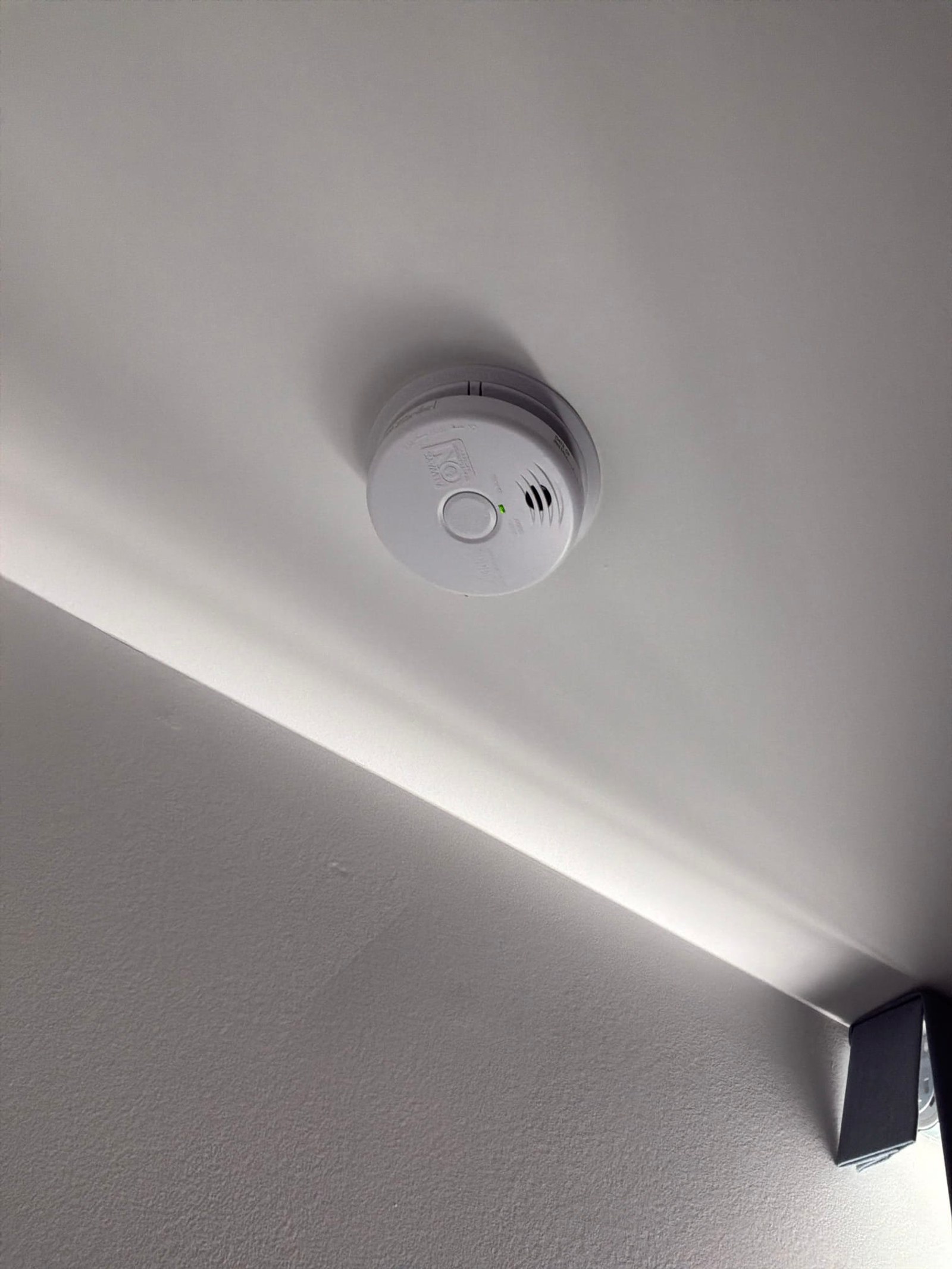
This Boca Raton smoke detector installation case study walks through the real diagnosis, the fix, and the code details from a recent service call. A homeowner in Boca Raton, FL called about a single smoke detector that kept sounding. When our field team arrived and assessed the full home, the right answer was clear: replace all seven detectors at once with hardwired, 10-year sealed units that meet today’s standards and keep every room of the home covered reliably.
Customer’s Problem
One smoke detector on a roughly 12-foot ceiling had started going off unexpectedly. The homeowner wanted it fixed or replaced. Our team treated this as an opportunity to evaluate the entire detection system throughout the home, not just the one unit causing trouble.
What Our Electrician Found
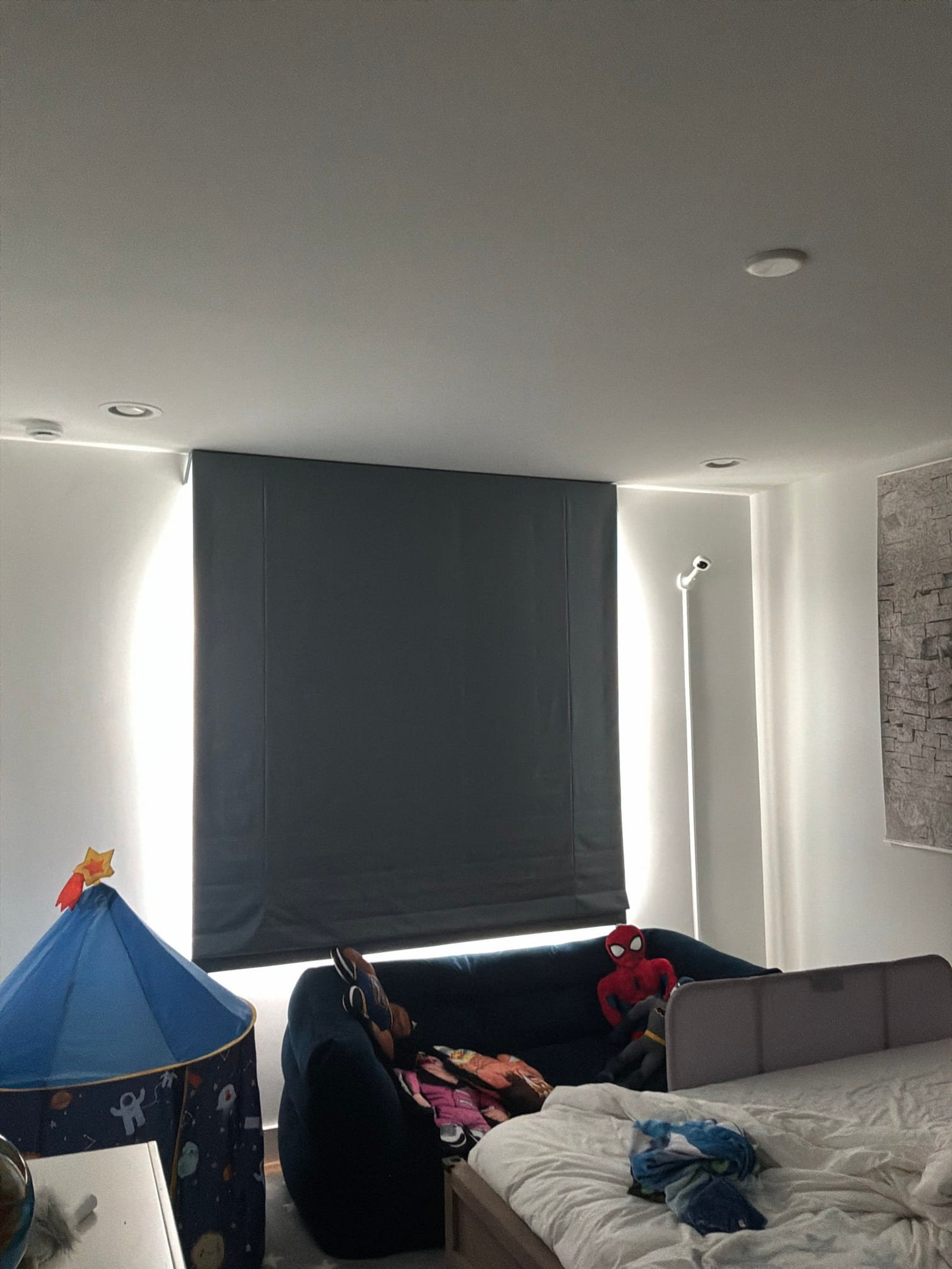
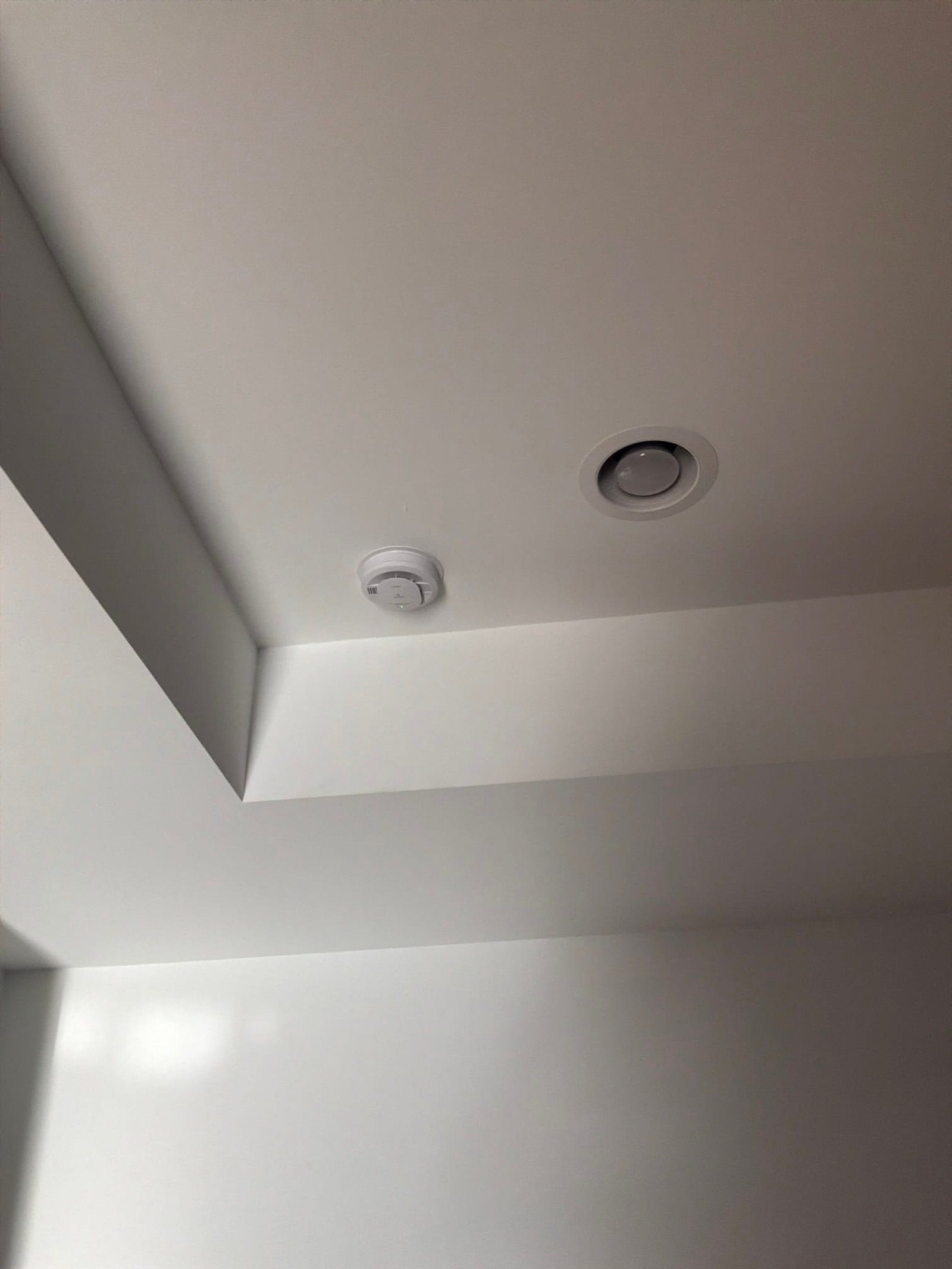
Our technician on-site inspected the existing smoke and CO detector coverage across the home. The photos from this visit show ceiling-mounted white detectors already in place, along with rooms including a children’s bedroom with recessed lighting where reliable, interconnected detection coverage matters most.
The existing detectors were at the end of their service life, which is a normal condition for any home whose devices have been in place for several years. Smoke and CO detectors have a rated lifespan, and units that have aged past that window are less reliable by design, not by fault. That aligns with what NFPA 72 recommends: detectors should be replaced according to the manufacturer’s stated service life, typically 7 to 10 years.
In addition, the inspection checklist noted three items worth addressing on a future visit: the home currently has no standby generator, no prewire for one, and no whole-home surge protection. None of those findings affect the detector work, but they are worth knowing about for long-term home planning.
Options We Presented
Our team presented three estimates for the homeowner to consider. The options differed in scope: one focused on a targeted repair or single-unit swap, another covered a partial replacement of the detectors showing the most wear, and the third covered a full replacement of all seven units with current-specification hardwired detectors. The homeowner chose the most complete scope, and the reasoning was straightforward: replacing all the detectors at once delivers consistent coverage and resets the service-life clock across the whole home.
Solution Selected
The homeowner selected the full seven-detector replacement. Given that multiple units were at or near the end of their rated service life, this approach made the most sense. It means every detector in the home now has the same installation date, the same 10-year battery, and the same reliable performance window going forward.
Work Performed
Our crew installed the following at existing hardwired locations throughout the home:
- 5 hardwired smoke detectors with 10-year sealed lithium batteries, replacing the existing units at their current ceiling locations
- 2 hardwired combination smoke and carbon monoxide detectors with 10-year sealed lithium batteries, also replacing units at their existing hardwired locations
All seven units are hardwired to the home’s electrical system and include battery backup, consistent with NFPA 72 installation requirements for residential dwellings. The home’s Square D QO 200-amp panel, which powers the hardwired detector circuits, was already on record and required no changes for this scope.
Important Materials and Equipment
Materials and equipment on the invoice for this project:
- Smoke/CO Alarm, Kidde 21027536 120V with 10 Year battery Backup (quantity 2)
- Smoke Alarm, Kidde 21027537 120V with 10 Year battery Backup (quantity 5)
Why Pricing Can Vary
Two homes with the same job on the invoice can land at different totals. On projects like this one, the total is driven by:
- Number of detectors and whether they are interconnected
- Hardwired versus battery or wireless-interconnect units
- Detector type (photoelectric, ionization, combination CO)
- Ceiling access and new wiring runs where none exist
- Code requirements triggered by the permit or the sale
Why This Boca Raton Smoke Detector Installation Matters for Homeowners
Smoke and CO detector replacement is one of the most straightforward ways to keep a household running with confidence. For a family with children, as the photos from this visit suggest, knowing that every room is covered by a fresh, properly functioning detector means one less thing to think about during the morning routine, at bedtime, or while parents are at work.
Hardwired detectors with sealed 10-year batteries offer a meaningful improvement over older battery-only units. The sealed battery eliminates the common scenario where a low-battery chirp in the middle of the night leads to a detector being taken down and never fully reinstalled. With hardwired interconnected units, if one detector senses a change in conditions, every detector in the home responds, giving the whole household time to act calmly.
Finally, the checklist findings about surge protection and generator readiness are worth keeping in mind for the future. A whole-home surge protective device at the Square D QO panel would help the home’s electronics, appliances, and hardwired systems ride through the power fluctuations that come with Florida storm seasons. Neither item is urgent today, but both represent ways to add another layer of reliability and peace of mind for the household over time. The Electrical Safety Foundation International offers additional guidance on whole-home electrical preparedness for homeowners who want to learn more.
Code Compliance Cited in This Job
Every fix above maps to a specific section of NEC 2020. Each card links to NFPA’s public NEC index.
AFCI Protection for Dwelling Branch Circuits
NEC 210.12 addresses arc-fault circuit interrupter protection for branch circuits in dwelling units, including bedroom circuits. On this job, the detectors installed in bedroom locations, including the children’s room visible in the photos, are connected to branch circuits that fall under this section’s scope. The existing Square D QO 200-amp panel provides the service infrastructure for these circuits. NFPA reference ›
Surge Protection at Service Equipment
NEC 230.67 requires a surge protective device at the service equipment of new dwelling-unit installations and is the baseline reference when evaluating SPD status during inspections. The inspection checklist for this Boca Raton home noted that no whole-home surge protection is currently present at the Square D QO 200-amp panel. This is a common finding in homes where the service predates the current code cycle. NFPA reference ›
Tamper-Resistant Receptacles in Dwellings
NEC 406.12 requires tamper-resistant receptacles throughout dwelling units, a consideration that is especially relevant in homes with children. While this section was not directly part of the detector replacement scope, the presence of a children’s bedroom noted during this visit makes it a useful reference for any future receptacle updates in the home. NFPA reference ›
Common Questions
Questions homeowners ask after seeing this kind of work.
How often should smoke and CO detectors be replaced in a Florida home?
Smoke detectors should generally be replaced every 10 years, and CO detectors every 5 to 7 years, in line with NFPA 72 and most manufacturers’ guidance. Florida’s humidity and heat can accelerate wear on sensing chambers, so it is a good practice to check the manufacture date printed on the back of each unit. If your detectors are approaching or past that window, a full replacement restores reliable coverage for the whole household. Schedule online and our team can assess every detector in the home during a single visit.
What is the difference between a standalone smoke detector and a combination smoke and CO detector?
A standalone smoke detector senses airborne particles from smoke. A combination unit also includes an electrochemical sensor that detects carbon monoxide, an odorless gas that can accumulate from gas appliances, attached garages, or generators running near the home. Combination units are especially useful in rooms near kitchens, garages, or mechanical spaces. On this Boca Raton job, we installed two combination units and five dedicated smoke detectors to provide layered coverage throughout the home. Book a safety check if you are unsure which configuration your home currently has.
Why do hardwired detectors offer better coverage than battery-only models?
Hardwired detectors draw power from the home’s electrical system and include a sealed battery for backup. More importantly, hardwired interconnected units communicate with each other: when one activates, every unit in the home sounds at once. That whole-home response gives every member of the household, including kids in back bedrooms, the same immediate awareness regardless of where a change is first detected. Battery-only units operate independently and do not share that interconnection. Schedule online to find out whether your current detectors are hardwired or battery-only.
How often should I have my home’s electrical system inspected?
A yearly inspection is a solid baseline for most homes. Older homes built before 1990 and homes that have been through recent storm seasons benefit from inspections more frequently, since both aging wiring and weather events can affect system performance in ways that are not always visible from the outside. On this visit, our team noted the absence of whole-home surge protection and generator readiness, both of which are worth planning for in a Florida home. Schedule online to set up an annual electrical review.
What does it mean that the home has no whole-home surge protection?
A whole-home surge protective device installs at the main service panel and helps cushion the home’s circuits against voltage spikes from lightning, utility switching, or large appliances cycling on and off. Without one, sensitive electronics, smart-home devices, and hardwired systems including newly installed detectors absorb those spikes directly. NEC 230.67 now calls for SPDs at service equipment in new installations, and adding one to an existing panel like this home’s Square D QO 200-amp service is a straightforward upgrade. Book a consultation and our team can walk you through the options.
Project Photos
Electrician and Technical Reviewer
Work performed by Slater, Thomas Edison Electric field electrician serving Jupiter / West Palm Beach.
Slater, the electrician on this job, is the technical reviewer of record for this case study.
Location
This project was completed in Boca Raton, Florida, in our Boca Raton service area.