
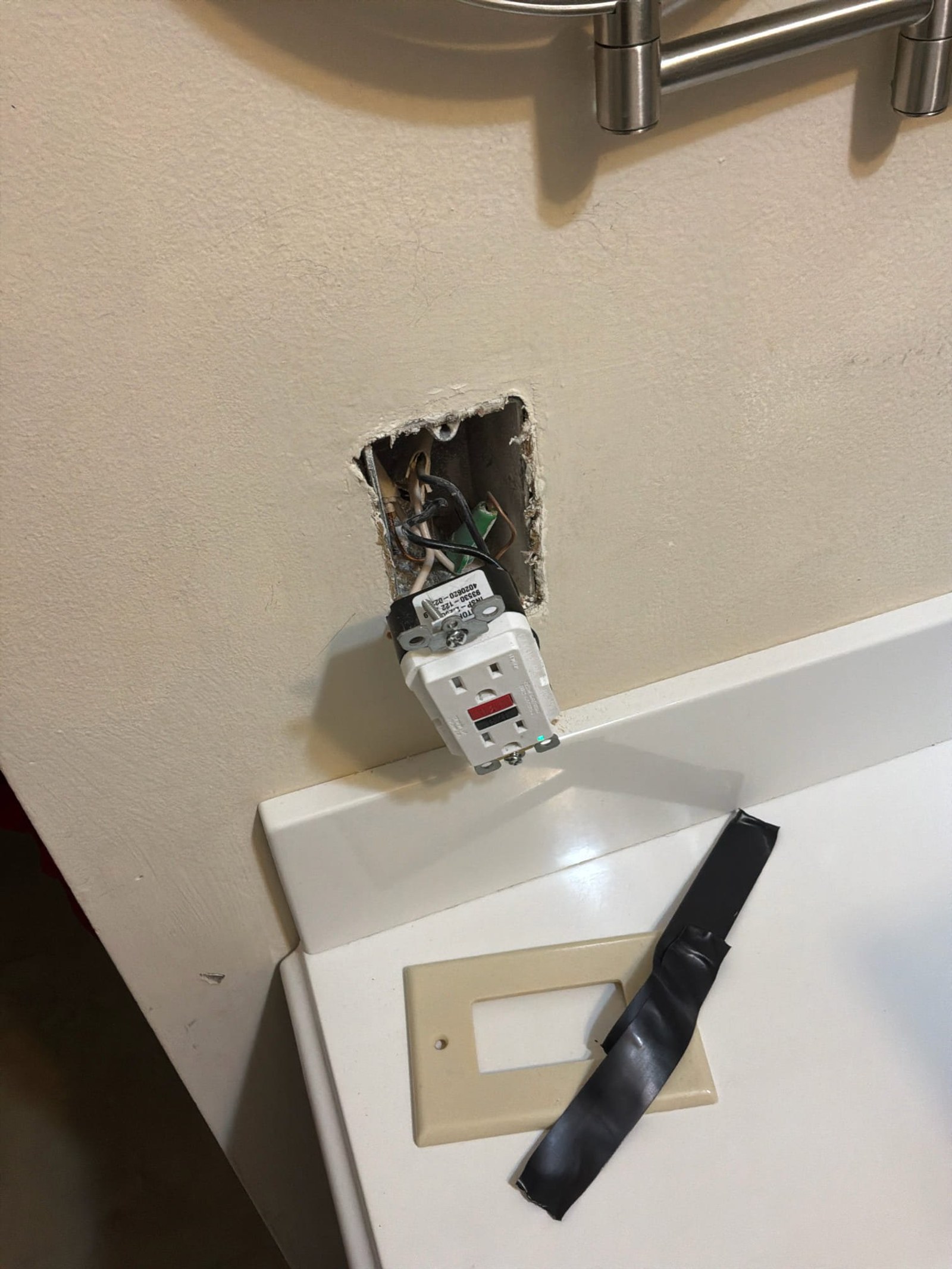
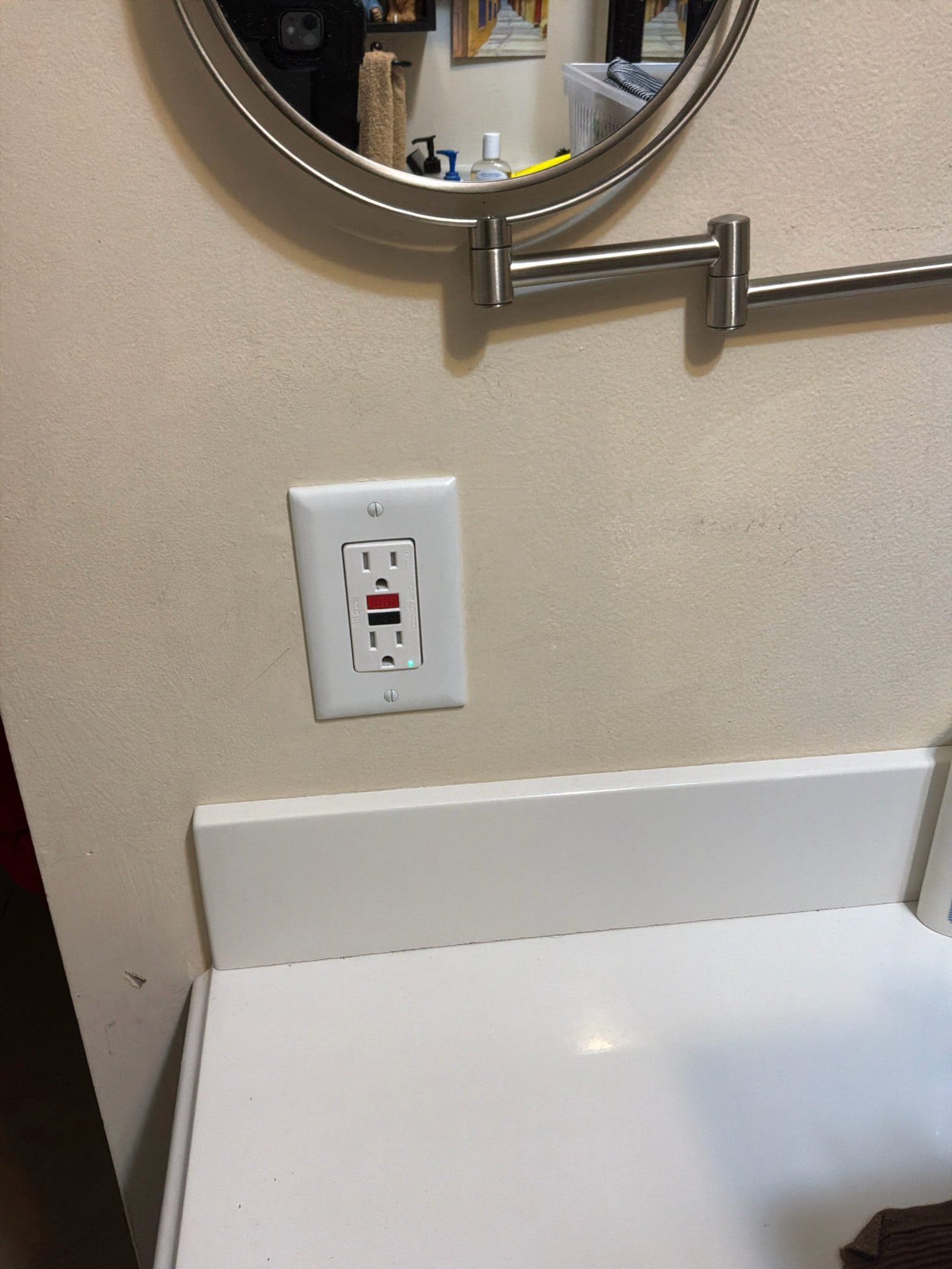
Before & After
 Before
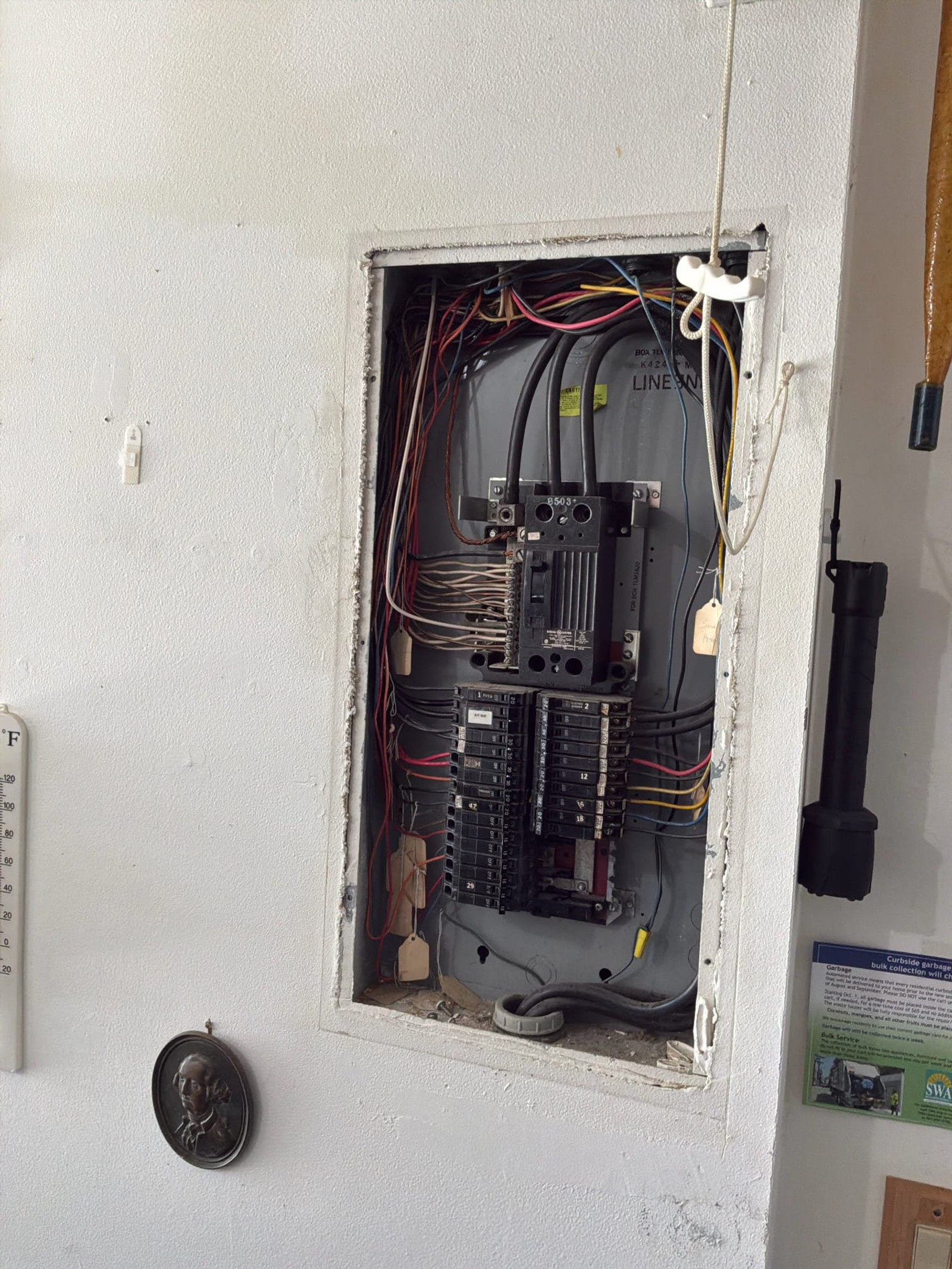
 After
This Boynton Beach electrical repair case study walks through the real diagnosis, the fix, and the code details from a recent service call. A homeowner in Boynton Beach, FL called about four outlets that had stopped working in a home built in 1986. What our field team found went well beyond the outlets themselves: the panel held some wiring left over from earlier work, several areas of the home predated current GFCI and smoke-detection standards, and the home had no whole-home surge protection. By the time the visit wrapped up, the household had a comprehensive set of upgrades that now keeps everyday life running smoothly, quietly, and reliably.
Customer’s Problem
The homeowner noticed that multiple outlets throughout the home had stopped responding. With the home dating back to 1986, some of that wiring had never been updated to match the standards that have evolved over the past four decades. The goal on arrival was to diagnose the dead outlets and restore reliable power where the family needed it most.
What Our Electrician Found
Our technician on-site opened the panel and found conductors left in place from earlier work alongside the active branch circuits. This is a common condition in homes of this era: over time, renovations come and go, and wiring from old circuits sometimes stays behind rather than being removed cleanly. While those conductors were not actively energized, their presence made the panel busier than it needed to be and worth addressing as part of any panel work.
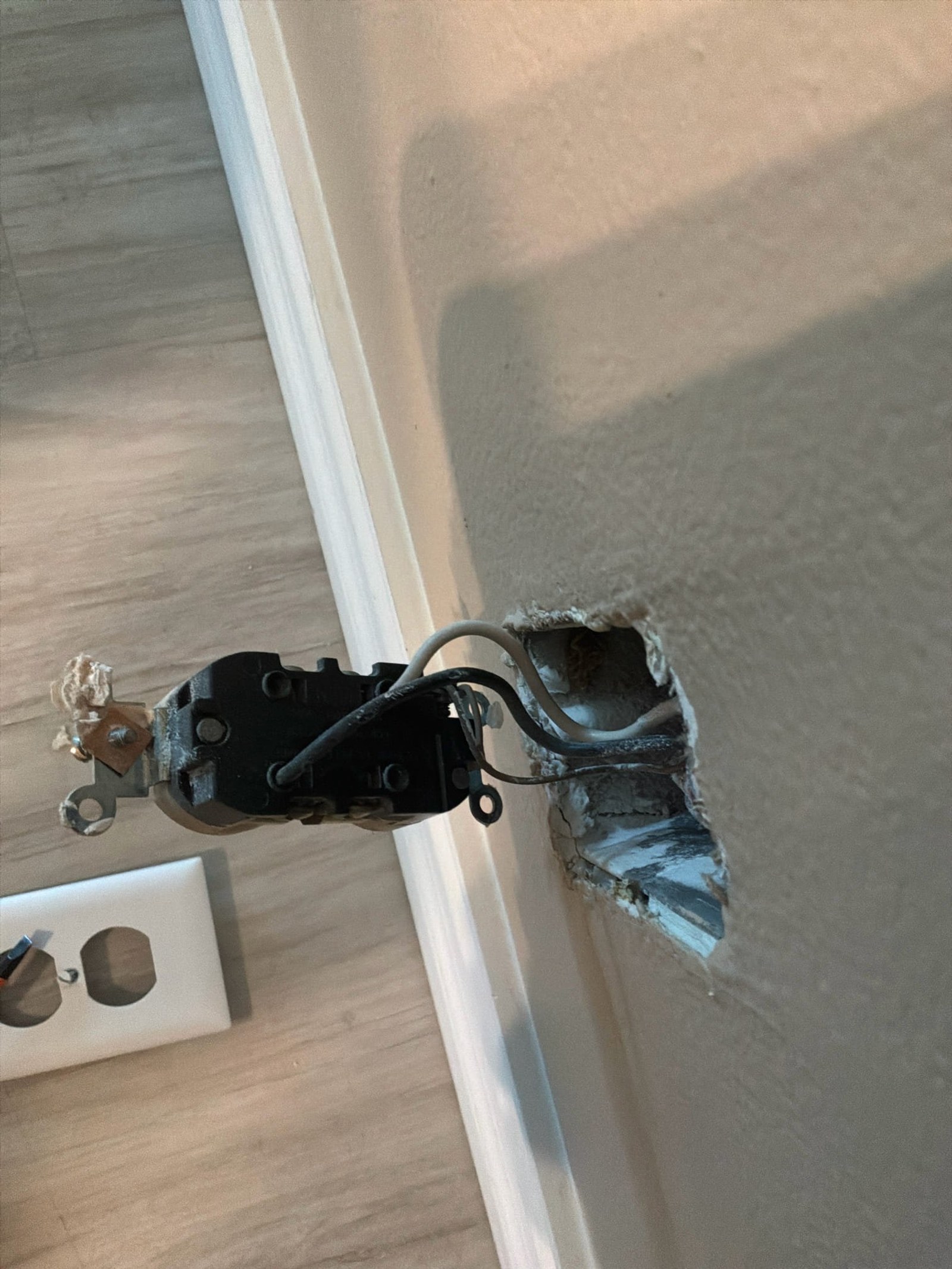
In the bathroom, a GFCI receptacle was in the process of being replaced, with the wall opening exposed during the swap. A separate outlet location also showed a device box rough-in with the drywall opening uncovered mid-installation. Both conditions were normal mid-job stages, not finished states, and the team worked through them systematically.
The home also lacked a whole-home surge protective device. Homes built in the 1980s were wired long before today’s NEC 230.67 requirement for surge protection at the service entrance, so this was entirely consistent with the era. However, a modern household relies on far more sensitive electronics than a 1986 home ever anticipated, making this a straightforward opportunity to add a meaningful layer of protection.
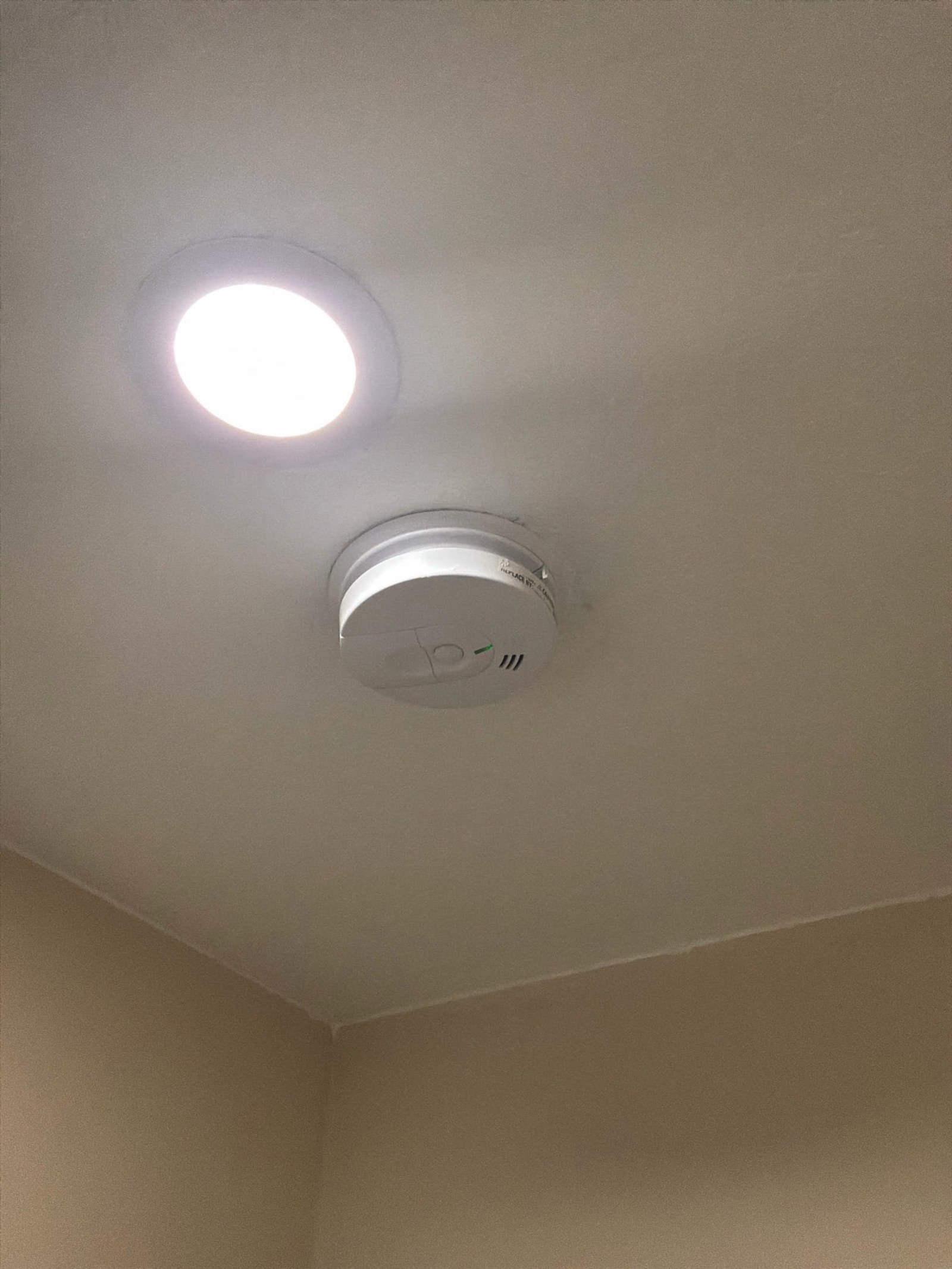
Finally, the existing smoke and carbon monoxide detection did not reflect current NFPA 72 placement and interconnect recommendations, another area where the home had simply aged past the standards in place when it was built.
Solution Selected
The homeowner chose a comprehensive scope that addressed every finding the field team identified: outlet and switch replacements, a new old-work device box, breaker replacements, a whole-home surge protector, and five new smart smoke and CO detectors. This approach made sense given the age of the home and the number of areas that had drifted from current standards.
Work Performed
Our crew completed the following at the Boynton Beach home:
- GFCI receptacle replacement: The bathroom GFCI receptacle was replaced and properly cover-plated, restoring code-appropriate protection to the wet-area circuit.
- Outlet and switch replacements: One 15-amp tamper-resistant single receptacle was installed in a new old-work cut-in box, and one single-pole Decora-style rocker switch was replaced at its existing location.
- Cord cap replacement: A 15-amp, 125-volt straight-blade plug was installed onto an existing cord, restoring a safe, properly rated termination.
- Breaker replacements: The team installed one Square D HomeLine HOM115 single-pole 15-amp breaker, one Square D HomeLine HOM240 two-pole 40-amp breaker, and one GE THQP two-pole 30-amp breaker, each seated into the panel at the appropriate slot.
- Whole-home surge protection: A PSP Vortex 120 kA whole-home surge protector was installed on the existing single-phase residential panel, providing panel-level protection across every circuit in the home.
- Smart smoke and CO detectors: Five 120-volt smart combination smoke and carbon monoxide detectors with 10-year sealed lithium battery backup were installed and interconnected throughout the home, consistent with NFPA 72 placement guidance.
Why Pricing Can Vary
Two homes with the same job on the invoice can land at different totals. On projects like this one, the total is driven by:
- Number of devices replaced
- Device type (standard, GFCI, AFCI, tamper-resistant, USB, smart or dimmer)
- Condition of the boxes and wiring behind the devices
- Backstabbed or aluminum connections that need correction
- Access and the number of rooms involved
Why This Boynton Beach Electrical Repair Matters for Homeowners
Homes built in the mid-1980s were wired to the standards of their time, and those standards were perfectly appropriate then. Over the past 40 years, the National Electrical Code has evolved significantly, particularly around GFCI protection in wet areas, surge protection at the service entrance, and smoke and CO detection throughout living spaces. Bringing a home like this one up to current expectations is not a reflection of anything done wrong originally. It is simply good stewardship of a home that has served a family well for decades.
Surge Protection and Everyday Electronics
South Florida’s storm season puts real stress on home electronics. A PSP Vortex 120 kA whole-home surge protector, installed at the panel level, means every circuit in the home now carries that protection. The family’s refrigerator, air conditioner, computers, televisions, and smart-home devices all ride through the voltage spikes that come with afternoon thunderstorms without skipping a beat. That kind of quiet reliability is easy to take for granted, and that is exactly the point.
Interconnected Smoke and CO Detection
Five new interconnected smart detectors mean that every room in the home now communicates with every other room. If anything changes in one area, the whole household knows at once. For a family going about a normal morning routine, that kind of coverage means genuine peace of mind without having to think about it. The 10-year sealed lithium batteries also mean no midnight low-battery chirps for the foreseeable future.
Panel and Outlet Work Built to Last
The Square D HomeLine and GE THQP breakers installed here are solid, code-compliant components rated for the circuits they serve. Pairing updated breakers with tamper-resistant receptacles and properly terminated connections gives the home a reliable electrical foundation. For a household in Boynton Beach counting on consistent power through every storm season, that foundation matters more than it might seem on a quiet day.
Our team is licensed through the Florida Department of Business and Professional Regulation (EC13015487), and every job is documented and backed by our standard workmanship warranty.
“Michael is very smart and helpful. He fixed my bathroom outlet within a twinkling of an eye. I’ll definitely recommend Thomas Edison electric to others and tell them to request for Michael.”
Code Compliance Cited in This Job
Every fix above maps to a specific section of NEC 2020. Each card links to NFPA’s public NEC index.
GFCI Protection for Personnel
NEC 210.8 requires GFCI protection on receptacles in bathrooms, kitchens, garages, and other specified locations in dwelling units. The bathroom GFCI receptacle replaced on this job brings that circuit into alignment with current requirements. Homes built in 1986 were often wired before the full scope of today’s GFCI requirements was in place, so this is a common and straightforward update for homes of this era. NFPA reference ›
Surge Protective Devices at Services
NEC 230.67 now requires a listed surge protective device at the service entrance of all new dwelling units. The PSP Vortex 120 kA whole-home surge protector installed on this job meets that requirement and extends protection to every branch circuit in the home. This section did not exist when the Boynton Beach home was originally wired, making the addition a meaningful modernization rather than a correction of any prior error. NFPA reference ›
Tamper-Resistant Receptacles in Dwellings
NEC 406.12 requires tamper-resistant receptacles throughout dwelling units. The 15-amp single receptacle installed at the new cut-in location on this job uses a tamper-resistant design consistent with this requirement. This standard postdates the original construction of the home, so adding it now reflects a straightforward upgrade to current code expectations. NFPA reference ›
Replacement Receptacle Requirements
NEC 406.4(D) requires that receptacles installed as replacements in existing dwellings meet current code, including GFCI protection where applicable. Replacing the bathroom GFCI receptacle on this job triggers that requirement, and the new device satisfies it. This provision ensures that any work done on older homes does not leave updated devices in circuits that still fall short of current standards. NFPA reference ›
Circuit and Panel Directory Identification
NEC 408.4 requires that every circuit in a panel be legibly identified as to its purpose and the areas it serves. With new breakers installed on this job, the panel directory was reviewed as part of the work. Clear circuit identification is especially valuable in a home with a history of multiple renovation phases, where abandoned wiring from earlier work can otherwise make the panel harder to read at a glance. NFPA reference ›
Common Questions
Questions homeowners ask after seeing this kind of work.
Why would multiple outlets stop working at the same time in a home built in 1986?
In homes of this era, a single upstream GFCI receptacle often protects several downstream outlets on the same circuit. When that GFCI trips or fails, every outlet it feeds goes dead at once. It can look like a widespread problem when the fix is actually replacing or resetting one device. Our technician on-site traced the circuit to confirm the cause before replacing any hardware. If you are seeing the same thing at home, a quick inspection can pinpoint whether it is a GFCI issue, a breaker, or something else. Schedule online and we can usually get there the same day.
What does a whole-home surge protector actually protect, and is it worth adding to an older home?
A panel-mounted surge protective device like the PSP Vortex 120 kA unit installed on this job sits at the service entrance and clamps voltage spikes before they travel down any branch circuit. That means every appliance, HVAC unit, smart-home device, and computer in the home benefits from the same protection. For a South Florida home heading into storm season, the upgrade is especially practical since afternoon lightning is a regular occurrence. If your home does not currently have panel-level surge protection, it is worth adding before the storms arrive. Book a consultation and our team can walk you through the options.
How many smoke and CO detectors does a home in Florida actually need?
NFPA 72 calls for smoke alarms inside every sleeping room, outside each separate sleeping area, and on every level of the home including the basement if there is one. Carbon monoxide detectors are required on each level where sleeping areas exist. The five interconnected smart detectors installed on this Boynton Beach home were placed to satisfy that layout. Interconnected units are especially helpful because a trigger in one room activates every alarm in the home at once. If your home has detectors that are more than 10 years old or not interconnected, it is a good time to update them. Schedule a maintenance visit and we can assess your current coverage.
How often should I have my home’s electrical system inspected?
A yearly inspection is a solid baseline for most homes. Homes built before 1990, like this one in Boynton Beach, often benefit from inspections more frequently since the wiring, breakers, and devices are approaching or past the 40-year mark. Homes that have weathered recent storms are also good candidates for a closer look, since surge events can stress components in ways that are not immediately obvious. An annual check gives you a clear picture of where things stand and what, if anything, is worth addressing before it becomes an inconvenience. Schedule your inspection online and our licensed team will walk you through every finding.
Is it normal to find old wiring left in place inside a panel in a home this age?
Yes, it is quite common in homes that have gone through multiple renovations over the decades. When circuits are decommissioned, the conductors are sometimes left in place rather than removed, especially if the panel access was limited or the work was done before current best practices became standard. The conductors are typically not energized, but their presence makes the panel harder to read and work in. Removing or properly terminating abandoned wiring is a straightforward step that brings the panel in line with current expectations under NEC 408.4 for clear circuit identification. If your panel looks busier than it should, our team can take a look and sort it out.
Project Photos
Electrician and Technical Reviewer
Work performed by Michael, Thomas Edison Electric field electrician serving Jupiter / West Palm Beach.
Michael, the electrician on this job, is the technical reviewer of record for this case study.
Location
This project was completed in Boynton Beach, Florida, in our Wellington service area.