
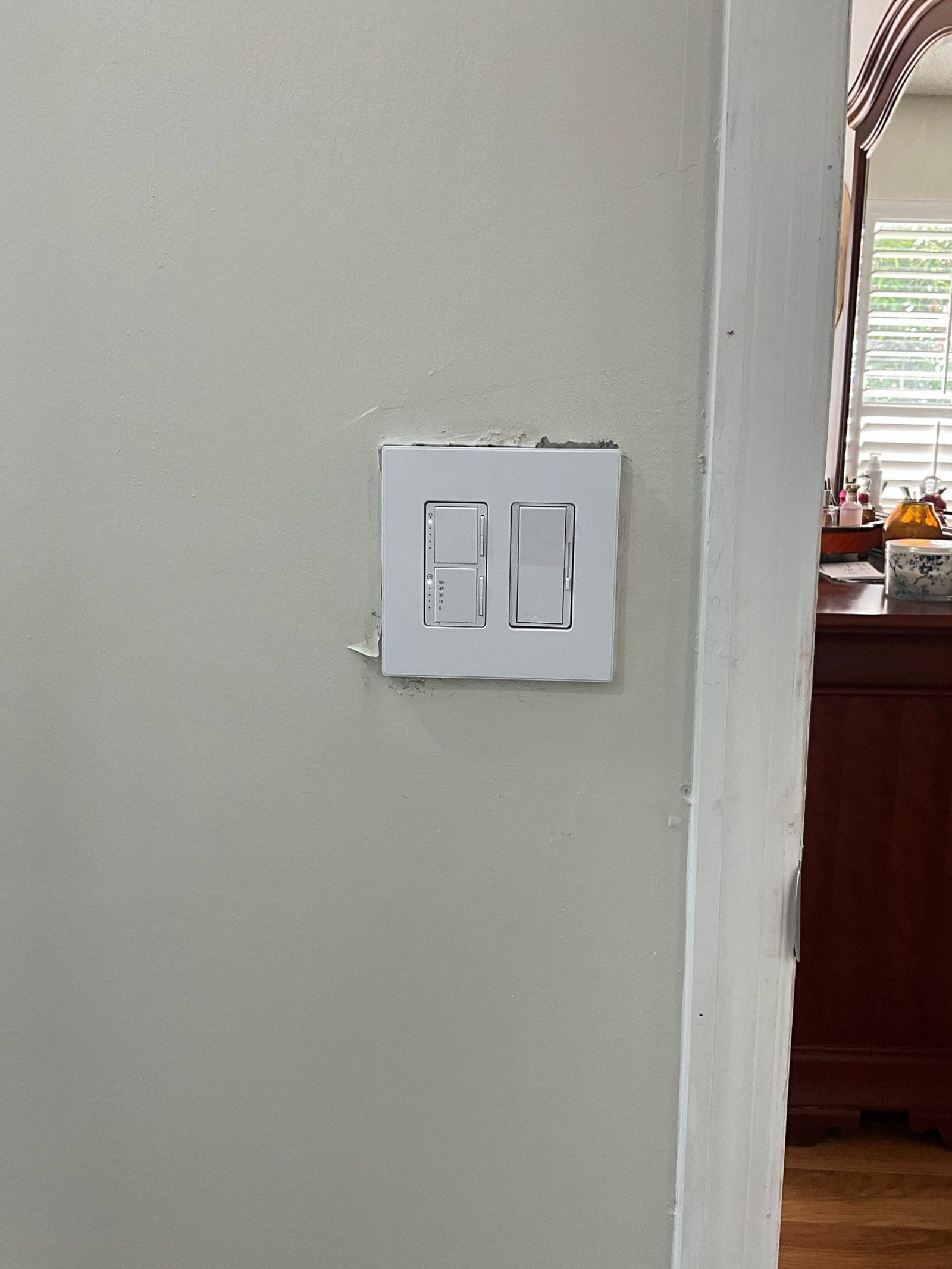
Before & After
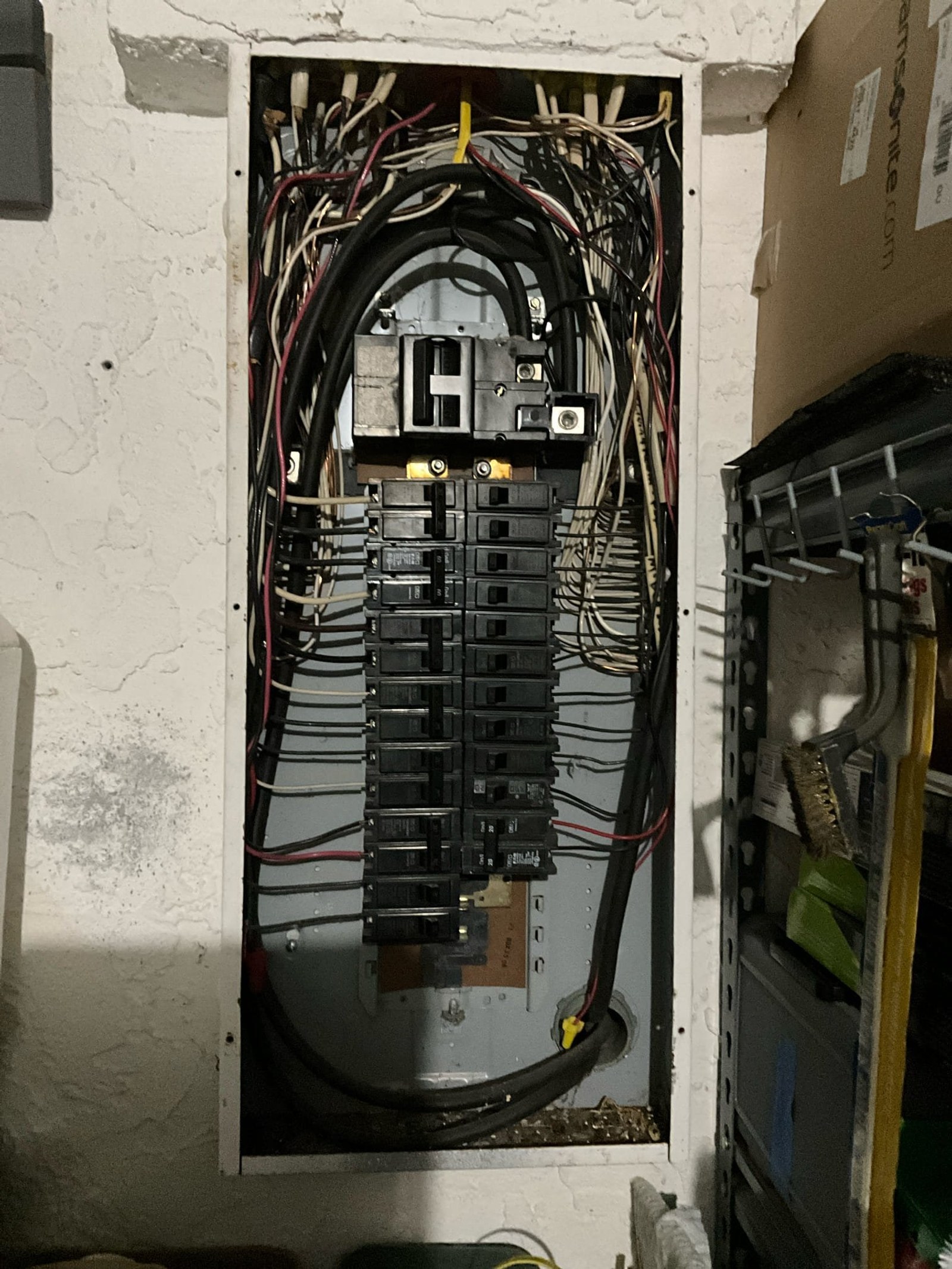 BeforeAfter
This Port St Lucie panel upgrade case study walks through the real diagnosis, the fix, and the code details from a recent service call. A homeowner in Port St. Lucie, FL called about installing a dimmer switch to control two lights and having a loose outlet looked at. When our licensed electrician opened the panel and walked the home, the visit grew into something more meaningful: a full panel modernization, whole-home surge protection, five new smart smoke and CO detectors, and the dimmer switches that started the conversation.
Customer’s Problem
The homeowner wanted a single dimmer switch that could control two separate light fixtures, and asked us to inspect an outlet that wasn’t performing reliably. What seemed like a focused afternoon job gave our field team the opportunity to take a broader look at the home’s electrical system.
What Our Electrician Found
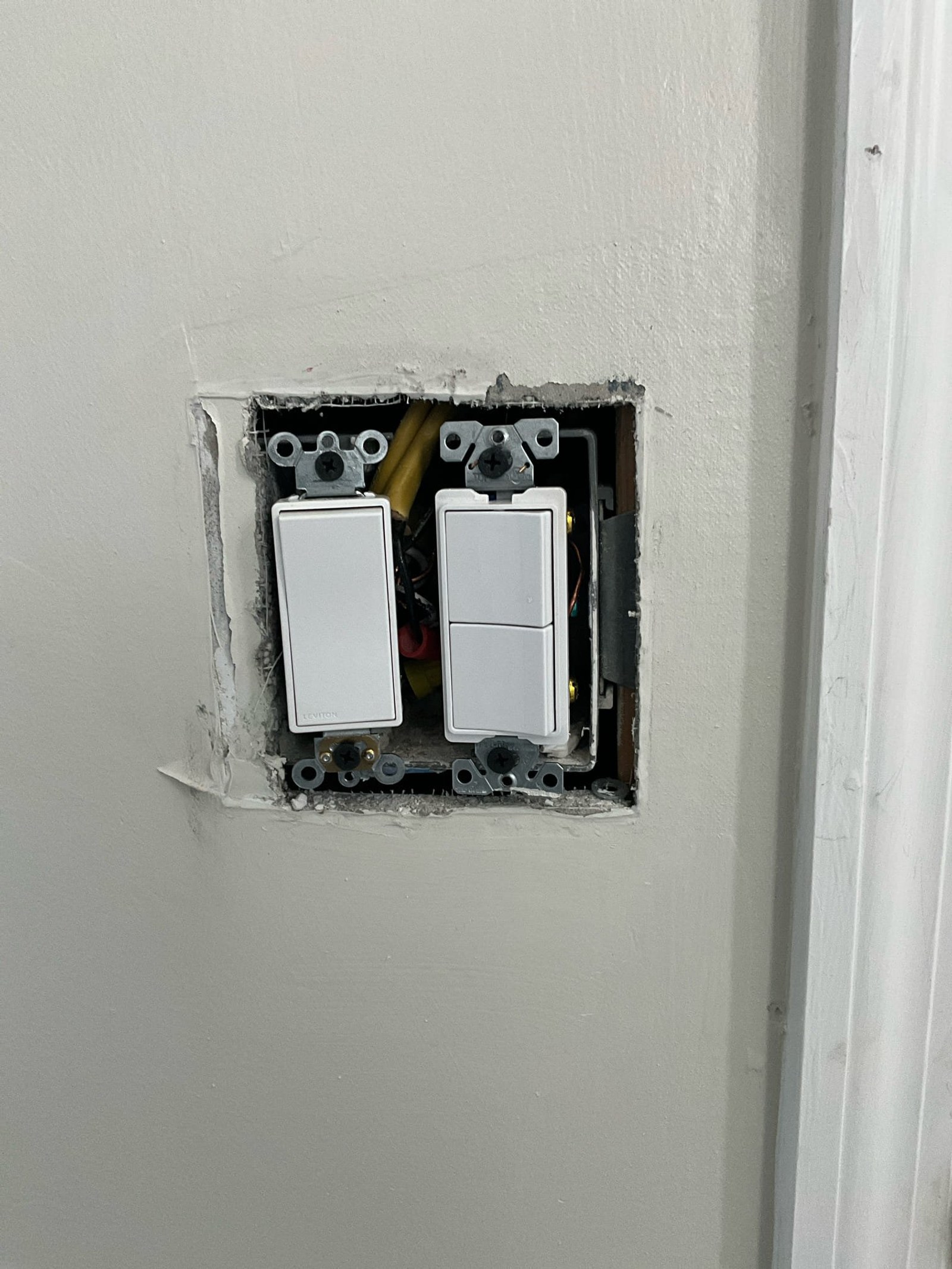
With the dead front removed from the 150-amp Eaton BR panel, our technician on-site could see mixed wire colors, including black, red, yellow, and white conductors, along with workmanship that appeared to be a previous DIY modification. That kind of informal work predates current NEC panel-wiring standards and creates an opportunity to bring things up to current code.
Beyond the panel interior, the inspection checklist flagged several areas worth addressing. AFCI protection was not present on the branch circuits that now require it under current code. GFCI protection was absent from areas where today’s standards call for it. The home lacked whole-home surge protection. Smoke detectors were not current with NFPA 72 requirements. Several outlets showed signs of being backstabbed, a common shortcut used in homes wired before about 2005, where the spring contacts ease over time and can produce the kind of intermittent performance the homeowner described. Grounding and voltage consistency at the outlets were also flagged as concerns, along with the absence of tamper-resistant receptacles.
At the switch location, photos show a two-gang device box with white toggle switches and exposed rough-in wiring. The existing arrangement didn’t support the dimming function the homeowner wanted, and the wiring layout needed updating to accommodate modern smart switches.
Panel-Side Observations
The Eaton BR panel itself was the 150-amp service. Inside, the checklist noted missing AFCI protection, absent surge protection, open knockout concerns, and questions about neutral and ground separation. Some of these conditions were consistent with how homes of this era were originally wired, perfectly permissible under the code cycle in place at the time, but updated NEC 2020 standards now recommend modernization.
Branch Circuit and Device Observations
The outlet the homeowner flagged was examined at its existing location. Backstabbed connections at outlets throughout the home were a concern noted in the checklist, along with voltage drop. These are typical findings in homes from this period. Replacing backstabbed devices with properly screw-terminated, tamper-resistant receptacles is a straightforward update that improves long-term reliability.
Solution Selected
The homeowner chose a comprehensive scope that addressed both the immediate request and the broader findings. The work covered the dimmer switch installation, outlet replacement, panel breaker upgrades, whole-home surge protection, and a full smoke and CO detector refresh.
Work Performed
Our crew completed the following:
- Dimmer switches: Installed two Lutron Caseta smart switches in a white two-gang wall plate, replacing the existing toggle switches and giving the homeowner individual dimming control for two light fixtures from a single location.
- Outlet replacement: Installed a new 15-amp tamper-resistant single receptacle (Pass & Seymour TR5251-W) in a new old-work box (Pass & Seymour S1-22-W) at the existing location, correcting the loose outlet concern.
- Cord cap: Installed a new 15-amp, 125-volt straight-blade plug onto an existing cord.
- Decorator switch: Installed a Pass & Seymour single-pole decorator switch (15A, 120/277V) at an existing location.
- Breaker replacements: Installed one Square D HomeLine HOM115 single-pole 15-amp breaker, one Square D HomeLine HOM240 two-pole 40-amp breaker, and one GE THQP two-pole 30-amp breaker in the existing panel.
- Whole-home surge protection: Installed a PSP Vortex 120 kA whole-home surge protector on the residential panel, per NEC 230.67.
- Smoke and CO detectors: Supplied and installed five Kidde 21031042 120V smart smoke and CO combination detectors with connected smart features and 10-year sealed lithium battery backup, bringing detector coverage in line with NFPA 72 requirements.
Why Pricing Can Vary
Two homes with the same job on the invoice can land at different totals. On projects like this one, the total is driven by:
- Number of devices replaced
- Device type (standard, GFCI, AFCI, tamper-resistant, USB, smart or dimmer)
- Condition of the boxes and wiring behind the devices
- Backstabbed or aluminum connections that need correction
- Access and the number of rooms involved
Why This Port St Lucie Panel Upgrade Matters for Homeowners
Starting with a dimmer switch and ending with a modernized electrical system is actually a common story. A single visit gives a licensed electrician the chance to see the full picture, and in older homes, that picture often includes a mix of DIY modifications and components that predate current code requirements. None of that is cause for alarm. It is simply the natural history of a lived-in home, and updating it is straightforward work.
For this family in Port St. Lucie, the Lutron Caseta smart switches mean they now control two lights from one clean location, with smooth dimming that works the way they always wanted. The five interconnected smart smoke and CO detectors mean every room communicates with every other room, so the whole house knows at once if anything changes, without anyone having to think about it. With the PSP Vortex 120 kA surge protector in place, the panel now shields the home’s appliances, electronics, and HVAC equipment through every Florida storm season, quietly, in the background.
The breaker replacements and outlet upgrade round out a system that now matches modern load expectations. Families run more devices than ever, and a panel that keeps up means no unexpected trip-outs during a weekend morning, a work-from-home afternoon, or a dinner party. Peace of mind, in this case, looks a lot like a home that simply keeps running the way you expect it to.
Thomas Edison Electric holds Florida electrical contractor license EC13015487, and all work on this job was completed by a licensed electrician. Additional guidance on home electrical safety is available through the Electrical Safety Foundation International.
“Great job done by Christina. Detail oriented work very neat and through job. 👍 Love it. Thank you”
Code Compliance Cited in This Job
Every fix above maps to a specific section of NEC 2020. Each card links to NFPA’s public NEC index.
GFCI Protection
NEC 210.8 requires GFCI protection for receptacles in kitchens, bathrooms, garages, outdoor locations, and other specified areas of dwelling units. The inspection checklist flagged GFCI protection as absent in required areas of this Port St. Lucie home. Bringing these locations into compliance adds a reliable layer of protection consistent with current standards. NFPA reference ›
AFCI Protection
NEC 210.12 requires arc-fault circuit-interrupter protection on branch circuits supplying outlets in bedrooms, kitchens, living areas, and most other spaces in dwelling units. The checklist noted AFCI protection was not present on circuits in this home. This is common in homes wired before the AFCI requirements expanded through successive NEC code cycles. NFPA reference ›
Surge Protective Device at Service
NEC 230.67 requires a listed surge protective device (SPD) at the service of all new dwelling unit services. The PSP Vortex 120 kA whole-home surge protector installed on this job addresses that requirement and provides the panel with protection against transient voltage events, which are especially frequent in South Florida during storm season. NFPA reference ›
Tamper-Resistant Receptacles
NEC 406.12 requires tamper-resistant receptacles throughout dwelling units. The inspection noted existing outlets were not tamper-resistant, a condition typical of homes wired before the 2008 NEC cycle introduced this requirement. The new Pass & Seymour TR5251-W receptacle installed on this job meets the tamper-resistant standard. NFPA reference ›
Replacement Receptacle Requirements
NEC 406.4(D) states that when receptacles are replaced in existing locations, the replacement device must meet current requirements, including grounding, GFCI protection where applicable, and tamper resistance. The outlet replacement at this Port St. Lucie home was completed in accordance with these provisions. NFPA reference ›
Common Questions
Questions homeowners ask after seeing this kind of work.
Can one dimmer switch really control two separate light fixtures?
Yes, with the right wiring configuration and a compatible smart switch. In this Port St. Lucie home, we installed two Lutron Caseta smart switches in a two-gang plate so each fixture gets independent dimming control from a single, clean location. The key is confirming the wiring and load are compatible before installation. If you have a similar setup in mind, our team can take a look and map out the best approach. Schedule online to get on the calendar.
Why would a routine outlet and switch call lead to a full panel upgrade?
A single visit lets a licensed electrician see the whole system, not just the one device. In this case, the panel interior showed DIY modifications and several items that predate current NEC requirements, including missing AFCI and GFCI protection, absent surge protection, and breakers due for replacement. Addressing everything in one visit is more efficient and gives the homeowner a complete picture of where things stand. If your home has a similar history, a safety inspection can clarify what, if anything, needs attention. Book a safety check at your convenience.
What does a whole-home surge protector actually protect?
A whole-home surge protector, like the PSP Vortex 120 kA unit installed here, sits at the main panel and intercepts voltage spikes before they travel through the branch circuits. That covers your HVAC system, refrigerator, washer, dryer, televisions, computers, and any other connected devices. In South Florida, where summer storms are frequent, it means your household electronics ride out the season without the wear that repeated surges cause over time. If your panel doesn’t have one yet, our team can schedule an installation quickly.
How often should I have my home’s electrical system inspected?
A yearly inspection is a good baseline for most homes. Homes built before 1990, homes that have had DIY modifications over the years, and homes that have weathered recent storms may benefit from inspections more often. Annual check-ins let a licensed electrician catch small concerns before they become larger ones, and give you an up-to-date picture of where your system stands relative to current code. Schedule online to set up your next inspection.
Are backstabbed outlets something I need to address right away?
Backstabbed connections were a widely used wiring shortcut in homes built or renovated before roughly 2005. Over time, the spring contacts in backstabbed devices can lose tension, which leads to higher contact resistance and the kind of intermittent outlet performance many homeowners notice. Replacing them with screw-terminated devices is a straightforward update that improves long-term reliability. It doesn’t have to happen all at once, but it is worth getting on the list. Our team can book a 30-minute visual inspection to assess how many locations are involved in your home.
Project Photos
Electrician and Technical Reviewer
Work performed by Christina, Thomas Edison Electric field electrician serving Jupiter / West Palm Beach.
Christina, the electrician on this job, is the technical reviewer of record for this case study.
Location
This project was completed in Port St. Lucie, Florida, in our Greenacres / Royal Palm Beach service area.