
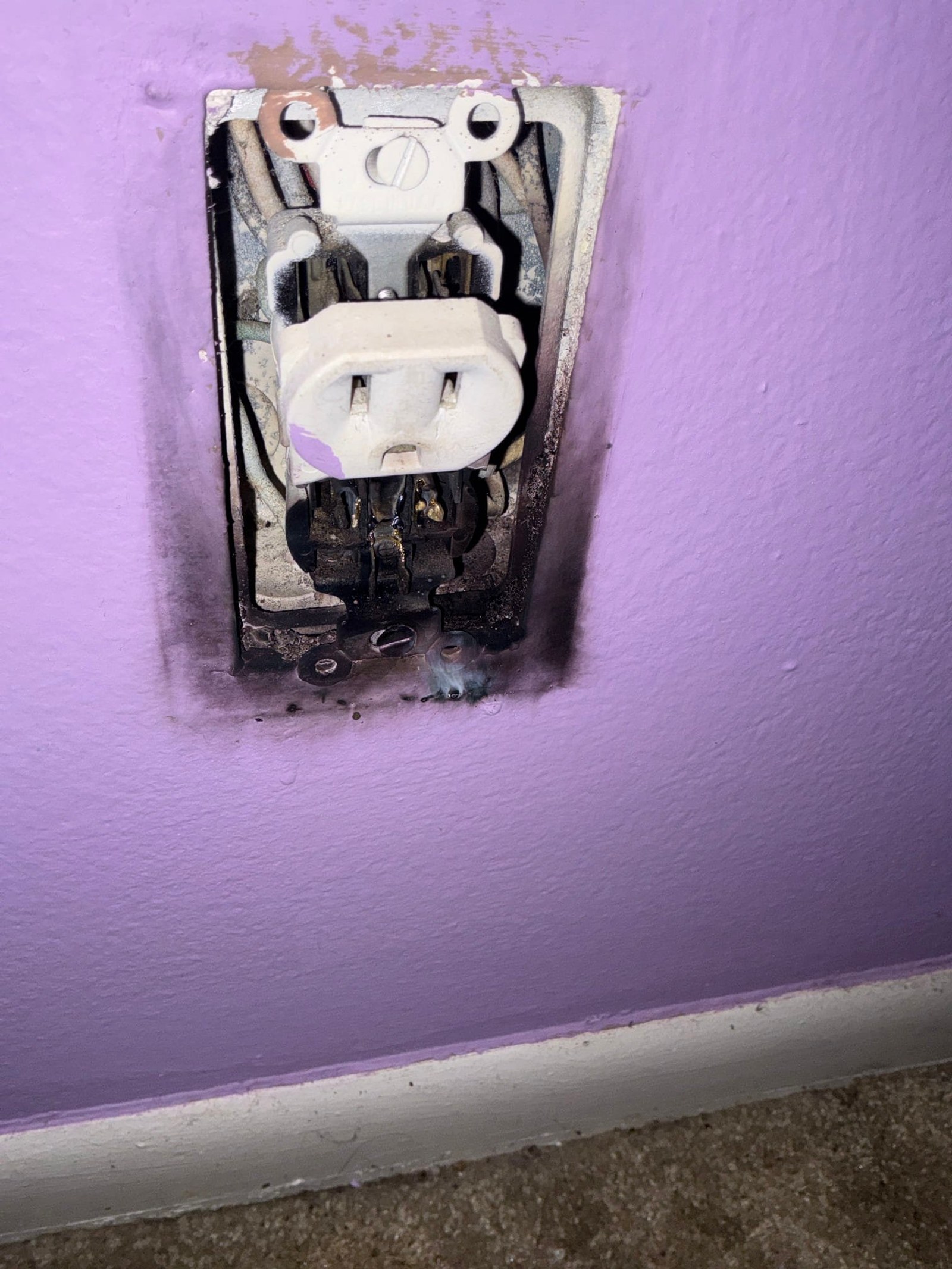
Before & After
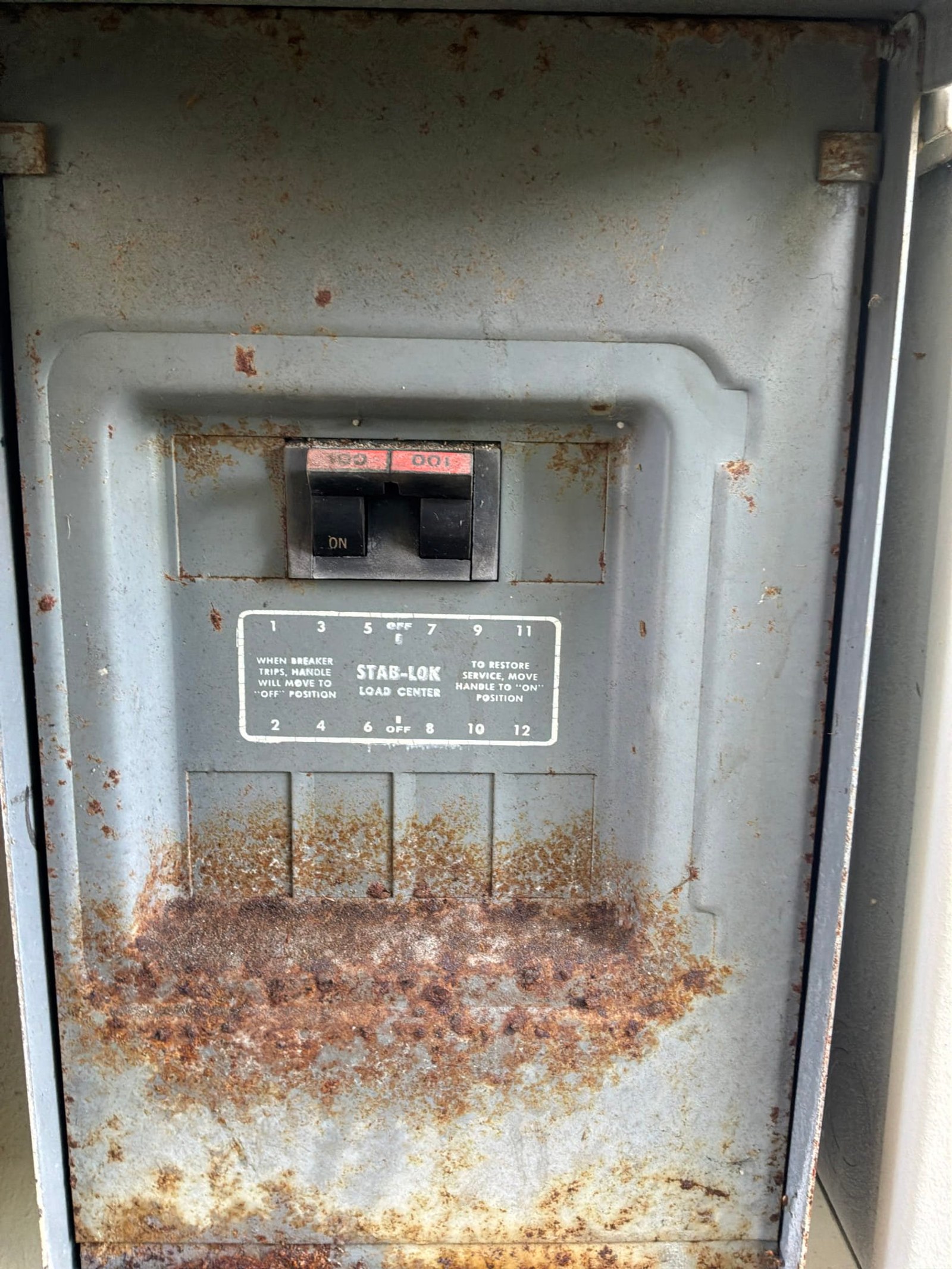 Before
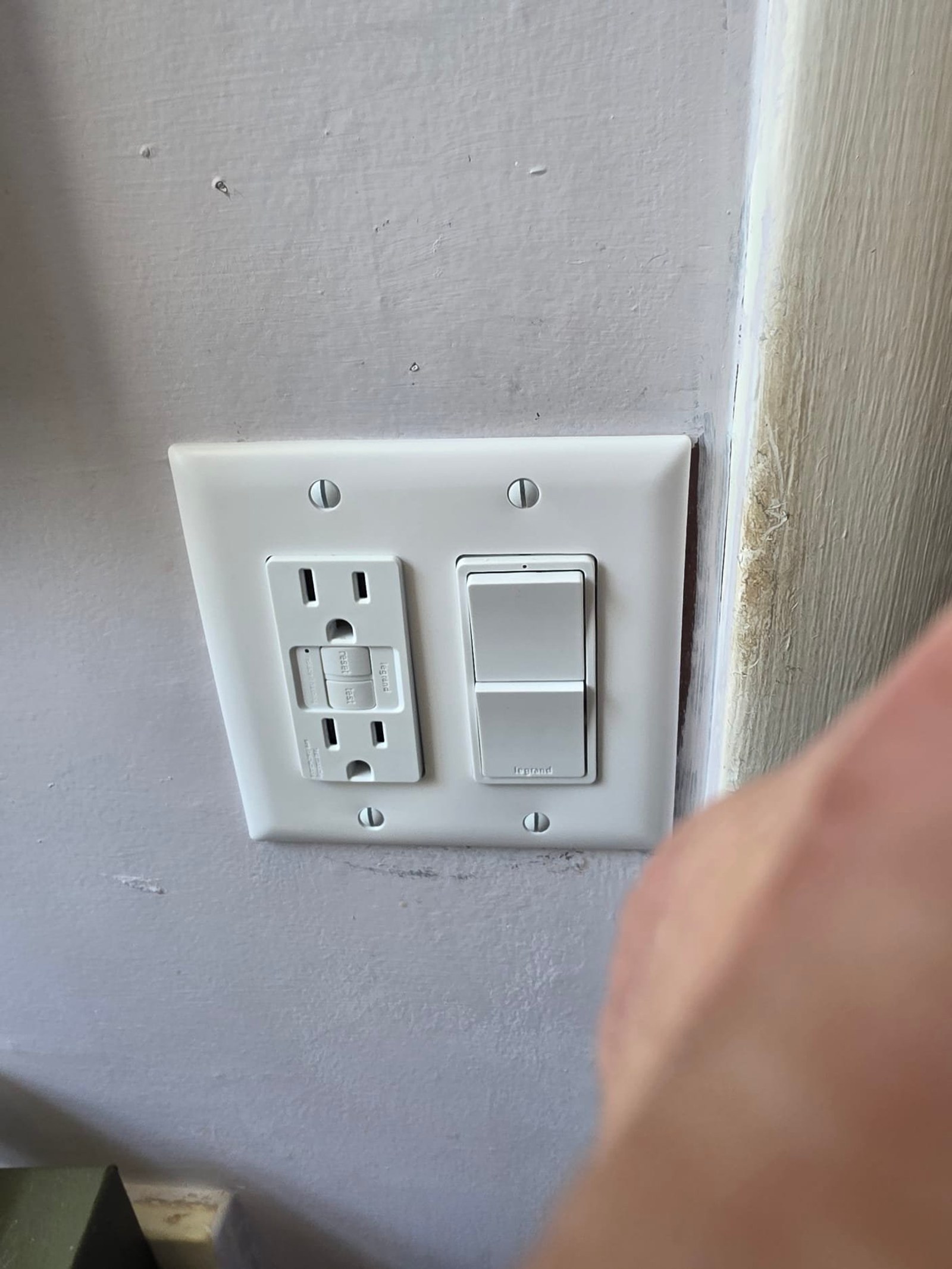 After
This Boynton Beach GFCI protection case study walks through the real diagnosis, the fix, and the code details from a recent service call. A homeowner in Boynton Beach, FL, called us after noticing a scorched outlet near her bed that had shown signs of wear more than once. Our field team arrived, assessed the outlet situation, and quickly found that the issue extended well beyond a single device. The result was a thorough device refresh that brought the home’s receptacles, switches, and GFCI protection in line with current standards.
Customer’s Problem
The homeowner had been dealing with outlet trouble for roughly a year. One outlet near her bed showed visible burn marks and had smoked on a prior occasion as well. A second outlet on the same wall had also stopped working. As the problem spread across the wall, she decided it was time to bring in a licensed electrician and get a clear picture of what was going on throughout the home.
What Our Electrician Found
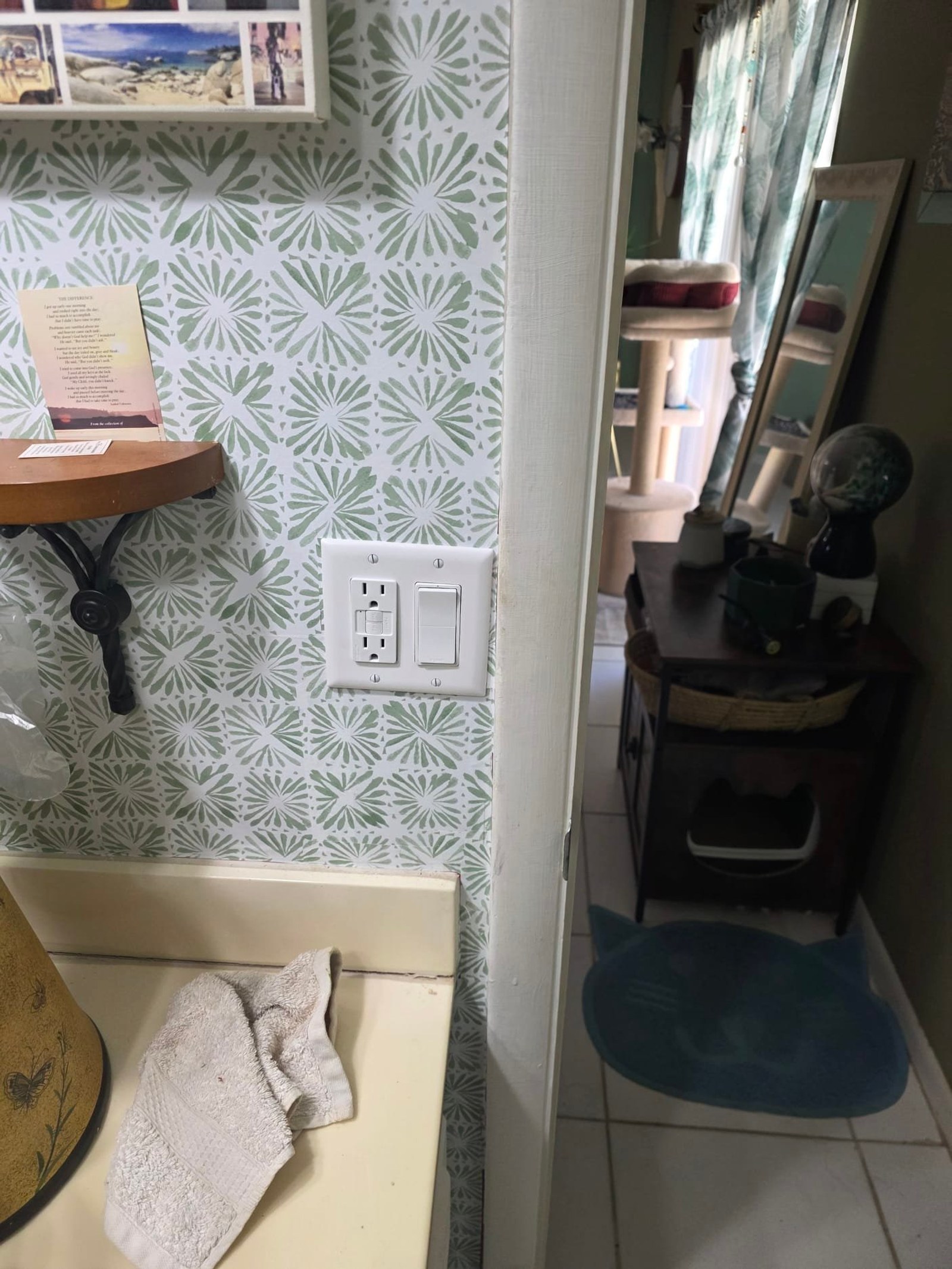
The licensed electrician on site started at the reported outlets and then worked through the rest of the home. Here is a summary of what the inspection revealed.
Outlet and Device Conditions
Several outlets showed signs of wear and backstabbing. Backstabbed connections were a common installation shortcut in homes wired before the mid-2000s. Over time, the spring tension in a backstabbed terminal eases, contact resistance climbs, and the result is exactly the kind of intermittent trouble and heat the homeowner had been experiencing. One outlet was missing its cover plate entirely, leaving a conductor exposed outside its protective raceway, a condition visible in our before photo against the purple wall. Replacing these devices with screw-terminated connections is a straightforward, durable fix.
The home also lacked tamper-resistant receptacles throughout. Under NEC 406.12, all 15A and 20A receptacles in dwelling units are required to be tamper-resistant. Homes built before that requirement took effect were permitted under the code of their era, but current standards now call for the upgrade.
GFCI and AFCI Coverage
Several areas requiring GFCI protection under NEC 210.8 did not have it in place. A bathroom outlet visible in one of the job photos showed a GFCI device, but consistent coverage across the home was not present. AFCI protection, required under NEC 210.12 for bedroom and living-area circuits in new work, was also not in place. Both of these were standard findings for a home of this era.
Panel Observations
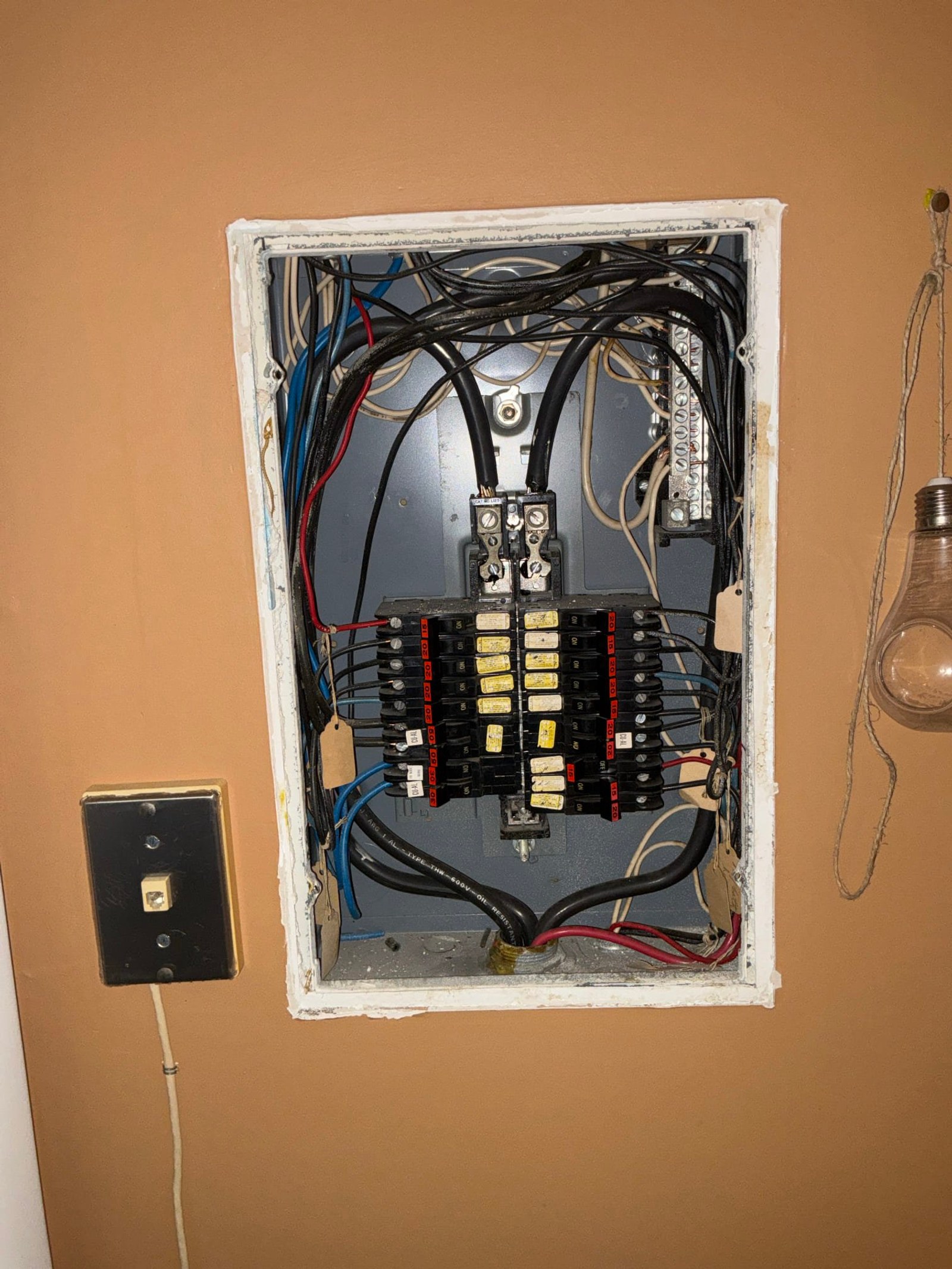
The home’s 100-amp Federal Pacific Stab-Lok load center was documented in the before photos. The panel interior showed tangled branch conductors in a disorganized condition, along with visible corrosion and salt corrosion on the terminations and enclosure. DIY workmanship was evident in the wiring. The Stab-Lok design predates current code requirements for properly listed breakers under NEC 408.4. The panel conditions were noted and communicated to the homeowner for future planning.
Additional Observations
The inspection also noted the absence of smoke detectors meeting current NFPA 72 requirements and no carbon monoxide detector on record. Whole-home surge protection was not present, and no standby generator or outside service disconnect was in place. These were flagged as items worth addressing in future service visits.
Solution Selected
The homeowner selected a comprehensive device refresh that addressed the worn and backstabbed receptacles, added GFCI coverage in required areas, updated all switches, installed tamper-resistant duplex receptacles throughout, and added a weatherproof in-use cover for an exterior outlet. The scope covered the whole home rather than just the two problem outlets, which made sense given how the inspection findings extended beyond the bedroom wall.
Work Performed
Our crew completed the following work:
- Replaced worn and backstabbed outlets with 15 Pass & Seymour tamper-resistant duplex receptacles (15A, 125V, white decorator style)
- Installed 4 Pass & Seymour self-testing GFCI tamper-resistant receptacles in required locations, including bathroom areas visible in the after photos
- Added 1 Pass & Seymour spec-grade single receptacle where needed
- Replaced 6 single-pole toggle switches with Pass & Seymour 15A spec-grade toggle switches
- Installed 1 Lutron Diva 150W 3-way dimmer switch (white)
- Installed 1 weatherproof in-use bubble cover for the exterior outlet
- Replaced all wall plates with matching white nylon covers, including duplex, single, 1-gang, and 2-gang plates, for a clean, uniform finish
- Tested all devices for proper operation after installation
Why Pricing Can Vary
Two homes with the same job on the invoice can land at different totals. On projects like this one, the total is driven by:
- Number of devices replaced
- Device type (standard, GFCI, AFCI, tamper-resistant, USB, smart or dimmer)
- Condition of the boxes and wiring behind the devices
- Backstabbed or aluminum connections that need correction
- Access and the number of rooms involved
Why This Boynton Beach Gfci Protection Matters for Homeowners
For a family using bedrooms and bathrooms every day, outlets that work consistently matter more than most people realize until something goes wrong. Worn connections can cause the kind of intermittent behavior this homeowner experienced for a full year before the problem became impossible to ignore. Addressing the devices throughout the home, rather than just the two problem spots, means the household has a consistent, reliable starting point going forward.
Tamper-resistant receptacles are a quiet but meaningful upgrade for any home where kids are present or likely to visit. The built-in shutters require equal pressure on both slots to open, which is simply how modern outlets work now. Every room that received new devices in this visit now meets that standard.
Additionally, the GFCI devices installed in required areas mean that bathroom circuits respond the way today’s code expects them to. With Pass & Seymour self-testing GFCI receptacles in place, the devices check their own function automatically, so the family does not have to remember to test them manually. The panel findings and the missing surge protection, smoke detectors, and CO detectors were documented and shared with the homeowner so she can plan next steps at her own pace. There is no pressure, but having the full picture means she can make informed decisions about her home when the time is right.
Code Compliance Cited in This Job
Every fix above maps to a specific section of NEC 2020. Each card links to NFPA’s public NEC index.
GFCI Protection
NEC 210.8 requires GFCI protection for personnel at receptacles in bathrooms, kitchens, garages, outdoors, and other specified locations in dwelling units. The inspection found several required locations in this Boynton Beach home without GFCI devices in place. Four self-testing GFCI tamper-resistant receptacles were installed to address those locations. NFPA reference ›
AFCI Protection
NEC 210.12 requires arc-fault circuit-interrupter protection on branch circuits supplying outlets in bedrooms, kitchens, living rooms, and other dwelling-unit areas. The home’s existing circuits predated this requirement. The finding was documented for future panel-level work. NFPA reference ›
Replacement Receptacle Requirements
NEC 406.4(D) states that when receptacles are replaced in an existing dwelling, the new devices must meet current requirements, including GFCI protection where applicable and tamper resistance per NEC 406.12. All replacement receptacles installed in this project are tamper-resistant and, where required by location, GFCI-protected. NFPA reference ›
Tamper-Resistant Receptacles
NEC 406.12 requires tamper-resistant receptacles for all 15A and 20A, 125V receptacles in dwelling units. The home’s existing receptacles pre-dated this requirement. All 15 duplex receptacles and 4 GFCI devices installed during this visit are tamper-resistant, bringing every updated location into compliance. NFPA reference ›
Circuit Directory and Breaker Listing
NEC 408.4 requires that breakers installed in a panel be properly listed for the enclosure. The home’s Federal Pacific Stab-Lok load center uses breakers that predate current listing requirements. This condition was documented and shared with the homeowner for future consideration. NFPA reference ›
Common Questions
Questions homeowners ask after seeing this kind of work.
Why would an outlet near a bed show burn marks more than once?
Recurring discoloration at an outlet is often a sign of a worn or backstabbed connection. When a terminal loses its firm contact over time, resistance at that point rises, and the outlet can run warm enough to discolor the cover plate. Replacing the device with a properly screw-terminated receptacle resolves the underlying connection issue. If you are seeing similar signs at an outlet in your home, our team can check it for you. Schedule online and we will get you on the calendar.
What does a self-testing GFCI receptacle do differently than a standard one?
A self-testing GFCI automatically checks its own internal protection circuitry at regular intervals. Standard GFCI devices rely on the homeowner pressing the Test button periodically, which many people understandably forget. Self-testing models like the Pass & Seymour devices installed in this Boynton Beach home indicate a problem automatically, so protection stays consistent without requiring manual upkeep. If your home has older GFCI outlets that have not been updated, a quick inspection can confirm whether they are still functioning properly. Book a safety check to get a clear picture.
How often should a homeowner have the electrical system inspected?
A yearly inspection is a reasonable baseline for most homes. Older homes built before 1990, and homes that have weathered recent storms, may benefit from inspections more frequently than once a year, since corrosion, aging wiring, and storm-related wear can develop between visits. This Boynton Beach home had several conditions that had been building quietly for some time before the outlet issue became noticeable. Annual check-ins help catch those things early. Schedule online to set up a convenient time for your home.
Are Federal Pacific Stab-Lok panels still safe to use?
Federal Pacific Stab-Lok panels were widely installed from the 1950s through the 1980s and were permitted under the code standards of that era. Current NEC requirements call for breakers to be properly listed for their enclosure, a standard the Stab-Lok design predates. Many homeowners with this panel type continue to use them while planning a future replacement. Having a licensed electrician document the panel’s current condition gives you the information you need to plan on your own timeline. Schedule online if you would like an assessment.
What is covered under a whole-home device refresh like this one?
A device refresh typically replaces worn or outdated receptacles, switches, and GFCI devices throughout the home, installs matching cover plates, adds weatherproof covers for exterior outlets, and tests every device after installation. The scope in this Boynton Beach project included tamper-resistant duplex receptacles, self-testing GFCI devices, toggle switches, a dimmer, and a weatherproof in-use cover. The result is a consistent, updated appearance and reliable operation across every updated location. If your home has a mix of old and new devices, we can schedule a walkthrough to help you figure out what makes sense to update.
Project Photos
Electrician and Technical Reviewer
Work performed by Slater, Thomas Edison Electric field electrician serving Jupiter / West Palm Beach.
Slater, the electrician on this job, is the technical reviewer of record for this case study.
Location
This project was completed in Boynton Beach, Florida, in our North Palm Beach / Riviera Beach / Palm Beach / West Palm Beach / Palm Springs / Lake Worth service area.