
Before & After
 BeforeAfter
This Jupiter GFCI protection case study walks through the real diagnosis, the fix, and the code details from a recent service call. An outdoor outlet at a Jupiter, FL home had been completely dead for several weeks. Our licensed electrician on site traced the issue to a failed GFCI receptacle, replaced it with a Pass & Seymour self-testing, tamper-resistant, weather-resistant model, and added an in-use bubble cover to keep moisture out going forward. While on site, the team also reviewed the Siemens 200-amp panel and noted several opportunities to bring the home further in line with current standards.
Customer’s Problem
A homeowner in Jupiter, FL noticed their exterior outlet had stopped working entirely. The outage had lasted a couple of weeks. Outdoor outlets along Florida’s coast take on a lot of humidity and heat cycling, so a GFCI that trips and will not reset is one of the more common service calls our team handles in this area.
What Our Electrician Found
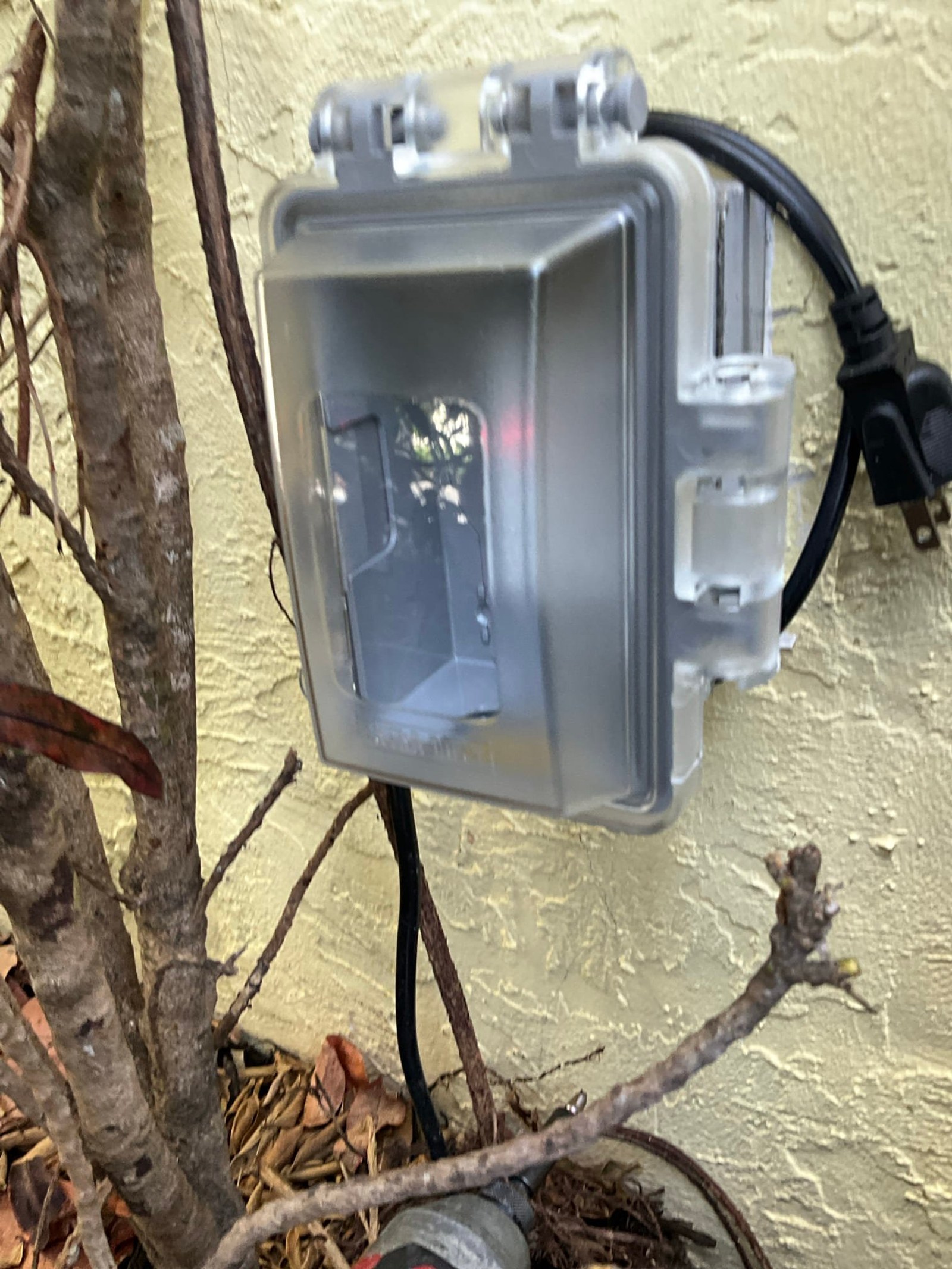
The licensed electrician on site confirmed the outdoor GFCI receptacle had failed. After replacement, the photos show a weatherproof cover installed flush against the exterior wall, which is exactly what current code calls for on outdoor outlets used in wet or damp locations.
During the broader walk-through, the team documented several items worth noting.
Outlet and Wiring Conditions
The inspection turned up loose or worn outlets and receptacles that appeared to be backstabbed. Backstabbing, where the wire is inserted into a spring-clip opening on the back of the device rather than wrapped around a screw terminal, was a common installation shortcut in homes wired before roughly 2005. Over time, the spring tension in those clips can ease, contact resistance climbs, and intermittent flickering or dead outlets can result. Switching to screw-terminal connections is a straightforward, durable improvement.
The team also noted that the existing outlets were not tamper-resistant. Tamper-resistant receptacles are now required by NEC 406.12 in all dwelling-unit locations. Homes wired before that requirement took effect were compliant at the time; current standards simply ask for an update as outlets are replaced.
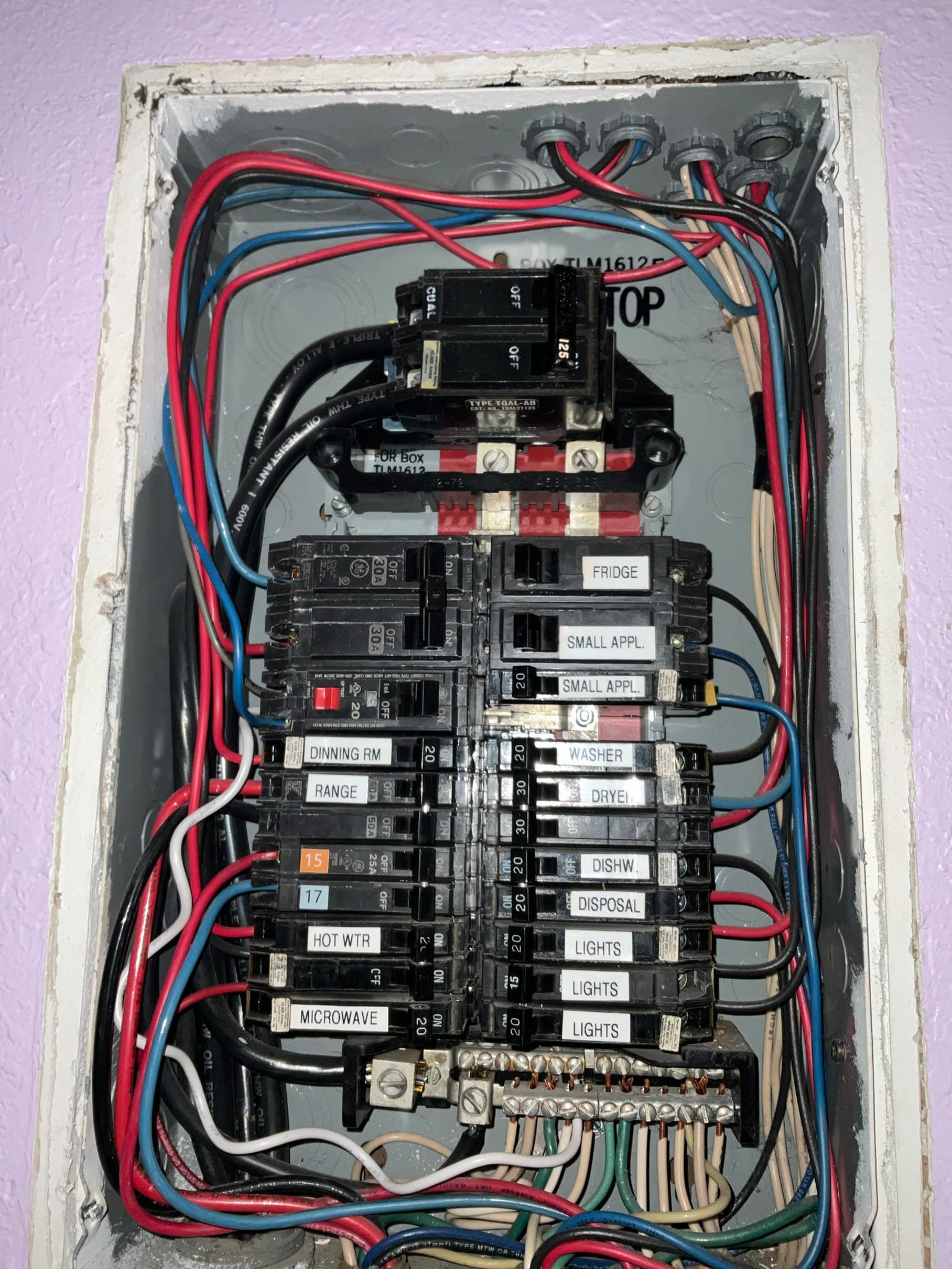
Three-way switches showed signs of improper installation, and the panel directory labels on the Siemens 200-amp service were incomplete or unclear. The panel interior photo shows breaker toggles alongside red, blue, and black conductors with circuit labels present but not fully matched to every circuit. A clear, accurate directory is one of the simplest things a homeowner can have, and NEC 408.4 requires every circuit to be legibly identified.
Whole-Home Safety Observations
The inspection also flagged several items that represent good next-step upgrades for the home. AFCI protection was not present on branch circuits where current code now asks for it. Smoke detectors and carbon monoxide detectors did not meet current placement or technology standards per NFPA 72. Whole-home surge protection was not installed, and no outside service disconnect or generator prewire was in place. None of these findings are unusual for a home of this vintage; they simply reflect how far protective technology has advanced since the home was first wired.
Solution Selected
The homeowner chose to address the immediate problem: the non-functioning outdoor outlet. The team installed a Pass & Seymour 1597-TRWRW 15A 125V self-testing tamper-resistant weather-resistant GFCI receptacle with a one-gang in-use bubble cover, restoring full outdoor outlet function and adding weatherproof protection at that location.
Work Performed
- Removed the failed GFCI receptacle at the outdoor location
- Installed a Pass & Seymour 1597-TRWRW 15A 125V self-testing, tamper-resistant, weather-resistant GFCI receptacle
- Fitted a one-gang in-use cover (bubble cover) over the new receptacle to protect against rain and humidity
- Documented inspection findings across outlets, switches, detectors, and the Siemens 200-amp panel for the homeowner’s reference
Why Pricing Can Vary
Two homes with the same job on the invoice can land at different totals. On projects like this one, the total is driven by:
- Number of devices replaced
- Device type (standard, GFCI, AFCI, tamper-resistant, USB, smart or dimmer)
- Condition of the boxes and wiring behind the devices
- Backstabbed or aluminum connections that need correction
- Access and the number of rooms involved
Why This Jupiter Gfci Protection Matters for Homeowners
In Jupiter and across South Florida, outdoor outlets deal with heat, salt air, and frequent rain. A GFCI receptacle is the device that monitors the circuit and cuts power the instant it detects an imbalance, which is exactly the kind of quiet, automatic protection a family wants working correctly on the side of the house where kids play, where guests plug in speakers at a backyard cookout, or where landscape lighting connects. The self-testing feature on the new Pass & Seymour unit checks itself regularly, so the household does not have to remember to press the test button each month.
The in-use bubble cover means the outlet stays protected even when a cord is plugged in, which is the standard NEC 406.9 asks for at wet locations. That small detail makes a meaningful difference in year-round reliability.
Beyond the outlet itself, the inspection checklist gives this household a clear picture of where the home stands today and what a future service visit could address. Upgrading the panel directory, adding AFCI protection, and installing interconnected smoke and CO detectors are all projects that layer in comfort and reliability one step at a time. There is no urgency to do everything at once; having the information means the family can plan ahead and make decisions on their own timeline, knowing the most immediate issue is already resolved.
“Highly recommend Thomas Edison Electric here in Jupiter! Their communication was top-notch from start to finish, with seamless email and text updates notifying me exactly when they’d arrive. It is such a refreshing surprise when a company actually shows up right on time. My technician, Christine Phillips, was an absolute pleasure to work with. She did a thorough visual inspection and gave me a clear, step-by-step breakdown of the work required. The pricing was completely upfront with no surprises. This was an excellent experience, if you are in Jupiter or the surrounding areas, do yourself a favor and reach out to them!”
Code Compliance Cited in This Job
Every fix above maps to a specific section of NEC 2020. Each card links to NFPA’s public NEC index.
GFCI Protection for Personnel
NEC 210.8 requires GFCI protection for receptacles installed in outdoor locations of dwelling units. The failed outlet on this Jupiter home was an exterior receptacle, making it a primary candidate for a GFCI device. The new Pass & Seymour weather-resistant GFCI satisfies this requirement at that location. NFPA reference ›
Replacement Receptacle Requirements
When a receptacle is replaced in a dwelling, NEC 406.4(D) requires the new device to meet current applicable requirements, including GFCI protection where the code now calls for it. Replacing the failed outdoor outlet with a code-compliant GFCI receptacle follows this rule directly. NFPA reference ›
Tamper-Resistant Receptacles
NEC 406.12 requires tamper-resistant receptacles throughout dwelling units. The inspection found the home’s existing outlets were not tamper-resistant, which is consistent with homes wired before this requirement was adopted. The replacement GFCI installed on this job carries a tamper-resistant rating, meeting current code at that location. NFPA reference ›
Circuit Directory and Identification
NEC 408.4 requires every circuit in a panelboard to be legibly identified as to its clear, evident purpose. The inspection of the Siemens 200-amp panel found that circuit labels were present but not fully matched to all circuits, which is a common condition in older panels. A complete, accurate directory makes the system easier and safer for any electrician or homeowner who works with the panel in the future. NFPA reference ›
AFCI Protection
NEC 210.12 requires arc-fault circuit-interrupter protection on branch circuits supplying outlets in dwelling-unit living areas, bedrooms, kitchens, and similar spaces. The inspection noted AFCI protection was not present on applicable circuits in this Jupiter home, which is typical for homes wired before the requirement expanded to its current scope. Adding AFCI breakers to those circuits is a straightforward upgrade that improves the reliability of the home’s electrical system. NFPA reference ›
Common Questions
Questions homeowners ask after seeing this kind of work.
Why would an outdoor outlet stop working even when the breaker has not tripped?
Outdoor GFCI receptacles are designed to shut themselves off when they detect moisture or a wiring imbalance, and sometimes the internal mechanism wears out and will not reset. When that happens the outlet stays dead even though the breaker in the panel is still on. A licensed electrician can confirm whether it is the GFCI device itself, a tripped upstream GFCI, or a wiring issue. If your outdoor outlet has been unresponsive for more than a day or two, schedule online and we can get it sorted out quickly.
What is the difference between a standard GFCI and a weather-resistant tamper-resistant GFCI?
A standard GFCI monitors the circuit and cuts power on an imbalance, which is the core protection. A weather-resistant version adds components rated to hold up against the humidity, UV exposure, and temperature swings that outdoor locations in South Florida deliver year-round. The tamper-resistant feature adds spring-loaded shutters inside the outlet so foreign objects cannot be inserted into the slots. For any outdoor or wet-location outlet, the weather-resistant tamper-resistant version is what current code asks for. Book a quick inspection if you are unsure what type your outdoor outlets are.
What does a self-testing GFCI do differently from a standard one?
A self-testing GFCI automatically runs an internal check at regular intervals to confirm the protection circuit is still working, rather than relying on a homeowner to press the test button manually. If the device detects a fault in itself, it locks out and signals that it needs to be replaced. This is especially useful on outdoor outlets that may go unnoticed for extended periods. If you have older GFCI outlets that do not carry a self-test rating, our team can schedule a replacement visit at your convenience.
How often should I have my home’s electrical system inspected?
A yearly inspection is a good baseline for most homes. Homes built before 1990 and homes that have experienced recent storms may benefit from inspections more often, since older wiring and weather events can both introduce conditions that are worth catching early. An annual visit also gives your electrician a chance to update the panel directory, check outlet conditions, and flag any areas where current code has moved ahead of what was standard when the home was wired. Schedule online to set up your next inspection.
Is surge protection worth adding to a home that already has a modern 200-amp panel?
Yes. A modern panel like the Siemens 200-amp service on this Jupiter home manages load and overcurrent protection well, but it does not filter the voltage spikes that come in from the utility grid during lightning events or equipment cycling. A whole-home surge protective device installed at the service entrance absorbs those spikes before they reach the branch circuits, which helps appliances, HVAC equipment, and electronics run reliably over the long term. Book a consultation to learn what options fit your home and budget.
Project Photos
Electrician and Technical Reviewer
Work performed by Christina, Thomas Edison Electric field electrician serving Jupiter / West Palm Beach.
Christina, the electrician on this job, is the technical reviewer of record for this case study.
Location
This project was completed in Jupiter, Florida, in our Jupiter / Juno Beach / Jupiter Island / Tequesta service area. See our electrical services in Jupiter.