
Before & After
 BeforeAfter
This Boca Raton GFCI protection case study walks through the real diagnosis, the fix, and the code details from a recent service call. A homeowner in Boca Raton, FL called wanting two outdoor outlets replaced and a handful of other exterior electrical items sorted out. When our field team arrived, the inspection pointed to a straightforward but meaningful upgrade: two exterior receptacles that predated current weather-resistant and tamper-resistant requirements. Replacing them with code-current devices and proper in-use covers gives the home’s outdoor circuits the durability South Florida’s climate demands.
Customer’s Problem
The homeowner reached out wanting two outdoor outlets replaced as soon as the team was available. Beyond the outlets, the initial request included some intermittently working lights, a couple of exterior fixtures to relocate, an unused timer box to remove, and track lighting to select and install. The priority was getting someone on-site quickly to assess everything and start with what could be completed that day.
What Our Electrician Found
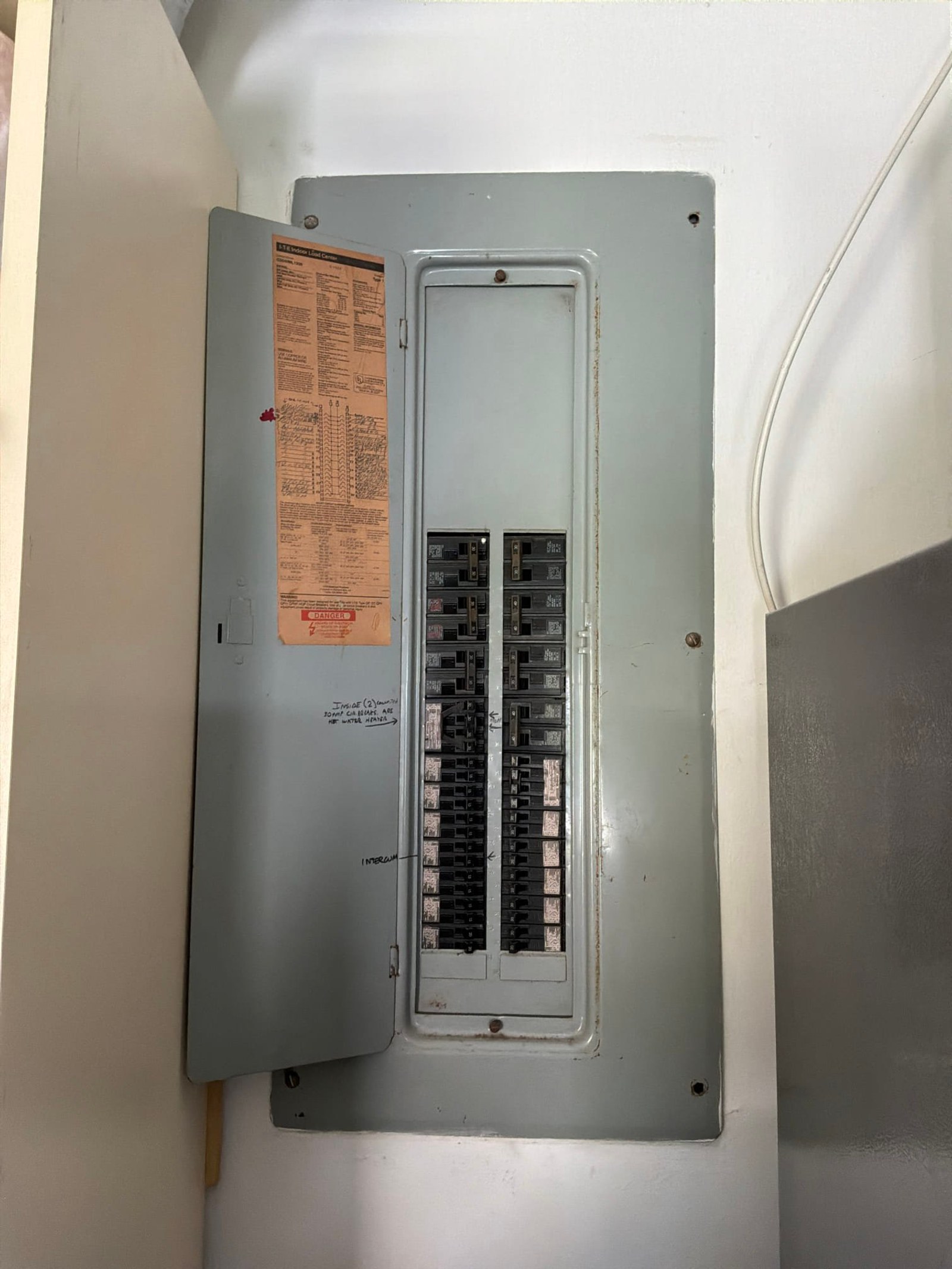
The licensed electrician on-site reviewed the panel, which is a Square D QO 200-amp service, and walked the exterior. The circuit directory on the panel deadfront was present, a good starting point for tracing outdoor circuits before any work begins.
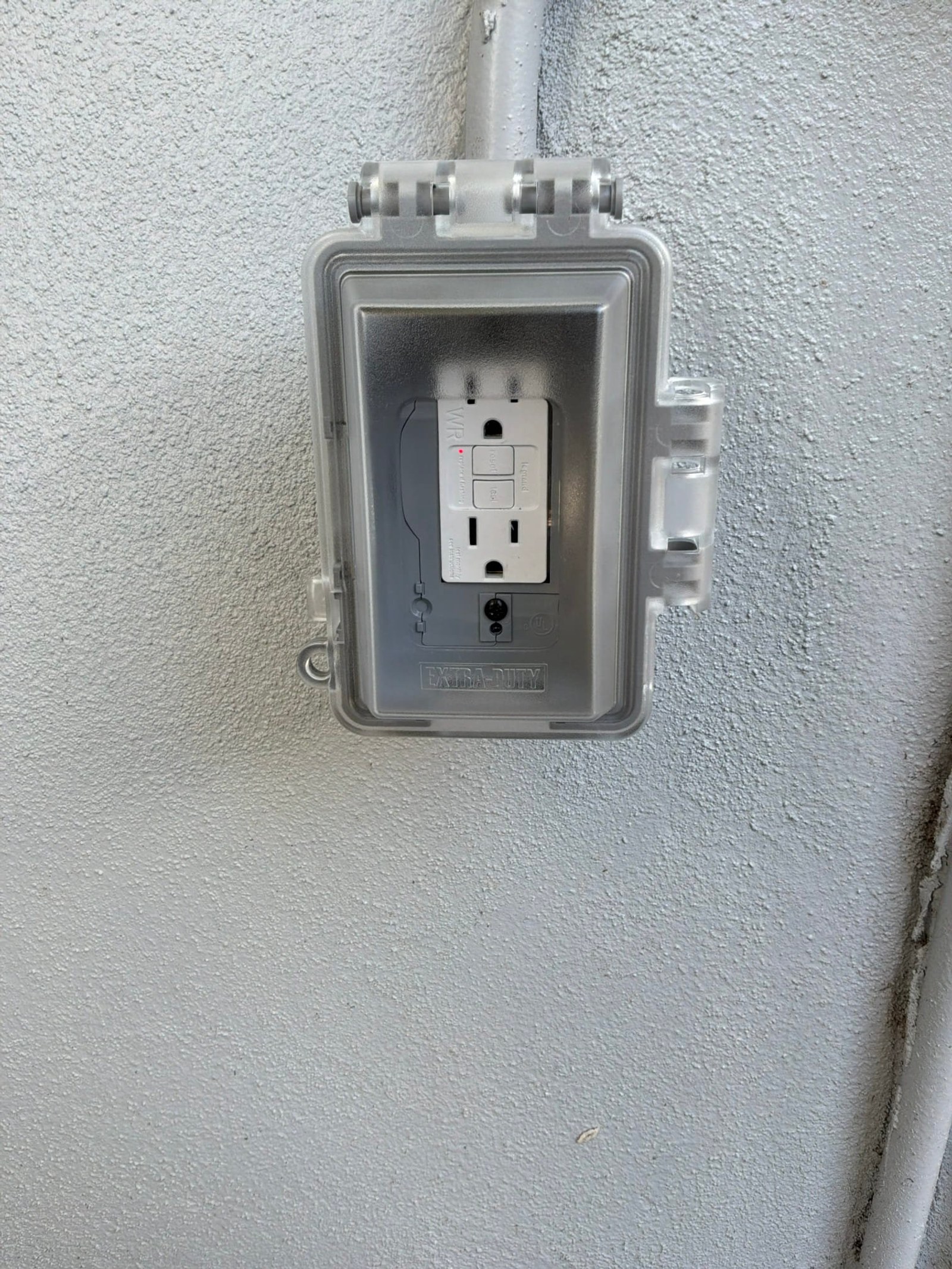
Outside, the two existing receptacles were standard devices without weather-resistant ratings and lacked in-use covers. For outlets installed on an exterior wall, current code calls specifically for weather-resistant (WR) and tamper-resistant (TR) devices paired with an in-use cover that keeps the cover closed even while a cord is plugged in. Older devices without those ratings were perfectly acceptable under the code cycle when they were installed, but today’s standards offer a meaningful improvement in durability and protection against moisture intrusion, which matters a great deal in Boca Raton’s humid, rainy climate.
The inspection checklist also flagged several items worth noting for the homeowner’s awareness. AFCI protection, whole-home surge protection, and a standby generator prewire were not present. Some outlets showed signs of wear consistent with older devices, and a few circuits showed the kind of voltage drop that suggests aging connections. Grounding continuity and open knockouts in the panel were also noted as items to revisit. These findings are common in homes of this era and represent good opportunities to modernize the system further over time.
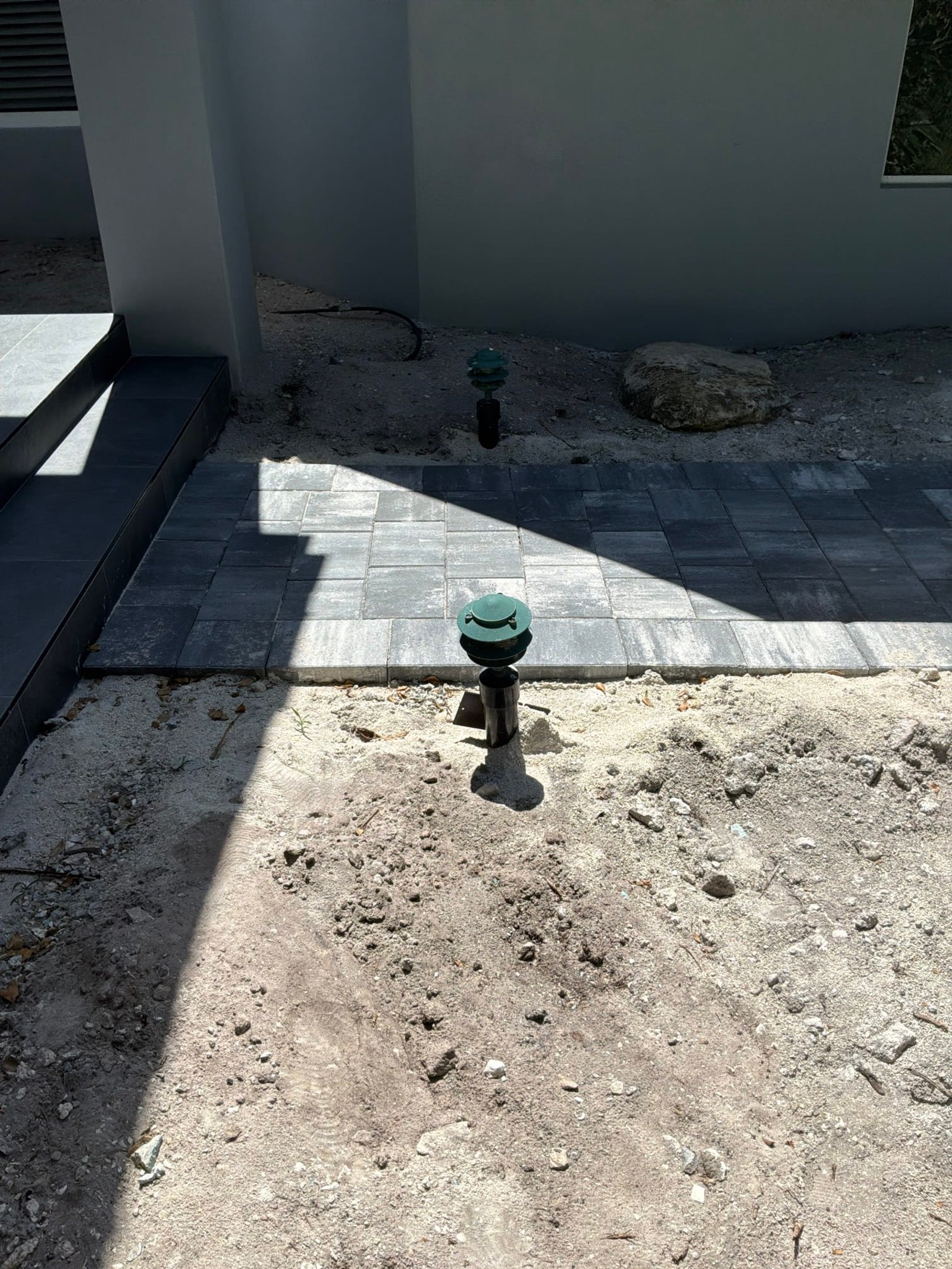
The ground-mounted landscape lighting near the foundation was documented as well. The fixtures were in place, though the intermittent behavior the homeowner described points to connections or fixtures worth evaluating on a follow-up visit once replacement parts are selected.
Solution Selected
The homeowner chose to move forward with the outdoor outlet replacements on this visit, addressing the most immediate need while leaving the lighting relocation, timer box removal, and track lighting installation for a follow-up once parts are on hand. This approach let the team deliver a clean, code-compliant result on the outlets without rushing decisions on the fixtures.
Work Performed
Our crew replaced both outdoor receptacles with Pass & Seymour self-test tamper-resistant, weather-resistant GFCI devices. Specifically:
- One Pass & Seymour 1597-TRWRW 15A 125V self-test tamper-resistant, weather-resistant GFCI receptacle was installed with a new in-use (bubble) cover, keeping the outlet protected whether or not a cord is plugged in.
- One Pass & Seymour 885-TRW 15A 125V tamper-resistant decorator duplex receptacle was installed at its existing location with a new in-use cover.
Both locations now have the exterior outlet and weatherproof cover combination visible in the job photos: a clean white device seated in an exterior box with a cover designed to shed water and stand up to sun exposure. The self-test feature on the GFCI unit automatically verifies the device is functioning, so the homeowner does not have to remember to press the test button manually.
Why Pricing Can Vary
Two homes with the same job on the invoice can land at different totals. On projects like this one, the total is driven by:
- Number of devices replaced
- Device type (standard, GFCI, AFCI, tamper-resistant, USB, smart or dimmer)
- Condition of the boxes and wiring behind the devices
- Backstabbed or aluminum connections that need correction
- Access and the number of rooms involved
Why This Boca Raton Gfci Protection Matters for Homeowners
Outdoor outlets in South Florida work harder than almost anywhere else in the country. They face heat, humidity, afternoon thunderstorms, and salt-laden air season after season. A standard indoor-grade receptacle installed outside will degrade faster and may eventually stop tripping reliably when it should. Weather-resistant and tamper-resistant devices are built specifically for that environment, with contacts and materials rated for moisture exposure and a shutter mechanism that keeps small objects out, an important detail for households with children.
For this family, the practical benefit is simple: the outdoor outlets now work the way they should, every time, whether it is a dry morning or the middle of a summer storm. Plugging in landscape lighting, a pressure washer, or holiday decorations no longer requires a second thought about whether the outlet will hold up.
Additionally, the checklist findings from this visit give the household a clear picture of what the system looks like today and where future improvements would add the most value. Items like whole-home surge protection and AFCI-protected circuits are meaningful upgrades, especially for a home running modern electronics and appliances. Knowing what is present and what predates current code means the family can plan those projects on their own timeline, with no surprises. Our team is already familiar with the home and ready to continue the work whenever the time is right.
“Jared did a great job and went the extra mile to make sure I understood everything and that I was happy with the results.”
Code Compliance Cited in This Job
Every fix above maps to a specific section of NEC 2020. Each card links to NFPA’s public NEC index.
GFCI Protection for Personnel
NEC 210.8 requires GFCI protection for all outdoor receptacles in dwelling units. On this job, both exterior outlets were replaced with weather-resistant, tamper-resistant GFCI devices to meet this requirement. The self-test feature on the primary unit provides ongoing assurance that the GFCI function remains active. NFPA reference ›
Replacement Receptacle Requirements
When a receptacle is replaced in a location that now requires GFCI protection, NEC 406.4(D) requires the replacement to meet current code, regardless of when the original was installed. Both outdoor outlets on this job were upgraded to GFCI-rated devices with in-use covers as a result, bringing them in line with current standards. NFPA reference ›
Tamper-Resistant Receptacles in Dwellings
NEC 406.12 requires tamper-resistant receptacles throughout dwelling units. The Pass & Seymour devices installed on this job carry the TR rating, satisfying this requirement at both outdoor locations. This is an important feature for any household with children. NFPA reference ›
AFCI Protection
NEC 210.12 requires arc-fault circuit interrupter protection on branch circuits serving most living areas in a dwelling. The inspection checklist noted AFCI protection as absent, which is common in homes wired before the 2002 NEC cycle introduced the requirement. Adding AFCI protection to the home’s branch circuits is a worthwhile future upgrade. NFPA reference ›
Surge Protective Device at Service
NEC 230.67 requires a surge protective device at the service entrance for new and upgraded dwelling-unit services. The checklist noted surge protection is not currently present at this Boca Raton home. Installing a whole-home SPD at the Square D QO 200-amp panel would add a layer of protection for electronics and appliances during the region’s frequent lightning storms. NFPA reference ›
Common Questions
Questions homeowners ask after seeing this kind of work.
Why do outdoor outlets in Boca Raton need to be weather-resistant and GFCI-protected?
South Florida’s combination of heat, humidity, and frequent rain puts extra stress on outdoor electrical devices. Standard indoor-grade receptacles were never designed for that environment and can degrade over time in ways that affect reliability. Current code under NEC 210.8 requires GFCI protection at all outdoor receptacle locations, and NEC 406.4(D) requires that any replaced outlet meet today’s weather-resistant and tamper-resistant standards. If your outdoor outlets are older devices without a WR or TR rating, it’s worth having a licensed electrician take a look before the next storm season.
What is the difference between a self-test GFCI and a standard GFCI outlet?
A standard GFCI outlet requires the homeowner to press the test button periodically to confirm the device is still functioning. A self-test GFCI, like the Pass & Seymour 1597-TRWRW installed on this job, automatically runs that check on its own and will indicate a fault if the protection has been lost. For outdoor locations that may not be checked regularly, self-test devices offer an added layer of reliability without requiring anything from the household. If you’d like to upgrade your outdoor outlets to self-test GFCI devices, schedule online and we’ll take care of it.
How often should I have my home’s electrical system inspected?
A yearly inspection is a good baseline for most homes. Older homes built before 1990 and homes that have weathered recent storms may benefit from inspections more often, since aging wiring and weather events can both affect connections and devices in ways that are not always visible. An annual check keeps the household informed and makes it easy to plan any upgrades on your own timeline. Schedule online to get on the calendar for your next visit.
The inspection checklist noted several items beyond the outlets. Do I need to address all of them at once?
Not necessarily. Many of the items flagged, such as AFCI protection, surge protection, and a generator prewire, are improvements over conditions that were standard when the home was wired. They represent good opportunities to modernize the system, but they do not all need to happen in a single visit. Our team can help you prioritize based on how you use the home and which upgrades would make the biggest difference for your household’s comfort and reliability. Schedule online and we can walk through the options together.
Can a GFCI outlet protect other outlets on the same circuit?
Yes. A GFCI receptacle can be wired to protect additional outlets downstream on the same circuit, which is a common and code-accepted approach for adding GFCI coverage without replacing every device individually. The key is making sure the load-side wiring is connected correctly and that the protected outlets are labeled accordingly, as required by NEC 406.4(D). If you’re unsure whether your existing GFCI outlets are protecting the right locations, our team can book a 30-minute visual inspection to confirm the setup.
Project Photos
Electrician and Technical Reviewer
Work performed by Jared, Thomas Edison Electric field electrician serving Jupiter / West Palm Beach.
Jared, the electrician on this job, is the technical reviewer of record for this case study.
Location
This project was completed in Boca Raton, Florida, in our Boca Raton service area. See our electrical services in Boca Raton.