
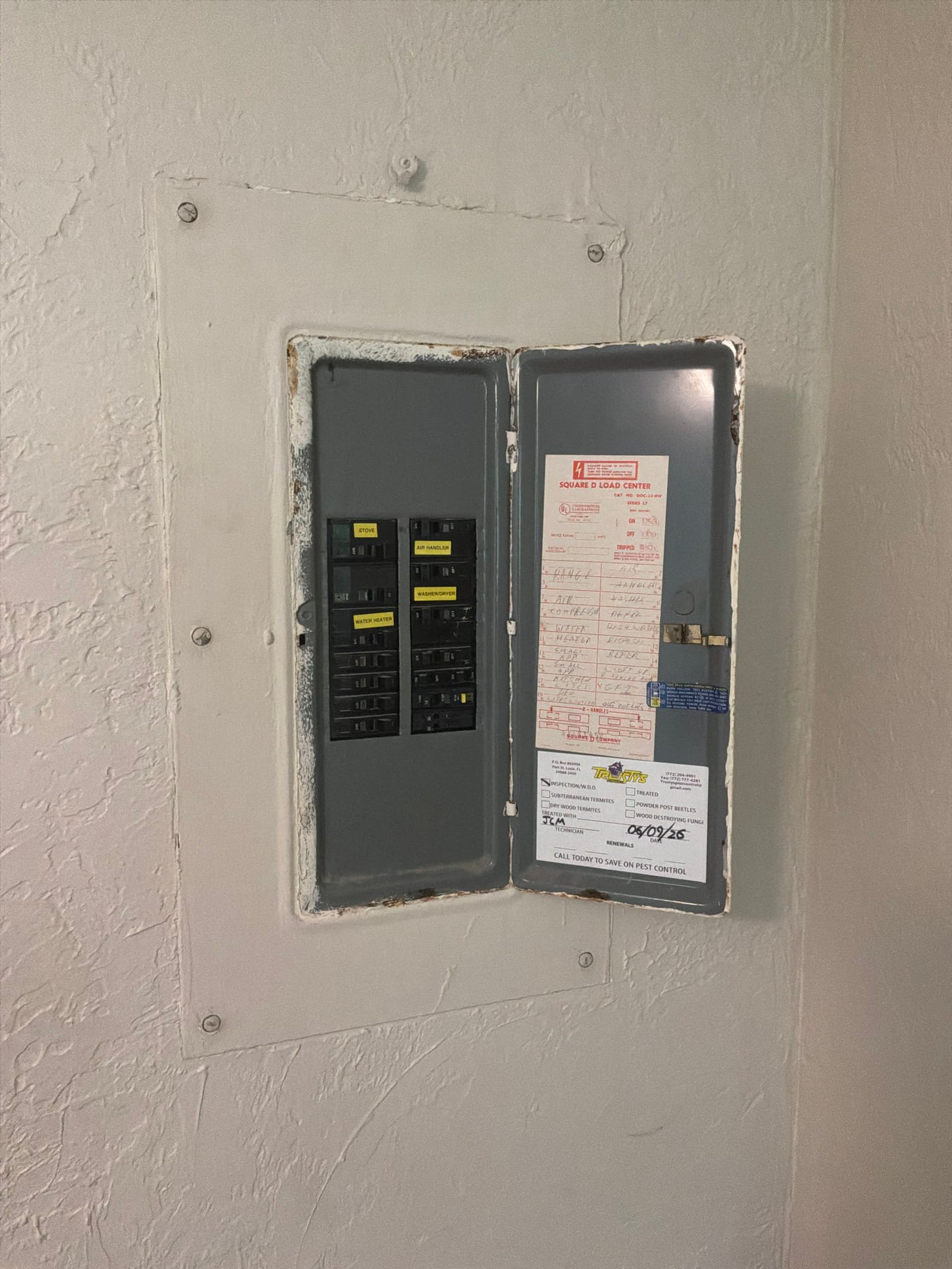
This Jupiter panel upgrade case study walks through the real diagnosis, the fix, and the code details from a recent service call. A homeowner in Jupiter, FL (33477) called us after a home inspection flagged a burnt neutral wire and two outlets in need of replacement. Our licensed electrician on site confirmed the outlet concerns, swapped in two tamper-resistant GFCI receptacles, and added a Square D QO tandem breaker to support the updated circuits. The result is a condo that works the way the family expects: reliable outlets, code-aligned protection, and a panel ready for everyday demands.
Customer’s Problem
The homeowner in Jupiter wanted two outlets replaced as part of routine upkeep. Their home inspector had also flagged a burnt neutral wire that needed a closer look before the transaction moved forward. Knowing the condition of every circuit matters for peace of mind, they called our team to handle both concerns in a single visit.
What Our Electrician Found
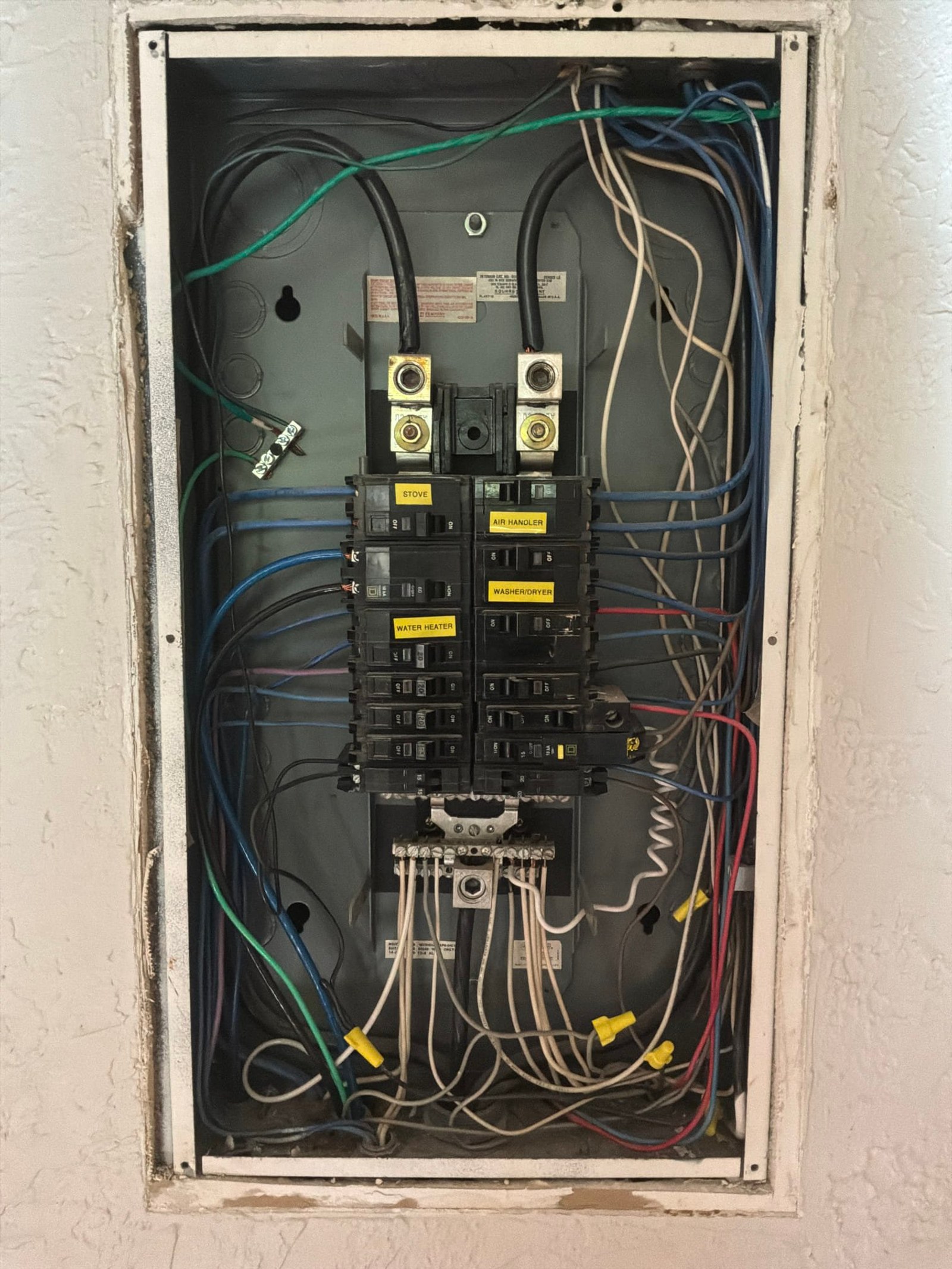
Our technician on-site started with the outlets and then turned attention to the panel. The panel photos from the visit show wiring consistent with earlier work left in place, tangled conductors, and yellow circuit labels for major loads including the stove, air handler, washer/dryer, and water heater. That kind of workmanship is common in condos that have seen multiple rounds of tenant improvements over the years. It creates an opportunity to bring the layout into cleaner, more organized shape.
Outlet Conditions
The two existing outlets showed signs of wear. The inspection checklist noted concerns about loose and worn outlets, backstabbed connections, and whether grounding was adequate. Backstabbed connections were a common installation shortcut used before current best practices took hold. Over time, the spring tension on those connections eases, contact resistance climbs, and intermittent behavior follows. Replacing them with screw-terminated, tamper-resistant GFCI receptacles is the straightforward, durable fix.
Panel Observations
The condo’s 200-amp Eaton CH tan-handle panel provided a solid foundation. However, the inspection also confirmed the absence of whole-home surge protection, and the panel interior showed conductors from earlier work still routed through the enclosure. No whole-home surge protective device was present, which is worth noting given that NEC 230.67 now calls for surge protection at the service in new and updated dwelling installations. That is an upgrade the household can revisit at any time.
Solution Selected
Based on the findings, the homeowner chose to move forward with the two GFCI receptacle replacements and the addition of a Square D QO tandem breaker. That scope addressed the home inspector’s concerns directly and gave the condo updated, code-aligned outlet protection without requiring a larger panel overhaul.
Work Performed
Our field team completed the following work at the Jupiter condo:
- Replaced two GFCI receptacles with Pass & Seymour 15A 125V self-test tamper-resistant GFCI outlets. Each unit features a built-in self-test function that monitors protection status continuously, so the outlets stay ready without requiring manual monthly button checks.
- Installed one Square D QO1515 tandem breaker (15/15 amp, single-pole) inside the existing 200-amp Eaton CH panel. The tandem format adds a circuit slot where space is limited, a practical solution for condos where panel real estate is at a premium.
All receptacles were installed at their existing locations with screw-terminal connections, replacing any previously backstabbed wiring.
Why Pricing Can Vary
Two homes with the same job on the invoice can land at different totals. On projects like this one, the total is driven by:
- Number of devices replaced
- Device type (standard, GFCI, AFCI, tamper-resistant, USB, smart or dimmer)
- Condition of the boxes and wiring behind the devices
- Backstabbed or aluminum connections that need correction
- Access and the number of rooms involved
Why This Jupiter Panel Upgrade Matters for Homeowners
GFCI protection is one of those updates that quietly works in the background every day. For a condo household, that means every family member, guests included, benefits from outlets that monitor their own current flow and respond in milliseconds if something unexpected happens. The self-test feature on these Pass & Seymour units means one less maintenance task on the to-do list: the outlet checks itself.
Additionally, tamper-resistant receptacles are now the standard for dwelling units under NEC 406.12. The spring-loaded shutters built into each outlet mean the receptacle only opens when a standard plug is inserted squarely, which matters in any home where kids visit or live.
Finally, the Square D QO tandem breaker adds a dedicated circuit slot in a panel that was running lean on open positions. That headroom is valuable as households add devices over time: a new appliance, a small air purifier, a home-office circuit. The condo is now set up to handle those additions without crowding the panel further. Peace of mind, in a condo context, often comes down to knowing the infrastructure is tidy, updated, and ready for whatever comes next.
“Jared best electrian I have worked with in a long time”
Code Compliance Cited in This Job
Every fix above maps to a specific section of NEC 2020. Each card links to NFPA’s public NEC index.
GFCI Protection for Personnel
NEC 210.8 requires GFCI-protected receptacles in areas where contact with water or ground faults is more likely, including bathrooms, kitchens, and other specified locations in dwelling units. On this Jupiter condo job, two existing receptacles were replaced with self-test GFCI tamper-resistant units to bring those locations into alignment with current personnel-protection requirements. This section applies regardless of when the home was originally wired, as replacement receptacles must meet current standards. NFPA reference ›
Replacement Receptacles Must Meet Current Requirements
When an existing receptacle is replaced in a dwelling, NEC 406.4(D) requires the new device to meet current code, including GFCI protection where applicable and tamper-resistant design where required. Both outlets replaced in this Jupiter condo met that threshold: the new Pass & Seymour units are self-test GFCI and tamper-resistant. This section is especially relevant in condos and townhouses where older receptacles are swapped during routine maintenance or pre-sale inspections. NFPA reference ›
Tamper-Resistant Receptacles in Dwellings
NEC 406.12 requires tamper-resistant receptacles throughout dwelling units, including condos and townhouses. The two replacement receptacles installed in this Jupiter unit include integrated spring-loaded shutters that block foreign object insertion while allowing standard plugs to seat normally. This requirement applies to all 15- and 20-amp, 125-volt receptacles in dwelling occupancies. NFPA reference ›
Surge Protective Device at Service
NEC 230.67 now requires a listed surge protective device (SPD) at the service equipment for new and updated dwelling unit installations. The inspection on this Jupiter condo confirmed no whole-home SPD was present. While the scope of this visit focused on the outlet and breaker work, noting the absence of surge protection gives the homeowner a clear, actionable next step for protecting the household’s appliances and electronics. NFPA reference ›
Terminal Connections and Splices
NEC 110.14(B) addresses the integrity of conductor terminations, including the requirement that connections be made in a manner that avoids thermal stress over time. On this job, concerns about backstabbed connections and a flagged burnt neutral underscored the importance of proper screw-terminal terminations. All replacement receptacles were connected using screw terminals rather than the push-in backstab method, which aligns with this section’s intent for reliable, long-term connections. NFPA reference ›
Common Questions
Questions homeowners ask after seeing this kind of work.
What is a self-test GFCI receptacle and why does it matter in a condo?
A self-test GFCI outlet continuously monitors its own protection circuitry rather than relying on the homeowner to press the test button manually. If the internal mechanism ever loses its ability to trip, the outlet signals that it needs replacement instead of silently failing. In a condo where residents may not think about outlet maintenance regularly, that built-in reminder is a practical comfort. If you have older GFCI outlets in your home, our team can check whether they’re still functioning properly.
Why would a home inspector flag a burnt neutral wire on an outlet?
A discolored or burnt neutral conductor at a receptacle usually points to a connection that has been running with higher-than-normal resistance, often the result of a loose or backstabbed terminal that heated up over repeated use. It is worth addressing before the outlet is put back into daily service. On this Jupiter job, the inspection findings guided the team straight to the affected locations. If a home inspector flagged something similar in your unit, schedule an evaluation and we can take a look.
How often should I have my condo’s electrical system inspected?
For most condos and townhouses, a yearly inspection is a sound baseline. Units that have seen multiple rounds of tenant improvements, older wiring that predates current code, or recent storm activity may benefit from checks more frequently than once a year. An annual visit lets a licensed electrician catch small items, like a loose connection or an outlet nearing end of life, before they become larger projects. Book a yearly safety check to keep your home running smoothly through every season.
What is a tandem breaker and when is one the right choice for a condo panel?
A tandem breaker fits two single-pole circuits into the space normally occupied by one, which makes it a practical option when a panel is running low on open slots. In a condo or townhouse with a compact panel, adding a circuit for a new load does not always mean replacing the entire panel: a properly rated tandem breaker in the right slot can provide the capacity needed. The Square D QO1515 installed on this Jupiter job follows that principle exactly. If your panel feels crowded or you need to add a circuit, reach out to our team and we can assess your options.
Does my condo in Jupiter need whole-home surge protection?
NEC 230.67 now calls for a listed surge protective device at the service for dwelling unit installations. Condos share utility infrastructure with neighboring units, and transient voltage events can travel through shared lines. A whole-home SPD at the panel protects appliances like the air handler, washer/dryer, and water heater from voltage spikes that a standard breaker is not designed to catch. If your unit does not yet have one, it is a straightforward addition. Schedule a consultation and our team can walk you through the options.
Project Photos
Electrician and Technical Reviewer
Work performed by Jared, Thomas Edison Electric field electrician serving Jupiter / West Palm Beach.
Jared, the electrician on this job, is the technical reviewer of record for this case study.
Location
This project was completed in Jupiter, Florida, in our Jupiter / Juno Beach / Jupiter Island / Tequesta service area. See our electrical services in Jupiter.